Key Takeaways
- Only a small number of foods naturally contain vitamin D, so fortified foods can help increase dietary intake.
- Oily fish and egg yolks are among the dietary sources of vitamin D in non-vegetarian diets.
- Vegetarians can obtain vitamin D from UV-exposed mushrooms and foods enriched with this nutrient.
- Regular milk and dairy products may contain little vitamin D unless they have been fortified.
- Vitamin D status is influenced by dietary intake, sunlight exposure and, when used, supplements.
- A blood test is used to measure vitamin D status; food sources alone cannot establish whether levels are adequate.
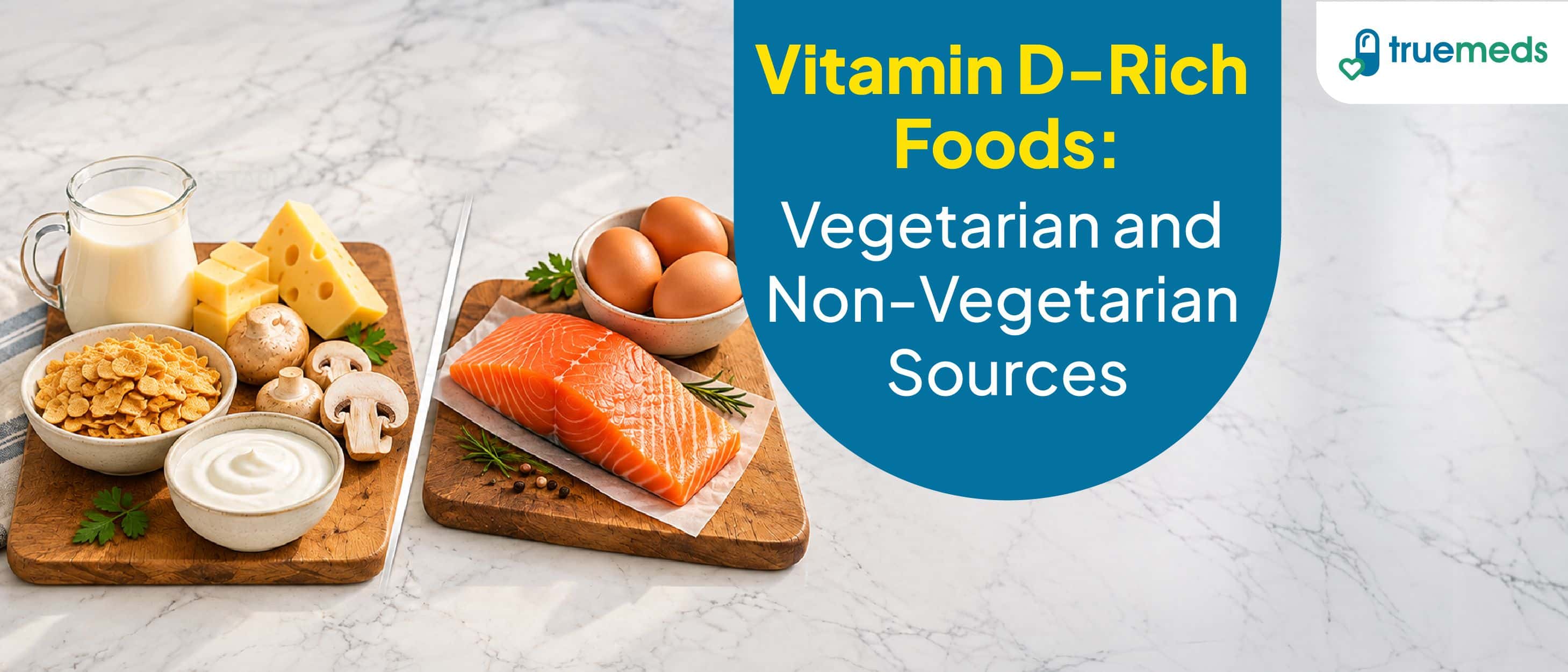
Foods that naturally provide vitamin D include oily fish and egg yolks. Mushrooms exposed to ultraviolet (UV) light can also produce vitamin D2. Some foods, such as milk and breakfast cereals, may have vitamin D added through fortification. Since only a limited range of foods naturally contain vitamin D, fortified options can be particularly helpful when planning a balanced diet[1][2].
Vitamin D helps the body absorb calcium and supports healthy bones and normal muscle function. Meeting daily needs through food alone may be challenging, especially for vegetarians and vegans. This guide explores Indian food sources, fortified products and other factors that affect vitamin D levels. It offers general nutrition information and does not replace blood testing or personalised medical advice.
Why Is Vitamin D Harder to Get from Food than Other Nutrients?
Unlike many vitamins found in a wide variety of foods, vitamin D has fewer natural dietary sources. Oily fish and egg yolks supply some vitamin D, while certain mushrooms provide vitamin D2. Fortified foods can also contribute to daily intake because vitamin D is added during manufacturing[1][2].
Sunlight provides another source. When skin receives ultraviolet B (UVB) radiation, the body can produce vitamin D. However, production differs between individuals and depends on several factors, including season, skin pigmentation, clothing, time spent outdoors and air pollution[1].
In India, the Food Safety and Standards Authority of India (FSSAI) allows vitamin D fortification in foods such as milk and edible oil. This process involves adding specific nutrients to foods to improve their nutritional value[3].
These sources differ in their vitamin D content and availability. Checking food labels and understanding the difference between naturally occurring and added vitamin D can help when choosing foods.
Non-Vegetarian Sources of Vitamin D
Fatty fish are among the more useful natural dietary sources of vitamin D. Egg yolks and some organ meats can also contribute, although their vitamin D content varies.
The following values are based on the Indian Food Composition Tables (IFCT 2017).
Food | Vitamin D3 per 100 g | What to know |
|---|---|---|
Hilsa (ilish) | 4.96 µg | Highest among the fish species listed in IFCT 2017. |
Sardines (Indian sardine) | 3.51 µg | Provides a useful amount of vitamin D3. |
Tuna (yellowfin tuna) | 3.12 µg | Can contribute to dietary vitamin D intake. |
Anchovies | 2.76 µg | Another fish source of vitamin D3. |
Catla | 1.90 µg | A commonly consumed freshwater fish in India. |
Rohu | 0.84 µg | Provides a smaller amount of vitamin D3. |
Indian mackerel (bangda) | 0.22 µg | Its vitamin D3 content is relatively low in IFCT data. |
Hen egg yolk | 3.25 µg (raw); 3.04 µg (boiled) | Most of the vitamin D in an egg is found in its yolk. |
Whole hen egg | 0.84 µg (raw); 0.74 µg (boiled) | Provides a smaller amount than the yolk alone per 100 g. |
Chicken liver | 2.62 µg | Also contains high amounts of preformed vitamin A. Avoid liver and liver products during pregnancy. |
Values represent vitamin D3 (cholecalciferol) per 100 g of edible portion. Fish and liver values are for raw foods; egg values are specified by preparation. Actual content may vary by food sample and preparation method[1][2].
Fish availability differs across Indian regions. Coastal diets may include more marine fish, while inland diets may rely on freshwater fish, eggs, or fortified foods. The vitamin D content of individual fish species should not be assumed to be the same.
Eggs can contribute to vitamin D intake, but they generally do not provide as much as a serving of a vitamin D-rich fatty fish. Their contribution also depends on how they are produced.
Read about - 10 Evidence-Based Health Benefits of Cod Liver Oil
Vegetarian Sources of Vitamin D
Vegetarian diets exclude meat and fish but may include eggs and dairy products. Vegan diets exclude all animal-derived foods, including eggs and dairy. The available vitamin D sources therefore depend on the type of vegetarian diet followed.
Vitamin D-Rich Foods for Vegetarians
Food | Vitamin D contribution | What to know |
|---|---|---|
Fresh button mushrooms | 20.54 µg vitamin D2/100 g | Value reported in IFCT 2017. Mushroom vitamin D content varies with growing conditions and UV exposure. |
Fresh chicken mushrooms | 27.58 µg vitamin D2/100 g | Value reported in IFCT 2017. Based on a limited number of regional samples. |
Fresh shiitake mushrooms | 36.40 µg vitamin D2/100 g | Value reported in IFCT 2017. Availability and nutrient content vary. |
Dried oyster mushrooms | 109 µg vitamin D2/100 g | Higher concentration partly reflects water removal during drying. |
Vitamin D-fortified milk | 0.5–0.75 µg/100 ml | FSSAI fortification standard: 5–7.5 µg per litre. Check the product label. |
Vitamin D-fortified edible oil | 11–16 µg/100 g | FSSAI fortification standard. A 5 g serving provides approximately 0.55–0.8 µg. |
Vitamin D-fortified curd or yoghurt | Product-specific | No single standard value applies. Check the nutrition label. |
Vitamin D-fortified plant-based beverages | Product-specific | Check whether vitamin D has been added and how much each serving provides. |
Mushroom values represent vitamin D2 (ergocalciferol) reported in IFCT 2017. Fortified milk and oil values represent FSSAI-prescribed fortification ranges, not universal measured values in every product[2][3].
Are Mushrooms a Good Source of Vitamin D?
Mushrooms can provide vitamin D, mainly in the form of vitamin D2, also known as ergocalciferol. However, the amount varies considerably. Ordinary mushrooms may contain relatively little vitamin D, while exposure to ultraviolet (UV) light can significantly increase their vitamin D2 content[1][4].
The vitamin D content depends on the mushroom variety, growing conditions and extent of UV exposure. Therefore, UV-treated or vitamin D-enriched mushrooms can be useful dietary sources, but not all mushrooms provide substantial amounts. Check product labels for information about vitamin D content or UV treatment.
Which Foods Are Rich in Calcium and Vitamin D?
Calcium and vitamin D perform related but different functions. Calcium is a major component of bones and teeth, while vitamin D helps the body absorb calcium[1].
Some foods can contribute both nutrients, but the amounts vary.
Food | Calcium contribution | Vitamin D contribution |
|---|---|---|
Vitamin D-fortified milk | Provides calcium | Provides added vitamin D if fortified |
Vitamin D-fortified plant milk with added calcium | Depends on the product | Provides added vitamin D if fortified |
Fortified dairy products | Often provide calcium | Depends on fortification |
Fatty fish eaten with edible bones, such as some canned sardines | Can provide calcium | Can provide vitamin D |
Ordinary milk or curd | Provides calcium | Usually contains little vitamin D unless fortified |
For a product to be a reliable source of both nutrients, its label should confirm the amounts of calcium and vitamin D. A product containing calcium is not necessarily rich in vitamin D.
Why Vegetarians and Vegans May Need to Pay Closer Attention to Vitamin D
People following vegetarian diets can obtain vitamin D from eggs, fortified dairy products, fortified plant-based drinks, and certain mushrooms. Vegans have fewer naturally occurring dietary options because they exclude eggs and dairy.
This does not mean every vegetarian or vegan will have low vitamin D levels. Sun exposure, fortified foods, supplements, health conditions, and individual differences also influence vitamin D status[1][2].
A few considerations may help when reviewing a vegetarian diet:
- Check fortified products: Look for vitamin D in the nutrition information rather than assuming a product contains it.
- Consider the type of mushroom: UV-exposed mushrooms may provide more vitamin D than ordinary varieties.
- Look at the overall diet: Calcium-rich foods support bone health, but they do not replace vitamin D.
- Recognise individual differences: Dietary intake alone cannot establish whether vitamin D levels are adequate.
People with concerns about vitamin D deficiency should discuss their individual circumstances with a qualified healthcare professional. A food list cannot determine whether testing or supplementation is appropriate.
Vitamin D-Rich Foods at a Glance
This chart summarises the main vitamin D food sources for Indian diets.
Food group | Examples | Suitability |
|---|---|---|
Fatty fish | Hilsa, sardines, mackerel, salmon | Non-vegetarian |
Eggs | Egg yolk | Vegetarian diets that include eggs |
Mushrooms exposed to UV light | UV-treated mushrooms | Vegetarian and vegan |
Fortified dairy products | Fortified milk or yoghurt | Vegetarian |
Fortified plant-based drinks | Products made from soy or other plants | Vegetarian and vegan, depending on ingredients |
Fortified edible oil | Products labelled with vitamin D fortification | May suit different dietary patterns |
Other fortified foods | Products listing vitamin D on the nutrition label | Depends on ingredients |
Indian food-composition data show that vitamin D levels vary between food groups and individual foods. Fortification can also change a product's vitamin D content substantially [2][3].
How to use this chart: Choose foods that fit your dietary preferences, then check the product label where fortification is involved. The chart identifies possible sources; it does not rank foods by exact vitamin D content.
Other Ways to Support Your Vitamin D Levels Besides Food
Food is one part of vitamin D intake. Sunlight exposure, fortified foods, and supplements may also influence vitamin D status.
Sunlight exposure
The skin produces vitamin D when exposed to ultraviolet B (UVB) radiation. The amount produced varies with location, time of day, season, clothing, skin pigmentation and other factors[1].
An Indian expert consensus suggests that exposure to sunlight between approximately 10 am and 3 pm may support vitamin D production. It recommends around 30 minutes of exposure, although individual requirements can vary depending on skin pigmentation, season, location and other factors[5].
Living in a sunny country such as India does not guarantee adequate vitamin D levels. Spending much of the day indoors, covering most of the skin and air pollution can reduce effective UVB exposure.
There is no single sunlight schedule that suits everyone. Sun exposure should be balanced against the risk of skin damage. Avoid prolonged exposure and sunburn, and use appropriate sun protection when outdoors.
Read about - Why Is Vitamin D Deficiency Increasing in India?
Fortified foods
FSSAI has established standards for food fortification, including the addition of vitamins A and D to certain products such as milk and edible oil[3].
When shopping, look for the +F logo and read the nutrition label to identify which nutrients have been added. Not every brand or product is fortified, and the vitamin D content can differ between products[3][6].
Supplements and Testing
Vitamin D supplements may be needed in some circumstances, depending on an individual's health, diet and vitamin D status. However, taking high doses without medical guidance can be harmful. Always consult a healthcare professional before starting vitamin D supplements, and take them only at the recommended dose and duration prescribed by your doctor.
A blood test measuring 25-hydroxyvitamin D [25(OH)D] is used to assess vitamin D status. Your doctor can determine whether testing is necessary and interpret the results in the context of your health. The amount of vitamin D you consume through food alone cannot establish your blood level, as absorption, skin production and other factors also contribute [1].
Read about - 5 Warning Signs of Vitamin Deficiency
Conclusion
Vitamin D-rich foods include fatty fish, egg yolks, UV-exposed mushrooms, and fortified products such as certain milk varieties and edible oils. The most suitable choices depend on whether a person follows a vegetarian, vegan, or non-vegetarian diet.
Because vitamin D occurs naturally in relatively few foods, checking fortification labels and considering other sources is useful. If vitamin D deficiency is a concern, individual assessment is more informative than relying on a food chart alone.
Medical disclaimer: This article is for general educational purposes only. It does not diagnose vitamin D deficiency or replace individual medical advice. A healthcare professional can advise on testing, dietary needs, and whether supplementation is appropriate.
FAQs
Are mushrooms really a good source of vitamin D, or is that a myth?
Mushrooms can provide vitamin D2, particularly when exposed to UV light. However, ordinary mushrooms may contain much less vitamin D, so the amount depends on the type and growing conditions.
Does the vitamin D content of eggs depend on how the chicken was raised?
Yes. The hen's diet and rearing conditions can influence the vitamin D content of eggs. Egg yolks provide some vitamin D, but the amount varies.
Can vegetarians get enough vitamin D without supplements?
Some vegetarians may obtain vitamin D from fortified foods, eggs and UV-exposed mushrooms. However, the vitamin D content of mushrooms varies considerably, so the amount provided per serving matters. Whether dietary sources provide enough vitamin D depends on overall food intake, sunlight exposure and individual factors. A healthcare professional can advise whether testing or supplementation is needed.
Do all fortified foods contain the same amount of vitamin D?
No. Vitamin D content varies by product and fortification level. Check the nutrition label for the amount per serving and the serving size.
Is vitamin D2 from mushrooms as effective as vitamin D3 from animal sources?
Both vitamin D2 and vitamin D3 can increase vitamin D levels. Vitamin D3 may raise and maintain levels more effectively in some circumstances, but the effect depends on the dose and context. Mushroom-derived vitamin D2 can still contribute to intake.
How can I find out my exact vitamin D level from food alone?
Food intake cannot reveal an exact blood vitamin D level. A blood test measuring 25-hydroxyvitamin D is used to assess vitamin D status. A healthcare professional can determine whether testing is appropriate.
References
National Institutes of Health, Office of Dietary Supplements. (2025). Vitamin D: Fact sheet for health professionals. https://ods.od.nih.gov/factsheets/VitaminD-HealthProfessional/
Longvah, T., Ananthan, R., Bhaskarachary, K., & Venkaiah, K. (2017). Indian food composition tables 2017. National Institute of Nutrition, Indian Council of Medical Research. https://www.nin.res.in/ebooks/IFCT2017.pdf
Food Safety and Standards Authority of India. (2026). Fortified food. https://www.fssai.gov.in/citizen/fortified-food
Cardwell, G., Bornman, J. F., James, A. P., & Black, L. J. (2018). A review of mushrooms as a potential source of dietary vitamin D. Nutrients, 10(10), 1498. https://doi.org/10.3390/nu10101498