Key Takeaways
- Prebiotics are substances selectively used by host microorganisms that confer a health benefit, while probiotics are live microorganisms that confer a health benefit when administered in adequate amounts.
- Foods containing certain fibres, including onions, garlic, oats and beans, can provide substrates used by gut microorganisms.
- Some yoghurts and fermented foods contain live microorganisms, but not every fermented food qualifies as a probiotic.
- Prebiotics and probiotics may influence the gut microbiome, but their effects depend on the ingredient, microbial strain and health outcome.
- Some prebiotic products can cause gas, bloating or changes in bowel habits.
- Probiotic supplements require particular caution in premature infants and people with serious underlying health conditions.
Prebiotics vs probiotics describes two different concepts in gut health. Prebiotics are substances selectively used by host microorganisms to provide a health benefit, while probiotics are live microorganisms that provide a health benefit when consumed in adequate amounts[1],[2]. Both relate to the gut microbiome, but they are not interchangeable.
The terms are often confused because both feature in discussions about digestion, immunity and microbial balance. Their benefits, however, depend on the specific substance or microorganism and the evidence supporting its use.
This article explains the difference between prebiotics and probiotics, their food sources, potential benefits and safety considerations. It provides general educational information, not personalised supplement advice or guidance on feeding an infant.
What is the Difference Between Prebiotics and Probiotics?
The main difference is what each contributes to the gut environment. Prebiotics provide resources that selected microorganisms can use, whereas probiotics are the live microorganisms themselves. Scientific definitions also require evidence of a health benefit; simply containing fibre or live bacteria is not enough to establish that a product qualifies as a prebiotic or probiotic[1],[2].
Feature | Prebiotics | Probiotics |
|---|---|---|
Definition | Substances selectively used by host microorganisms that confer a health benefit | Live microorganisms that confer a health benefit when administered in adequate amounts |
Main role | Provide substrates used by selected microorganisms | Introduce specific live microorganisms |
Food sources | Certain fibres and other food components | Some yoghurts and fermented foods containing live cultures |
Supplement forms | Powders, capsules and products containing prebiotic ingredients | Capsules, powders, drops and other products containing live microorganisms |
Potential effects | May influence microbial activity and fermentation products | May provide specific benefits depending on the strain and condition |
Important limitation | Not every dietary fibre meets the definition of a prebiotic | Evidence for one strain cannot automatically be applied to another |
What is the Difference Between a Prebiotic and A Probiotic in Simple Terms?
A simple way to remember the distinction is that prebiotics are substances used by selected microorganisms, while probiotics are live microorganisms. This is a useful starting point, but it does not mean every prebiotic supports every probiotic strain.
Some products contain both components and are described as synbiotics. Their intended benefits depend on the ingredients and supporting evidence[3].
What Do Prebiotics and Probiotics Actually Do in the Gut?
The gut microbiome is the diverse population of microorganisms living in the gut. These microorganisms interact with food components and with one another. Prebiotics and probiotics may influence these interactions, although their effects vary by product and individual[4].
How Do Prebiotics Work?
Certain prebiotic substances pass through the upper digestive tract without being fully digested. Selected microorganisms can then use them in the intestine. Depending on the substance and the microorganisms present, fermentation of certain prebiotic ingredients can produce metabolites such as short-chain fatty acids. The amounts produced and their potential effects vary[1],[4].
Prebiotics are often discussed alongside dietary fibre, but the terms are not interchangeable. Many fibres support digestive health without meeting the narrower scientific definition of a prebiotic.
Their effects also depend on the type and amount consumed, the existing gut microbiome and the outcome being measured. A change in microbial composition does not automatically demonstrate a meaningful health benefit[1],[5].
How Do Probiotics Work?
Probiotics are live microorganisms that provide a health benefit when administered in adequate amounts. Depending on the strain, they may interact with existing microorganisms, the intestinal environment or the body's immune responses[2], [5].
Probiotics are not a single uniform category. Different species and strains can produce different effects. A finding involving one specific strain cannot automatically establish the effectiveness of another strain or a multi-strain product.
Probiotics are also not a universal solution for digestive problems. Evidence for a particular condition does not establish benefits for unrelated conditions[5].
Can Prebiotics and Probiotics Work Together?
Prebiotics and probiotics can be combined in products known as synbiotics. These contain live microorganisms and substances selectively used by microorganisms, with the combination intended to provide a health benefit[3].
However, simply combining a probiotic with fibre does not establish that a product is an effective synbiotic. The scientific definition considers the components and the evidence for the intended benefit[3].
Food Sources of Prebiotics and Probiotics
Everyday foods can provide dietary fibre, nutrients and, in some cases, live microorganisms. However, processing, storage and preparation can affect the composition of a finished product. Food sources should not automatically be assumed to produce the same effects as supplements studied in clinical trials[4][5].
Foods that Provide Prebiotics
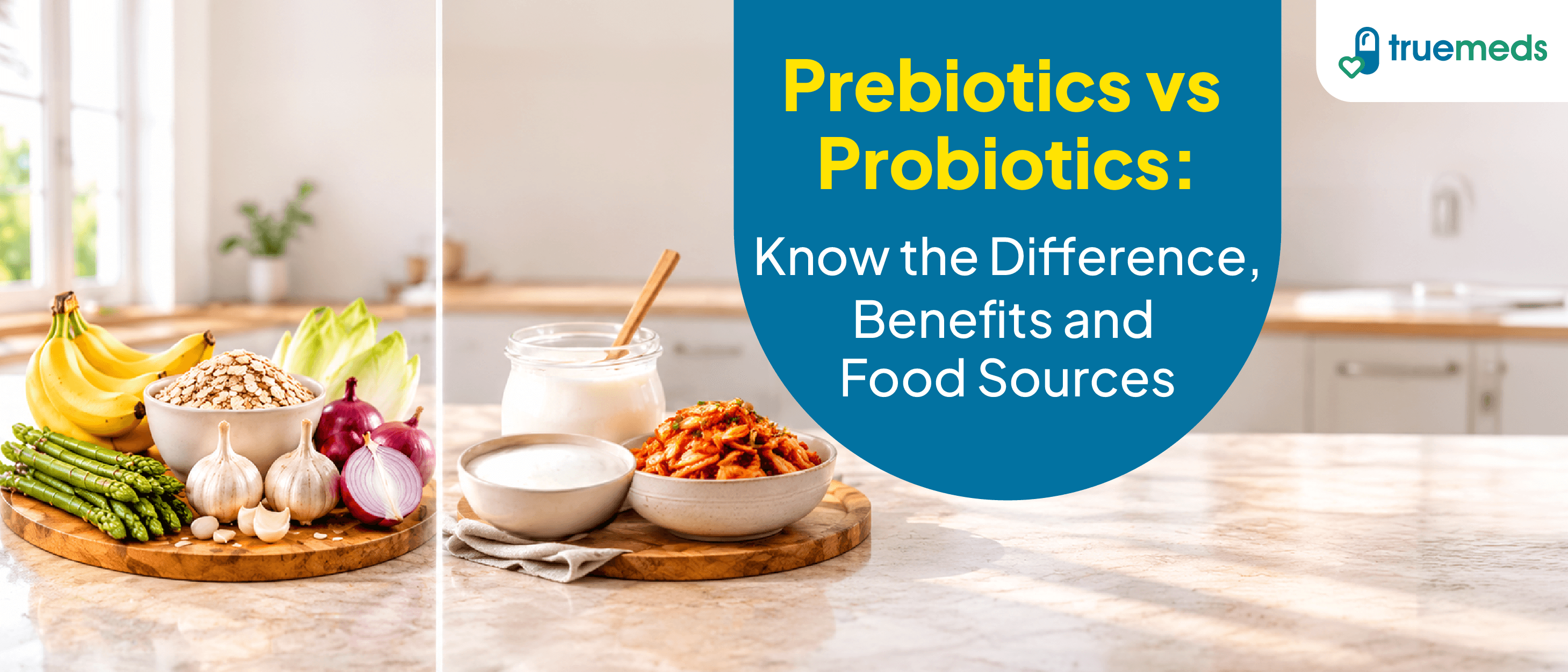
Some foods contain fibres or other substances that selected gut microorganisms can use. Examples include:
- Onions and garlic: Contain fructans, including inulin-type compounds, some of which can act as prebiotics.
- Oats: Provide beta-glucan and other dietary fibres. Whether a particular fibre meets the definition of a prebiotic depends on the evidence for its selective use by microorganisms and its health benefits.
- Beans and lentils: Supply dietary fibre and fermentable carbohydrates.
- Bananas: Provide dietary fibre, and less-ripe bananas generally contain more resistant starch than ripe bananas. The composition and potential prebiotic effects depend on ripeness and the food's other characteristics.
- Asparagus and other vegetables: May contain live microorganisms if they have not been heat-treated after fermentation and have been stored appropriately.
These foods contain a variety of nutrients and fibre types. Their presence on this list does not mean that every fibre they contain meets the scientific definition of a prebiotic[1],[4].
Foods that Provide Probiotics
Some fermented foods contain live microorganisms. Examples include:
- Yoghurt with live cultures: May provide live bacterial cultures.
- Certain fermented milk products: May contain live microorganisms, depending on production and storage.
- Some fermented vegetables: May contain live microorganisms when fermentation and storage preserve them.
Not every fermented food qualifies as a probiotic. The microorganisms must be alive in adequate amounts and provide a demonstrated health benefit. Heating or pasteurisation after fermentation can reduce or eliminate live cultures[2],[5].
Read about - 20 Probiotic Foods That Are Super Healthy
Prebiotic vs Probiotic Foods: A Quick Comparison
Food or food group | What it may provide |
|---|---|
Onions and garlic | Fibres that selected gut microorganisms can use |
Oats, beans and lentils | Dietary fibre, including fermentable carbohydrates |
Bananas and vegetables | Fibre and other nutrients; prebiotic effects depend on their components |
Yoghurt with live cultures | Live microorganisms, depending on the product |
Fermented vegetables | Potentially live microorganisms, depending on preparation and storage |
A varied diet can provide different fibres and nutrients. Whether a food provides a specific prebiotic or probiotic benefit depends on its composition and the evidence available.
What Does the Research Actually Show?
Research into prebiotics and probiotics covers digestive symptoms, microbial activity and other health outcomes. Findings vary across studies, so claims should be linked to the specific ingredient, strain, population and outcome examined[4], [5].
Digestive Health
Some studies have examined specific probiotic strains or formulations for preventing antibiotic-associated diarrhoea, with results varying across studies and patient groups. This evidence does not mean that every probiotic supplement is effective or that everyone taking antibiotics needs one. Product selection should be based on the evidence for the intended use and individual clinical circumstances.[5]
Prebiotic research has examined ingredients such as inulin and oligosaccharides, as well as emerging candidates such as some polyphenols. Their potential effects differ, and evidence for one ingredient cannot establish the benefits of all prebiotics[4].
Changes in the gut microbiome do not automatically mean a person will experience a noticeable health improvement. Clinical outcomes need to be evaluated alongside changes in microorganisms.
Immunity and General Wellbeing
The gut microbiome interacts with the immune system, and this relationship remains an active area of research. However, not all prebiotics and probiotics have been shown to strengthen immunity or prevent infections.
The effect of a particular product depends on its formulation and the evidence for the intended outcome. Findings from one population may not apply to another[4].
Mood and The Gut–brain Connection
The gut and brain communicate through several biological pathways. Researchers have investigated whether prebiotics and probiotics influence mood, anxiety and depression through this gut–brain connection.
Research in this area is still developing. Results may vary according to the intervention, population and outcome measured. Evidence of a biological interaction does not establish that a supplement can treat a mental health condition[4].
A 2025 systematic review and meta-analysis of 23 randomised controlled trials examined the effects of prebiotics and probiotics on depression and anxiety in people with diagnosed mental health conditions. It found that probiotics may reduce symptoms of depression and anxiety. However, evidence for prebiotics was limited, and the researchers noted considerable variation between studies[6].
These findings come from human clinical trials. Proposed biological mechanisms and findings from animal studies provide additional research context but do not independently establish mental health benefits in humans. Prebiotics and probiotics should not replace established mental health treatments.
A 2026 ISAPP consensus statement describes gut health in terms of normal gastrointestinal function and gut-related symptoms that affect quality of life. This reinforces the point that microbiome composition alone cannot establish whether a person is healthy. It includes gastrointestinal function and symptoms that affect quality of life, alongside objective measures of function[7].
Why Product-Specific Evidence Matters
When interpreting research, several questions are important:
- Was the study conducted in humans, animals or laboratory settings?
- Which prebiotic substance or probiotic strain was examined?
- What outcome did researchers measure?
- How large and reliable was the study?
- Do the findings apply to the product being discussed?
These distinctions help separate promising research from established clinical benefits. They also explain why broad claims about all prebiotics or probiotics can be misleading.
Read about - How to Maintain Gut Health for Better Digestion and Overall Wellness
Are Prebiotics and Probiotics Safe for Babies?
The question of baby prebiotics vs probiotics requires particular care. Infants have developing digestive and immune systems, and evidence from adults cannot automatically be applied to babies. Products intended for adults may also differ from those designed for infants.
Prebiotics in Infant Nutrition
Prebiotic ingredients included in infant formula are not equivalent to separate prebiotic supplements. Parents should not add supplements to an infant's feeds without guidance from the baby's doctor. Evidence depends on the ingredient, formulation, age group and health outcome being assessed[4].
Infant feeding decisions also depend on age, growth, feeding method and individual health circumstances. General information about prebiotics cannot determine which product is suitable for a particular infant.
Probiotics and Premature Infants
Probiotics have been studied for preventing necrotising enterocolitis (NEC), a serious intestinal condition that primarily affects premature infants. Research findings vary by probiotic preparation and infant population.
The American Academy of Pediatrics has highlighted concerns about inconsistent evidence, product quality and safety, particularly for extremely low-birthweight infants[8]. The US Food and Drug Administration has also warned that probiotics given to premature infants can cause invasive infections, which may be severe or fatal[9].
This warning is particularly relevant to premature or medically vulnerable infants and should not be interpreted as evidence that every probiotic product has the same risk in all populations.
Probiotic supplements should therefore not be treated as a routine preventive measure for all babies. Decisions involving premature or medically vulnerable infants require specialist neonatal oversight.
What About Full-Term Babies?
Evidence for one infant group does not necessarily apply to another. A probiotic studied for a particular condition in premature infants cannot automatically be recommended for healthy, full-term babies.
Parents should not use adult supplements or change an infant's feeding regimen based solely on general online information. The safety and suitability of an ingredient depend on the infant's age, health and the specific product.
Should You Take a Supplement, or Get Prebiotics and Probiotics From Food?
Food sources and supplements serve different purposes. Everyday foods provide a combination of nutrients, while supplements deliver selected ingredients or microorganisms in particular formulations. Neither category guarantees a health benefit for every person.
When Food Sources Are Relevant
Foods containing fibre can contribute to overall dietary quality. Some fermented foods may provide live microorganisms, although the amount and type vary. Food choices also provide nutrients beyond prebiotics and probiotics.
A varied eating pattern can include different plant foods and suitable fermented foods. This does not mean every person needs to seek out products labelled as prebiotic or probiotic.
What to Know About Supplements
Probiotic supplements vary in their strains, viable microorganism counts, ingredients and quality. Evidence for a particular strain or formulation should not be assumed to apply to other products[5].
Prebiotic supplements also differ in composition and concentration. Some can cause gas, bloating or changes in bowel habits, particularly when intake increases quickly. Tolerability varies with the ingredient and amount consumed[4].
People with significant underlying health conditions, weakened immunity or complex medical needs may face different risks from probiotic use. Product suitability is a matter for individual assessment rather than generalised claims.
Do Prebiotic Sodas Work?
Prebiotic sodas are marketed as drinks containing added fibres, such as inulin. The presence of a prebiotic ingredient does not establish that a drink improves gut health or provides benefits beyond other dietary sources.
The amount and type of fibre, added sugars, sweeteners and other ingredients vary by product. Some added fibres can cause digestive discomfort in susceptible people. Claims about a particular soda should be assessed using evidence on its formulation, not simply the word “prebiotic” on its label.
Ultimately, the difference between prebiotics and probiotics is a scientific distinction, not a ranking of which is universally better. Their relevance depends on the intended health outcome, the evidence available, and the person concerned.
Conclusion
Prebiotics and probiotics have different definitions, although both are relevant to research on the gut microbiome. Prebiotics are substances selectively used by microorganisms in the body that provide a health benefit, while probiotics are live microorganisms that provide health benefits when consumed in adequate amounts.
Food sources can contribute fibre, nutrients and, in some cases, live cultures. Supplements may have specific uses, but benefits depend on the product and the evidence for the intended outcome. Particular caution is necessary when considering probiotics for premature infants or medically vulnerable people.
Medical disclaimer: This article is for informational and educational purposes only. It does not replace professional medical advice, diagnosis or treatment. Individual health and nutritional needs vary; consult a qualified healthcare professional for personalised guidance.
FAQs
Can you take too many prebiotics, or are there side effects?
Yes. Large amounts of some prebiotic fibres can cause gas, bloating, abdominal discomfort or changes in bowel habits. The likelihood depends on the type of fibre, the amount consumed and individual tolerance.
Do prebiotic sodas actually work?
A prebiotic soda may provide a fibre that selected gut microorganisms can use. However, the presence of that ingredient alone does not prove that the drink improves digestive health or delivers a specific clinical benefit. Evidence depends on the product's formulation and the outcome studied.
Can babies get protection against necrotising enterocolitis from probiotic supplements?
Some studies have reported reduced necrotising enterocolitis risk with particular probiotic preparations in selected premature infants. However, evidence, product quality and safety concerns remain important. Probiotics can cause severe infections in vulnerable premature infants, so these products require specialist neonatal assessment.
What are synbiotics?
Synbiotics contain live microorganisms and substances selectively used by microorganisms, with the combination intended to provide a health benefit. The term does not mean every product combining probiotics and fibre has proven benefits.
Can taking probiotics with antibiotics help prevent diarrhoea?
Some probiotic strains may reduce the risk of antibiotic-associated diarrhoea. However, the evidence varies by strain, population and product. Results for one formulation cannot automatically be applied to every probiotic supplement.
Do prebiotics or probiotics help with mood or mental health?
Research suggests that probiotics may help reduce symptoms of depression and anxiety in some people. However, evidence for prebiotics remains limited, and results vary across studies. Neither should be considered a substitute for professional mental health assessment or treatment.
References
Hutkins, R., Walter, J., Gibson, G. R., Bedu-Ferrari, C., Scott, K., Tancredi, D. J., Wijeyesekera, A., & Sanders, M. E. (2025). Classifying compounds as prebiotics—Scientific perspectives and recommendations. Nature Reviews Gastroenterology & Hepatology, 22, 54–70. https://doi.org/10.1038/s41575-024-00981-6
Hill, C., Guarner, F., Reid, G., Gibson, G. R., Merenstein, D. J., Pot, B., Morelli, L., Canani, R. B., Flint, H. J., Salminen, S., Calder, P. C., & Sanders, M. E. (2014). Expert consensus document: The International Scientific Association for Probiotics and Prebiotics consensus statement on the scope and appropriate use of the term probiotic. Nature Reviews Gastroenterology & Hepatology, 11(8), 506–514. https://doi.org/10.1038/nrgastro.2014.66
Swanson, K. S., Gibson, G. R., Hutkins, R., Reimer, R. A., Reid, G., Verbeke, K., Scott, K. P., Holscher, H. D., Azad, M. B., Delzenne, N. M., & Sanders, M. E. (2020). The International Scientific Association for Probiotics and Prebiotics (ISAPP) consensus statement on the definition and scope of synbiotics. Nature Reviews Gastroenterology & Hepatology, 17(11), 687–701. https://doi.org/10.1038/s41575-020-0344-2
Ali, S., Hamayun, M., Siraj, M., Khan, S. A., Kim, H.-Y., & Lee, B. (2025). Recent advances in prebiotics: Classification, mechanisms, and health applications. Future Foods, 12, Article 100680. https://doi.org/10.1016/j.fufo.2025.100680