Key Takeaways
- 100 g of dry soya chunks provides around 366 calories and 51 g of protein.
- Soya chunks are a complete plant protein, meaning they contain all 9 essential amino acids.
- They are also rich in fibre (~17 g), calcium (~338 mg), and magnesium (~280 mg) per 100 g.
- They may support muscle repair, weight management, heart health, bone health, and gut health when consumed as part of a balanced diet.
- A typical serving is 25–30 g dry weight per meal; moderate daily intake is generally safe for most healthy adults.
- Soak in hot water for 15–20 minutes, squeeze out the water, and rinse well before cooking.
- Soy does not increase oestrogen or testosterone levels in men, but people with soy allergy should avoid it, and people with thyroid conditions or those taking thyroid medicine should consult their doctor about soy intake.
Soya chunks, scientifically recognised as textured vegetable protein (TVP), serve as an exceptionally dense, plant-based protein source derived from defatted soy flour[1]. For individuals tracking their macronutrients, and particularly vegetarians looking to close nutritional gaps, this versatile ingredient offers a complete amino acid profile comparable to animal protein[2].
Understanding its exact macro distribution is essential for precise meal planning, weight management, and muscle recovery. In this article, we look at the nutritional profile of soya chunks, including their protein content per 100 g, their potential health benefits, and practical ways to include them in a healthy diet. To help you structure your meals accurately, the nutritional metrics for the dry product are detailed below.
What is the Nutritional Value & Calories of Soya Chunks Per 100 g?
Per 100 g, dry soya chunks provide 366 calories and 51.1 g of protein. This nutritional breakdown represents the uncooked, dry product before preparation (values may vary slightly by brand). For the complete nutritional profile, refer to the table below[3].
*Values are approximate and may vary by brand.
Soya chunks provide complete protein, meaning they contain all nine essential amino acids your body cannot produce on its own[4]. This makes them comparable to animal-based protein sources in terms of amino acid quality.
Dietitian's Tip: To reduce bloating, start with a small serving of 15-20g and gradually increase. Always pair soya chunks with a source of vitamin C (like lemon or bell peppers) to enhance iron absorption.
What Are the Health Benefits of Soya Chunks?
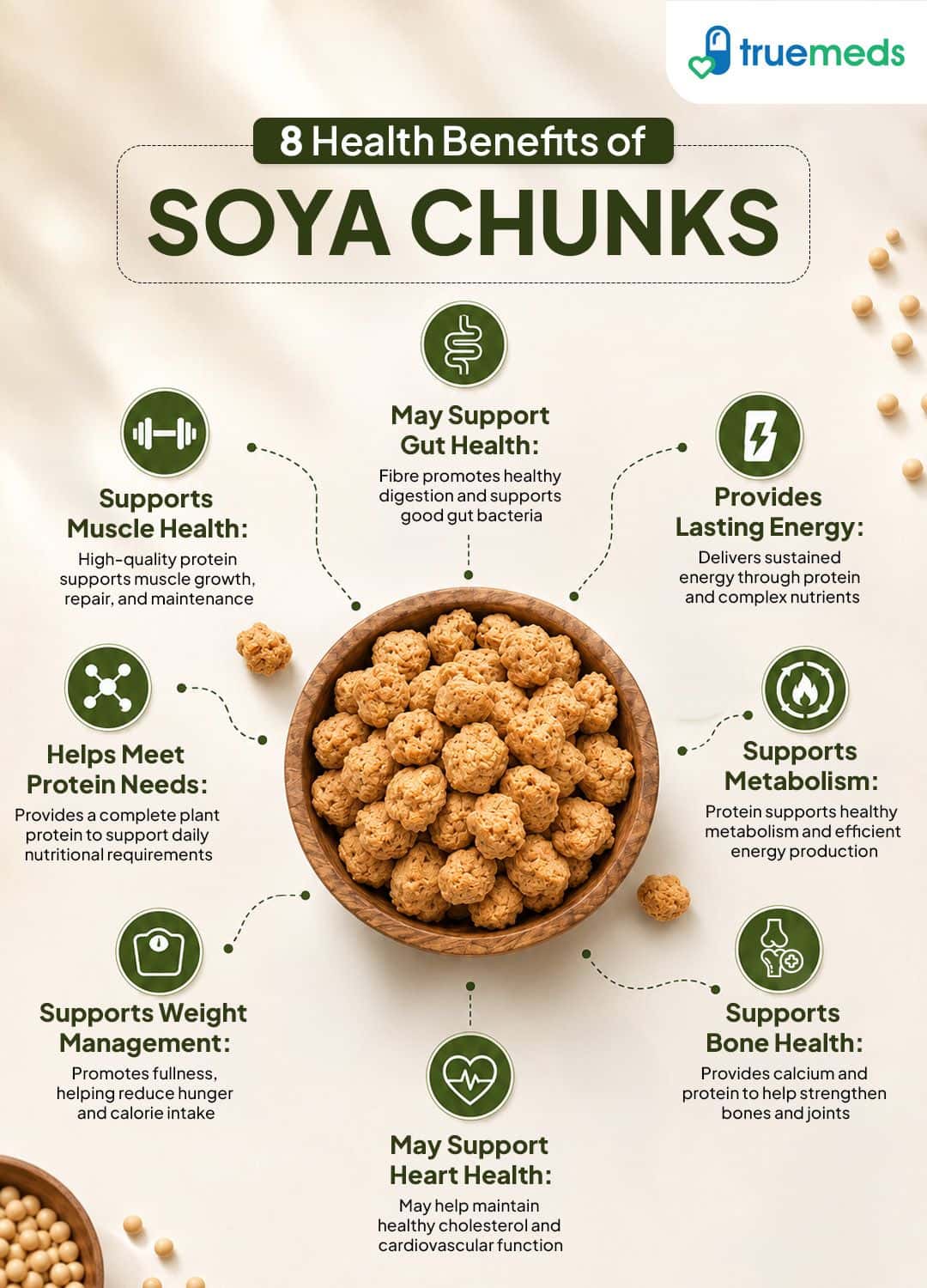
When consumed as part of a balanced diet, soya chunks offer significant nutritional advantages due to their high protein, low saturated fat, and mineral composition[5]. This powerful profile actively supports muscle maintenance, helps meet daily protein requirements, and aids weight management through prolonged satiety. Furthermore, it promotes heart and bone health, boosts metabolism, stabilises energy levels, and supports gut health through its high dietary fibre content.
1. Supports Muscle Maintenance & Repair
Protein provides essential amino acids that support muscle protein synthesis, a process responsible for repairing and maintaining muscle tissue, particularly after physical activity[6]. Soya chunks provide a plant-based way to meet these protein requirements effectively. Because they contain all nine essential amino acids, soya chunks may support muscle repair and maintenance, similar to animal proteins, when consumed regularly as part of a varied diet[1].
2. Helps Meet Daily Protein Requirements
With approximately 51 g of protein per 100 g (dry weight), soya chunks provide a dense and efficient source of plant-based protein[7]. This makes them particularly valuable for vegetarians who may have limited protein sources in their diet. A modest serving can contribute significantly to daily protein needs. However, they should be part of a varied diet rather than the sole source of protein.
3. Supports Weight Management
The combination of high protein and fibre content in soya chunks may help with weight management by promoting feelings of fullness. High-protein foods require more energy to digest and can help control calorie intake by reducing frequent hunger. Research suggests that plant-based proteins, particularly soy protein, may enhance satiety and support weight management by helping to reduce body fat gain and improve overall body composition when incorporated into a balanced diet[8].
4. May Support Heart Health
Unlike red meat or dairy products, soya chunks contain very little saturated fat and provide heart-healthy polyunsaturated fats instead. Research indicates that soy foods may have positive effects on cardiovascular health by helping reduce blood cholesterol levels[9]. When used as an alternative to high-saturated-fat protein sources, soya chunks may support heart-friendly eating patterns.
5. Good for Bone Health
Soya chunks provide substantial amounts of calcium (approximately 338 mg per 100 g) and magnesium (approximately 280 mg per 100 g)[3], both of which may help maintain healthy bones. Studies have found associations between regular soy food consumption and improved markers of bone health, particularly among Asian women. Research indicates that regular consumption of soy foods, within an overall healthy dietary pattern, may help maintain bone health[10].
6. Supports Metabolism
Protein-rich foods like soya chunks require more energy for your body to digest and process compared to carbohydrates. This increased energy expenditure during digestion can support overall metabolic activity[8]. Higher-protein diets may also help preserve lean muscle mass while promoting greater fat loss during weight management.
7. Helps Maintain Energy Levels
Soya foods, which provide high-quality protein and dietary fibre, have been associated with improved glycaemic control and metabolic health. Evidence suggests that soy protein can attenuate postprandial glucose responses and support appetite regulation, which may contribute to weight management outcomes[2]. Because soy is a complete protein containing all nine essential amino acids in consistent amounts[4], it may help maintain stable energy levels throughout the day when consumed as part of balanced meals.
8. May Support Gut Health
Dietary fibre is found only in plant foods, and soya chunks provide approximately 17 grams per 100 g[3]. Animal studies suggest that this fibre content may support gastrointestinal health and help maintain a healthy gut environment. However, human studies are limited[11].
Are Soya Chunks Good for Weight Loss?
Yes, soya chunks can be a valuable addition to a weight-loss diet when consumed as part of a balanced eating plan. Their nutritional profile supports satiety and helps meet daily protein requirements.
- Soya chunks are high in protein, which may help you feel fuller for longer and reduce overall calorie intake.
- They are rich in dietary fibre, which can support digestion and promote feelings of fullness.
- With relatively low fat content, they can be included in calorie-conscious meals.
- Their complete amino acid profile helps support muscle maintenance, particularly when combined with regular physical activity.
- Soya chunks are versatile and can be used in curries, stir-fries, salads, and other nutrient-dense meals.
For best results, prepare soya chunks using healthy cooking methods and include them as part of an overall balanced diet and active lifestyle.
How to Eat Soya Chunks in a Healthy Diet
If you are regularly incorporating soya chunks for weight loss, the way you prepare them plays a massive role in managing your daily satiety. Proper soaking and rinsing ensure a perfect, meat-like texture that makes low-calorie meals incredibly filling and delicious. Follow these essential preparation guidelines to make your healthy meals both palatable and nutritious:
- To cook soya chunks, soak them in hot water for 15-20 minutes until they become soft.
- After soaking, squeeze out excess water and rinse thoroughly to remove any smell or impurities. (This preparation step makes them ready to absorb flavours from your cooking.)
- You can incorporate prepared soya chunks into various dishes to boost protein content. Add them to curries, stir-fries, pulao, or salads as you would with paneer or chicken. They work well in Indian gravies, dry sabzis, and even as a filling for parathas or sandwiches.
- A typical healthy serving of soya chunks is about 25–30 g dry weight per meal, which provides a substantial amount of plant protein while fitting comfortably into a balanced diet.
- Remember that variety is important. Combine soya chunks with whole grains, vegetables, and other protein sources throughout the week rather than relying on them exclusively.
FAQs
How much protein is in 100 g of soya chunks?
Dry soya chunks contain approximately 51 grams of protein per 100 grams, making them one of the highest plant-based protein sources available.
Is it safe to eat soya chunks daily?
Moderate consumption of 25-30 grams (dry weight) daily is generally safe for most people when eaten as part of a varied diet. However, variety is important. Rotate soya chunks with other protein sources throughout the week rather than eating them at every meal.
Are soya chunks good for health?
Yes, when consumed in moderation. Soya chunks provide high-quality protein, fibre, calcium, and iron while being low in saturated fat. They may support muscle maintenance, heart health, and weight management as part of a balanced eating pattern.
How to cook soya chunks?
Soak soya chunks in hot water for 15-20 minutes until soft. Squeeze out excess water and rinse thoroughly. Then add them to curries, stir-fries, pulao, or salads. They absorb flavours well when cooked with spices and sauces.
Do soya chunks increase oestrogen?
No, research shows that soy consumption does not affect oestrogen or testosterone levels in men. Multiple studies confirm that neither soy protein nor isoflavone exposure impacts hormone levels, regardless of the dose or duration of consumption.
Are soya chunks good for weight loss?
Yes, soya chunks may support weight management. Their high protein and fibre content promotes feelings of fullness and helps control appetite. With fewer calories than many high-protein foods, they fit well into calorie-controlled eating patterns when consumed in appropriate portions.
How many calories are in 100 g of soya chunks?
Dry soya chunks contain approximately 366 calories per 100 grams. However, remember that you typically consume much smaller portions (25-30 g), which provide proportionally fewer calories per serving.
Do soya chunks increase weight?
No, when eaten in moderation, soya chunks do not cause weight gain. In fact, their high protein and fibre content can support weight management by promoting satiety. Weight gain occurs from overall excessive calorie intake, not from specific nutritious foods.
Can pregnant women eat soya chunks?
Yes, moderate soy consumption is generally considered safe during pregnancy. Population studies from countries with high soy intake show no harmful effects from eating soy during pregnancy. However, maintain variety in your protein sources and consult your healthcare provider about your specific dietary needs.
Are soya chunks good for diabetes?
Yes, soya chunks may be beneficial for people with diabetes. They have a low glycaemic index and high protein and fibre content, which can help moderate the release of glucose into the bloodstream. However, portion control remains important for overall carbohydrate management.
Can I eat 100 g of soya chunks in a day?
For many healthy adults, 100 g of dry soya chunks can be included in a balanced diet. However, individual protein requirements vary based on age, activity level, and overall diet. It is best to consume them alongside other nutrient-rich foods.
Are soya chunks good for dieting?
Yes, soya chunks can be a useful addition to a weight-management diet. Their high protein and fibre content may help promote fullness, support muscle maintenance, and reduce hunger, making it easier to follow a balanced, calorie-conscious eating plan.
Do soya chunks have all 9 amino acids?
Yes, soya chunks contain all nine essential amino acids, making them a complete protein source. This makes them particularly valuable for vegetarians and vegans looking to meet their protein requirements and support muscle growth and maintenance.
What is the disadvantage of soya chunks?
Some people may experience digestive discomfort, such as bloating or gas, when consuming large amounts of soya chunks. Individuals with soy allergies should avoid it, and moderation is recommended as part of a varied and balanced diet.
Medical Disclaimer
This article is for informational purposes only and does not constitute medical advice. The information provided should not be used for diagnosing or treating health conditions. Always consult a qualified healthcare provider for diagnosis, treatment, and personalised medical advice. Do not disregard professional medical advice or delay seeking it because of information found in this article. If you have a medical emergency, contact your doctor or emergency services immediately.
References
Qin, P., Wang, T., & Luo, Y. (2022). A review on plant-based proteins from soybean: Health benefits and soy product development. Journal of Agriculture and Food Research, 7, 100265. https://doi.org/10.1016/j.jafr.2021.100265
Rizzo, G., & Baroni, L. (2018). Soy, soy foods and their role in vegetarian diets. Nutrients, 10(1), 43. https://doi.org/10.3390/nu10010043
U.S. Department of Agriculture, Agricultural Research Service. (n.d.). FoodData Central: Nutrient details for Food ID 2707451 [Database entry]. USDA FoodData Central. https://fdc.nal.usda.gov/food-details/2707451/nutrients
Di Donfrancesco, B. (2023). Indispensable amino acid composition of texturized vegetable protein and recommended pattern [Figure]. ResearchGate. https://www.researchgate.net/figure/ndispensable-amino-acid-composition-of-the-texturized-vegetable-protein-and-recommended_fig2_367258398