

- Medicines
- Personal Care
- Skin Cream
- Sunscreen
- Face Wash
- Skin and Body Soap
- Acne Care
- Body Lotions
- Moisturising Lotion
- Moisturising Cream
- Mosquito Repellent
- Moisturising Gel
- Body Wash
- Hair Oils
- Hair Shampoo
- Hair Conditioners
- Hair Supplements
- Hair Colour
- Hair Serum
- Hair Mask
- Hair Solutions
- Baby Diapers and Wipes
- Baby Lotion and Moisturising Cream
- Baby Bath Essentials
- Baby Skin Care
- Baby and Infant Food
- Baby Healthcare
- Women Multivitamins
- Ovulation Test Kit and Women Intimate Care
- Sanitary Pads
- Nutritional Drinks
- Condoms
- Lubricants
- Massage Gels
- Personal Body Massagers
- Men Performance Booster
- Sexual Health Supplements
- Massage Oils
- Ayurveda
- Tooth Paste
- Mouth Ulcer Gel
- Mouthwash
- Toothache and Gum Pain
- Tooth Brush
- Gargle Solution
- Orthopaedic Supports
- Adult Diapers
- Footwear
- Mobility and Support Accessories
- Urinary Support and Care
- Health Conditions
- Bone and Joint Care
- Digestive Care
- Eye Care
- Pain Relief
- Smoking Cessation
- Liver Care
- Stomach Care
- Cold and Cough
- Heart Care
- Kidney Care
- Piles, Fissures & Fistula
- Respiratory Care
- Mental Wellness
- Derma Care
- Pre and Probiotics
- Acidity
- Gas
- Constipation
- Loose Motion/Diarrhoea
- Digestive Fibres
- Digestive Enzymes
- Eye Lubricant Drops
- Lens Solution
- Safety Eye Wear
- Eye Cream
- Eye Vitamins and Supplements
- Eye Drops
- Eye Ointment and Gel
- Nicotine Patch
- Nicotine Gum
- Nicotine Lozenges
- Cough Syrups
- Chest Rubs and Balms
- Nasal Spray
- Lozenges
- Inhalant Capsules
- Cold and Cough Tablets
- Vitamins & Supplements
- Diabetes Care
- Healthcare Devices
- Homeopathic Medicine
- Health Guide
Wet Age-Related Macular Degeneration
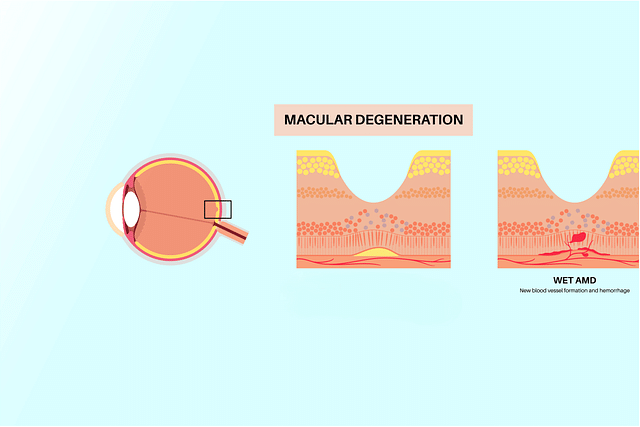
Wet age-related macular degeneration (wet AMD) is a serious eye condition affecting the central part of the retina, known as the macula. It is characterised by the growth of abnormal blood vessels beneath the retina. This leads to fluid and blood leakage, causing damage and scarring to the macula. Wet AMD is a major cause of severe central vision loss in older adults, typically occurring in people over the age of 50. Treatment options like anti-VEGF injections can help slow disease progression and preserve vision.
 50
50Last updated on : 06 May, 2026
Read time : 13 mins
Overview of Disease
Age-related macular degeneration (AMD) is a common eye disorder that primarily affects individuals over the age of 50. It is a progressive condition that damages the macula, the central part of the retina responsible for sharp, detailed vision. AMD can be classified into two main types: dry AMD and wet AMD. While dry AMD is more prevalent, wet AMD is more severe and can lead to rapid and significant vision loss if left untreated. This article focuses on wet age-related macular degeneration, its causes, symptoms, and available treatment options.
What is Wet Age-Related Macular Degeneration?
Wet age-related macular degeneration, also known as exudative or neovascular macular degeneration, is an advanced form of AMD. It occurs when abnormal blood vessels grow beneath the retina, specifically in the macula. These fragile blood vessels are prone to leaking fluid and blood, causing damage and scarring to the macular tissue. As a result, individuals with wet AMD experience a rapid decline in central vision. This can significantly impact their daily activities such as reading, driving, and recognising faces.
The development of wet AMD is often preceded by the presence of dry AMD. In some cases, dry AMD can progress to the wet form, although this is not always the case. It is crucial to understand the risk factors and symptoms associated with wet AMD to ensure prompt diagnosis and treatment.
Key Factors about Wet Age-Related Macular Degeneration
| Category | Details |
| Also Referred as | Exudative macular degeneration, Neovascular macular degeneration |
| Commonly Occurs In | Occurs in adults over 50, particularly those over 60 |
| Affected Organ | The macula, part of the retina in the eye |
| Type | Wet (or exudative) age-related macular degeneration |
| Common Signs | Blurry or fuzzy vision, straight lines appearing wavy, dark spots or blind spots in central vision, visual distortions |
| Consulting Specialist | Ophthalmologist or Retina Specialist |
| Treatement Procedures | Anti-VEGF injections, Photodynamic therapy (PDT), Laser photocoagulation |
| Managed By | Anti-VEGF medications such as ranibizumab, aflibercept, bevacizumab, brolucizumab, and faricimab-svoa, Ophthalmologists, particularly retina specialists |
| Mimiciking Condition | Charles Bonnet syndrome (visual hallucinations), Diabetic retinopathy |
Symptoms of Wet Age-Related Macular Degeneration
The symptoms of wet age-related macular degeneration (AMD) usually appear suddenly and progress rapidly. Common signs include:
- Visual distortions, where straight lines appear wavy or bent (National Eye Institute, 2022)
- Reduced central vision in one or both eyes, making tasks like reading or recognising faces difficult
- Need for brighter light when reading or doing close-up work
- Trouble adjusting to low light levels, such as when moving from a bright to a dimly lit room
- Colours appear less bright, and objects seem to change in shape or size
- In rare cases, patients may experience photopsias (flashes of light). Visual hallucinations can occur in individuals with significant vision loss due to Charles Bonnet syndrome, but they are not a symptom of wet AMD itself.
Stages of Wet Age-Related Macular Degeneration
Wet AMD is classified as late (advanced) AMD rather than a separate stage. AMD staging (early, intermediate, late) refers to drusen size and retinal changes, not the presence of wet disease (Yu et al., 2024). The progression of AMD can be categorised into three main stages:
- Early AMD: This stage is characterised by the presence of drusen, which are small yellow deposits that form under the retina. At this point, vision loss may not be noticeable.
- Intermediate AMD: As the condition progresses, the drusen may become larger, and pigmentary changes in the retina may occur. Some mild vision loss may be experienced during this stage.
- Advanced AMD: This stage includes both wet AMD and advanced dry AMD (also known as geographic atrophy). In wet AMD, abnormal blood vessels grow beneath the retina, while in advanced dry AMD, the retinal cells waste away, causing irreversible vision loss.
It is important to note that wet AMD is an advanced stage of the disease. However, prompt treatment with anti-vascular endothelial growth factor (anti-VEGF) injections can slow the progression of vision loss. In some cases, this treatment may even improve vision. Regular eye exams are crucial for early detection and timely intervention.
Causes of Wet Age-Related Macular Degeneration
Wet AMD develops when abnormal blood vessels grow under the retina and leak fluid or blood into the macula. This leads to scarring and rapid loss of central vision (American Academy of Ophthalmology, 2023). This condition typically occurs in individuals who already have dry macular degeneration. Approximately 10–20% of AMD cases are neovascular (wet), but they account for most cases of severe central vision loss. The primary causes of wet AMD are:
- Abnormal Blood Vessel Growth: Irregular new blood vessels grow from the choroid under and into the macula, causing vision loss.
- Fluid Buildup: Fluid leaks from the choroid and accumulates between the retinal pigment epithelium and the retina or within the layers of the retina. This accumulation causes irregularities in the macula layers, leading to vision loss or distortion.
Risk Factors
Several factors can increase your likelihood of developing wet age-related macular degeneration:
- Age over 55 years significantly elevates the risk
- Family history and genetics, with multiple genes associated with AMD
- AMD is more common in people of European ancestry, though it can affect all ethnic groups
- Cigarette smoking or frequent exposure to tobacco smoke (American Academy of Ophthalmology, 2023)
- Obesity, which hastens progression from early/intermediate to advanced AMD
- Cardiovascular diseases affecting the heart and blood vessels
Other potential wet AMD risk factors include high blood pressure, excessive sun exposure, low dietary intake of antioxidants, and low omega-3 fatty acid consumption. Regular eye check-ups become crucial with increasing age or if you have a family history of wet macular degeneration. Early diagnosis through a dilated eye exam can help detect wet AMD symptoms before significant vision loss occurs.
Complications
Wet age-related macular degeneration is a serious condition that can lead to significant vision loss if not treated promptly. The primary complication of wet AMD is central vision loss, which can be severe and permanent. Without treatment, most individuals with wet AMD experience progressive and often severe central vision loss. This vision loss can become severe enough to meet the criteria for legal blindness.
The abnormal blood vessels that grow underneath the retina in wet AMD can leak blood and fluid, causing damage and scarring to the macula. This leakage can result in the formation of scar tissue, further distorting and damaging the macula. The central vision loss associated with wet AMD can make everyday activities such as reading, driving, and recognising faces extremely difficult. However, peripheral vision is typically preserved, allowing patients to maintain some level of independence. Early diagnosis and treatment are crucial in minimising the risk of severe vision loss due to wet AMD.
Prevention of Wet Age-Related Macular Degeneration
Reducing risk or delaying the onset of wet age-related macular degeneration involves several strategies. However, there is no guaranteed method to prevent the condition completely.
- Regular Eye Exams: Early detection is crucial. Regular eye exams can help identify early signs of macular degeneration, such as drusen, which are tiny yellow deposits in the retina. These exams can detect changes before symptoms become apparent.
- Healthy Lifestyle: Maintaining a healthy lifestyle, including a balanced diet low in saturated fats, can reduce the risk of developing macular degeneration. Avoiding smoking and engaging in regular physical activity are also important for lowering this risk.
- Dietary Supplements: Certain dietary supplements, such as the AREDS2 formula, may help slow the progression of intermediate to late dry AMD, but they do not prevent wet AMD and do not treat it. This formula includes vitamins C and E, zinc, and antioxidants like lutein and zeaxanthin. However, these should be taken under the guidance of a healthcare provider.
By incorporating these preventive measures, individuals can lower their risk of developing wet AMD or slow down its progression. Regular monitoring and early intervention are key to preserving vision in those at risk for this condition.
Diagnosis & Tests
Diagnosing wet age-related macular degeneration involves a combination of clinical examinations and advanced diagnostic tests. A routine eye exam performed by an ophthalmologist or optometrist can detect signs of wet AMD by directly viewing the retinas using an ophthalmoscopy or slit lamp exam. The Amsler grid eye test may also be used to detect distortions in vision.
To facilitate a closer examination of the retina, eye drops are used to dilate the pupils. This allows the eye care professional to assess the macula better and look for any abnormalities or signs of wet AMD.
Advanced diagnostic tests for wet macular degeneration include:
- Optical Coherence Tomography (OCT): This non-invasive imaging test uses light waves to create detailed cross-sectional images of the retina. It allows the detection of fluid or blood accumulation associated with wet AMD (National Eye Institute, 2022).
- Fluorescein Angiography: In this test, a fluorescent dye is injected into the bloodstream. A series of photographs is then taken as the dye passes through the blood vessels in the retina. This helps identify abnormal blood vessels and areas of leakage characteristic of wet AMD.
- Indocyanine Green Angiography: Similar to fluorescein angiography, this test uses a different dye. This dye allows for better visualisation of the choroidal blood vessels beneath the retina, which can be affected in wet AMD.
Treatment & Management
The management of wet age-related macular degeneration (AMD) aims to slow disease progression, prevent further vision loss, and preserve central vision. Treatment is most effective when initiated early, and it often involves ongoing care.
1. Anti-VEGF (vascular endothelial growth factor) Therapy (First-Line Treatment)
The cornerstone of wet AMD treatment is intravitreal injection of anti-VEGF agents (Yu et al., 2024). VEGF is a protein that promotes the growth of abnormal, leaky blood vessels beneath the retina, contributing to vision loss. Blocking this protein helps stabilisSpecial article Recent Updates on the Diagnosis and Management of Age-Related Macular Degeneratione or improve vision in many patients.
Commonly used anti-VEGF agents include:
- Ranibizumab: A monoclonal antibody fragment that inhibits VEGF-A, helping reduce abnormal blood vessel growth and fluid leakage in wet age-related macular degeneration (AMD).
- Aflibercept: A fusion protein that blocks VEGF-A, VEGF-B, and placental growth factor, making it effective in controlling vision loss and retinal swelling in wet AMD.
- Brolucizumab: A humanised single-chain antibody fragment that targets VEGF-A, offering longer dosing intervals while effectively reducing retinal fluid in wet AMD.
- Faricimab: A bispecific antibody that blocks both VEGF-A and angiopoietin-2, improving vascular stability and reducing disease progression in wet AMD.
- Pegaptanib is largely obsolete in modern AMD management and is no longer recommended as a standard therapy.
These drugs are injected directly into the vitreous humour of the eye, typically every 4 to 8 weeks. The frequency may be adjusted based on the patient's response, using a treat-and-extend approach.
2. Photodynamic Therapy (PDT)
Photodynamic therapy is a less frequently used option but may be beneficial in some instances, especially when anti-VEGF therapy alone is insufficient or contraindicated.
- Verteporfin: This light-sensitive medicine is injected intravenously and then activated with a low-intensity laser applied to the affected area of the retina. This selectively seals abnormal blood vessels without damaging surrounding tissue.
3. Laser Photocoagulation
- Laser photocoagulation is now rarely used because most choroidal neovascular membranes occur near the fovea, and anti-VEGF therapy is superior. It is only considered for very select extrafoveal lesions, which are uncommon.
Living with Disease
Living with wet AMD can significantly impact daily activities such as reading, recognising faces, and driving due to the loss of central vision. Here are some tips for managing the condition:
- Low Vision Rehabilitation: Participate in low vision rehabilitation programmes to develop new ways to perform daily tasks and maintain independence.
- Use of Adaptive Devices: Use adaptive devices such as magnifiers, electronic readers, and large-print books to assist with reading and other visual tasks.
- Maximise Lighting: Ensure adequate lighting in the home and workplace to maximise remaining vision.
- Regular Eye Doctor Visits: Maintain regular follow-up appointments with your eye doctor to monitor the progression of the disease and adjust treatment as needed.
- Healthy Lifestyle: Engage in a healthy lifestyle, including a balanced diet rich in fruits and vegetables, regular exercise, and avoiding smoking, to support overall eye health.
- Ask for Support: Seek support from family, friends, and support groups to cope with the emotional and practical challenges of living with vision loss.
When to See a Doctor?
If you experience any symptoms of wet AMD, it is crucial to consult an ophthalmologist promptly. These symptoms may include sudden or gradual changes in central vision, distorted or wavy lines, or a dark or empty area in the centre of your vision. Early diagnosis and treatment can help preserve your vision and prevent further damage to the retina.
If you have wet AMD and notice vision changes or treatment side effects, contact your ophthalmologist immediately. Regular follow-up appointments are necessary to monitor the progression of the disease and adjust treatment as needed. By working closely with your eye care professional, you can effectively manage wet AMD and maintain the best possible vision.
Key Takeaways
- Wet age-related macular degeneration (AMD) is a chronic eye disorder that causes abnormal blood vessel growth and fluid leakage in the macula, leading to central vision loss.
- Risk factors for wet AMD include age, genetics, smoking, obesity, and cardiovascular disease.
- Symptoms of wet AMD include blurred or distorted central vision, dark or white spots in the centre of vision, and difficulty reading or recognising faces.
- Diagnosis of wet AMD involves a comprehensive eye exam, including a visual acuity test, dilated eye exam, optical coherence tomography (OCT), and fluorescein angiography.
- The primary treatment for wet AMD is anti-VEGF injections, which help slow down or stop the progression of the disease by blocking the growth of abnormal blood vessels.
- Living with wet AMD requires ongoing management, lifestyle adjustments, and regular eye exams to monitor treatment and disease progression.
FAQs
What is the most effective treatment for wet macular degeneration?
Is it possible to live with wet macular degeneration?
How many wet macular degeneration patients go blind?
What is the typical duration of wet macular degeneration?
Can wet macular degeneration be repaired?
Is it possible to halt the progression of wet AMD?
Have there been cases of people recovering from macular degeneration?
How can I prevent macular degeneration from worsening?
What are the new medicines for treating wet macular degeneration?
References
- American Academy of Ophthalmology. (2023). Age-related macular degeneration preferred practice pattern. https://www.aao.org/preferred-practice-pattern/age-related-macular-degeneration-ppp
- National Eye Institute. (2022). Age-related macular degeneration: Facts about AMD. https://www.nei.nih.gov/learn-about-eye-health/eye-conditions-and-diseases/age-related-macular-degeneration
- Yu, S. S., et al. (2024). Recent updates on the diagnosis and management of age-related macular degeneration. Mayo Clinic Proceedings: Innovations, Quality & Outcomes. https://doi.org/10.1016/j.mayocpiqo.2024.05.003
- Heier, J. S., Khanani, A. M., Quezada Ruiz, C., Basu, K., Ferrone, P. J., Brittain, C., Figueroa, M. S., Lin, H., Holz, F. G., Patel, V., Lai, T. Y. Y., Silverman, D., Regillo, C., Swaminathan, B., Viola, F., Cheung, C. M. G., Wong, T. Y., & TENAYA and LUCERNE Investigators. (2022). Efficacy, durability, and safety of intravitreal faricimab up to every 16 weeks for neovascular age-related macular degeneration (TENAYA and LUCERNE): two randomised, double-masked, phase 3, non-inferiority trials. Lancet, 399(10326), 729–740. https://doi.org/10.1016/S0140-6736(22)00010-1
- Wykoff, C. C., Brown, D. M., & Kaiser, P. K. (2020). Anti-VEGF therapy for neovascular AMD: Current updates and future directions. Retina, 40(11), 2142–2160. https://doi.org/10.1097/IAE.0000000000002929
Check Related Salts
Latest health articles

Top Health Essentials














Disclaimer
Top-Selling Medicines:
...View more
Top-OTC medicines:
...View more
Company
About UsHealth ArticleHealth StoriesHealth LibraryDiseases & Health ConditionsAyurvedaUnderstanding Generic MedicinesAll MedicinesAll BrandsNeed HelpFAQSecuritySavings CalculatorAdvertise with UsSubscribe
Registered Office Address
Grievance Officer
Download Truemeds


Contact Us
Our customer representative team is available 7 days a week from 9 am - 9 pm.
v4.28.13

2026 - Truemeds | All rights reserved. Our content is for informational purposes only. See additional information.

Our Payment Partners




