

- Medicines
- Personal Care
- Skin Cream
- Sunscreen
- Face Wash
- Skin and Body Soap
- Acne Care
- Body Lotions
- Moisturising Lotion
- Moisturising Cream
- Mosquito Repellent
- Moisturising Gel
- Body Wash
- Hair Oils
- Hair Shampoo
- Hair Conditioners
- Hair Supplements
- Hair Colour
- Hair Serum
- Hair Mask
- Hair Solutions
- Baby Diapers and Wipes
- Baby Lotion and Moisturising Cream
- Baby Bath Essentials
- Baby Skin Care
- Baby and Infant Food
- Baby Healthcare
- Women Multivitamins
- Ovulation Test Kit and Women Intimate Care
- Sanitary Pads
- Nutritional Drinks
- Condoms
- Lubricants
- Massage Gels
- Personal Body Massagers
- Men Performance Booster
- Sexual Health Supplements
- Massage Oils
- Ayurveda
- Tooth Paste
- Mouth Ulcer Gel
- Mouthwash
- Toothache and Gum Pain
- Tooth Brush
- Gargle Solution
- Orthopaedic Supports
- Adult Diapers
- Footwear
- Mobility and Support Accessories
- Urinary Support and Care
- Health Conditions
- Bone and Joint Care
- Digestive Care
- Eye Care
- Pain Relief
- Smoking Cessation
- Liver Care
- Stomach Care
- Cold and Cough
- Heart Care
- Kidney Care
- Piles, Fissures & Fistula
- Respiratory Care
- Mental Wellness
- Derma Care
- Pre and Probiotics
- Acidity
- Gas
- Constipation
- Loose Motion/Diarrhoea
- Digestive Fibres
- Digestive Enzymes
- Eye Lubricant Drops
- Lens Solution
- Safety Eye Wear
- Eye Cream
- Eye Vitamins and Supplements
- Eye Drops
- Eye Ointment and Gel
- Nicotine Patch
- Nicotine Gum
- Nicotine Lozenges
- Cough Syrups
- Chest Rubs and Balms
- Nasal Spray
- Lozenges
- Inhalant Capsules
- Cold and Cough Tablets
- Vitamins & Supplements
- Diabetes Care
- Healthcare Devices
- Homeopathic Medicine
- Health Guide
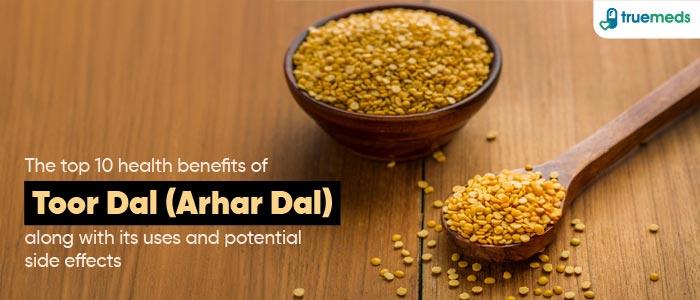
Top 9 Health Benefits of Toor Dal (Arhar Dal): Uses and Nutritional Profile
Last updated on : 30 Nov, 2025
Read time : 9 min
Legumes are highly valued for their nutritional benefits, especially their high protein, fibre, energy, and essential vitamins and minerals. Among these, Pigeon Pea (Cajanus cajan), also known as Toor Dal, Arhar, or Red Gram, is a widely cultivated and consumed pulse in India.
Toor dal is a nutritional powerhouse, offering a rich profile of plant-based protein, fibre, and essential micronutrients like iron, folate, magnesium, phosphorus, potassium, and B vitamins [1]. These qualities make it valuable for supporting bodily growth, fetal development, and metabolic health when consumed as part of a balanced diet [2].
Continue reading to know more about this staple legume, its detailed nutritional profile, potential health benefits, traditional uses, and important side effects.
Toor Dal: Nutritional Value per 100 g
Toor Dal (Pigeon pea) is an incredible source of proteins, complex carbohydrates, and minerals like potassium and magnesium. Below is the typical nutritional value per 100 grams of dried, raw Toor Dal [3]:
| Nutrients | Nutritional Value per 100 gm |
| Calories | Approximately 343 kcal |
| Total Fat | 1.5 g |
| Total Carbohydrate | 63 g |
| Protein | 22 g |
| Sodium | 17 mg |
| Potassium | 1392 mg |
| Calcium | 13 mg |
| Iron | 2.2 mg (12% Daily Value) |
| Magnesium | 183 mg (44% Daily Value) |
| Vitamin B6 | 0.28 mg (16% Daily Value) |
Key Properties of Toor Dal
Here are the key properties of Toor Dal that contribute to its value in a healthy diet:
- Antioxidant Activity: Rich in compounds like flavonoids and phenolic acids, Toor Dal exhibits antioxidant activity which helps combat oxidative stress in the body, potentially lowering the risk of chronic diseases [1].
- Hypocholesterolemic Potential: The combination of high soluble fibre and protein may help support healthy blood cholesterol levels. The fibre in pulses can bind to cholesterol, aiding its excretion [4].
- Low Glycemic Index (GI): Toor Dal has a low GI (estimated around 29) [4], making it a good choice for those managing blood sugar levels. It leads to a slower, more stable release of glucose into the bloodstream compared to high-GI foods.
- Antimicrobial Activity (In Vitro): Studies have shown that extracts of pigeon pea contain compounds with antimicrobial activity against certain bacteria and fungi in laboratory settings [1]. However, strong data from human clinical studies are lacking to support its direct use as an antimicrobial in diet.
Top 9 Potential Health Benefits of Toor Dal
1. Supports Digestive Health
Toor Dal is an excellent source of dietary fibre, which is fundamental for promoting healthy digestion. This fibre helps regulate bowel movements and adds bulk to the stool, which can assist in relieving common issues like constipation and promoting regularity [4].
2. Contributes to Immune Function
The essential micronutrients present, such as B vitamins, iron, and antioxidants, play a supportive role in overall wellness and the maintenance of a healthy immune system.
3. Aids in Weight Management
As a high-protein, high-fibre food, Toor Dal can be beneficial for weight management. Its fibre content promotes satiety (feeling of fullness), which may help reduce overall calorie intake. Furthermore, protein requires more energy to digest, contributing to a modest increase in metabolism [5].
4. May Help Maintain Healthy Blood Pressure
Toor Dal is notably rich in potassium [3]. Potassium is a key electrolyte that helps counter the effects of sodium and acts as a vasodilator, which can support the maintenance of normal blood pressure levels, thus reducing the strain on the cardiovascular system [6].
5. Supports Healthy Cholesterol Levels
The combination of soluble fibre and potassium contributes to cardiovascular health. Soluble fibre helps balance cholesterol levels by interfering with cholesterol absorption, while potassium helps manage blood pressure, collectively supporting a healthy heart.
6. Traditional Use in Health Practices
In some traditional medicine systems, parts of the pigeon pea plant have been used for various ailments, including as a supportive measure in conditions like jaundice or malaria [1]. It is crucial to note that Toor Dal consumption is NOT a substitute for prescribed medical treatment for infectious diseases like malaria, and all serious medical conditions require professional medical care.
7. May Help Regulate Diarrhoea
While excessive fibre can sometimes exacerbate digestive issues, the soluble fibre in cooked Toor Dal can help to absorb excess water in the gut and add consistency to loose stools, potentially aiding in the management of non-infectious diarrhoea.
8. Source of Nutrients for Cell Repair and Growth
As a source of complete protein when combined with grains like rice, and rich in essential micronutrients like zinc and B vitamins, Toor Dal provides the necessary building blocks for tissue repair, growth, and general metabolic function [2].
9. Valuable During Pregnancy
Toor Dal is a particularly good source of folate (Vitamin B9) and iron. Folate is vital for preventing neural tube defects during fetal development, and iron is essential for preventing maternal anaemia, making it a valuable inclusion in a pregnant woman’s diet [2].
How to Use Toor Dal
Toor Dal is a versatile staple in Indian cuisine and is used in a variety of delicious and nutritious dishes. Here’s how you can incorporate it:
- Dal Tadka & Dal Fry: The most common preparation, where the cooked dal is seasoned with aromatic spices.
- Sambhar & Rasam: Essential components in South Indian cuisine.
- Khichdi: A comforting, easily digestible dish made by cooking dal and rice together.
- Puran Poli: A sweet, flatbread where cooked and mashed dal is used as the filling.
- Toor Dal Soup: A simple, protein-rich soup.
- Traditional Indian Sweets: Such as laddu and halwa, where the dal is cooked with ghee, sugar, and cardamom to create rich treats.
Side Effects of Toor Dal and Precautions
Toor Dal is generally safe and highly nutritious when consumed as part of a balanced diet. However, if consumed excessively, or in individuals with pre-existing conditions, a few side effects may occur:
- Gas and Bloating: Toor Dal is high in fibre and complex carbohydrates (oligosaccharides), which are not fully digested in the small intestine. These compounds are fermented by gut bacteria in the colon, which can lead to gas, flatulence, and bloating, particularly if one is not accustomed to a high-fibre diet.
- Potential for Kidney Stone Contribution: Toor Dal contains oxalates, which can contribute to the formation of calcium oxalate kidney stones in susceptible individuals. Those with a history of kidney stones should consume Toor Dal in moderation [7].
- Gout: Toor Dal contains purines, which are metabolized into uric acid. While it is considered moderate in purines compared to organ meats, excessive consumption might be a concern for individuals managing gout [7].
Precautions:
Individuals prone to Kidney Stones, Irritable Bowel Syndrome (IBS), or Gout should consume Toor Dal in moderation.
Soaking Toor Dal for several hours before cooking is recommended to improve digestibility and reduce the content of phytic acid (an anti-nutrient) and oligosaccharides that cause gas [7].
Conclusion
Toor Dal is a nutritious legume, serving as an excellent source of plant-based protein, dietary fibre, and essential vitamins and minerals, notably potassium and folate. When incorporated into a balanced diet, it offers numerous potential health benefits, including supporting heart health, aiding in blood sugar management due to its low Glycemic Index, and assisting in weight management. It is also a valuable food choice during pregnancy due to its folate content. Moderation is key, especially for individuals with a history of kidney stones or digestive sensitivities.
Frequently Asked Questions (FAQs)
What is Toor Dal also known as?
Toor Dal is also known as pigeon pea, red gram, and arhar dal.
Are chana dal and Toor Dal the same?
No, chana dal and Toor Dal are different types of lentils. Chana dal is made from split chickpeas (Cicer arietinum), while Toor Dal is made from split pigeon peas (Cajanus cajan).
Can I eat Toor Dal daily?
Yes, incorporating Toor Dal daily as part of a balanced diet is generally safe and encouraged for its nutritional value, provided you do not have pre-existing conditions like severe digestive problems or kidney stone propensity that require specific dietary restrictions.
Is it good to eat Toor Dal every day?
Eating Toor Dal daily provides essential nutrients like protein, fibre, and B vitamins, supporting digestion, heart health, and energy levels. It can be a very beneficial dietary staple.
Which vitamins are in Toor Dal?
Toor Dal is particularly rich in B vitamins, including vitamin B1 (thiamine), vitamin B9 (folate/folic acid), and vitamin B6 (pyridoxine), which are vital for energy metabolism and cell health.
How to reduce gas from Toor Dal?
The most effective methods to reduce gas from Toor Dal are to soak it in water for at least 6-8 hours before cooking, discard the soaking water, and cook it thoroughly. While boiling the dal, adding digestive spices like ginger, cumin (jeera), or asafoetida (hing) can further aid digestion and reduce gas formation.
References
[1] Haji, A., Teka, T. A., Bereka, T. Y., Andersa, K. N., Nekera, K. D., Abdi, G. G., Abelti, A. L., & Urugo, M. M. (2024). Nutritional composition, bioactive compounds, food applications, and health benefits of pigeon pea (Cajanus cajan L. Millsp.): A review. Legume Science, 6(2), e233. https://doi.org/10.1002/leg3.233
[2] Singh, I. P. (2016). Nutritional benefits of pigeonpea. In M. P. Srivastava, S. Singh, & R. K. Singh (Eds.), Pigeonpea: Breeding and Genetics (pp. 73–81). Springer. https://doi.org/10.1007/978-81-322-2716-8_7
[3] U.S. Department of Agriculture (USDA), Agricultural Research Service. (2023). FoodData Central, Full Report (FDC ID: 172421). https://fdc.nal.usda.gov/fdc-app.html#/food-details/172421/nutrients
[4] Singh, F., Diwakar, B., & ICRISAT. (1993). Nutritive value and uses of pigeonpea and groundnut (Skill Development Series No. 14). International Crops Research Institute for the Semi-Arid Tropics. https://oar.icrisat.org/2423/1/Nutritive-Value-Uses-Pigeonpea-Groundnut.pdf
[5] Paddon-Jones, D., Westman, E., Mattes, E. R., Wolfe, R. R., Elstain, P. B., & Campbell, W. W. (2008). Protein, weight management, and satiety. The American Journal of Clinical Nutrition, 87(5), 1558S–1561S. https://doi.org/10.1093/ajcn/87.5.1558S
[6] Aburto, N. J., Hanson, S., Gutierrez, H., Hooper, L., Elliott, P., & Cappuccio, F. P. (2013). Effect of increased potassium intake on cardiovascular risk factors and disease: Systematic review and meta-analyses. BMJ, 346, f1378. https://doi.org/10.1136/bmj.f1378
[7] Popelka, A., & Jarmon, D. G. (2008). The complete guide to food counts. McGraw-Hill Professional. (General reference for oxalate and purine content in food). https://books.google.com/books/about/The_Complete_Book_of_Food_Counts_9th_Edi.html?id=EqmKVl45OXUC














Disclaimer
Our healthcare experts have carefully reviewed and compiled the information presented here to ensure accuracy and trustworthiness. It is important to note that this information serves as a general overview of the topic and is for informational purposes only. It is not intended to diagnose, prevent, or cure any health problem. This page does not establish a doctor-patient relationship, nor does it replace the advice or consultation of a registered medical practitioner. We recommend seeking guidance from your registered medical practitioner for any questions or concerns regarding your medical condition.
Recent Articles




Company
About UsHealth ArticleHealth StoriesHealth LibraryDiseases & Health ConditionsAyurvedaUnderstanding Generic MedicinesAll MedicinesAll BrandsNeed HelpFAQSecuritySavings CalculatorSubscribe
Registered Office Address
Grievance Officer
Download Truemeds


Contact Us
Our customer representative team is available 7 days a week from 9 am - 9 pm.
v4.15.1

2026 - Truemeds | All rights reserved. Our content is for informational purposes only. See additional information.

Our Payment Partners




