

- Medicines
- Personal Care
- Skin Cream
- Sunscreen
- Face Wash
- Skin and Body Soap
- Acne Care
- Body Lotions
- Moisturising Lotion
- Moisturising Cream
- Mosquito Repellent
- Moisturising Gel
- Body Wash
- Hair Oils
- Hair Shampoo
- Hair Conditioners
- Hair Supplements
- Hair Colour
- Hair Serum
- Hair Mask
- Hair Solutions
- Baby Diapers and Wipes
- Baby Lotion and Moisturising Cream
- Baby Bath Essentials
- Baby Skin Care
- Baby and Infant Food
- Baby Healthcare
- Women Multivitamins
- Ovulation Test Kit and Women Intimate Care
- Sanitary Pads
- Nutritional Drinks
- Condoms
- Lubricants
- Massage Gels
- Personal Body Massagers
- Men Performance Booster
- Sexual Health Supplements
- Massage Oils
- Ayurveda
- Tooth Paste
- Mouth Ulcer Gel
- Mouthwash
- Toothache and Gum Pain
- Tooth Brush
- Gargle Solution
- Orthopaedic Supports
- Adult Diapers
- Footwear
- Mobility and Support Accessories
- Urinary Support and Care
- Health Conditions
- Bone and Joint Care
- Digestive Care
- Eye Care
- Pain Relief
- Smoking Cessation
- Liver Care
- Stomach Care
- Cold and Cough
- Heart Care
- Kidney Care
- Piles, Fissures & Fistula
- Respiratory Care
- Mental Wellness
- Derma Care
- Pre and Probiotics
- Acidity
- Gas
- Constipation
- Loose Motion/Diarrhoea
- Digestive Fibres
- Digestive Enzymes
- Eye Lubricant Drops
- Lens Solution
- Safety Eye Wear
- Eye Cream
- Eye Vitamins and Supplements
- Eye Drops
- Eye Ointment and Gel
- Nicotine Patch
- Nicotine Gum
- Nicotine Lozenges
- Cough Syrups
- Chest Rubs and Balms
- Nasal Spray
- Lozenges
- Inhalant Capsules
- Cold and Cough Tablets
- Vitamins & Supplements
- Diabetes Care
- Healthcare Devices
- Homeopathic Medicine
- Health Guide
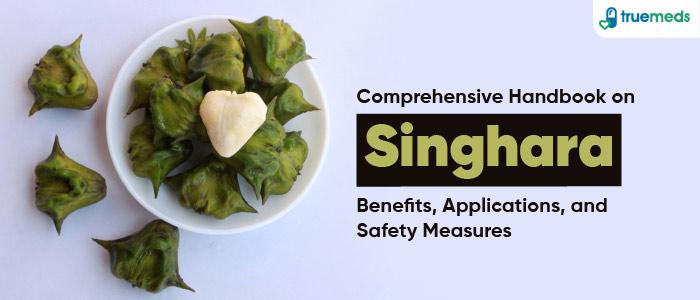
Singhara (Water Chestnuts): Nutritional Value, Benefits, Uses & Precautions
Last updated on : 01 Dec, 2025
Read time : 11 min
Singhara is also referred to as paniphal in Hindi and is commonly known as the water chestnut in English. Its scientific name is Trapa natans. It is an annual aquatic free-floating plant that grows in shallow water bodies, ponds, or marshes. The edible portion of the water chestnut plant is its fruit, commonly referred to as the nut, which is consumed in various forms. It is recognised for being rich in essential micronutrients like copper, iron, iodine, phosphorus, calcium, potassium, and magnesium, and contains vitamins such as thiamine, vitamin A, vitamin C, riboflavin, and nicotinic acid [1]. Singhara is also gluten-free, making it a suitable option for individuals seeking gluten-free foods or those with celiac disease. Emerging research suggests it may offer benefits for managing blood pressure and supporting digestive health. Learn more about its nutrition, uses, and health benefits.
Water Chestnuts Nutritional Value
Singhara is rich in carbohydrates, vitamins, and minerals, including B-complex vitamins (pyridoxine, riboflavin, thiamine, nicotinic acid, pantothenic acid), vitamin C, vitamin A, calcium, potassium, and magnesium. Here is the nutritional value of 100 grams of Singhara fruit:
|
Nutrients |
Nutritional Value |
| Calories | 95.6 kcal |
| Carbohydrates | 21.46 g |
| Protein | 0.86 g |
| Fat | 0.37 g |
| Dietary Fiber | 3 g |
| Vitamin B6 | 0.3 mg |
| Vitamin C | 5.26 mg |
| Potassium | 584 mg |
| Calcium | 37.15 mg |
| Iron | 0.06 mg |
Properties of Singhara (Water Chestnuts)
The traditional use and preliminary research suggest that water chestnuts possess several valuable properties, which include [2], [3], [4]:
- Potential Hypoglycemic Activity: Some studies indicate Singhara may help lower blood sugar levels.
- Antihypertensive Activity: Its high potassium content may contribute to reducing high blood pressure.
- Potential Antioxidant Properties: Singhara contains substances that may protect cells from oxidative damage.
- Potential Anti-inflammatory Properties: Water chestnuts may help reduce inflammation in the body.
- Potential Lipid Profile Support: Regular intake may help in maintaining healthy cholesterol levels.
- Traditional Astringent Use: Historically used to reduce discharge and bleeding.
Top Health Benefits of Singhara (Water Chestnuts)
As a nutrient-dense food, water chestnuts are thought to be beneficial for digestion and may support the health of the liver, kidneys, spleen, and genitourinary system. They may possess properties that can reduce fever, fight infections, assist with loose stools, and act as a natural diuretic [3], [4].
Here are other water chestnut benefits:
1. May Support Blood Pressure Regulation
Potassium in Singhara may help lower the risk of high blood pressure and stroke associated with heart disease. Studies have shown that people who consume large amounts of potassium are likely to have a significantly reduced risk of high blood pressure and stroke [5].
2. May Aid in Weight Management
Individuals on a weight loss plan can benefit from the low-calorie content of Singhara. Singhara are a high-capacity food that can curb hunger without adding many calories to the diet.
3. Supports Digestive Health
Singhara is a good source of fibre, which supports the body in digesting food more efficiently. Fibre helps in digestion by facilitating the passage of food through the large intestine. It softens the stool and facilitates its smooth expulsion [6].
4. May Help Maintain Healthy Cholesterol Levels
The fibre content in water chestnuts may assist in lowering “bad” cholesterol (LDL) levels, which can improve heart health. Eating them regularly as part of a balanced diet may help maintain healthier cholesterol levels [3].
5. Potential to Enhance Skin Health
Singhara is rich in antioxidants that may protect the skin from damage and premature ageing. Its nutrient profile may contribute to maintaining youthful and radiant skin.
6. May Support Blood Sugar Regulation
Singhara contains compounds that are being studied for their potential to help regulate blood sugar levels. This makes it a potentially good choice for people looking to support metabolic health or manage diabetes in consultation with a doctor [2].
7. Potential to Soothe Stomach Discomfort
In traditional practice, Singhara’s anti-inflammatory properties were used to soothe the digestive tract. While not a treatment for ulcers, its gentle nature may promote comfort.
8. May Help Manage Uric Acid Levels
Preliminary research suggests that Singhara may help reduce uric acid levels in the blood, which could potentially assist in managing gout attacks [4]. It may also support joint health by reducing inflammation.
9. Supports Urinary Health
The diuretic properties of Singhara may help flush out toxins from the urinary system. It may assist in preventing minor infections and maintains urinary tract health.
10. May Help Fight Anaemia
Singhara is a good source of iron, which is essential for producing healthy red blood cells. Consuming Singhara can help support the prevention of mild anaemia and boost overall energy levels [1].
11. Traditional Use for Heavy Menstrual Bleeding
Water chestnuts can traditionally assist in reducing heavy menstrual bleeding due to their astringent properties. It may be consumed to provide relief and help regulate menstrual flow [4].
12. Cooling Action
According to traditional beliefs, Singhada may have a cooling nature, which may help maintain internal balance, especially in warm weather.
13. Supports Thyroid Health
Water chestnuts are beneficial for thyroid health due to their iodine content. Adequate iodine intake supports proper thyroid function and may help prevent thyroid-related issues [1].
14. Aids in Managing Loose Stools
Water chestnuts can be effective in managing mild diarrhoea due to their cooling and anti-inflammatory properties, and starch content. They may help soothe the digestive system and restore normal bowel movements [3].
15. Traditional Relief for Bronchitis Symptoms
Water chestnuts are traditionally used to relieve bronchitis symptoms by reducing inflammation and irritation in the respiratory tract. They may support lung health and ease breathing [4].
Uses of Singhara (Water Chestnuts)
Singhara is eaten as such after boiling, and its flour is used for various purposes.
- Nutritious Breakfast: Dried Singhara fruit/seed powder is often used to make a highly nutritious breakfast.
- Baking and Cooking: Singhara flour is used in cakes, cookies, pasta, pudding, bread, cereals, soups, sauces, and gravies, particularly as a gluten-free substitute.
- Health Benefits: Singhada is a moisture-rich fruit that may help support hydration and provide natural energy through its starch and sugar content. It contains dietary fibre that can support digestion and is naturally low in fat, making it a light and wholesome food choice. Being rich in minerals like potassium, phosphorus, and calcium, Singhada may help support muscle and bone health. Additionally, its vitamin C and beta-carotene content offer antioxidant support, and it is often used during fasting as a gluten-free, easily digestible food.
How to Use Water Chestnuts (Singhara)
Singhara can be used in the following ways:
- The edible Singhara nuts can be eaten boiled or roasted.
- The young fruit can be eaten raw.
- The flour can be used to make pakodas, paratha, puri, curry, kheer, halwa, chaat, and cheela.
Side Effects of Singhara
Singhara fruit is generally safe when consumed in moderation. If consumed excessively, it can cause a few side effects due to its high fibre or starch content. Here are some potential Singhara fruit side effects when consumed in excess:
- Stomach ache
- Vomiting
- Bloating
- Nausea
Precautions to Take with Singhara
Follow these precautions for the safe use of Singhara:
- Singhara may contribute to lowering blood pressure. Thus, hypotensive people (individuals with low blood pressure) are advised to consume Singhara in moderation and monitor their blood pressure closely.
- Singhara has been found to possess potential hypoglycemic properties. Thus, diabetic persons on medications or individuals with low blood sugar levels (hypoglycemia) should consult a doctor before significantly increasing their intake of Singhara.
- Do not consume raw Singhara from unverified water sources as it may carry parasites or pathogens [6]. Always ensure the fruit is properly cleaned, cooked, or sourced from a reliable vendor.
Cultivation of Singhara
In India, Singhara, or water chestnut, is cultivated mainly in shallow ponds, lakes, and slow-moving rivers. The plant thrives in tropical and subtropical regions, with Uttar Pradesh and Bihar as major producers. It is widely cultivated in Darbhanga, Madhubani, and Samastipur districts. Farmers typically plant the crop in the early summer, and harvesting occurs in the autumn when the nuts mature.
Conclusion
Singhara, or water chestnut, is a nutritious food with a rich profile of vitamins and minerals. It is highly valued for its potential health benefits, including supporting healthy cholesterol and blood pressure levels, aiding digestion due to its fibre content, and acting as a gluten-free source of energy. While it has been traditionally used to assist with conditions like loose stools and minor inflammation, it should be consumed as part of a balanced diet and not as a replacement for medical treatment.
Frequently Asked Questions (FAQs)
Can we eat Singhara daily?
Yes, you can eat Singhara daily as it is nutritious and beneficial for your health. However, it should be consumed in moderation to avoid any potential side effects like bloating.
Which vitamin is in Singhara?
Singhara is particularly rich in Vitamin B6 and Vitamin C. These vitamins support various bodily functions, including immune health and metabolism.
Is Singhara good for men?
Yes, Singhara is good for men. It is a source of essential minerals like potassium and magnesium, which support muscle strength and energy levels. Its overall nutrient profile supports general health.
Is Singhara rich in protein?
Singhara contains protein, but it is not particularly high in protein compared to other sources. It provides about 0.86 grams of protein per 100 grams.
Is Singhara good for BP?
Yes, Singhara is considered good for blood pressure due to its high potassium content, which is a key mineral that helps regulate blood pressure levels and promotes heart health by maintaining proper electrolyte balance [5].
Can diabetic patients eat singhara?
Yes, diabetic patients can eat Singhara in moderation. It is low in fat and has a relatively low glycemic index, which means it generally releases sugar slowly. However, portion control is key, and it should be discussed with a healthcare provider [2].
Can we eat singhara fast?
Yes, Singhara is commonly consumed during fasting, especially in India. Its flour is a popular choice for meals during fasts as it is gluten-free and provides essential nutrients and energy.
Is Singhara cold or hot?
Singhara is considered a “cooling” food in Ayurveda. It is thought to help maintain body temperature and is often consumed during the summer or fasting seasons.
Can pregnant women eat Singhada?
Yes, pregnant women can eat Singhara. It is rich in nutrients like potassium and antioxidants, which support overall health and fetal development. However, it is vital to ensure it is thoroughly cleaned and cooked, and a doctor should always be consulted for dietary advice during pregnancy.
References
[1] Basu, S., & Hemamalini, A. J. (2023). Nutritional and Health Benefits of Singhara – A Review Article. International Journal of Health and Allied Sciences, 12(4), 1-5. https://doi.org/10.55691/2278-344X.1060
[2] Chikara, A., Chaudhary, S., Sahal, A., Hussain, A., Kumar, V., Dobhal, A., Kaur, R., Ahmad, W., Richa, R., & Kumar, S. (2025). Water Chestnut unveiled: a comprehensive review of its nutritional profile, bioactive potential, and food applications of peel and kernel. Waste and Biomass Valorization. https://doi.org/10.1007/s12649-025-03278-0
[3] Shalini, Raghav, P. K., & Singh, P. (2019). THERAPEUTIC PROPERTIES OF WATER CHESTNUT: a REVIEW. Journal of Emerging Technologies and Innovative Research, 6(6), 159–162. https://www.jetir.org/papers/JETIR1906027.pdf
[4] Sundar, S., Dwivedi, D. H., Verma, S., Maurya, H. K., & Kumar, B. (2024). A Review on Importance Nutritional Value and Uses of Water Chestnut (Trapa Natans Var. Bispinosa Roxb.). International Journal of Plant & Soil Science, 36(11), 377–385. https://doi.org/10.9734/ijpss/2024/v36i115154
[5] World Health Organization. (2012). Guideline: Potassium intake for adults and children. WHO Press. Retrieved from https://www.who.int/publications/i/item/9789241504813
[6] Rajput, J. D., & Singh, S. P. (2023). Water Chestnut (Trapa natans L.): Functional characteristics, nutritional properties and applications in food industry: A review. The Journal of Phytopharmacology, 12(2), 119-126. https://phytopharmajournal.com/assets/pdf_files/Vol12_Issue2_09.pdf














Disclaimer
Our healthcare experts have carefully reviewed and compiled the information presented here to ensure accuracy and trustworthiness. It is important to note that this information serves as a general overview of the topic and is for informational purposes only. It is not intended to diagnose, prevent, or cure any health problem. This page does not establish a doctor-patient relationship, nor does it replace the advice or consultation of a registered medical practitioner. We recommend seeking guidance from your registered medical practitioner for any questions or concerns regarding your medical condition.
Recent Articles




Company
About UsHealth ArticleHealth StoriesHealth LibraryDiseases & Health ConditionsAyurvedaUnderstanding Generic MedicinesAll MedicinesAll BrandsNeed HelpFAQSecuritySavings CalculatorSubscribe
Registered Office Address
Grievance Officer
Download Truemeds


Contact Us
Our customer representative team is available 7 days a week from 9 am - 9 pm.
v4.14.0

2026 - Truemeds | All rights reserved. Our content is for informational purposes only. See additional information.

Our Payment Partners




