

- Medicines
- Personal Care
- Skin Cream
- Sunscreen
- Face Wash
- Skin and Body Soap
- Acne Care
- Body Lotions
- Moisturising Lotion
- Moisturising Cream
- Mosquito Repellent
- Moisturising Gel
- Body Wash
- Hair Oils
- Hair Shampoo
- Hair Conditioners
- Hair Supplements
- Hair Colour
- Hair Serum
- Hair Mask
- Hair Solutions
- Baby Diapers and Wipes
- Baby Lotion and Moisturising Cream
- Baby Bath Essentials
- Baby Skin Care
- Baby and Infant Food
- Baby Healthcare
- Women Multivitamins
- Ovulation Test Kit and Women Intimate Care
- Sanitary Pads
- Nutritional Drinks
- Condoms
- Lubricants
- Massage Gels
- Personal Body Massagers
- Men Performance Booster
- Sexual Health Supplements
- Massage Oils
- Ayurveda
- Tooth Paste
- Mouth Ulcer Gel
- Mouthwash
- Toothache and Gum Pain
- Tooth Brush
- Gargle Solution
- Orthopaedic Supports
- Adult Diapers
- Footwear
- Mobility and Support Accessories
- Urinary Support and Care
- Health Conditions
- Bone and Joint Care
- Digestive Care
- Eye Care
- Pain Relief
- Smoking Cessation
- Liver Care
- Stomach Care
- Cold and Cough
- Heart Care
- Kidney Care
- Piles, Fissures & Fistula
- Respiratory Care
- Mental Wellness
- Derma Care
- Pre and Probiotics
- Acidity
- Gas
- Constipation
- Loose Motion/Diarrhoea
- Digestive Fibres
- Digestive Enzymes
- Eye Lubricant Drops
- Lens Solution
- Safety Eye Wear
- Eye Cream
- Eye Vitamins and Supplements
- Eye Drops
- Eye Ointment and Gel
- Nicotine Patch
- Nicotine Gum
- Nicotine Lozenges
- Cough Syrups
- Chest Rubs and Balms
- Nasal Spray
- Lozenges
- Inhalant Capsules
- Cold and Cough Tablets
- Vitamins & Supplements
- Diabetes Care
- Healthcare Devices
- Homeopathic Medicine
- Health Guide
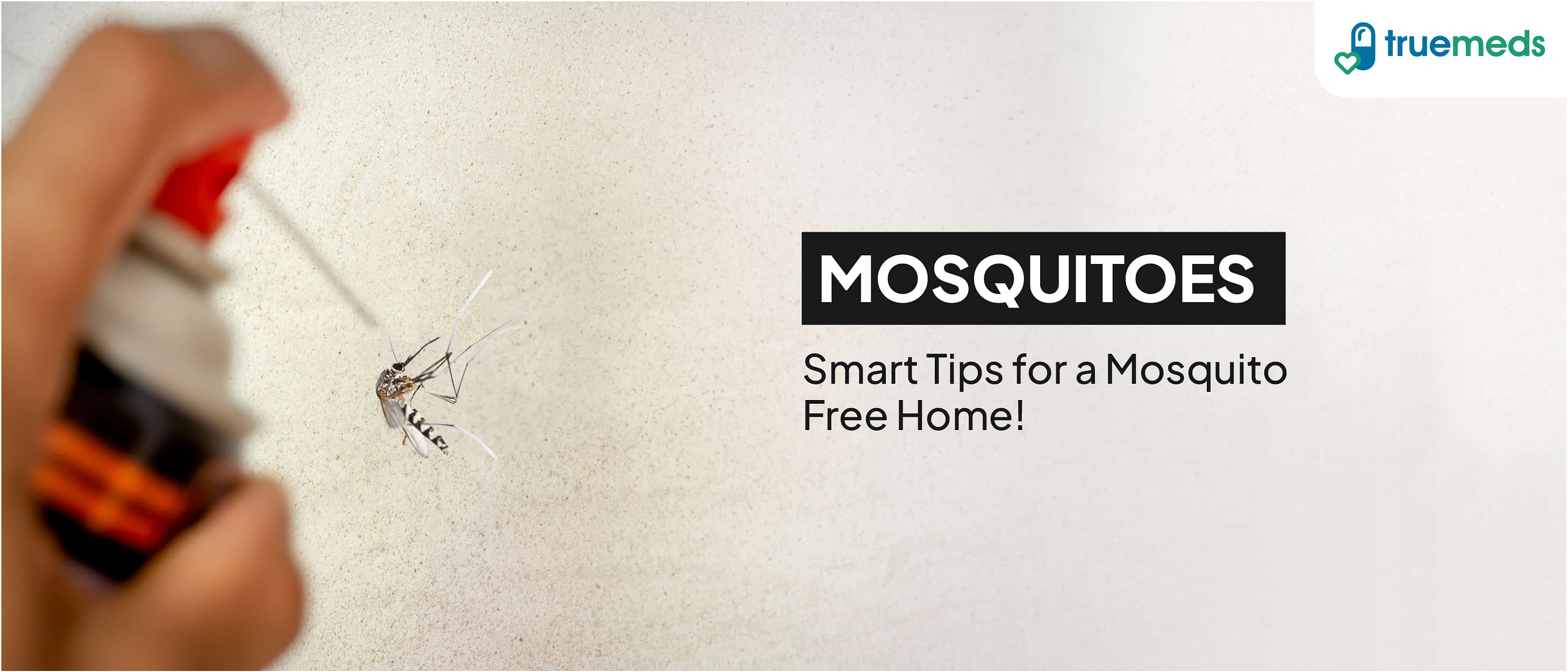
How to Get Rid of Mosquitoes at Home: Effective Prevention and Control Methods
Last updated on : 01 Dec, 2025
Read time : 6 min
Mosquitoes are more than just a nuisance; they are significant public health vectors capable of transmitting serious diseases such as malaria, dengue fever, Zika virus, and West Nile virus [1]. To effectively safeguard your family’s health and well-being, a comprehensive understanding of mosquito prevention and control measures is essential. This article, based on guidance from public health experts and organisations like the CDC and EPA, outlines scientifically supported and natural strategies to help you maintain a mosquito-free home and surrounding environment [2].
Let’s begin by examining evidence-based methods for controlling mosquito populations.
I. Eliminating Mosquito Breeding Sites
The most critical step in mosquito control is preventing them from reproducing. Mosquitoes lay their eggs in stagnant water; therefore, eliminating all sources of standing water is paramount [3].
- Remove Standing Water: Weekly, empty, or change the water from sources like flower vases, pet bowls, rain barrels, and potted plant saucers.
- Maintain Outdoor Features: Empty and clean outdoor features, such as bird baths and ornamental fountains, at least once a week.
- Inspect and Repair Leaks: Immediately inspect and repair any leaks from air conditioners, pipes, or faucets that create puddles or areas of excess moisture around the home.
- Clean Gutters and Drains: Regularly clean and maintain roof gutters, kitchen drains, and utility areas to ensure water flows freely and does not pool.
- Public Health Fact: Mosquitoes are responsible for infecting over 700 million people worldwide each year, contributing to more than 1 million deaths annually through diseases like malaria, dengue, and Zika [4]. This alarming statistic underscores the vital importance of consistent mosquito control.
II. Best Practices for Personal and Structural Protection
Implementing structural barriers and using personal protective measures are key to preventing mosquito bites.
A. Structural Barriers
- Install and Maintain Screens: Ensure that all windows and doors have intact, properly fitted window and door screens. Promptly repair any tears or holes.
- Cover Gaps: Seal gaps in walls, doors, and windows that could allow entry.
- Use Mosquito Netting: Place netting over baby carriers, strollers, and beds when indoors or outdoors.
B. Personal Protection
- Wear Protective Clothing: When outdoors, particularly during peak mosquito activity hours (dawn and dusk), wear long-sleeved shirts, long pants, and socks.
- Apply EPA-Registered Repellents: Apply EPA-registered mosquito repellents to exposed skin and clothing, strictly following the label directions. The most effective active ingredients approved by the EPA include DEET, Picaridin, Oil of Lemon Eucalyptus (OLE), and IR3535 [2].
III. Using Effective Repellent Remedies and Traps
While structural control is the most effective long-term strategy, certain natural remedies and physical traps can help repel mosquitoes and eliminate them indoors.
A. Scientifically Supported Natural Repellents
- Oil of Lemon Eucalyptus (OLE): This is the only plant-based repellent recommended by the CDC as an effective alternative to DEET [2]. When used in products with a high concentration of the active compound (p-menthane-3,8-diol or PMD), it can offer comparable protection to low concentrations of DEET [5].
- Citronella Oil and Related Essential Oils: Essential oils from citronella, lemongrass, clove, and cinnamon are recognised natural mosquito repellents. These can be used in diffusers or mixed with a carrier oil (e.g., sunflower or coconut oil) for topical application, but their protection time is often shorter than synthetic repellents [5].
- Neem Oil: A mixture of neem and coconut oil can act as a repellent, as neem contains compounds with insecticidal properties [5].
B. Indoor Mosquito Elimination
- Install Mosquito Traps or Bug Zappers: Utilise commercial mosquito traps, which often use CO2 or light to attract and capture/kill mosquitoes inside the home.
- Airflow and Ventilation: Keep your home clean, dry, and well-ventilated to reduce potential dark, humid resting spots for mosquitoes. Using fans indoors can also help deter mosquitoes [3].
- DIY Traps (As a Supplemental Measure): Simple traps using a 2-litre plastic bottle, hot water, brown sugar, and yeast can attract mosquitoes via the produced carbon dioxide.
IV. Why Mosquito Control is a Public Health Imperative
Effective mosquito control is crucial because it directly impacts public health and quality of life. By reducing the mosquito population, we significantly lower the risk of outbreaks of malaria, dengue fever, Zika, West Nile virus, and chikungunya, which can cause severe illness, long-term disability, and death. A consistent, informed effort to manage mosquitoes is a fundamental act of community health and personal safety.
Conclusion
Maintaining a mosquito-free home is an achievable public health goal that requires a multifaceted, consistent effort. The most effective long-term strategy is Source Reduction (eliminating standing water), supported by structural barriers (screens) and the judicious use of EPA-registered repellents [2]. By integrating these best practices with natural repellents like Oil of Lemon Eucalyptus, you can significantly reduce mosquito populations, improve your comfort, and, most importantly, protect against serious vector-borne diseases.
Disclaimer
This article is for informational and general public health awareness purposes only and should not be considered a substitute for professional medical advice, diagnosis, or treatment. Please consult a qualified healthcare professional (Primary Care Physician/MD/DO) or local public health authority for specific advice regarding vector-borne disease prevention, symptoms, or treatment.
Frequently Asked Questions (FAQs)
What is the best way to keep mosquitoes from biting me?
The best way is a combination of methods: wearing long sleeves and pants, removing standing water nearby, and applying an EPA-registered repellent containing ingredients like DEET or Oil of Lemon Eucalyptus to exposed skin [2].
What natural scents do mosquitoes hate?
Mosquitoes are repelled by scents from essential oils such as citronella, eucalyptus, lavender, lemongrass, and peppermint [5].
What is the most effective way to kill a mosquito in my room?
Using a mosquito trap (e.g., bug zapper) or a physical barrier (e.g., mosquito net) is the most effective way to eliminate mosquitoes indoors [3].
How can I quickly eliminate mosquitoes outside my home?
Quickly drain all standing water and, as a temporary measure, use an area repellent product like a citronella candle or an outdoor fan [2].
How do I keep my room mosquito-free?
Ensure screens are secure and intact, use air conditioning or a fan, and eliminate any water sources indoors (e.g., water in flower pot trays or old containers). Using a mosquito net over your bed is also highly effective [3].
References
[1] CDC. (2024, August 28). Mosquito-borne disease prevention. Retrieved November 2, 2025, from https://www.cdc.gov/mosquitoes/about/diseases/index.html
[2] CDC. (2024, August 28). Preventing mosquito bites. Retrieved November 2, 2025, from https://www.cdc.gov/mosquitoes/prevention/index.html
[3] Department of Health and Human Services. (n.d.). Mosquitoes – protect your home checklist. Better Health Channel. Retrieved November 2, 2025, from https://www.betterhealth.vic.gov.au/health/healthyliving/mosquitoes-protect-your-home-checklist
[4] World Health Organization. (n.d.). Vector-borne diseases. Retrieved November 2, 2025, from https://www.who.int/news-room/fact-sheets/detail/vector-borne-diseases
[5] Noguera-Gahona, M., Peña-Moreno, C., Quiñones-Sobarzo, N., Weinstein-Oppenheimer, C., Guerra-Zúñiga, M., & Collao-Ferrada, X. (2024). Repellents against Aedes aegypti bites: Synthetic and natural origins. Frontiers in Insect Science, 4. https://doi.org/10.3389/finsc.2024.1510857














Disclaimer
Our healthcare experts have carefully reviewed and compiled the information presented here to ensure accuracy and trustworthiness. It is important to note that this information serves as a general overview of the topic and is for informational purposes only. It is not intended to diagnose, prevent, or cure any health problem. This page does not establish a doctor-patient relationship, nor does it replace the advice or consultation of a registered medical practitioner. We recommend seeking guidance from your registered medical practitioner for any questions or concerns regarding your medical condition.
Popular Articles

Recommended Articles

Recent Articles





Company
About UsHealth ArticleHealth StoriesHealth LibraryDiseases & Health ConditionsAyurvedaAll MedicinesAll BrandsNeed HelpFAQSecuritySubscribe
Registered Office Address
Grievance Officer
Download Truemeds


Contact Us
Our customer representative team is available 7 days a week from 9 am - 9 pm.
v4.9.0

2025 - Truemeds | All rights reserved. Our content is for informational purposes only. See additional information.

Our Payment Partners




