

- Medicines
- Personal Care
- Skin Cream
- Sunscreen
- Face Wash
- Skin and Body Soap
- Acne Care
- Body Lotions
- Moisturising Lotion
- Moisturising Cream
- Mosquito Repellent
- Moisturising Gel
- Body Wash
- Hair Oils
- Hair Shampoo
- Hair Conditioners
- Hair Supplements
- Hair Colour
- Hair Serum
- Hair Mask
- Hair Solutions
- Baby Diapers and Wipes
- Baby Lotion and Moisturising Cream
- Baby Bath Essentials
- Baby Skin Care
- Baby and Infant Food
- Baby Healthcare
- Women Multivitamins
- Ovulation Test Kit and Women Intimate Care
- Sanitary Pads
- Nutritional Drinks
- Condoms
- Lubricants
- Massage Gels
- Personal Body Massagers
- Men Performance Booster
- Sexual Health Supplements
- Massage Oils
- Ayurveda
- Tooth Paste
- Mouth Ulcer Gel
- Mouthwash
- Toothache and Gum Pain
- Tooth Brush
- Gargle Solution
- Orthopaedic Supports
- Adult Diapers
- Footwear
- Mobility and Support Accessories
- Urinary Support and Care
- Health Conditions
- Bone and Joint Care
- Digestive Care
- Eye Care
- Pain Relief
- Smoking Cessation
- Liver Care
- Stomach Care
- Cold and Cough
- Heart Care
- Kidney Care
- Piles, Fissures & Fistula
- Respiratory Care
- Mental Wellness
- Derma Care
- Pre and Probiotics
- Acidity
- Gas
- Constipation
- Loose Motion/Diarrhoea
- Digestive Fibres
- Digestive Enzymes
- Eye Lubricant Drops
- Lens Solution
- Safety Eye Wear
- Eye Cream
- Eye Vitamins and Supplements
- Eye Drops
- Eye Ointment and Gel
- Nicotine Patch
- Nicotine Gum
- Nicotine Lozenges
- Cough Syrups
- Chest Rubs and Balms
- Nasal Spray
- Lozenges
- Inhalant Capsules
- Cold and Cough Tablets
- Vitamins & Supplements
- Diabetes Care
- Healthcare Devices
- Homeopathic Medicine
- Health Guide
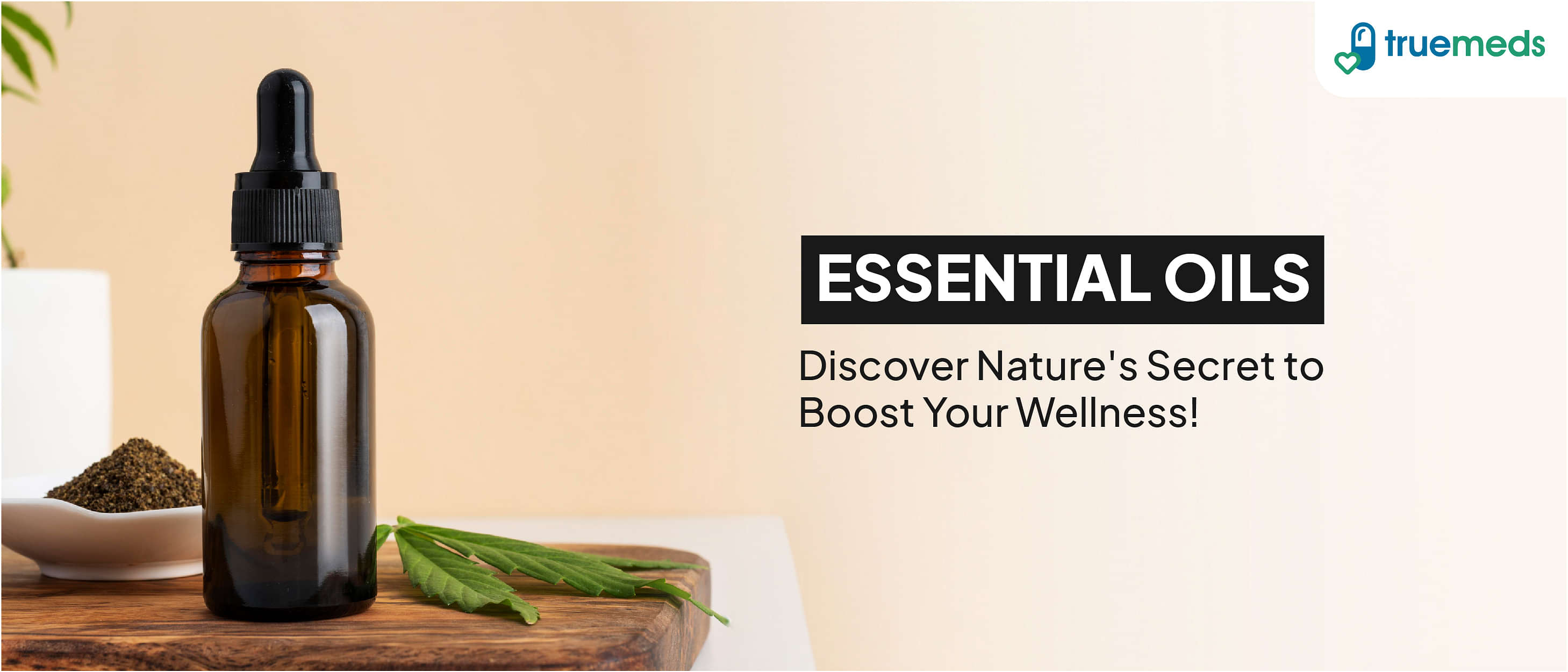
Health Benefits of Essential Oils: Uses, Safety & Precautions
Last updated on : 01 Dec, 2025
Read time : 11 min
Essential oils, concentrated botanical extracts, have been popularly utilized for their potential wide-ranging effects on well-being. From supporting a sense of calm and promoting better sleep to offering potential antimicrobial and anti-inflammatory properties, these potent oils offer a complementary approach to wellness. In this blog, we will explore some of the well-researched health benefits of essential oils and discuss how you can incorporate them into your daily routine safely and responsibly.
What are Essential Oils?
Essential oils are highly concentrated extracts obtained from various parts of plants, such as flowers, leaves, bark, and roots. These oils are extracted through methods like distillation or mechanical pressing, capturing the plant’s essence, including its scent and flavour. Each essential oil comprises a unique blend of aromatic compounds, giving it distinct potential therapeutic properties. These oils are commonly used in aromatherapy and topical applications to support physical, mental, and emotional well-being.
How do Essential Oils Work?
Essential oils interact with the body through two primary pathways: inhalation and skin absorption.
When inhaled, the aromatic molecules in essential oils stimulate the olfactory system, which is closely connected to the limbic system in the brain. This interaction can influence emotions, behaviours, and physiological functions such as breathing and heart rate [10].
When applied topically, essential oils penetrate the skin and enter the bloodstream, where their chemical components (such as terpenes and phenolics) may exert their effects on a local and systemic level [9]. The unique chemical composition of each oil, including compounds like terpenes and phenolics, contributes to its specific therapeutic benefits.
Common Essential Oils
Essential oils are derived from various parts of plants, each with unique properties and benefits. Let’s explore some of these popular essential oils in detail:
Peppermint
Peppermint oil, extracted from peppermint leaves, is known for its refreshing and invigorating scent. It is often used to potentially boost energy levels, aid digestion, and may help relieve headaches and nausea [1].
Lavender
Lavender oil, derived from lavender flowers, is renowned for its calming and relaxing properties. It is frequently used to help manage stress and anxiety, promote better sleep, and soothe skin conditions [2].
Sandalwood
Sandalwood oil obtained from the sandalwood tree is prized for its grounding and calming effects. It is used to calm nerves, improve focus, and promote relaxation [3].
Bergamot
Bergamot oil, extracted from the rind of bergamot oranges, is valued for its uplifting and calming properties. It is used to potentially reduce stress, improve mood, and may be used as a complementary treatment for skin conditions like eczema.
Rose
Rose oil, derived from rose flowers, is known for its emotional and mental benefits. Research suggests it may be used to improve mood, reduce anxiety, and enhance overall well-being [4].
Chamomile
Chamomile oil, extracted from chamomile flowers, is recognised for its soothing and calming effects. It is often used to promote relaxation and aid in sleep.
Ylang-Ylang
Ylang-ylang oil, obtained from the flowers of the ylang-ylang tree, is celebrated for its sweet and calming fragrance. It is used to potentially relieve headaches, nausea, and as a supportive remedy for skin conditions, as well as to promote emotional balance [5].
Tea Tree
Tea tree oil, derived from the leaves of the Melaleuca tree, is highly regarded for its documented antimicrobial properties. It is commonly used to support the body in fighting infections, and in the management of acne, athlete’s foot, and other skin conditions [6].
Jasmine
Jasmine oil, extracted from jasmine flowers, is known for its uplifting and calming effects. It is used to help with depression, and is sometimes used in complementary care for childbirth, and libido issues.
Lemon
Lemon oil, derived from lemon peels, is valued for its invigorating and refreshing properties. It is often used to aid in a sense of digestion, improve mood, and may offer relief from headaches [7]. These essential oils offer a wide range of health benefits when used correctly and safely.
Key Benefits of Essential Oils
Essential oils offer a range of health benefits when used correctly and safely. It is important to remember that they are used as complementary support and not as a primary treatment for medical conditions.
1. Support for Stress and Anxiety Relief
Essential oils such as lavender, bergamot, and rose are known for their anxiety-reducing effects. When inhaled, these oils can stimulate the limbic system, which influences emotions and behaviours, thereby potentially helping to alleviate stress and anxiety [10]. Incorporating these oils into your daily routine can promote a sense of calm and relaxation.
2. Potential for Improved Sleep Quality
Lavender oil, in particular, has been shown to improve sleep quality. A systematic review of studies found that smelling lavender oil can increase sleep time and enhance the overall quality of sleep, especially in older adults and those with dementia [2]. Using lavender oil in a diffuser or applying it topically before bedtime can help promote restful sleep.
3. Complementary Pain Relief for Headaches and Migraines
Peppermint, eucalyptus, and lavender oils are often used to complementarily relieve headaches and migraines. A specific study noted that applying a blend of peppermint oil and ethanol to the forehead and temples resulted in a significant reduction in tension headache pain [1]. These oils can be applied topically (always diluted) or inhaled to help ease pain and reduce symptoms. Massaging a blend of these oils onto the temples and forehead can provide supportive relief from tension headaches and migraines.
4. Anti-Inflammatory Potential
Many essential oils, including ginger, frankincense, and eucalyptus, possess demonstrated anti-inflammatory properties in laboratory settings [9]. These oils can potentially help reduce inflammation and alleviate symptoms related to conditions such as arthritis and other inflammatory diseases when used topically and safely [9]. Applying these oils topically or adding them to a warm bath can help soothe sore muscles and joints.
5. Documented Antibiotic and Antimicrobial Properties
Essential oils like tea tree, oregano, and lemon have strong antimicrobial properties, making them effective against certain bacterial, viral, and fungal infections in laboratory and specific clinical settings [6, 7]. They are commonly used to treat acne, athlete’s foot, and other minor skin infections. Diluting these oils and applying them topically can help combat harmful microbes and promote healthy skin.
How to Use Essential Oils Safely
The efficacy of essential oils largely depends on the method of application and proper dilution. Here is how you can use essential oils:
- Aromatherapy: Inhale the essential oils using a diffuser, directly from the bottle, or by adding a few drops to a handkerchief or pillowcase.
- Topical application: Always dilute essential oils with a suitable carrier oil, such as coconut or jojoba oil, before applying to the skin to avoid irritation. A typical safe dilution ratio for adults is 1-5% (e.g., 3-5 drops per teaspoon of carrier oil).
- Bath: Add a few drops of essential oil mixed with a dispersant (like a tablespoon of carrier oil or milk) to your bath water for a relaxing and skin-nourishing experience. Adding oils directly to water causes them to float undiluted, increasing the risk of skin irritation.
- Massage: Mix essential oils with a carrier oil for use during massage therapy to enhance relaxation and reduce stress.
Safety and Side Effects of Essential Oils
While essential oils offer numerous potential health benefits, it is crucial to use them safely and be aware of potential side effects:
- Dilution is Mandatory: Never apply undiluted (“neat”) essential oils directly to the skin, as this is the most common cause of skin irritation, burns, and sensitization. Always dilute essential oils with a carrier oil to prevent skin irritation and other adverse reactions.
- Hormonal Concerns: Some oils, such as lavender and tea tree oil, may act as endocrine disruptors and potentially disrupt hormone levels, particularly in prepubescent boys with repeated, long-term use [10].
- Toxicity and Children: Tea tree oil and some others can be neurotoxic and should be used with extreme caution around small children or animals.
- Patch Test: Conduct a patch test (applying a small, diluted amount to an inconspicuous area of skin) before using any essential oil to check for allergic reactions or sensitivities.
- Ingestion Danger: Never ingest essential oils unless under the explicit, individual guidance of a qualified and trained clinical aromatherapist or healthcare provider. Ingestion can cause serious side effects, including gastrointestinal irritation, liver damage, loss of muscle control, and coma [10].
- Vulnerable Groups: Pregnant individuals, those who are breastfeeding, individuals with asthma or epilepsy, and those with young children should always exercise caution and consult a healthcare provider or a certified aromatherapist before using essential oils.
Conclusion
Essential oils have been shown to provide a wide array of potential health benefits, from reducing stress and improving sleep quality to fighting infections and supporting digestive health. However, it is essential to use these powerful plant extracts responsibly, adhering to proper dilution guidelines, performing patch tests, and avoiding ingestion. Given their potency, they should be viewed as a powerful complementary therapy, not a substitute for conventional medical treatment. As with any natural remedy, it is always advisable to consult with healthcare professionals before using essential oils, especially if you have pre-existing health conditions or are pregnant.
Disclaimer
This article is for informational purposes only and should not be considered medical advice. Please consult a qualified healthcare professional before starting or changing any treatment.
Frequently Asked Questions (FAQs)
What are essential oils used for?
Essential oils are used for various purposes, including stress reduction, improving sleep quality, complementary support for fungal infections, boosting mood, easing minor inflammation, and enhancing the health of skin and hair.
How to use 100% essential oils?
100% essential oils should always be diluted in a carrier oil (typically at a 1–5% concentration for adults) before application to avoid skin irritation. They can also be used in aromatherapy via diffusion or direct inhalation.
Is it possible to make essential oils at home?
Essential oils are typically made through large-scale, controlled processes like steam distillation or mechanical methods like cold pressing. For home use, you can attempt cold pressing for citrus oils, but distillation is typically beyond the capabilities of most home setups. Homemade extracts often lack the concentration and quality of commercial essential oils and should not be used in the same manner.
What are the potential side effects of essential oils?
Side effects can include skin irritation, allergic reactions, hormonal imbalances, photosensitivity (with some citrus oils), and neurological issues if not used correctly. Some oils can be neurotoxic or cause adverse reactions if ingested.
References
[1] Mughal, S. S. (2022). Peppermint oil, its useful, and adverse effects on human health: A review. In Authorea, Inc. https://doi.org/10.22541/au.166401168.86712355/v1
[2] Popova-Dobreva, D. (2023). THERAPEUTIC USE OF LAVENDER OIL. Trakia Journal of Sciences, 21(Suppl. 1), 30–35. https://doi.org/10.15547/tjs.2023.s.01.006
[3] Boruah, T., Parashar, P., Ujir, C., Dey, S. K., Nayik, G. A., Ansari, M. J., & Nejad, A. S. M. (2023). Sandalwood essential oil. In G. A. Nayik & M. J. Ansari (Eds.), Essential Oils (pp. 121–145). Elsevier. https://www.sciencedirect.com/science/article/abs/pii/B9780323917407000037
[4] Katekar, V. P., Rao, A. B., & Sardeshpande, V. R. (2022). Review of the rose essential oil extraction by hydrodistillation: An investigation for the optimum operating condition for maximum yield. Sustainable Chemistry and Pharmacy, 29(100783), 100783. https://doi.org/10.1016/j.scp.2022.100783
[5] Mrani, S. A., Zejli, H., Azzouni, D., Fadili, D., Alanazi, M. M., Hassane, S. O. S., Sabbahi, R., Kabra, A., Moussaoui, A. E., Hammouti, B., & Taleb, M. (2024). Chemical composition, antioxidant, antibacterial, and hemolytic properties of ylang-ylang (Cananga odorata) essential oil: Potential therapeutic applications in dermatology. Pharmaceuticals (Basel, Switzerland), 17(10), 1376. https://doi.org/10.3390/ph17101376
[6] Kairey, L., Agnew, T., Bowles, E. J., Barkla, B. J., Wardle, J., & Lauche, R. (2023). Efficacy and safety of Melaleuca alternifolia (tea tree) oil for human health—A systematic review of randomized controlled trials. Frontiers in Pharmacology, 14. https://doi.org/10.3389/fphar.2023.1116077
[7] Gonçalves, S., Castro, J., Almeida, A., Monteiro, M., Rodrigues, T., Fernandes, R., & Matos, R. S. (2025). A systematic review of the therapeutic properties of lemon essential oil. Advances in Integrative Medicine, 12(3), 100433. https://www.sciencedirect.com/science/article/pii/S2212958824001356
[8] Osaili, T. M., Dhanasekaran, D. K., Zeb, F., Faris, M. E., Naja, F., Radwan, H., Cheikh Ismail, L., Hasan, H., Hashim, M., & Obaid, R. S. (2023). A status review on health-promoting properties and global regulation of essential oils. Molecules (Basel, Switzerland), 28(4), 1809. https://doi.org/10.3390/molecules28041809
[9] Pezantes-Orellana, C., German Bermúdez, F., Matías De la Cruz, C., Montalvo, J. L., & Orellana-Manzano, A. (2024). Essential oils: a systematic review on revolutionizing health, nutrition, and omics for optimal well-being. Frontiers in Medicine, 11, 1337785. https://doi.org/10.3389/fmed.2024.1337785
[10] Ramsey, J. T., Shropshire, B. C., Nagy, T. R., Chambers, K. D., Li, Y., & Korach, K. S. (2020). Essential oils and health. The Yale Journal of Biology and Medicine, 93(2), 291–305. https://pubmed.ncbi.nlm.nih.gov/32607090/















Disclaimer
Our healthcare experts have carefully reviewed and compiled the information presented here to ensure accuracy and trustworthiness. It is important to note that this information serves as a general overview of the topic and is for informational purposes only. It is not intended to diagnose, prevent, or cure any health problem. This page does not establish a doctor-patient relationship, nor does it replace the advice or consultation of a registered medical practitioner. We recommend seeking guidance from your registered medical practitioner for any questions or concerns regarding your medical condition.
Recent Articles






Company
About UsHealth ArticleHealth StoriesHealth LibraryDiseases & Health ConditionsAyurvedaUnderstanding Generic MedicinesAll MedicinesAll BrandsNeed HelpFAQSecuritySavings CalculatorSubscribe
Registered Office Address
Grievance Officer
Download Truemeds


Contact Us
Our customer representative team is available 7 days a week from 9 am - 9 pm.
v4.16.1

2026 - Truemeds | All rights reserved. Our content is for informational purposes only. See additional information.

Our Payment Partners




