

- Medicines
- Personal Care
- Skin Cream
- Sunscreen
- Face Wash
- Skin and Body Soap
- Acne Care
- Body Lotions
- Moisturising Lotion
- Moisturising Cream
- Mosquito Repellent
- Moisturising Gel
- Body Wash
- Hair Oils
- Hair Shampoo
- Hair Conditioners
- Hair Supplements
- Hair Colour
- Hair Serum
- Hair Mask
- Hair Solutions
- Baby Diapers and Wipes
- Baby Lotion and Moisturising Cream
- Baby Bath Essentials
- Baby Skin Care
- Baby and Infant Food
- Baby Healthcare
- Women Multivitamins
- Ovulation Test Kit and Women Intimate Care
- Sanitary Pads
- Nutritional Drinks
- Condoms
- Lubricants
- Massage Gels
- Personal Body Massagers
- Men Performance Booster
- Sexual Health Supplements
- Massage Oils
- Ayurveda
- Tooth Paste
- Mouth Ulcer Gel
- Mouthwash
- Toothache and Gum Pain
- Tooth Brush
- Gargle Solution
- Orthopaedic Supports
- Adult Diapers
- Footwear
- Mobility and Support Accessories
- Urinary Support and Care
- Health Conditions
- Bone and Joint Care
- Digestive Care
- Eye Care
- Pain Relief
- Smoking Cessation
- Liver Care
- Stomach Care
- Cold and Cough
- Heart Care
- Kidney Care
- Piles, Fissures & Fistula
- Respiratory Care
- Mental Wellness
- Derma Care
- Pre and Probiotics
- Acidity
- Gas
- Constipation
- Loose Motion/Diarrhoea
- Digestive Fibres
- Digestive Enzymes
- Eye Lubricant Drops
- Lens Solution
- Safety Eye Wear
- Eye Cream
- Eye Vitamins and Supplements
- Eye Drops
- Eye Ointment and Gel
- Nicotine Patch
- Nicotine Gum
- Nicotine Lozenges
- Cough Syrups
- Chest Rubs and Balms
- Nasal Spray
- Lozenges
- Inhalant Capsules
- Cold and Cough Tablets
- Vitamins & Supplements
- Diabetes Care
- Healthcare Devices
- Homeopathic Medicine
- Health Guide
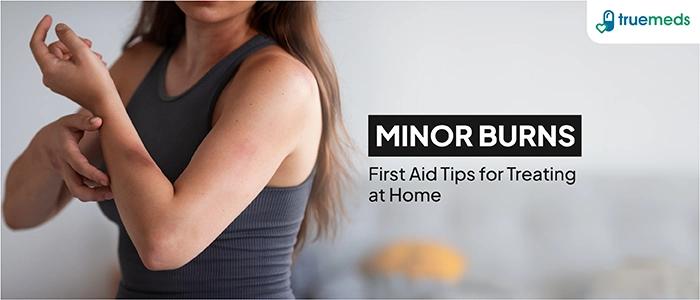
First Aid for Minor Burns: 10 Essential Steps for Home Treatment
Last updated on : 01 Dec, 2025
Read time : 8 min
Burns are a surprisingly common household injury, ranging in severity from minor discomfort to a medical emergency. For minor burns, knowing the correct and immediate first aid steps is critical to minimize damage, relieve pain, and promote effective healing [1]. Simple interventions—such as cooling the area under running water and applying an appropriate dressing—can make a significant difference.
This guide, based on established medical protocols, outlines 10 evidence-based steps for safely treating minor burns at home. However, it is essential to first accurately assess the burn’s severity before attempting any home treatment.
Understanding Minor Burns: Severity Assessment
The first and most crucial step is determining the burn’s degree. This assessment guides the decision of whether home treatment is appropriate or if immediate professional medical help is required.
|
Burn Type |
Description |
Home Treatment Feasibility |
| First-Degree (Minor) | Affects only the outer layer of skin (epidermis). Causes redness, pain, and mild swelling. Skin does not blister. | Treatable at home. |
| Second-Degree | Damages the first and second layers of skin (epidermis and dermis). Causes intense pain, redness, and blistering. | Treatable at home only if the burn is small (generally under 2 to 3 inches) and not on a critical area [2]. |
| Third-Degree (Major) | Extends through all layers of skin and underlying tissue. Skin may look white, brown, black, or leathery. It may be painless due to nerve damage [1]. | EMERGENCY—Seek immediate medical care. |
When to Seek Immediate Medical Attention
Home treatment is only suitable for first-degree burns and very small, uncomplicated second-degree burns. You must seek immediate professional medical care (Emergency Room or Burn Center) if any of the following apply:
- The burn is Third-Degree (looks white, black, or leathery).
- The burn is larger than 2 to 3 inches in diameter or larger than the victim’s palm [2].
- The burn is on a critical area, including the face, hands, feet, major joints, groin, or genitals.
- The burn was caused by chemicals or electricity (even if the visible injury is small).
- The victim is an infant, elderly, or has an underlying medical condition (like diabetes or an immunocompromised state).
- The victim shows signs of smoke inhalation (coughing, hoarse voice, difficulty breathing).
If you are unsure about the severity, always err on the side of caution and seek medical help promptly.
10 First Aid Tips to Treat Minor Burns
Quick and correct treatment can significantly reduce pain and speed up the healing process for minor burns.
1. Cool the Burn Immediately
The most crucial first step is cooling the burn to limit the depth of tissue damage.
- Keep the burned area under cool, running tap water for 10 to 20 minutes, or until the pain significantly lessens [1], [2].
- Do not use ice or extremely cold water, as this can restrict blood flow and potentially cause further tissue damage (frostbite) [1].
2. Remove Jewellery and Clothing
Gently remove any tight items like rings, bracelets, watches, or clothing from the burned area immediately before swelling begins.
Do not attempt to remove clothing that is stuck to the burn. Leave it in place and let medical personnel handle its removal.
3. Cover the Burn with a Sterile Dressing
- After cooling, cover the burn with a sterile, non-adhesive gauze bandage or a clean, non-fluffy cloth [3]. A piece of plastic cling film (plastic wrap), applied loosely, can also serve as a sterile covering in a pinch.
- This covering protects the burn from dirt and bacteria, minimizing the risk of infection.
4. Protect Any Blisters
- Avoid breaking any blisters that form, as the intact skin acts as a natural, sterile barrier against infection.
- If a small blister does break, gently clean the area with mild soap and water and apply an over-the-counter antibiotic ointment to the area before re-dressing [2].
5. Elevate the Burned Area
- If possible and comfortable, gently elevate the burned limb (e.g., an arm or leg) above the level of the heart.
- This simple action helps to reduce swelling and discomfort.
6. Use Over-the-Counter Pain Relief
- For pain management, you may take non-steroidal anti-inflammatory drugs (NSAIDs) like ibuprofen or acetaminophen (paracetamol), if not contraindicated by other medical conditions.
- Always ensure you follow the manufacturer’s instructions on dosage and frequency.
7. Moisturize the Healing Skin
- Once the initial heat is out and the burn is no longer actively painful (usually after the first 24-48 hours), you can apply a soothing, water-based moisturizer like aloe vera gel or petroleum jelly [2].
- This step helps to keep the skin supple, prevent drying, and aid the healing process.
8. Avoid Unapproved “Home Remedies”
- Never apply substances like butter, oils, creams (other than a physician-recommended antibiotic ointment), or toothpaste to a fresh burn [3].
- These greasy or thick substances can trap heat in the skin, intensifying the damage and significantly increasing the risk of bacterial infection.
9. Protect from Sun Exposure
- As the burn heals, the new skin will be extremely sensitive to ultraviolet (UV) radiation.
- Protect the area from direct sunlight for at least a year using clothing, bandages, or a broad-spectrum sunscreen with an SPF of 30 or higher to prevent hyperpigmentation and further damage.
10. Watch Closely for Signs of Infection
- Monitor the wound daily for signs that healing is being complicated by infection.
- Be alert for symptoms, including heightened or increasing pain, spreading redness outside the burned area, excessive swelling, fever, or the presence of pus/oozing from the wound [2]. If these symptoms occur, seek medical attention immediately.
Conclusion
Possessing the knowledge to accurately assess and treat a minor burn is an essential life skill for effective first aid. By following medically sound protocols—especially the immediate and sustained cooling of the burn—you can significantly reduce pain, minimize tissue damage, and promote a faster recovery. It is equally important to recognise the definitive signs that necessitate professional medical care, particularly for deep burns, large surface areas, or burns in sensitive anatomical locations. Always prioritize safety and do not hesitate to consult a healthcare professional when the severity is in doubt.
FAQs
Can I use ice on a burn to relieve pain?
No. For first aid, you must avoid using ice or extremely cold water [1]. The rapid, extreme cold can restrict blood flow and potentially cause further damage to the skin tissue. Cool, running tap water for 10-20 minutes is the medically recommended choice.
Should I apply butter or oil to a burn?
No, absolutely not. You should never apply greasy substances like butter, oils, or creams to a fresh burn. They can trap heat in the skin, intensify the damage, and significantly increase the risk of bacterial infection [3].
What type of bandage should I use for a minor burn?
Use a sterile, non-stick gauze bandage or a piece of plastic cling film (plastic wrap) placed loosely over the wound. This prevents the dressing from sticking to the burn, reducing pain and the risk of infection. Avoid cotton wool or highly adhesive plasters [3].
How do I know if a burn requires medical attention?
Seek medical attention if the burn is deep (leathery texture), larger than your palm [2], on the face/hands/feet/major joints, or if it was caused by chemicals or electricity. Also, consult a doctor if you are concerned about any signs of infection (increased pain, pus, fever).
Can I pop blisters that form on a burn?
No, popping blisters should be avoided [2]. The blister’s dome of skin provides a natural, sterile barrier that is crucial for preventing infection in the underlying tissue.
What are the signs of an infected burn?
Signs of an infected burn include increased pain, spreading redness outside the burn area, excessive swelling, fever, or the presence of pus/oozing from the wound. If these occur, contact your doctor promptly.
Disclaimer
This article is for informational purposes only and is not a substitute for professional medical advice, diagnosis, or treatment. As a platform focused on wellness and health awareness, we urge you to always seek the advice of a qualified healthcare provider or primary care physician with any questions you may have regarding a medical condition. Please consult a healthcare provider before beginning any new wellness practice or modifying your treatment, especially if you have an existing medical condition or are on medication.
References
[1] Hudspith, J., & Rayatt, S. (2004). First Aid and Treatment of Minor Burns. BMJ, 328(7454), 1487–1489. https://doi.org/10.1136/bmj.328.7454.1487
[2] Hyland, E. J., Connolly, S. M., Fox, J. A., & Harvey, J. G. (2015). Minor burn management: potions and lotions. Australian Prescriber, 38(4), 124–127. https://doi.org/10.18773/austprescr.2015.041
[3] Treat minor burns effectively. (2004). BMJ: British Medical Journal, 328(7454), 0. https://pmc.ncbi.nlm.nih.gov/articles/PMC428498/














Disclaimer
Our healthcare experts have carefully reviewed and compiled the information presented here to ensure accuracy and trustworthiness. It is important to note that this information serves as a general overview of the topic and is for informational purposes only. It is not intended to diagnose, prevent, or cure any health problem. This page does not establish a doctor-patient relationship, nor does it replace the advice or consultation of a registered medical practitioner. We recommend seeking guidance from your registered medical practitioner for any questions or concerns regarding your medical condition.
Popular Articles
Recommended Articles

Recent Articles








Company
About UsHealth ArticleHealth StoriesHealth LibraryDiseases & Health ConditionsAyurvedaAll MedicinesAll BrandsNeed HelpFAQSecuritySubscribe
Registered Office Address
Grievance Officer
Download Truemeds


Contact Us
Our customer representative team is available 7 days a week from 9 am - 9 pm.
v4.8.2

2025 - Truemeds | All rights reserved. Our content is for informational purposes only. See additional information.
Our Payment Partners