

- Medicines
- Personal Care
- Skin Cream
- Sunscreen
- Face Wash
- Skin and Body Soap
- Acne Care
- Body Lotions
- Moisturising Lotion
- Moisturising Cream
- Mosquito Repellent
- Moisturising Gel
- Body Wash
- Hair Oils
- Hair Shampoo
- Hair Conditioners
- Hair Supplements
- Hair Colour
- Hair Serum
- Hair Mask
- Hair Solutions
- Baby Diapers and Wipes
- Baby Lotion and Moisturising Cream
- Baby Bath Essentials
- Baby Skin Care
- Baby and Infant Food
- Baby Healthcare
- Women Multivitamins
- Ovulation Test Kit and Women Intimate Care
- Sanitary Pads
- Nutritional Drinks
- Condoms
- Lubricants
- Massage Gels
- Personal Body Massagers
- Men Performance Booster
- Sexual Health Supplements
- Massage Oils
- Ayurveda
- Tooth Paste
- Mouth Ulcer Gel
- Mouthwash
- Toothache and Gum Pain
- Tooth Brush
- Gargle Solution
- Orthopaedic Supports
- Adult Diapers
- Footwear
- Mobility and Support Accessories
- Urinary Support and Care
- Health Conditions
- Bone and Joint Care
- Digestive Care
- Eye Care
- Pain Relief
- Smoking Cessation
- Liver Care
- Stomach Care
- Cold and Cough
- Heart Care
- Kidney Care
- Piles, Fissures & Fistula
- Respiratory Care
- Mental Wellness
- Derma Care
- Pre and Probiotics
- Acidity
- Gas
- Constipation
- Loose Motion/Diarrhoea
- Digestive Fibres
- Digestive Enzymes
- Eye Lubricant Drops
- Lens Solution
- Safety Eye Wear
- Eye Cream
- Eye Vitamins and Supplements
- Eye Drops
- Eye Ointment and Gel
- Nicotine Patch
- Nicotine Gum
- Nicotine Lozenges
- Cough Syrups
- Chest Rubs and Balms
- Nasal Spray
- Lozenges
- Inhalant Capsules
- Cold and Cough Tablets
- Vitamins & Supplements
- Diabetes Care
- Healthcare Devices
- Homeopathic Medicine
- Health Guide
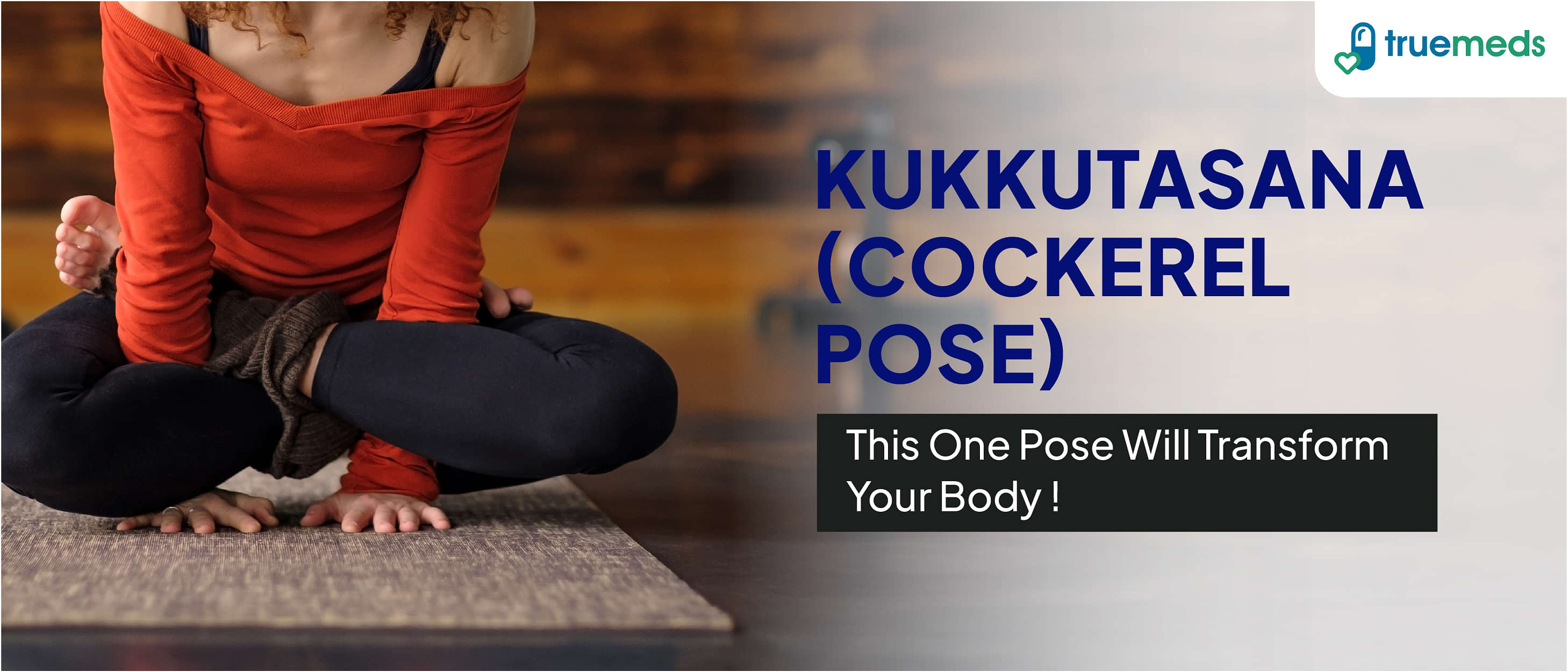
Benefits of Kukkutasana (Cockerel Pose) and How to Do It
Last updated on : 30 Nov, 2025
Read time : 7 min
Kukkutasana, also known as the Cockerel Pose, is an advanced yoga asana that offers numerous benefits for both the body and mind. This challenging pose is a powerful addition to any sustained yoga practice, helping practitioners safely enhance their physical strength, flexibility, and focus.
In this blog, we will explore the potential benefits of Kukkutasana and provide a step-by-step guide on how to perform this invigorating pose safely and effectively. It is essential to practice this pose under the guidance of a certified yoga instructor.
What is Kukkutasana?
Kukkutasana, derived from the Sanskrit words ‘Kukkut’ (meaning cock or rooster) and ‘Asana’ (meaning pose), is an advanced yoga posture commonly found in sequences such as Ashtanga Yoga, Iyengar Yoga, Core Yoga, and Hip Opening Yoga. This pose involves balancing the body on the hands while in a lotus position, engaging the core, pelvic floor muscles, and upper body. Mastering Kukkutasana requires significant foundational strength, hip flexibility, and patience, making it an ideal challenge for those seeking to deepen their yoga practice and reap its numerous benefits.
How to Do Kukkutasana?
If you’re ready to attempt Kukkutasana, follow this step-by-step guide to help you get into the pose safely: Ensure you have mastered Padmasana and have sufficiently warmed up your wrists, hips, and shoulders before attempting.
- Begin in Lotus Pose (Padmasana) by crossing your legs so that your feet rest on the opposite thighs. Keep your spine straight and avoid hunching.
- Thread your hands between your calves and thighs, ensuring that your elbows remain above your legs.
- Spread your fingers wide and place your palms firmly on the ground, with your fingers pointing forward.
- Inhale deeply, engage your core and pelvic floor muscles and lean forward. Transfer the weight of your body to your wrists and arms, and lift your hips off the floor.
- Steady your body, keeping your gaze focused a few feet in front of you or at the tip of your nose. Ensure your neck and back are slightly leaned forward to maintain balance and stability.
- Hold the pose for a few breaths, breathing normally, and then slowly lower your hips back to the mat with an exhale.
- Interchange the position of your legs in Lotus Pose and practise the pose again.
Benefits of Kukkutasana
Kukkutasana, or Cockerel Pose, offers a myriad of benefits for those with a consistent yoga practice. This challenging yet rewarding yoga pose is known to strengthen the upper body, may aid digestion, and can help to tone the arms, which ultimately supports overall physical function.
Let’s take a closer look at some of its key advantages:
- Strengthens Your Upper Body and Core: Kukkutasana strengthens the arms, chest, shoulders, and core by supporting your body weight on your arms. This engagement can help improve muscle tone and circulation, thereby potentially reducing the risk of injury. Regular practice builds upper body strength, preparing you for more challenging yoga poses that require greater arm and shoulder strength.
- May Support Digestive Function: Kukkutasana may enhance digestion by applying gentle pressure to the stomach and intestines, promoting movement through the gastrointestinal tract [1]. This gentle stimulation is believed to support digestive enzymes, aiding in the absorption of nutrients and promoting smoother digestion. The pose also helps relieve bloating and discomfort, making it a beneficial addition to a yoga routine for improving digestive health.
- Tones Biceps and Triceps: Kukkutasana targets the biceps and triceps by supporting body weight on the arms. This continuous engagement strengthens and tones the muscles, improving muscle definition. Regular practice enhances arm strength and circulation, helping you achieve more toned and defined arms over time.
- Enhances Circulation and Focus: Kukkutasana supports healthy blood flow by improving circulation and opening the chest. As the pose strengthens the upper body, it encourages healthy blood flow, which is beneficial for cardiovascular health. Regular practice contributes to better physical coordination and overall body awareness.
Did you know? Kukkutasana engages over 20 muscles at once, including the rectus abdominis, deltoids, and triceps, making it a powerful compound posture[2].
This advanced yoga pose not only builds strength in the arms, core, and legs but also enhances flexibility and balance. The deep hip flexion and shoulder stability required challenge both the body and mind, making it a full-body workout that promotes focus and concentration. It’s a remarkable way to strengthen and stretch while improving your overall physical awareness.
Other Benefits of Kukkutasana
Beyond its core benefits, Kukkutasana offers a range of additional benefits that contribute to both mental and physical well-being:
- Strengthens the muscles in the shoulders, arms, chest and stomach
- Promotes smooth blood flow and coordination between the ears, eyes and brain (Enhances neurological coordination) [1]
- Massages the digestive organs, improving digestion and enzyme production
- May help to reduce stress and anxiety, potentially improving sleep quality by calming the nervous system.
- Develops concentration, balance and overall physical stability
Is there any risk associated with Kukkutasana?
While this asana can be highly beneficial, it’s essential for everyone, especially those with pre-existing conditions, to be careful. These include:
- Any muscle strains, tissue damage, bone injuries or joint trauma in the knees, hips, wrists, or shoulders.
- Higher risk of cardiac events for those with uncontrolled or severe heart conditions or multiple cardiovascular risk factors. Consult a cardiologist before attempting.
- Avoid Kukkutasana if you have high blood pressure, back pain, hernia, gastric ulcers, recent abdominal surgery, severe heart issues or problems with hands, arms, shoulders, wrists or spleen.
Conclusion
Kukkutasana, also known as Cockerel Pose, is an advanced yoga posture that strengthens the upper body, improves circulation, may aid digestion, can help reduce stress, and enhances balance. However, individuals with certain health conditions or injuries should approach this pose with extreme caution. Regular practice of Kukkutasana, safely guided by a qualified and certified teacher and, if necessary, after consulting a healthcare professional, can lead to enhanced overall well-being.
Disclaimer: This article is for informational purposes only and should not be considered medical advice. It is not a substitute for professional medical assessment, diagnosis, or treatment. Please consult a qualified healthcare professional or a certified yoga therapist before starting or changing any treatment or exercise regimen.
Frequently Asked Questions(FAQs)
How to do Kukkutasana step by step?
To do Kukkutasana, sit in Padmasana, insert forearms between thighs and calves, press palms into the floor, lift your body, balance on your hands, maintain a straight spine, breathe naturally, and lower down slowly to return to the starting position.
What are the limitations of Kukkutasana?
Limitations include avoiding the pose if you have high blood pressure, heart or lung problems, back pain, hernia, prolapse, gastric ulcers, recent abdominal surgery, severe knee injuries, weak wrists or elbows, or are pregnant. It is also not recommended for beginners without expert supervision.
What are the precautions for Kukkutasana?
Precautions include practising on an empty stomach and avoiding the pose if you have sciatica, lower back pain, knee injuries, or conditions like osteoporosis, hernia, prolapse, gastric ulcers, or high blood pressure. Also, avoid it if you have a weak or injured wrist, elbow, or shoulder. Ensure proper hip opening and avoid internal rotation at the knee joint. Always listen to your body and stop if you feel sharp pain.
References
[1] Gangwal, J., Kumar, S., & Jadoun, S. (2019). Anatomical exploration of “Kukkutasana.” International Journal of Trend in Scientific Research and Development, 3(5), 28018. https://www.ijtsrd.com/humanities-and-the-arts/other/28018/anatomical-exploration-of-%E2%80%9Ckukkutasana%E2%80%9D/dr-somlata-jadoun
[2] Saraswati, S. S. (2013). Asana pranayama mudra bandha. Munger: Yoga Publications Trust. https://sanatanayogsandesh.com/wp-content/uploads/2020/04/Asana-Pranayama-Mudra-Bandha.pdf













Disclaimer
Our healthcare experts have carefully reviewed and compiled the information presented here to ensure accuracy and trustworthiness. It is important to note that this information serves as a general overview of the topic and is for informational purposes only. It is not intended to diagnose, prevent, or cure any health problem. This page does not establish a doctor-patient relationship, nor does it replace the advice or consultation of a registered medical practitioner. We recommend seeking guidance from your registered medical practitioner for any questions or concerns regarding your medical condition.
Popular Articles


Recommended Articles


Recent Articles







Company
About UsHealth ArticleHealth StoriesDiseases & Health ConditionsAyurvedaAll MedicinesAll BrandsNeed HelpFAQSecuritySubscribe
Registered Office Address
Grievance Officer
Download Truemeds


Contact Us
Our customer representative team is available 7 days a week from 9 am - 9 pm.
v4.8.0

2025 - Truemeds | All rights reserved. Our content is for informational purposes only. See additional information.

Our Payment Partners




