
Dark lips can be a common concern for many individuals, affecting their self-confidence and overall appearance. This condition may be caused by various factors, such as sun exposure, smoking, and dehydration, which can lead to hyperpigmentation and darkening of the lips[1]. While there are numerous cosmetic products available to address this issue, natural remedies offer a gentle alternative. By understanding the root causes and employing simple natural remedies for black lips, you can work towards lightening your lips and restoring their natural, healthy appearance.
This article is for informational purposes and does not replace professional medical advice. Consult a dermatologist before starting any new treatment.
What causes dark lips?
Several factors can contribute to the development of dark lips, including:
- Sun exposure: Prolonged exposure to ultraviolet (UV) rays stimulates melanin production in the skin, leading to hyperpigmentation and darker lips over time. Without proper protection, lips can develop uneven pigmentation[1].
- Smoking: The nicotine and other harmful chemicals found in tobacco products can cause discolouration and affect the blood vessels in the lips[2]. Chronic exposure to tobacco smoke may trigger increased melanin production, often resulting in an uneven, blotchy appearance.
- Dehydration: When the lips lack adequate moisture, the skin can become dry and dull, which may make the lips appear darker than usual[3]. Lips have a thinner outer layer and lack oil-producing glands, making them more susceptible to dryness[4].
- Medications: Certain prescription medicines, such as antipsychotics and chemotherapy agents, may have side effects that include lip discolouration[5]. If you suspect your medication is causing lip discolouration, do not stop taking it without consulting your prescribing doctor.
- Vitamin deficiencies: A lack of essential vitamins, particularly vitamin B12, can negatively affect skin health and may contribute to dark lips[6]. If a nutritional deficiency is suspected, consult a doctor for blood tests and appropriate supplementation rather than relying solely on topical treatments.
By addressing these underlying causes and incorporating natural remedies into your daily routine, you can work towards lightening your dark lips.
Top natural remedies to lighten dark lips
To naturally lighten dark lips and achieve a more even appearance, several home remedies can be incorporated into your daily skincare routine.
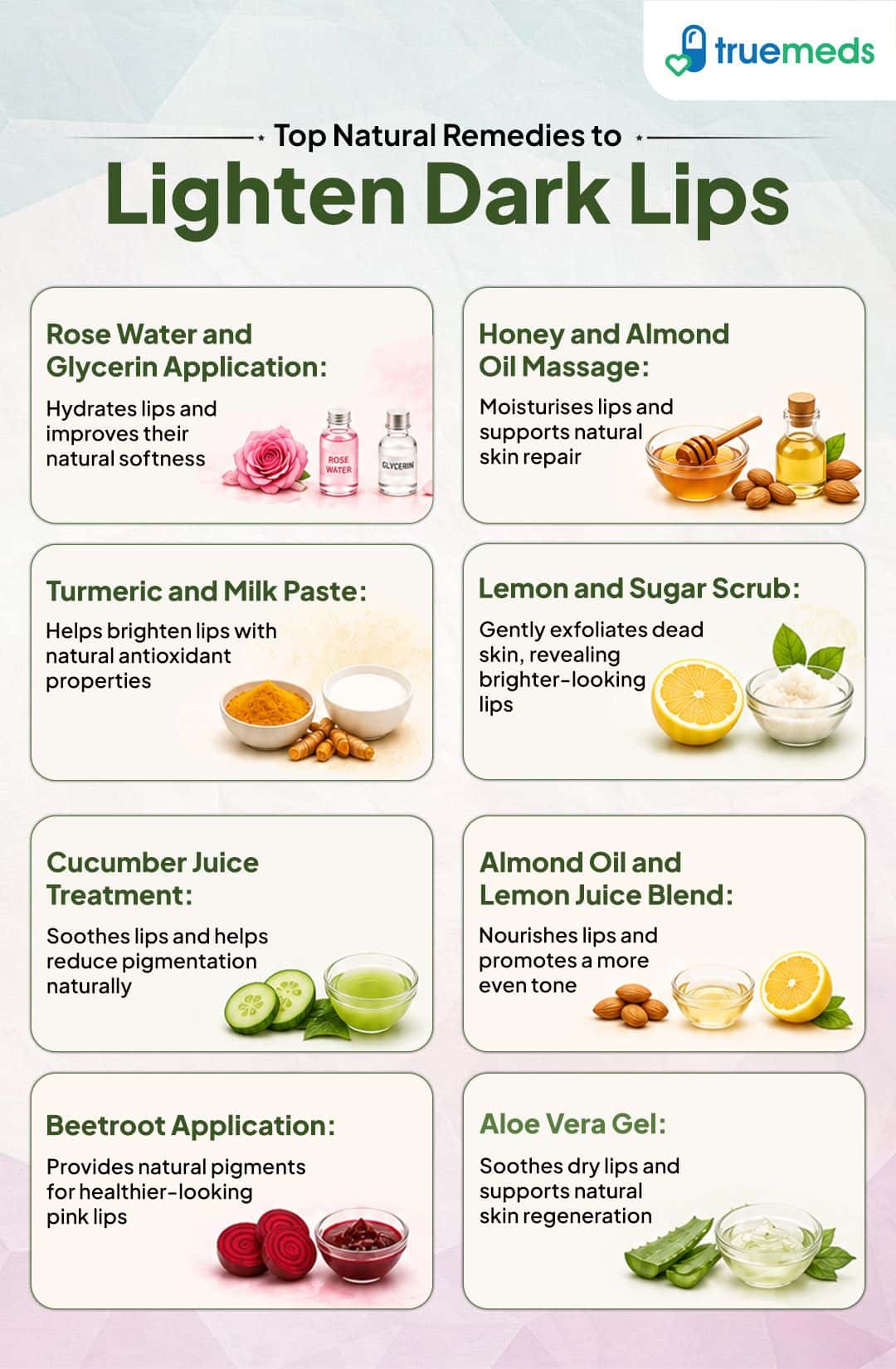
1. Lemon and sugar scrub
One simple home remedy for lightening dark lips is a lemon and sugar scrub. To create this gentle exfoliating treatment, mix fresh lemon juice with granulated sugar until a paste-like consistency is achieved. The citric acid in lemon juice acts as a mild chemical exfoliant, which may improve surface-level skin tone. Its direct effect on melanin production is not well established[7]. The sugar granules act as a mild abrasive to remove dead skin cells and reveal brighter, more evenly toned lips beneath. Gently massage the scrub onto your lips in circular motions for 1-2 minutes, then rinse with lukewarm water. Be sure to follow up with a nourishing lip balm or moisturiser to prevent dryness and promote healthy lip tissue. With regular use, this scrub may help gradually improve the appearance of dark lips, leaving you with a more radiant smile.
Note: Lemon can irritate sensitive lips. It acts as a chemical exfoliant but may irritate lips and potentially worsen pigmentation if overused. Perform a patch test first. Do not use this scrub if you have cracked, bleeding, or sore lips, or active cold sores.
2. Honey and almond oil massage
A simple home remedy for dark lips is to apply a nourishing mixture of honey and almond oil. This natural remedy may help lighten dark lips by harnessing the moisturising properties of honey and the vitamin E content of almond oil. Honey acts as a humectant, locking in moisture and gently supporting skin cell renewal, while the antioxidants in almond oil may help reduce pigmentation caused by environmental exposure[8] To use this remedy, mix equal parts of raw honey and unrefined sweet almond oil, apply the mixture to your lips nightly, and leave it on for 15–20 minutes before rinsing. With regular use, this treatment can hydrate, soften, and support the restoration of your lips' natural hue.
3. Turmeric and milk paste
Turmeric, known for its curcumin content, has anti-inflammatory and antioxidant properties that may help improve the appearance of pigmentation. Evidence for topical turmeric's effectiveness on skin pigmentation is currently limited. Consult a dermatologist for clinically proven alternatives.
When combined with milk, which contains lactic acid, this paste can gently exfoliate and brighten the lips. To prepare this treatment, combine 1–2 teaspoons of turmeric powder with enough milk to form a thick paste. Apply the paste to your lips for 5–10 minutes, then rinse with cool water. Over time, this remedy may help lighten dark spots and enhance the texture of your lips. If you have sensitive skin, it's advisable to dilute the turmeric further or perform a patch test before applying the paste.
4. Rose water and glycerin application
Rose water and glycerin have been traditionally used to hydrate and gently brighten the skin, making them a popular combination for those looking to lighten dark lips. Rose water may help soothe irritation, while glycerin attracts moisture, preventing the dryness that can contribute to lip darkening. To use this remedy, mix equal parts of rose water and glycerin, and apply the mixture to your lips twice daily. Leave it on for 10–15 minutes before rinsing. For added benefits, you can combine this mixture with a drop of almond oil, which provides additional vitamin E.
5. Cucumber juice treatment
Cucumber juice is a natural remedy that may help soothe and lighten your lips. The hydrating properties of cucumber juice can calm the delicate skin on your lips whilst potentially reducing pigmentation. To use this home remedy, blend half a cucumber and strain out the solid parts. Store the liquid in the refrigerator and apply it to your lips using a cotton ball. Leave the juice on for about 30 minutes before rinsing with cool water. Regular application, a few times a week, may help your lips look fresher and brighter by reducing discolouration and promoting healthier skin.
6. Almond oil and lemon juice blend
A blend of almond oil and lemon juice may be an effective way to address dark lips. Almond oil deeply moisturises the lips, while the citric acid in lemon juice acts as a natural exfoliating agent, which may help reduce melanin production. To use this treatment, mix a few drops of almond oil with fresh lemon juice and apply the mixture to your lips. Leave it on for 10-15 minutes, then rinse thoroughly. Do not leave lemon juice on the skin overnight. This method may help remove dead skin cells and gradually lighten the colour of your lips over time. Consistent use of this remedy can provide lasting results when combined with preventive measures.
Note: Lemon juice may increase sensitivity to sunlight and can cause irritation in some individuals. Avoid sun exposure after applying lemon juice. Do not use this remedy before going outdoors. Apply sunscreen or lip balm with SPF after rinsing.
7. Beetroot application
Beetroot juice is a natural pigment that can temporarily impart a reddish tint to lips, giving them a healthier, more vibrant appearance. This vegetable is rich in antioxidants and vitamins that nourish and protect the delicate skin on your lips. To use this home remedy, extract the juice from cooked or raw beetroot by blending and straining it. Use a cotton ball to apply the juice to your lips and leave it on for 10 to 15 minutes before rinsing off. Regular use of this treatment can help you maintain healthy, naturally pigmented lips.
8. Aloe vera gel
Aloe vera gel is a natural remedy that may help lighten dark lips and provide much-needed moisture. Its moisturising and soothing properties may help keep the lips soft and healthy-looking. Aloe vera may help soothe irritation and prevent further pigmentation, though it does not directly lighten lips. Reducing irritation is important, as inflammation can be a contributing factor to lip darkening[9]. By applying fresh aloe vera gel to your lips, you can take advantage of its excellent moisturising and healing properties, which help soothe chapped lips and promote healthier lip tissue. Additionally, aloe vera's anti-inflammatory properties may aid in healing cuts or irritations on the lips, further enhancing their appearance. Incorporating aloe vera gel into your lip care routine is a simple and gentle way to work towards naturally lighter and healthier lips.
Preventive Measures to Reduce Dark Lips
In addition to using home remedies, there are several preventive measures you can take to maintain healthy, lighter-looking lips:
- Stay Hydrated: Drinking plenty of water throughout the day helps keep your lips moist and healthy[3].
- Use Lip Balm With SPF: Protecting your lips from harmful UV rays can prevent darkening and dryness. Apply a lip balm with SPF 30 or higher regularly, especially when outdoors[10].
- Avoid Smoking: Smoking is known to cause lip discolouration and dryness[2], so quitting or avoiding smoking altogether can help improve the appearance of your lips.
- Exfoliate Gently: Using a soft lip scrub to remove dead skin cells can improve lip texture and promote a more even skin tone[10]. However, limit exfoliation to once or twice weekly to avoid irritation. Over-exfoliation can worsen lip darkening.
- Maintain Good Oral Hygiene: Certain oral conditions can affect lip health, so maintaining good oral hygiene is essential for overall lip health.
By incorporating these preventive measures into your daily routine, you can effectively support lip health and work towards achieving a more radiant appearance.
Common Myths About Dark Lips
Several misconceptions about dark lips can lead to unrealistic expectations or unsafe practices. Here are some common myths and the facts behind them:
- Myth: Natural remedies can lighten dark lips overnight.
Fact: Home remedies may offer gradual improvement for some people, but results vary depending on the underlying cause and consistent lip care. - Myth: Lemon juice is safe to use every day.
Fact: Frequent use of lemon juice may cause irritation, dryness, and increased sensitivity to sunlight. It should be used cautiously and not on cracked or sore lips. - Myth: Dark lips are always caused by smoking.
Fact: While smoking is a common cause, dark lips may also result from sun exposure, dehydration, certain medications, vitamin deficiencies, or other underlying factors. - Myth: Scrubbing the lips more often gives faster results.
Fact: Excessive exfoliation can irritate the delicate skin of the lips and may worsen dryness or pigmentation. Gentle exfoliation once or twice a week is usually sufficient.
Conclusion
Learning how to lighten dark lips requires a combination of natural remedies and preventive measures. By using home remedies such as aloe vera gel, lemon and sugar scrubs, and honey mixtures, and incorporating simple habits like staying hydrated and using protective lip balms, you can effectively nourish your lips and support the reduction of darkening. Regularly exfoliating and avoiding harmful habits, such as smoking, will also contribute to healthier, naturally lighter lips. Consistency is key when it comes to achieving and maintaining better lip health over time. By following these tips and using appropriate treatments, you can work towards improving your lip appearance and enjoy a more confident, radiant smile.
For persistent or severe lip pigmentation, consult a dermatologist to determine underlying causes and receive personalised treatment.
FAQs
Are natural remedies effective for lightening dark lips?
Natural remedies may offer mild improvement for some individuals by exfoliating the skin surface and moisturising the lips, though clinical evidence is limited. Results vary significantly.
How long does it take to see results from these remedies?
Visible improvements in lip colour typically require several weeks of consistent daily use when applying natural ingredients like lemon or turmeric mixtures. However, the results may vary from individual to individual.
Can these remedies be used on sensitive lips?
While lemon may irritate sensitive skin, gentler options like almond oil or honey are generally safer for those with sensitive lips. Individuals with nut allergies should avoid almond oil, and those with bee-product sensitivities should not use honey. Always perform a patch test before use.
Are there any side effects to using these natural treatments?
Overuse of acidic ingredients, such as lemon, can cause dryness or irritation on the lips; always follow up with a moisturiser.
When should I consult a dermatologist about my dark lips?
Seek medical advice if your lips darken suddenly or develop lesions, or if home remedies cause persistent irritation, as these may indicate underlying conditions.
Can dark lips turn pink again naturally?
If lip darkening is caused by factors such as sun exposure, smoking, dehydration, or irritation, adopting healthy lip care habits and using suitable home remedies may gradually improve the appearance of the lips. However, results vary depending on the underlying cause and may take time.
What are the best natural lip lighteners?
Natural ingredients such as aloe vera, honey, almond oil, and beetroot may help improve the appearance of dark lips by moisturising, soothing, or temporarily enhancing lip colour. However, clinical evidence supporting their effectiveness as natural lip lightener remedies remains limited.
How to prevent dark lips from coming back?
To help reduce dark lips and prevent them from recurring, protect your lips from sun exposure with an SPF lip balm, stay hydrated, avoid smoking, and keep your lips moisturised. Avoid excessive licking or using products that irritate your lips.
Is it safe to use lemon juice on lips daily?
No. Daily application of lemon juice is not recommended because it may cause irritation, dryness, and increased sensitivity to sunlight. If you choose to use it, apply it for a short duration, rinse thoroughly, and discontinue use if irritation occurs.
What should I do if a home remedy causes irritation or burning on my lips?
Stop using the home remedy immediately and gently rinse your lips with water. Apply a fragrance-free moisturising lip balm to soothe the area. If irritation, swelling, blistering, or persistent discomfort develops, consult a qualified healthcare provider or dermatologist.
Medical Disclaimer
This article is for informational purposes only and does not constitute medical advice. The information provided should not be used for diagnosing or treating health conditions. Always consult a qualified healthcare provider for diagnosis, treatment, and personalised medical advice. Do not disregard professional medical advice or delay seeking it because of information found in this article. If you have a medical emergency, contact your doctor or emergency services immediately.
References
Perioral pigmentation : Pigment International. (2022). LWW. https://journals.lww.com/pigi/fulltext/2022/09030/perioral_pigmentation.2.aspx
Tirth, A., Sagar, D., Saikia, J., Vaibhav Tandon, D., Rabha, S., Khanam, A., And Head, P., & Student, P. (2025). Effect Of Smoking On Lip And Gingival Pigmentation Among Adult Population Of Moradabad City. International Journal of Medical Science and Current Research (IJMSCR) International Journal of Medical Science and Current Research, 1. https://ijmscr.com/asset/images/uploads/17375565459676.pdf
Bhutta, B. S., & Hafsi, W. (2023, August 17). Cheilitis. StatPearls - NCBI Bookshelf. https://www.ncbi.nlm.nih.gov/books/NBK470592/
Wang, Y., Lin, L., Wang, Y., Wei, M., Wei, J., Cui, Y., Ren, Y., & Wang, X. (2022). Analysis of clinical presentations, lip transepidermal water loss and associated dermatological conditions in patients with chronic cheilitis. Scientific Reports, 12(1), 22497. https://doi.org/10.1038/s41598-022-27115-9