Key Takeaways
- Sadness generally passes with time, whereas depression can persist for 2 weeks or longer and may begin to interfere with everyday activities.
- Depression is more than simply feeling sad. A person may also experience disturbed sleep, reduced energy, problems with concentration, changes in appetite, or loss of interest in usual activities.
- The key difference between ordinary sadness and depression is how long the symptoms continue, how severe they become, and how much they affect a person’s day-to-day functioning.
- Depression can be treated. With appropriate professional care, treatment, and support, many people see substantial improvement in their symptoms and quality of life.
- Do not ignore persistent or worsening symptoms. If someone is struggling for an extended period or has thoughts of self-harm, they should seek professional medical help promptly.
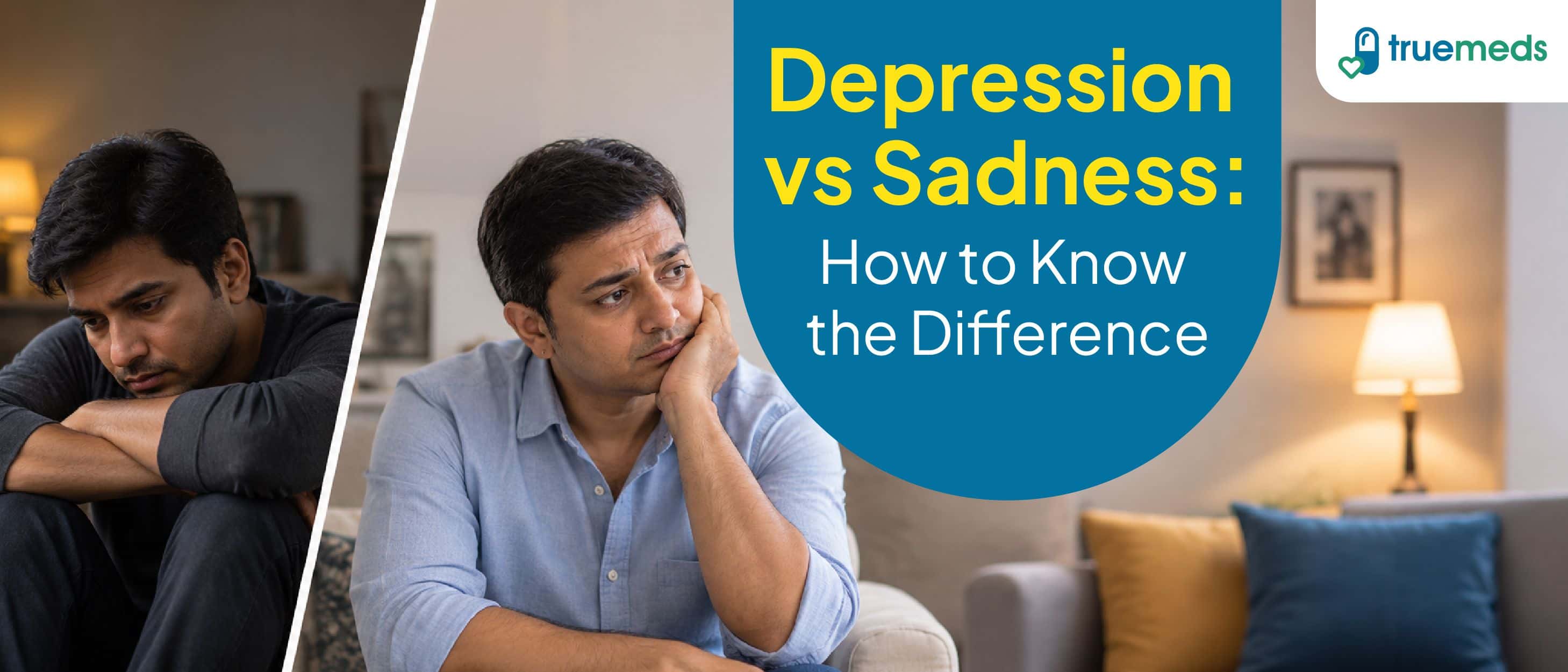
Sadness and depression can feel similar, but they are not the same. Sadness is a common emotional response to difficult or disappointing situations. It often changes as the situation improves. Depression, however, is a mental health condition that can affect mood, thoughts, sleep, energy, and everyday activities[1]. The duration and effect on daily life are important differences. Depression generally lasts for at least 2 weeks and can interfere with work, studies, relationships, or other routine activities[2]. This article explains how sadness and depression differ and discusses some signs associated with depression.
This information is for education only and does not replace professional diagnosis.
What is sadness?
Sadness is a normal emotion that can occur in response to many situations. These may include disappointment, loss, conflict, or other difficult experiences[3]. The feeling may be strong at first but often becomes less intense as time passes.
For example, a disagreement with a friend or a difficult day at work may leave you feeling low. Disappointing news can have a similar effect. In these situations, the low mood may ease as you adjust to what has happened.
Even when you feel sad, you may still be able to:
- Enjoy something you usually like
- Carry out your usual responsibilities
- Maintain your usual sleep and eating patterns
- Spend time with friends or family
Sadness can be an uncomfortable experience, but it is a normal part of emotional life. Feeling sad by itself does not necessarily mean that a person is depressed.
What is depression?
Depression is a mental health condition that affects a person’s mood, interest in activities, thoughts, and everyday functioning. It commonly involves persistent sadness or a loss of interest in things a person usually enjoys. In major depression, these symptoms occur most of the day, nearly every day, for at least 2 weeks and can interfere with daily life[4].
Depression can develop through a combination of biological, psychological, and social factors[5]. Experiences such as unemployment, bereavement, or trauma may contribute to its development, although they do not affect everyone in the same way.
There may or may not be an obvious event before depression begins. Some people notice symptoms after a major loss or stressful experience, while others develop them without a clear trigger. This can make depression difficult to explain based only on what is happening around a person.
If you suspect you have depression, consult a healthcare professional for proper evaluation.
Depression vs sadness: key differences
Sadness and depression can share some features, but they differ in several important ways. The table compares some features commonly associated with each.
Aspect | Sadness | Depression |
Duration | Usually improves with time | Symptoms last at least 2 weeks and may continue longer |
Trigger | Often linked to a specific event or situation | May occur with or without an obvious trigger |
Effect on daily life | Usually causes less disruption to everyday activities | Can interfere with work, studies, relationships, and other daily activities |
Physical symptoms | Physical changes may occur | Fatigue, sleep changes, and appetite changes may occur[2] |
Interest and enjoyment | Interest in enjoyable activities may remain | Loss of interest or pleasure is a common feature[4] |
Self-worth | Feelings of self-worth are generally unchanged | Feelings of guilt or worthlessness may occur[2] |
These differences can provide useful context, but sadness and depression do not always look the same in every person. The duration, range of symptoms, and effect on daily life are considered together when depression is assessed[2][6].
Common signs of depression to watch for
Depression can affect more than mood. It may also influence energy levels, sleep, appetite, concentration, behaviour, and relationships. The symptoms are not the same for everyone, and some people may experience only some of them[7].
Emotional changes:
These may include:
- Feeling sad, empty, hopeless, or helpless for much of the time
- Losing interest in previously enjoyable activities
- Feeling guilty, worthless, irritable, frustrated, or unusually restless
- Feeling that life has little value
- Having thoughts about death, suicide, or self-harm
Physical changes:
Depression may also affect the body. Some people experience:
- Persistent tiredness or low energy
- Changes in appetite or weight
- Difficulty sleeping or sleeping more than usual
- Physical symptoms such as headaches, aches, pains, or digestive problems
Changes in thinking (cognitive symptoms):
Some people notice changes in their ability to think or concentrate. These can include:
- Difficulty concentrating or remembering things
- Trouble making decisions
- Feeling mentally or physically slowed down
- Finding everyday tasks harder to complete
Changes in behaviour and relationships:
Depression can sometimes affect how a person interacts with others or manages their usual activities. This may include:
- Spending less time with family or friends
- Losing interest in hobbies or regular activities
- Finding work, studies, or relationships harder to manage
Depression symptoms may continue for weeks or longer and can affect different areas of everyday life[7]. Clinical assessment considers the overall pattern of symptoms, including persistent low mood or loss of interest, rather than any single symptom alone[4].
If you or someone you know is having thoughts of suicide or self-harm, seek immediate professional help rather than waiting for the symptoms to improve. In India, you can call Tele-MANAS at 14416 or 1800-89-14416 for 24/7 mental-health support.
When to seek help for depression
Low mood can happen to anyone, but persistent changes in mood or behaviour deserve attention. If these changes continue for 2 weeks or more or begin to affect everyday life, it may be worth discussing them with a qualified mental health professional[2].
A person may consider speaking with a counsellor, psychologist, psychiatrist, or another qualified mental health professional if they notice:
- Low mood that continues for 2 weeks or longer
- Less interest in usual activities
- Changes in sleep, appetite, or energy
- Persistent feelings of hopelessness or worthlessness
- Difficulty keeping up with work, studies, relationships, or daily tasks
Professional assessment can help clarify what may be causing these changes. Depression is treatable, and the type of support used can vary depending on the person and their circumstances.
If someone has thoughts of suicide or self-harm, they should seek urgent professional help. Treatment must be determined by a healthcare provider. Do not attempt to self-diagnose or self-medicate.
If you're in crisis: get help right now
If you or someone you know is struggling or having thoughts of suicide, immediate help is available.
India crisis helplines:
- iCALL (TISS): +919152987821 — Monday to Saturday, 8 AM to 9 PM
- Vandrevala Foundation: +919999666555 — Available 24×7
- NIMHANS Tele-MANAS: 14416 or 1800-89-14416 — Available 24×7
In life-threatening situations, call emergency services immediately or go to your nearest hospital emergency department.
You are not alone, and support is available around the clock. Reaching out during a crisis is a sign of strength, not weakness.
Conclusion
Sadness is a normal emotional response and often changes with time. Depression is different. It can last for 2 weeks or longer and may affect mood, interest, sleep, energy, concentration, and everyday activities.
The symptoms can vary from one person to another, so there is no single way depression feels or appears. When changes in mood or behaviour persist or begin to affect daily life, speaking with a qualified mental health professional can help clarify what is happening.
Depression is a recognised and treatable mental health condition. Professional support is particularly important when symptoms are severe or include thoughts of suicide or self-harm.
FAQs
What are the different types of depression?
Several types exist, including major depression, persistent depressive disorder (dysthymia) with milder but longer-lasting symptoms, seasonal affective disorder that follows seasonal patterns, and depression with psychotic features involving delusions or hallucinations.
Can you have depression without feeling sad?
Yes, some people experience depression primarily as emptiness or loss of interest rather than overwhelming sadness. Irritability, fatigue, and difficulty concentrating may be more prominent than a sad mood.
Is grief the same as depression?
Grief is a natural response to loss that typically improves over time. While grieving people may have symptoms similar to depression, these symptoms usually improve with time. For some people, bereavement can lead to depression.
How is depression diagnosed?
Diagnosis requires symptoms present most of the day, nearly every day, for at least 2 weeks. One symptom must be depressed mood or loss of interest. A healthcare professional will evaluate your symptoms, medical history, and rule out other conditions.
Can grief turn into depression?
Yes, for some people, bereavement can lead to depression, especially if grief is prolonged or complicated. If grief symptoms persist beyond what feels normal or significantly impair functioning, professional evaluation is recommended.
Does depression always need a specific cause or trigger?
Depression can emerge without any obvious external cause. While life events may trigger depression in some people, others develop it due to biological, genetic, or psychological factors without a clear precipitating event.
Can depression go away without treatment?
While mild depression may sometimes improve on its own, professional support and treatment can help manage symptoms and support recovery.
Medical Disclaimer
This article is for informational purposes only and does not constitute medical advice. The information provided should not be used for diagnosing or treating health conditions. Always consult a qualified healthcare provider for diagnosis, treatment, and personalised medical advice. Do not disregard professional medical advice or delay seeking it because of information found in this article. If you have a medical emergency, contact your doctor or emergency services immediately.
References
World Health Organization. (2025). Mental disorders. World Health Organisation. https://www.who.int/news-room/fact-sheets/detail/mental-disorders
Centers for Disease Control and Prevention. (2024). Sadness & depression. Centers for Disease Control and Prevention. https://www.cdc.gov/emotional-well-being/managing-difficult-emotions/sadness-depression.html
Understanding feelings of sadness. (n.d.). Medicare Mental Health. https://www.medicarementalhealth.gov.au/living-well/understanding-sadness
National Institute of Mental Health. (2024). Depression. National Institute of Mental Health. https://www.nimh.nih.gov/health/publications/depression