
For centuries, honey has been cherished for its unique flavour and medicinal properties. From ancient civilisations to modern times, this golden nectar has played a significant role in both nutrition and wellness[1]. Today, we continue to appreciate honey for its numerous health benefits, which can be attributed to its distinctive composition and natural properties[2]. Let's dive deeper into what makes honey such a special ingredient.
What is honey?
Honey is made when bees collect nectar from flowers and change it using natural enzymes. One such enzyme, glucose oxidase, helps produce hydrogen peroxide, which gives honey its antibacterial properties. The journey begins with bees gathering nectar from various floral sources, which they then store in their honeycomb. Through a combination of regurgitation and evaporation, the nectar is gradually converted into the thick, syrupy substance we know as honey. The flavour and benefits of honey can vary depending on the type of flowers the bees visit, resulting in a diverse range of varieties such as clover, manuka, and acacia[2]. To better understand the nutritional value of honey, let's take a closer look at its composition.
Nutritional profile of honey
The nutritional composition of honey can vary depending on its floral source, geographic origin, processing methods, and storage conditions.
Nutritional properties of honey are as follows[3]:
Health benefits of honey
Honey offers a wide range of health benefits, from enhancing skin health to supporting digestion and providing antioxidant effects[2]. Let's explore the various ways honey can contribute to your overall well-being.
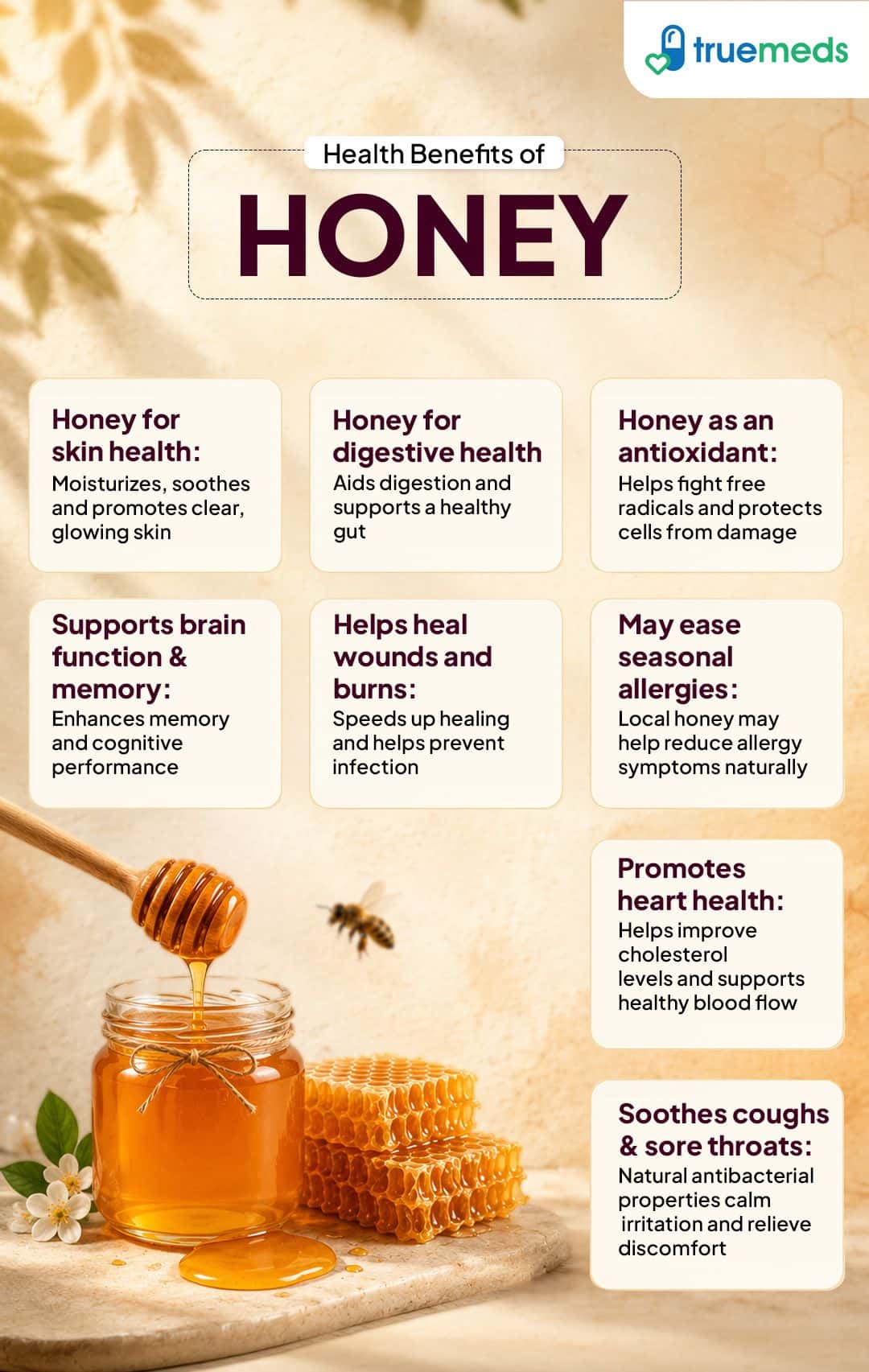
1. Honey for skin health
Honey is a natural humectant, meaning it attracts and retains moisture, thereby improving skin hydration and elasticity. Its antibacterial and anti-inflammatory properties may help combat acne, soothe eczema, and promote skin healing, making it a valuable addition to your skincare routine[4].
This is not medical advice, and these benefits are adjunctive, not medical treatments. Seek professional guidance for skin conditions.
2. Honey for digestive health
Honey promotes the growth of beneficial gut bacteria, contributing to a balanced microbiome. This is crucial for efficient digestion and overall gastrointestinal wellness[2]. Honey's role in supporting gut health complements its antioxidant properties, which offer further health benefits.
Honey may act as a mild prebiotic and support gut health; however, individuals experiencing digestive symptoms should consult a healthcare professional before using honey for therapeutic purposes.
3. Honey as an antioxidant
Honey contains powerful antioxidants, such as flavonoids and phenolic acids, that help neutralise harmful free radicals[1]. These antioxidant properties may help reduce inflammation and protect the body from oxidative stress-related diseases[2]. Beyond its internal health benefits, honey can also provide relief for common ailments like coughs and sore throats.
4. Soothes coughs and sore throats
Honey's soothing texture and antimicrobial properties make it an effective natural remedy for coughs and sore throats. It can reduce irritation and inflammation in the throat, providing relief, especially for children[5].
It should be considered adjunctive and not a substitute for medical treatment, especially in persistent or severe cases.
5. Supports brain function and memory
The B vitamins and antioxidants found in honey may support brain health by enhancing energy metabolism and protecting neurons from oxidative damage[1]. This might lead to improved memory and cognitive function[2].
Further well-designed clinical studies are required to establish definitive cognitive effects of honey.
6. Provides a natural energy boost
As a natural source of carbohydrates and sugars, honey provides a quick and sustained energy boost. Its sweetness surpasses that of sugar, so smaller amounts are needed for energy, a natural alternative with similar metabolic effects to sugar[2].
7. Promotes heart health
The antioxidants in honey may modestly support cardiovascular disease by reducing inflammation and improving cholesterol levels[1]. Additionally, minerals like potassium and magnesium found in honey may support heart muscle function and blood pressure regulation[2].
8. Helps heal wounds and burns
Honey's antimicrobial and anti-inflammatory properties may promote wound healing by preventing infection and accelerating tissue repair. It has traditionally been used to support the management of burns, ulcers, and skin injuries, with some evidence of benefit when used under medical supervision[4].
Professional medical care is essential for serious wounds. While medical-grade honey has recognised applications in wound care, unsupervised home use of honey on wounds or burns is not recommended, as inappropriate application may increase the risk of infection or delay healing; such use should be undertaken only under medical guidance.
9. May ease seasonal allergies
Consuming local honey might help reduce symptoms of seasonal allergies by exposing the immune system to small amounts of local pollen, potentially building tolerance and decreasing allergic reactions over time. However, scientific evidence supporting this claim remains limited[6].
Uses of honey in everyday life
Honey is a versatile natural sweetener that can be used in various aspects of everyday life, from enhancing the flavour of beverages to serving as a traditional remedy for various ailments[2].
- One of the best ways to incorporate honey into your daily routine is by using it as a natural sweetener in place of refined sugar. Add a spoonful of honey to your morning tea, oatmeal, or smoothie for a healthier alternative.
- Honey can also be used in salad dressings or as a glaze for roasted vegetables and meats, adding a touch of sweetness and depth to your dishes.
- For skincare, mix honey with oats or yoghurt to create a gentle exfoliant that leaves your skin feeling soft and nourished.
- Consuming a spoonful of raw honey daily can also help leverage its antioxidant properties, supporting heart health and boosting your immune system.
When using honey for its health benefits, always opt for honey from credible manufacturers to retain its maximum effects.
Precautions and considerations
While honey offers numerous health benefits, it's important to keep a few considerations in mind when incorporating it into your diet:
- Calorie content: Honey is a high-calorie sweetener, with approximately 64 calories per tablespoon[3]. Consume it in moderation to avoid excessive calorie intake.
- Infant safety: Never give honey to babies under 12 months old, as it may contain spores that cause infant botulism, a rare but serious illness[7].
- Allergic reactions: Although uncommon, some individuals may experience allergic reactions to honey, especially those with bee or bee product allergies[6]. Be aware of any symptoms after consuming honey.
- Blood sugar management: Despite having a lower glycaemic index than regular sugar, honey still affects blood sugar levels. People with diabetes should monitor their intake and consult their doctor for guidance[2].
Consult your healthcare provider before making dietary changes.
By keeping these precautions in mind, you can safely enjoy the benefits of honey as part of a balanced diet.
Conclusion
Honey is a versatile and natural sweetener that offers a range of health benefits, including antioxidant properties and may have a slightly lower glycaemic response than refined sugar in some people. Its unique composition of sugars, enzymes, and compounds contributes to its distinct taste and nutritional value. Whether enjoyed in beverages, as a spread, or in cooking and baking, honey can be a delicious addition to your diet. However, it's crucial to consume honey mindfully, considering its calorie and sugar content. By incorporating honey in moderation and being aware of any precautions, you can reap the benefits of this natural sweetener while maintaining a balanced and healthy lifestyle.
FAQs
What are the health benefits of honey?
Honey contains natural antioxidants and bioactive compounds that help protect against oxidative stress. It also has antimicrobial properties. When used in moderation, it may have a gentler effect on blood sugar compared with refined sugar, making it a better alternative for overall health.
How does honey help with skin conditions like acne?
Honey's antibacterial and anti-inflammatory properties may help reduce bacteria and soothe the skin, although more clinical evidence is needed to confirm its effectiveness in treating acne.
Is honey good for digestion?
While honey may support gut health through its prebiotic properties, direct evidence for its digestive benefits, such as easing ulcers, is not strongly established.
Can honey help with weight loss?
There is no strong evidence that honey directly aids weight loss; however, using it in moderation as a substitute for refined sugar may help reduce overall calorie intake.
How do I use honey for moisturising my skin?
To use honey as a natural moisturiser, apply raw honey directly to your skin or mix it with oils like coconut oil to create a hydrating face mask. Rinse off after 10–15 minutes.
Can honey be used as a natural remedy for a sore throat?
Yes, honey can help soothe throat irritation and coughs. Mix 1–2 teaspoons of honey in warm tea or water for relief. However, do not give honey to infants under 1 year old.
Does heating honey reduce its nutritional value?
Yes, excessive heating may reduce some of honey's beneficial compounds, including certain enzymes and antioxidants. To preserve its natural properties, avoid prolonged exposure to high temperatures and add honey to foods or beverages after they have cooled slightly.
How should honey be stored to maintain its quality?
Store honey in a tightly sealed container at room temperature, away from direct sunlight and moisture. Proper storage helps preserve its flavour, texture, and quality. Refrigeration is generally unnecessary and may cause honey to crystallise more quickly.
Can honey help relieve a sore throat or cough?
Yes, honey may help soothe a sore throat and reduce cough frequency in adults and children over 1 year of age. However, it should not replace medical treatment for persistent, severe, or worsening symptoms.
Is honey healthier than sugar?
Honey contains small amounts of antioxidants and other natural compounds that refined sugar lacks. However, both are added sugars and should be consumed in moderation as part of a balanced diet. Honey is not a health food or a substitute for healthy eating.
Can people with diabetes eat honey?
People with diabetes may consume honey in moderation if advised by their doctor or dietitian. Although honey has a slightly lower glycaemic index than refined sugar, it still raises blood sugar levels and should be included within the total daily carbohydrate intake.
Medical Disclaimer
This article is for informational purposes only and does not constitute medical advice. The information provided should not be used for diagnosing or treating health conditions. Always consult a qualified healthcare provider for diagnosis, treatment, and personalised medical advice. Do not disregard professional medical advice or delay seeking it because of information found in this article. If you have a medical emergency, contact your doctor or emergency services immediately.
References
Samarghandian, S., Farkhondeh, T., & Samini, F. (2017). Honey and health: A review of recent clinical research. Pharmacognosy Research, 9(2), 121-127. https://www.ncbi.nlm.nih.gov/pmc/articles/PMC5424551/
Palma-Morales, M., Huertas, J., & Rodríguez-Pérez, C. (2023). A comprehensive review of the effect of honey on human health. Nutrients, 15(13), 3056. https://doi.org/10.3390/nu15133056
U.S. Department of Agriculture. (2019). Honey. FoodData Central. https://fdc.nal.usda.gov/fdc-app.html#/food-details/169640/nutrients
Burlando, B., & Cornara, L. (2013). Honey in dermatology and skin care: a review. Journal of Cosmetic Dermatology, 12(4), 306–313. https://doi.org/10.1111/jocd.12058