

- Medicines
- Personal Care
- Skin Cream
- Sunscreen
- Face Wash
- Skin and Body Soap
- Acne Care
- Body Lotions
- Moisturising Lotion
- Moisturising Cream
- Mosquito Repellent
- Moisturising Gel
- Body Wash
- Hair Oils
- Hair Shampoo
- Hair Conditioners
- Hair Supplements
- Hair Colour
- Hair Serum
- Hair Mask
- Hair Solutions
- Baby Diapers and Wipes
- Baby Lotion and Moisturising Cream
- Baby Bath Essentials
- Baby Skin Care
- Baby and Infant Food
- Baby Healthcare
- Women Multivitamins
- Ovulation Test Kit and Women Intimate Care
- Sanitary Pads
- Nutritional Drinks
- Condoms
- Lubricants
- Massage Gels
- Personal Body Massagers
- Men Performance Booster
- Sexual Health Supplements
- Massage Oils
- Ayurveda
- Tooth Paste
- Mouth Ulcer Gel
- Mouthwash
- Toothache and Gum Pain
- Tooth Brush
- Gargle Solution
- Orthopaedic Supports
- Adult Diapers
- Footwear
- Mobility and Support Accessories
- Urinary Support and Care
- Health Conditions
- Bone and Joint Care
- Digestive Care
- Eye Care
- Pain Relief
- Smoking Cessation
- Liver Care
- Stomach Care
- Cold and Cough
- Heart Care
- Kidney Care
- Piles, Fissures & Fistula
- Respiratory Care
- Mental Wellness
- Derma Care
- Pre and Probiotics
- Acidity
- Gas
- Constipation
- Loose Motion/Diarrhoea
- Digestive Fibres
- Digestive Enzymes
- Eye Lubricant Drops
- Lens Solution
- Safety Eye Wear
- Eye Cream
- Eye Vitamins and Supplements
- Eye Drops
- Eye Ointment and Gel
- Nicotine Patch
- Nicotine Gum
- Nicotine Lozenges
- Cough Syrups
- Chest Rubs and Balms
- Nasal Spray
- Lozenges
- Inhalant Capsules
- Cold and Cough Tablets
- Vitamins & Supplements
- Diabetes Care
- Healthcare Devices
- Homeopathic Medicine
- Health Guide
Hepatitis C
Hepatitis C is a viral infection that causes liver inflammation, primarily spread through contact with infected blood. Many people with Hepatitis C have no symptoms, but chronic infection can lead to serious liver damage (WHO (2025)). Early diagnosis and treatment are crucial for managing the condition and preventing complications.
 50
50Last updated on : 29 Apr, 2026
Read time : 13 mins

Overview of Disease
Hepatitis C, a viral infection affecting millions worldwide, poses a significant public health concern, making it essential to understand its causes, symptoms, and treatment options to prevent its spread and manage its impact. In this article, we will explore the key aspects of Hepatitis C, empowering you with the knowledge to safeguard your health and the health of those around you.
What is Hepatitis C?
Hepatitis C is a viral infection caused by the Hepatitis C virus (HCV), which primarily targets the liver, leading to inflammation and potential liver damage if left untreated. The virus is mainly transmitted through contact with blood containing HCV, which can occur in various ways, such as sharing needles or other equipment for injecting drugs, accidental needle stick injuries, using unsterilised tattooing or piercing tools, and coming into contact with the blood or open sores of an infected individual. Understanding the modes of transmission is crucial for preventing the spread of Hepatitis C.
Key Factors about Hepatitis C
| Category | Details |
| Also Referred to as | Non-A, Non-B hepatitis |
| Commonly Occurs In | Worldwide, with approximately 58 million people chronically infected as of 2019, and new infections continuing in high-risk populations |
| Affected Organ | Liver |
| Type | Viral infection caused by the Hepatitis C virus (HCV) |
| Common Signs | Jaundice, fatigue, nausea, fever, muscle aches, dark urine, and itchy skin |
| Consulting Specialist | Gastroenterologist, Infectious Disease Specialist |
| Treatment Procedures | Antiviral medications, possibly a liver transplant in severe cases |
| Managed By | Direct-acting antiviral (DAA) medications |
| Mimicking Condition | Other forms of Hepatitis, liver diseases such as cirrhosis, and liver cancer |
Early Signs of Disease
Early warning signs of Hepatitis C may be subtle or nonexistent, making it challenging to detect the infection in its initial stages. However, some individuals may experience the following symptoms:
- Fatigue
- Loss of appetite
- Nausea and/or vomiting
- Abdominal pain
- Dark yellow urine
- Jaundice (yellowing of the eyes and skin)
- Joint pain
- Grey- or clay-coloured stools
Symptoms of Hepatitis C
The symptoms of Hepatitis C can be mild and may not appear until the liver has been significantly damaged. Some common symptoms include:
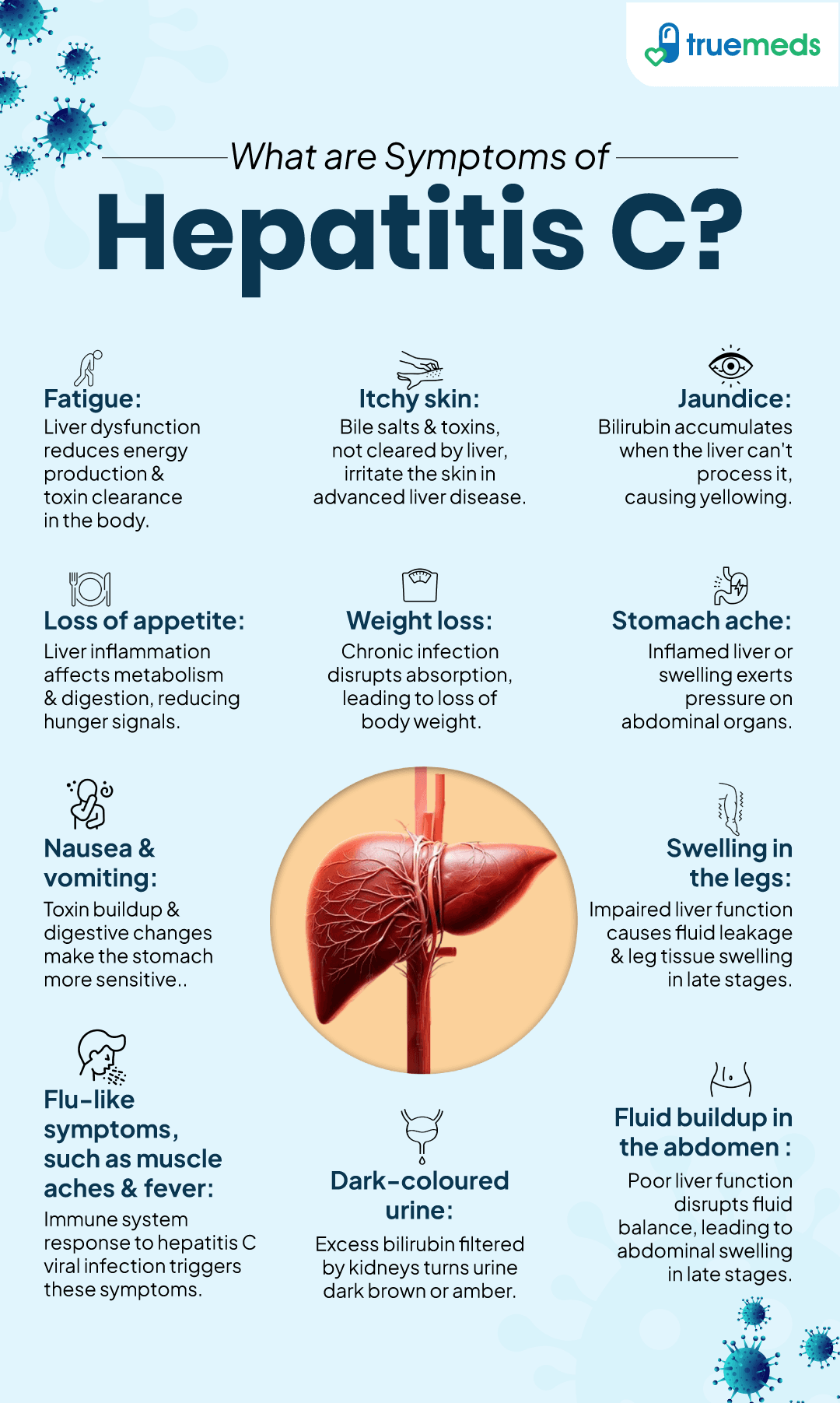
- Flu-like symptoms, such as muscle aches and fever
- Fatigue
- Loss of appetite
- Abdominal pain
- Nausea and vomiting
- Jaundice (yellowing of the skin and eyes)
- Dark-coloured urine
- Itchy skin
- Fluid buildup in the abdomen (ascites)
- Swelling in the legs
- Weight loss
Stages of Hepatitis C
Hepatitis C infection progresses through several distinct stages, each with its own characteristics and implications for treatment and management:
- Incubation period: This initial phase lasts from 2 weeks to 6 months after exposure to the Hepatitis C virus (HCV). During this time, the virus replicates until it reaches levels that trigger an immune response.
- Acute Hepatitis C: This stage begins when the immune system recognises the infection, typically within 2 weeks to 6 months post-exposure. Only about 20% of people exhibit symptoms like fever, fatigue, appetite loss, nausea, and jaundice. In some cases, the virus may be cleared spontaneously. However, in most (about 80%) cases, it progresses to chronic infection.
- Chronic Hepatitis C: This long-term infection can last a lifetime if untreated. Most people with chronic hepatitis C have no noticeable symptoms until significant liver damage has occurred, which can lead to cirrhosis, liver failure, or hepatocellular carcinoma if untreated AASLD (2023).
- Cirrhosis and liver failure: Chronic Hepatitis C can lead to cirrhosis, where the liver becomes scarred, and function is impaired. Over time, this can progress to liver failure, a condition where the liver cannot perform its essential functions.
Risk Factors
Several key factors increase the risk of contracting the Hepatitis C Virus:
- Sharing needles and syringes for drug injection
- Receiving blood transfusions before 1992, when HCV screening began
- Occupational exposure to infected blood among healthcare workers
- Unprotected sex with an HCV-infected individual, though less common
Hepatitis C is primarily spread through contact with infected blood. Injecting drugs and sharing needles is the most common risk factor. While less common, Hepatitis C can also be transmitted sexually. Knowing your risk factors is important for prevention and early detection through Hepatitis C testing.
Complications
If left untreated or inadequately treated, the Hepatitis C virus can lead to several serious, potentially life-threatening complications over time. These complications primarily affect the liver but can also involve other organ systems.
The major complications of chronic HCV infection include:
- Cirrhosis: Extensive scarring of the liver due to long-term inflammation and damage caused by the Hepatitis C virus. Cirrhosis can lead to liver failure, liver cancer, and other severe complications.
- Liver failure: As HCV-related liver damage progresses, the liver may become unable to perform its vital functions, leading to liver failure. This can be life-threatening and may require a liver transplant.
- Liver cancer: Chronic HCV infection significantly increases the risk of developing hepatocellular carcinoma (HCC), the most common type of liver cancer.
- Portal hypertension: Scarring and increased pressure in the liver's blood vessels can cause a range of complications, such as ascites (abdominal fluid buildup), oesophageal varices (enlarged veins in the oesophagus that can bleed), and splenomegaly (enlarged spleen).
Other potential complications of Hepatitis C include:
- Extrahepatic manifestations: HCV can affect various organ systems beyond the liver, causing conditions like cryoglobulinemia, glomerulonephritis, and certain types of lymphoma. These are less common but can be severe in some patients WHO (2025).
- Increased risk of other infections: HCV-infected individuals are more susceptible to other infections, such as hepatitis A and B, which can cause further liver damage.
- Cognitive and neurological issues: HCV may be associated with "brain fog," fatigue, and an increased risk of depression and anxiety.
Regularly monitoring liver health through hepatitis tests, imaging studies, and liver function assessments is crucial for detecting and managing these complications early. Timely and effective treatment of Hepatitis C is the best way to prevent or slow the progression of these serious complications.
Prevention of Hepatitis C
Preventing hepatitis C virus (HCV) infection is crucial, as there is currently no vaccine available. The main preventive measures are avoiding exposure to infected blood, such as through needle sharing or unsafe healthcare practices (EASL, 2024). The primary method of prevention revolves around avoiding behaviours and practices that can lead to exposure to the blood of an infected individual. Some key preventive measures include:
- Avoid sharing needles and drug equipment, which is a common route of Hepatitis C transmission, especially among people who inject drugs.
- Use sterile medical and personal care items, ensuring that any medical equipment, like needles and syringes, is properly sterilised or discarded after use.
- Choose licensed and reputable tattoo and piercing parlours that follow strict sanitary procedures, using new, disposable needles and ink for each client.
- Practice safe sex by using barrier methods such as condoms, particularly with multiple or new partners, to reduce the risk of Hepatitis C transmission through blood exposure during sexual activities.
- Ensure healthcare providers adhere to stringent infection control measures, including proper sterilisation of equipment and screening of blood donations.
- Get tested for Hepatitis C if you are at high risk, such as having received a blood transfusion or organ transplant before 1992, or if you have engaged in high-risk behaviours. Testing is crucial for early detection and timely treatment.
Diagnosis & Tests
Initial screening for Hepatitis C involves a blood test to detect HCV antibodies. If positive, a follow-up PCR-based test (HCV RNA test) is used to confirm the presence of the virus in the blood.
- Liver Function Tests: These blood tests assess liver enzyme levels to determine if the liver is damaged or inflamed due to Hepatitis C infection. Elevated liver enzymes may indicate liver damage.
- Liver Biopsy: In some cases, a small sample of liver tissue may be taken via biopsy to directly assess inflammation and scarring caused by chronic Hepatitis C infection.
Regular Hepatitis C testing is recommended for high-risk individuals to enable early diagnosis and treatment. Advances in Hepatitis C treatment have made the infection curable in most cases.
Treatment & Management
The management of hepatitis C has evolved with the introduction of direct-acting antivirals (DAAs), which are highly effective and can cure most cases of chronic hepatitis C when taken as prescribed (AASLD, 2023). The goal of therapy is to achieve a sustained virologic response (SVR), defined as undetectable HCV RNA 12 weeks after completing treatment, indicating cure.
1. Direct-Acting Antiviral Combinations
These are the foundation of modern Hepatitis C treatment. DAAs directly inhibit the virus at various stages of its life cycle, providing high cure rates with fewer side effects.
- Protease Inhibitors (NS3/4A): Medications such as Boceprevir, telaprevir, grazoprevir, simeprevir, asunaprevir, and paritaprevir prevent viral maturation by inhibiting the protease enzyme essential for protein processing.
These are typically combined with other antiviral classes for optimal viral suppression, especially in genotype-specific or cirrhotic cases.
2. Targeting Viral Replication
NS5A inhibitors are essential for preventing the replication and assembly of new virus particles.
- Daclatasvir: Inhibits the NS5A protein, disrupting viral replication and improving treatment outcomes across various HCV genotypes.
- Ledipasvir: Effectively blocks NS5A, preventing viral replication, and is commonly used in fixed-dose combinations for genotype 1.
- Ombitasvir: Part of combination therapies; targets NS5A and contributes to high cure rates, especially in genotype 1 infections.
- Elbasvir: Used in combination with grazoprevir; targets NS5A to inhibit viral replication in genotypes 1 and 4.
- Velpatasvir: A pan-genotypic NS5A inhibitor that offers broad efficacy across all major hepatitis C genotypes when used with sofosbuvir.
3. Blocking Viral Enzymes
Polymerase inhibitors disrupt the virus’s ability to reproduce by targeting RNA polymerase activity.
- Sofosbuvir: A nucleotide analogue that targets the NS5B RNA polymerase enzyme, effectively blocking the synthesis of viral RNA and preventing replication of the hepatitis C virus.
- Dasabuvir: A non-nucleoside inhibitor of the NS5B RNA polymerase that works by disrupting the viral replication process and is typically used in combination with other antiviral agents for enhanced efficacy.
When paired with NS5A inhibitors or protease inhibitors, they form the core of first-line treatment options for most HCV genotypes.
4. Support from Nucleoside Analogues
In cases of treatment-resistant or advanced liver disease, additional agents may be considered.
- Ribavirin: A guanosine analogue that enhances treatment response, especially in cirrhotic or previously treated patients.
Its use is now limited due to side effects, such as anaemia, but it remains valuable in select cases where maximum viral suppression is required.
5. Immune System Support
Although largely phased out in favour of DAAs, immunomodulators still have niche applications.
- Interferon (pegylated or standard): Stimulates the host immune system to attack infected cells and suppress viral replication.
Interferon is used for patients who cannot access DAAs or in resource-limited settings; interferon may still be used with ribavirin in difficult-to-treat genotypes.
Living with Disease
In addition to medication, lifestyle changes are important in managing Hepatitis C:
- Avoiding alcohol to prevent further liver damage
- Eating a healthy diet to support liver health
- Getting vaccinated against Hepatitis A and B
- Regular monitoring by a doctor to track liver health
With proper medical care and adherence to treatment, the vast majority of people with Hepatitis C can now be cured, preventing the progression of serious liver diseases. If you have risk factors or symptoms, talk to your doctor about Hepatitis C testing and treatment options.
When to See a Doctor?
If you have risk factors for Hepatitis C, such as a history of injecting drugs, receiving a blood transfusion or organ transplant before July 1992, having haemophilia and receiving clotting factor before 1987, or being exposed to potentially infected blood, you should undergo a Hepatitis test.
If you experience symptoms suggestive of Hepatitis C infection, like dark yellow urine, fatigue, fever, jaundice, or abdominal pain, even though many people with HCV do not show symptoms until the infection becomes chronic.
If you have engaged in behaviours that increase your risk of HCV, such as injecting drugs, sharing needles, or having unprotected sex with someone who may be infected, you should get a hepatitis test.
Undergo routine screening, as the CDC recommends that all adults aged 18 to 79 years should get tested for Hepatitis C at least once in their lifetime, and those with ongoing risk factors should get periodic testing.
If you have previously been diagnosed with Hepatitis C but have not received treatment, you should discuss your options with a medical professional, as early intervention can prevent long-term complications.
Timely diagnosis through a Hepatitis C test is vital for initiating appropriate Hepatitis C treatment and management strategies. If you suspect you may have been exposed to the Hepatitis C Virus or are experiencing symptoms, do not hesitate to consult with your healthcare provider for proper evaluation and guidance on the most suitable course of action, which may include antiviral therapy and lifestyle modifications to support liver health.
Key Takeaways
- Hepatitis C is a viral infection caused by the Hepatitis C virus (HCV) that primarily affects the liver.
- HCV is transmitted through contact with infected blood, often via shared needles, unsafe healthcare practices, or from an infected mother to her baby.
- Symptoms of acute Hepatitis C may include fatigue, nausea, abdominal pain, and jaundice, but many people remain asymptomatic.
- Chronic Hepatitis C can lead to serious complications like liver cirrhosis, liver cancer, and liver failure if left untreated.
- Diagnosis involves blood tests to detect HCV antibodies and viral RNA, as well as liver function tests and imaging studies.
- Treatment for hepatitis C has greatly improved with direct-acting antiviral medications, which can cure the infection in most cases, especially when started early.
- Prevention measures include avoiding shared needles, practising safe sex, and following proper infection control protocols in healthcare settings.
- Regular screening is recommended for individuals at high risk of HCV infection, such as injection drug users and people with HIV.
FAQs
How does hepatitis transmission occur?
Is it possible to reverse liver damage caused by Hepatitis C?
What are the initial symptoms of Hepatitis C?
Are hepatitis B and C serious health concerns?
Which type of hepatitis is incurable?
What is the primary cause of hepatitis?
References
- World Health Organization. (2025). Hepatitis C. Retrieved from https://www.who.int/news-room/fact-sheets/detail/hepatitis-c
- American Association for the Study of Liver Diseases. (2023). Hepatitis C Guidance 2023 Update. Retrieved from https://www.aasld.org/practice-guidelines/hepatitis-c
- European Association for the Study of the Liver. (2024). EASL recommendations on treatment of hepatitis C. Retrieved from https://easl.eu/wp-content/uploads/2020/10/EASL-recommendations-on-treatment-of-hepatitis-C.pdf
- SASLT. (2024). SASLT guidelines: Update in the treatment of hepatitis C virus. Retrieved from https://pmc.ncbi.nlm.nih.gov/articles/PMC10856511/
- CDC. (2025). Hepatitis C basics. Retrieved from https://www.cdc.gov/hepatitis-c/about/index.html
Browse Other Conditions
Latest health articles

Top Health Essentials






























Disclaimer
Top-Selling Medicines:
...View more
Top-OTC medicines:
...View more
Company
About UsHealth ArticleHealth StoriesHealth LibraryDiseases & Health ConditionsAyurvedaUnderstanding Generic MedicinesAll MedicinesAll BrandsNeed HelpFAQSecuritySavings CalculatorAdvertise with UsSubscribe
Registered Office Address
Grievance Officer
Download Truemeds


Contact Us
Our customer representative team is available 7 days a week from 9 am - 9 pm.
v4.28.13

2026 - Truemeds | All rights reserved. Our content is for informational purposes only. See additional information.

Our Payment Partners