

- Medicines
- Personal Care
- Skin Cream
- Sunscreen
- Face Wash
- Skin and Body Soap
- Acne Care
- Body Lotions
- Moisturising Lotion
- Moisturising Cream
- Mosquito Repellent
- Moisturising Gel
- Body Wash
- Hair Oils
- Hair Shampoo
- Hair Conditioners
- Hair Supplements
- Hair Colour
- Hair Serum
- Hair Mask
- Hair Solutions
- Baby Diapers and Wipes
- Baby Lotion and Moisturising Cream
- Baby Bath Essentials
- Baby Skin Care
- Baby and Infant Food
- Baby Healthcare
- Women Multivitamins
- Ovulation Test Kit and Women Intimate Care
- Sanitary Pads
- Nutritional Drinks
- Condoms
- Lubricants
- Massage Gels
- Personal Body Massagers
- Men Performance Booster
- Sexual Health Supplements
- Massage Oils
- Ayurveda
- Tooth Paste
- Mouth Ulcer Gel
- Mouthwash
- Toothache and Gum Pain
- Tooth Brush
- Gargle Solution
- Orthopaedic Supports
- Adult Diapers
- Footwear
- Mobility and Support Accessories
- Urinary Support and Care
- Health Conditions
- Bone and Joint Care
- Digestive Care
- Eye Care
- Pain Relief
- Smoking Cessation
- Liver Care
- Stomach Care
- Cold and Cough
- Heart Care
- Kidney Care
- Piles, Fissures & Fistula
- Respiratory Care
- Mental Wellness
- Derma Care
- Pre and Probiotics
- Acidity
- Gas
- Constipation
- Loose Motion/Diarrhoea
- Digestive Fibres
- Digestive Enzymes
- Eye Lubricant Drops
- Lens Solution
- Safety Eye Wear
- Eye Cream
- Eye Vitamins and Supplements
- Eye Drops
- Eye Ointment and Gel
- Nicotine Patch
- Nicotine Gum
- Nicotine Lozenges
- Cough Syrups
- Chest Rubs and Balms
- Nasal Spray
- Lozenges
- Inhalant Capsules
- Cold and Cough Tablets
- Vitamins & Supplements
- Diabetes Care
- Healthcare Devices
- Homeopathic Medicine
- Health Guide
Skin Cancer
Skin cancer is a type of cancer that develops in the skin cells due to mutations in their DNA, causing uncontrolled growth and tumour formation. It is primarily categorised into melanoma and non-melanoma skin cancer, with the main types being basal cell carcinoma, squamous cell carcinoma, and melanoma. Skin cancer stages are determined by the size and extent of the tumour, lymph node involvement, and metastasis to other parts of the body. Early detection and treatment are crucial for improving patient outcomes.
 50
50Last updated on : 30 Apr, 2026
Read time : 16 mins
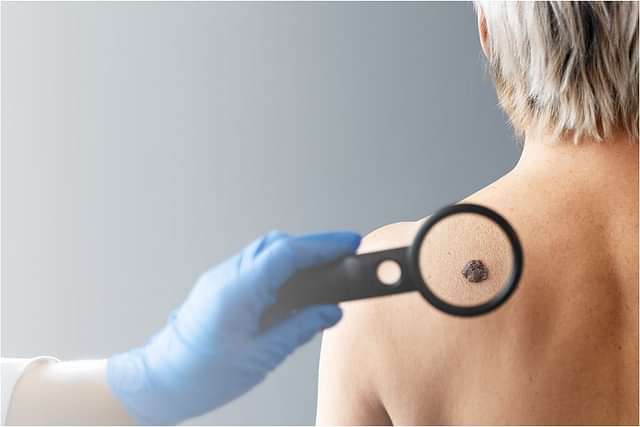
Overview of Disease
Skin cancer is a prevalent type of cancer that affects millions of people worldwide. It occurs when abnormal skin cells grow and multiply uncontrollably, forming tumours. While skin cancer can be caused by various factors, the primary cause is exposure to ultraviolet (UV) radiation from the sun or tanning beds. Genetic mutations and environmental factors also play a role in the development of skin cancer.
What is Skin Cancer?
Skin cancer is a malignant growth of skin cells that occurs when DNA mutations cause them to multiply rapidly and form tumours. The three main types of skin cancer are basal cell carcinoma, squamous cell carcinoma, and melanoma. Each type has its own distinct characteristics and stages, which determine the severity and treatment options for the condition. Early detection and treatment are crucial in managing skin cancer effectively.
Key Factors about Skin Cancer
| Category | Details |
| Also Referred to as | Non-melanoma skin cancer, Basal cell skin cancer, Squamous cell skin cancer, Melanoma |
| Commonly Occurs In | Face, ears, neck, arms, chest, back, hands, legs (for non-melanoma); Any area of the body (for melanoma) |
| Affected Organ | Skin (epidermis) |
| Type | Basal cell carcinoma (BCC), Squamous cell Carcinoma (SCC), Melanoma |
| Common Signs | Flesh-coloured round growth, pearl-like bump, pinkish patch, Red scaly patch, Slow-growing lump, Red scaly patch or firm bump, Scaly patch, bleeding or crusting |
| Consulting Specialist | Dermatologist |
| Treatment Procedures | Mohs surgery, Cryotherapy, Radiation, Chemotherapy, Topical treatments, Surgical excision |
| Managed By | Medications such as Dacarbazine, 5-fluorouracil (topical), Diclofenac (topical), Imiquimod (topical), Cemiplimab, and Pembrolizumab |
| Mimicking Condition | Actinic keratoses, Precancerous skin growths |
Types of Skin Cancer
There are several types of skin cancer, classified based on the type of skin cells affected. The main types include:
- Basal cell carcinoma (BCC): The most common type, developing from basal cells in the lower part of the epidermis. BCCs can appear as flesh-coloured, pearl-like bumps or pinkish patches, commonly found on sun-exposed areas such as the head, neck, and arms.
- Squamous cell carcinoma (SCC): The second most common type, developing from squamous cells in the upper part of the epidermis. SCCs typically appear as red, firm bumps or scaly patches, often forming on skin with frequent sun exposure.
- Melanoma: The most serious type, developing from melanocytes. Melanoma can appear as dark spots or within existing moles and is more aggressive and prone to spreading if left untreated.
Symptoms of Skin Cancer
The symptoms of skin cancer vary depending on the type and severity. Common symptoms include:
- Changes in skin appearance: One of the most noticeable signs of skin cancer is a change in the appearance of the skin. This can include new growths or sores that do not heal. Skin cancer may present as a new mole or a change in an existing mole, which may become larger, change in colour, or have an irregular border.
- Changes in mole colour or texture: Skin cancers such as melanoma can cause moles to change colour, becoming darker or more varied in hue. The texture of the mole may also become rough, scaly, or develop a raised area. Melanomas often show a mix of colours, such as brown, black, red, or white.
- Bleeding or oozing lesions: A common symptom of skin cancer is a lesion or sore that bleeds, oozes, or crusts over. This is particularly concerning if the bleeding occurs without any obvious cause, such as an injury, or if it persists over time.
- Itching or pain: While not always present, itching, tenderness, or pain in a specific area of the skin can be an indication of skin cancer. This discomfort is often linked to malignant growths that disrupt normal skin tissue.
- Changes in skin texture: Skin cancer can also lead to changes in the texture of the skin. Areas may become rough, scaly, or appear to be forming a crust. These textural changes are often seen in basal cell carcinoma and squamous cell carcinoma.
- Persistent ulcers or sores: Persistent skin ulcers or sores that do not heal can be a sign of skin cancer. Unlike benign sores or wounds, these ulcers can remain unchanged or worsen over time.
- New growths or nodules: New growths or nodules on the skin that are asymmetrical or have uneven edges might be indicative of skin cancer. These growths can vary in size and may feel hard or raised.
Stages of Skin Cancer
The stages of skin cancer are determined by several factors, including the size of the tumour, its depth of invasion, and whether it has spread to nearby lymph nodes or distant organs. The staging system for skin cancer is as follows:
- Stage 0: Stage 0 skin cancer, also known as carcinoma in situ, is the earliest stage of skin cancer. At this stage, the cancer cells are confined to the outermost layer of the skin (epidermis) and have not invaded deeper layers.
- Stage 1: Stage 1 melanoma is characterized by a localized tumour that is confined to the skin. Stage IA melanoma is less than or equal to 1.0 mm in thickness without ulceration. Stage IB melanoma is less than or equal to 1.0 mm with ulceration, or 1.01-2.0 mm without ulceration. The tumour has not spread to nearby lymph nodes or distant organs.
- Stage 2: In stage 2 melanoma, the tumour has grown thicker into the skin but has not spread to lymph nodes or distant organs. Stage IIA melanoma is either 1.01-2.0 mm with ulceration or 2.01-4.0 mm without ulceration. Stage IIB melanoma is either 2.01-4.0 mm with ulceration or greater than 4.0 mm without ulceration. Stage IIC melanoma is greater than 4.0 mm with ulceration.
- Stage 3: Stage 3 melanoma indicates that the cancer has spread to regional lymph nodes or has in-transit, satellite, or microsatellite metastases. Stage 3 is further subdivided into stages IIIA, IIIB, IIIC, and IIID based on the primary tumour thickness, ulceration, number of lymph nodes involved, and whether the lymph node involvement is clinically occult (found on sentinel node biopsy) or clinically apparent.
- Stage 4: Stage 4 skin cancer is the most advanced stage, indicating that the cancer has spread to distant organs or lymph nodes far from the original tumour site. This stage is also known as metastatic skin cancer.
Causes of Skin Cancer
The factors that can contribute to the development of skin cancer include:
- Exposure to ultraviolet (UV) radiation: Prolonged and intense sun exposure, especially during peak sunlight hours, can damage the DNA in skin cells. This damage accumulates over time and increases the risk of developing skin cancer.
- Genetic factors: Individuals with a family history of skin cancer are more likely to develop it themselves. Specific genetic mutations can increase susceptibility to skin cancer, such as those affecting genes responsible for DNA repair or those involved in skin pigmentation.
- Skin type and colour: People with lighter skin, blue or green eyes, and red or blonde hair are at a higher risk for skin cancer. Lighter skin types have less melanin, which provides some protection against UV radiation. Individuals with darker skin have a lower risk, but they are not immune to skin cancer.
- Age: The risk of developing skin cancer increases with age. This is partly due to the cumulative effect of UV exposure over time. Older adults are more likely to have had prolonged sun exposure, which can contribute to the development of skin cancer.
- Immune system suppression: A weakened immune system can increase the risk of skin cancer. This can be due to medical conditions such as HIV/AIDS or as a result of immunosuppressive medications used in the treatment of other diseases, such as organ transplant recipients.
- Exposure to certain chemicals: Exposure to certain chemicals and substances can increase skin cancer risk. For example, arsenic, which can be found in contaminated drinking water or certain industrial processes, has been linked to an increased risk of skin cancer.
- Personal history of skin cancer: Individuals who have previously been diagnosed with skin cancer are at a higher risk of developing new skin cancers.
Risk Factors
Several factors can increase your risk of developing skin cancer, including:
- Fair skin that burns easily
- Excessive sun exposure or indoor tanning
- History of sunburns, especially during childhood
- Large number of moles or atypical moles
- Family history of skin cancer
- Weakened immune system
- Exposure to certain chemicals or radiation (Schmults et al., 2023)
Who's at Risk?
While anyone can develop skin cancer, some individuals are at a higher risk:
- People with fair skin, light-coloured eyes, and blonde or red hair
- Individuals with a history of excessive sun exposure or sunburns
- People with a large number of moles or atypical moles
- Those with a family history of skin cancer
- Individuals with weakened immune systems
- Older adults, as the risk increases with age
Complications
Skin cancer, if not detected and treated early, can lead to various complications that may have a significant impact on a person's health and quality of life. These include:
- Local tissue damage: Cancer growth can damage surrounding tissues, leading to ulceration, bleeding, and infection. Extensive surgery might be needed, causing cosmetic and functional changes.
- Metastasis: Advanced skin cancer can spread to other body parts, such as lymph nodes, lungs, or liver, complicating treatment and worsening prognosis.
- Lymphoedema: Spreading to or removal of lymph nodes can cause lymphoedema, leading to painful swelling in affected areas that requires ongoing management.
- Psychological impact: The diagnosis and treatment of skin cancer can cause significant psychological stress, including anxiety, depression, and body image issues, especially if visible areas are affected.
- Functional impairment: Skin cancers on areas like the face or hands can impair movement or facial expressions, impacting daily activities.
- Secondary cancers: Those who have had skin cancer are at increased risk of developing new skin cancers, necessitating ongoing monitoring.
- Treatment side effects: Treatment methods such as surgery, radiation, or chemotherapy can cause side effects like fatigue, skin irritation, or systemic issues such as nausea.
Prevention of Skin Cancer
Preventing skin cancer is essential to reducing the incidence of this disease and its associated complications. Here are some key measures that can help prevent skin cancer:
- Avoid direct sunlight: Minimise exposure to direct sunlight, especially during peak hours, typically between 11 am and 3 pm, when UV radiation is strongest. Seek shade whenever possible to reduce the risk of skin damage.
- Wear protective clothing: Cover exposed skin with protective clothing, such as long-sleeved shirts, long pants, wide-brimmed hats, and sunglasses. This helps block harmful UV rays and protect the skin from sun damage.
- Use broad-spectrum sunscreens: Apply a broad-spectrum sunscreen with an SPF of at least 30 regularly, even on cloudy days. Reapply every two hours while outdoors, or more frequently if swimming or sweating excessively (American Cancer Society, 2024).
- Perform regular skin checks: Conduct regular self-examinations of the skin and schedule visits to a doctor for professional skin checks. This helps catch any potential skin issues early, when they are most treatable.
Diagnosis & Tests
Diagnosing skin cancer involves several key steps to accurately identify the presence and type of cancer. This includes:
- Physical examination: During this exam, the doctor inspects any suspicious skin lesions or changes in existing moles. They assess factors such as size, shape, colour, and texture to determine if further investigation is needed.
- Dermatoscopy: To gain a more detailed view of suspicious skin areas, a dermatologist may use a dermatoscope. This handheld device magnifies and illuminates the skin, allowing for a closer examination of the structures and patterns in the skin that may indicate cancer.
- Skin biopsy: If a lesion appears suspicious, a skin biopsy is usually performed. This involves removing a small sample of skin tissue for laboratory analysis.
- Imaging tests: For cases where skin cancer may have spread beyond the skin, imaging tests such as ultrasound, CT scans, or MRI may be used. These tests help to assess the extent of cancer spread and determine the appropriate course of treatment.
- Molecular testing: In some cases, molecular testing of the tumour may be performed to identify specific genetic mutations or markers associated with the cancer. This information can help in tailoring personalised treatment plans and assessing prognosis.
- Staging: Staging involves evaluating the size of the tumour, its depth, and whether it has spread to lymph nodes or other parts of the body.
Treatment & Management
The management of skin cancer is tailored based on its type (basal cell carcinoma, squamous cell carcinoma, or melanoma), stage, location, size, and the patient’s overall health. Treatment aims to eliminate the cancer, prevent recurrence, and preserve healthy tissue and appearance.
1. Surgery
Surgery is the primary treatment for most skin cancers, especially in the early stages.
- Excisional Surgery: Removes the tumour with a margin of normal skin; commonly used for basal and squamous cell carcinomas.
- Mohs Micrographic Surgery: A precise technique to remove the cancer layer by layer with immediate microscopic examination while sparing healthy tissue; considered the gold standard for high-risk tumours (e.g., on the face, recurrent tumours, or tumours with aggressive histologic patterns) (Schmults et al., 2023).
- Shave Excision: Used for superficial basal or squamous cell carcinoma.
- Curettage and Electrodessication: Involves scraping the tumour and burning the area; suitable for small, low-risk tumours.
2. Radiation Therapy
Used for patients who cannot undergo surgery or when tumours are difficult to remove surgically.
- Effective for basal cell carcinoma and squamous cell carcinoma.
- High-energy X-rays or electron beam radiation target and destroy cancer cells.
3. Chemotherapy
Systemic chemotherapy is reserved for advanced or metastatic skin cancers, especially melanoma.
- Dacarbazine: An alkylating agent that interferes with DNA replication, primarily used for metastatic melanoma.
- Temozolomide: An oral alkylating agent often used as an alternative to dacarbazine in advanced melanoma due to better tolerance.
- Cisplatin: A platinum-based chemotherapeutic that disrupts DNA structure, used in aggressive or advanced skin cancers.
- Carboplatin: A cisplatin analogue with a better safety profile, used in combination therapies for advanced non-melanoma skin cancers.
- Fluorouracil (5-FU): A topical or systemic chemotherapy that inhibits DNA synthesis, commonly used for actinic keratosis and superficial basal cell carcinoma.
- Paclitaxel: Inhibits microtubule disassembly, used in combination regimens for advanced or metastatic cutaneous malignancies.
4. Topical Chemotherapy
Applied directly to the skin for superficial or precancerous lesions:
- 5-Fluorouracil (5-FU) cream for the treatment of actinic keratosis and superficial basal cell carcinoma.
- Imiquimod cream stimulates an immune response and is used for superficial basal cell carcinoma and actinic keratosis.
5. Photodynamic Therapy (PDT)
Combines a photosensitising agent with light exposure to destroy cancer cells.
- Aminolevulinic acid (ALA): A photosensitiser activated by light to destroy abnormal cells, used in actinic keratosis and superficial skin cancers.
- Methyl aminolevulinate (MAL): A topical photosensitising agent used in photodynamic therapy to selectively target and destroy cancerous skin lesions.
6. Cryotherapy
Involves freezing cancerous tissue with liquid nitrogen.
- Effective for actinic keratosis and some low-risk basal cell and squamous cell carcinomas.
- Causes localised destruction of abnormal cells.
7. Immunotherapy
Activates the immune system to fight cancer cells, especially used in advanced melanoma and some non-melanoma skin cancers.
- Checkpoint inhibitors:
- Pembrolizumab: A PD-1 inhibitor that boosts immune response against melanoma and other advanced skin cancers.
- Nivolumab: Another PD-1 checkpoint inhibitor used in the treatment of metastatic melanoma and cutaneous squamous cell carcinoma.
- Ipilimumab: A CTLA-4 inhibitor that enhances T-cell activation, used in combination with PD-1 inhibitors for advanced melanoma.
- Cemiplimab: A PD-1 inhibitor approved for advanced cutaneous squamous cell carcinoma and certain basal cell carcinomas.
- Interleukin-2 (IL-2) and interferon-alpha (less common now due to toxicity)
8. Targeted Therapy
Used for melanomas with specific genetic mutations:
- BRAF mutations:
- Vemurafenib: A BRAF inhibitor used in melanoma patients with BRAF V600 mutations to block abnormal cell growth.
- Dabrafenib: Another BRAF inhibitor effective in treating BRAF-mutated metastatic melanoma.
- MEK inhibitors (often in combination with BRAF inhibitors):
- Trametinib: A MEK inhibitor often combined with BRAF inhibitors to delay resistance and improve outcomes in melanoma.
- Cobimetinib: A MEK inhibitor used with vemurafenib to treat BRAF-mutated melanoma more effectively.
- KIT mutations (less common):
- Imatinib: A tyrosine kinase inhibitor used in rare skin cancers like dermatofibrosarcoma protuberans or melanomas with KIT mutations.
9. Laser Surgery
High-intensity light precisely destroys cancerous or precancerous lesions, mostly for cosmetic outcomes or superficial cancers.
When to See a Doctor?
If you have any concerns or suspicions about skin cancer, it is crucial to consult a doctor promptly. Be on the lookout for unusual moles, changes in skin texture, or unexplained growths on your skin, as these could be early signs of skin cancer. If you have been taking medications that may increase photosensitivity or immunosuppressive medications (such as those taken after organ transplantation), it is especially important to discuss your skin cancer risk with your doctor. They can assess your individual risk factors and recommend appropriate screening, treatment, or alternative medications if necessary.
Key Takeaways
- Skin cancer is a serious condition that requires prompt medical attention and appropriate treatment.
- The management of skin cancer depends on the type and stage of the cancer, and may include surgery, radiation therapy, chemotherapy, photodynamic therapy, immunotherapy, targeted therapy, cryotherapy, topical chemotherapy, and laser surgery.
- Medications used in the treatment of skin cancer include dacarbazine, 5-fluorouracil (topical), diclofenac (topical), imiquimod (topical) cemiplimab, and pembrolizumab.
- Early detection is crucial for successful treatment, so it is essential to be aware of any changes in your skin and to seek medical attention if you notice any suspicious signs or symptoms.
- Regular skin checks with a dermatologist are recommended for individuals at high risk of developing skin cancer.
FAQs
Can skin cancer be cured?
Yes, most skin cancers are highly treatable if detected and addressed early. Early diagnosis and intervention significantly improve the likelihood of complete recovery.
How does skin cancer look like?
Skin cancer's appearance varies by type. It often manifests as a new growth or change in an existing mole or growth. The ABCDE criteria (Asymmetry, Border, Colour, Diameter, Evolution) aid in identifying potential skin cancer signs.
Is skin cancer painful to touch?
Can I live a full life with skin cancer?
Yes, with early detection and appropriate treatment, skin cancer is highly curable, and most individuals can anticipate a full life. However, advanced melanoma cases can be potentially fatal.
Is skin cancer serious?
Skin cancer is a serious health concern requiring immediate medical attention. Without proper treatment, it can invade nearby tissues or spread to other body parts, potentially leading to life-threatening complications.
Can skin cancer cause death?
Yes, untreated or advanced-stage skin cancer can lead to death. Melanoma is the leading cause of skin cancer deaths.
Should skin cancer be removed?
Yes, surgical removal is typically the primary skin cancer treatment. The specific surgical approach (e.g., excisional biopsy, Mohs surgery, cryosurgery) depends on the cancer type and extent.
What does stage 1 skin cancer look like?
Stage 1 skin cancer typically appears as a small, localised growth or lesion on the skin, with varying appearances depending on the type.
How to detect skin cancer?
Does skin cancer bleed?
References
- American Cancer Society. (2024). Key statistics for basal and squamous cell skin cancers. https://www.cancer.org/cancer/types/basal-and-squamous-cell-skin-cancer/about/key-statistics.html
- Schmults, C. D., Blitzblau, R., Aasi, S. Z., Alam, M., Amici, J. M., Bibee, K., Bordeaux, J., Chen, P. L., Conde, J. G., Daniels, G. A., DiMaio, D., Fisher, K., Gastman, B., Grekin, R. C., Grossman, D., Ho, A. L., Hohenleutner, U., Ibrahim, S. F., Jambusaria-Pahlajani, A., ... Hughes, K. (2023). Basal cell skin cancer, version 2.2024, NCCN clinical practice guidelines in oncology. Journal of the National Comprehensive Cancer Network, 21(11), 1181-1203. https://doi.org/10.6004/jnccn.2023.0056
- Shalata, W., Attal, Z. G., Solomon, A., Tourkey, L., Abu Salamah, F., Abu Ras, A. J., Shaikh, Y., Yakobson, A., & Khatib, S. (2024). Melanoma management: Exploring staging, prognosis, and treatment innovations. International Journal of Molecular Sciences, 25(11), 5794. https://doi.org/10.3390/ijms25115794
- Mittal, A., & Mittal, B. (2024). Comparative analysis of US guidelines for the management of cutaneous squamous cell and basal cell carcinoma. Journal of Skin Cancer, 2024, 3859066. https://doi.org/10.1155/2024/3859066
- Fateeva, A., Eddy, K., & Chen, S. (2024). Current state of melanoma therapy and next steps: Battling therapeutic resistance. Cancers, 16(8), 1571. https://doi.org/10.3390/cancers16081571
Check Related Salts
Latest health articles

Top Health Essentials















Disclaimer
Top-Selling Medicines:
...View more
Top-OTC medicines:
...View more
Company
About UsHealth ArticleHealth StoriesHealth LibraryDiseases & Health ConditionsAyurvedaUnderstanding Generic MedicinesAll MedicinesAll BrandsNeed HelpFAQSecuritySavings CalculatorAdvertise with UsSubscribe
Registered Office Address
Grievance Officer
Download Truemeds


Contact Us
Our customer representative team is available 7 days a week from 9 am - 9 pm.
v4.28.13

2026 - Truemeds | All rights reserved. Our content is for informational purposes only. See additional information.

Our Payment Partners




