

- Medicines
- Personal Care
- Skin Cream
- Sunscreen
- Face Wash
- Skin and Body Soap
- Acne Care
- Body Lotions
- Moisturising Lotion
- Moisturising Cream
- Mosquito Repellent
- Moisturising Gel
- Body Wash
- Hair Oils
- Hair Shampoo
- Hair Conditioners
- Hair Supplements
- Hair Colour
- Hair Serum
- Hair Mask
- Hair Solutions
- Baby Diapers and Wipes
- Baby Lotion and Moisturising Cream
- Baby Bath Essentials
- Baby Skin Care
- Baby and Infant Food
- Baby Healthcare
- Women Multivitamins
- Ovulation Test Kit and Women Intimate Care
- Sanitary Pads
- Nutritional Drinks
- Condoms
- Lubricants
- Massage Gels
- Personal Body Massagers
- Men Performance Booster
- Sexual Health Supplements
- Massage Oils
- Ayurveda
- Tooth Paste
- Mouth Ulcer Gel
- Mouthwash
- Toothache and Gum Pain
- Tooth Brush
- Gargle Solution
- Orthopaedic Supports
- Adult Diapers
- Footwear
- Mobility and Support Accessories
- Urinary Support and Care
- Health Conditions
- Bone and Joint Care
- Digestive Care
- Eye Care
- Pain Relief
- Smoking Cessation
- Liver Care
- Stomach Care
- Cold and Cough
- Heart Care
- Kidney Care
- Piles, Fissures & Fistula
- Respiratory Care
- Mental Wellness
- Derma Care
- Pre and Probiotics
- Acidity
- Gas
- Constipation
- Loose Motion/Diarrhoea
- Digestive Fibres
- Digestive Enzymes
- Eye Lubricant Drops
- Lens Solution
- Safety Eye Wear
- Eye Cream
- Eye Vitamins and Supplements
- Eye Drops
- Eye Ointment and Gel
- Nicotine Patch
- Nicotine Gum
- Nicotine Lozenges
- Cough Syrups
- Chest Rubs and Balms
- Nasal Spray
- Lozenges
- Inhalant Capsules
- Cold and Cough Tablets
- Vitamins & Supplements
- Diabetes Care
- Healthcare Devices
- Homeopathic Medicine
- Health Guide
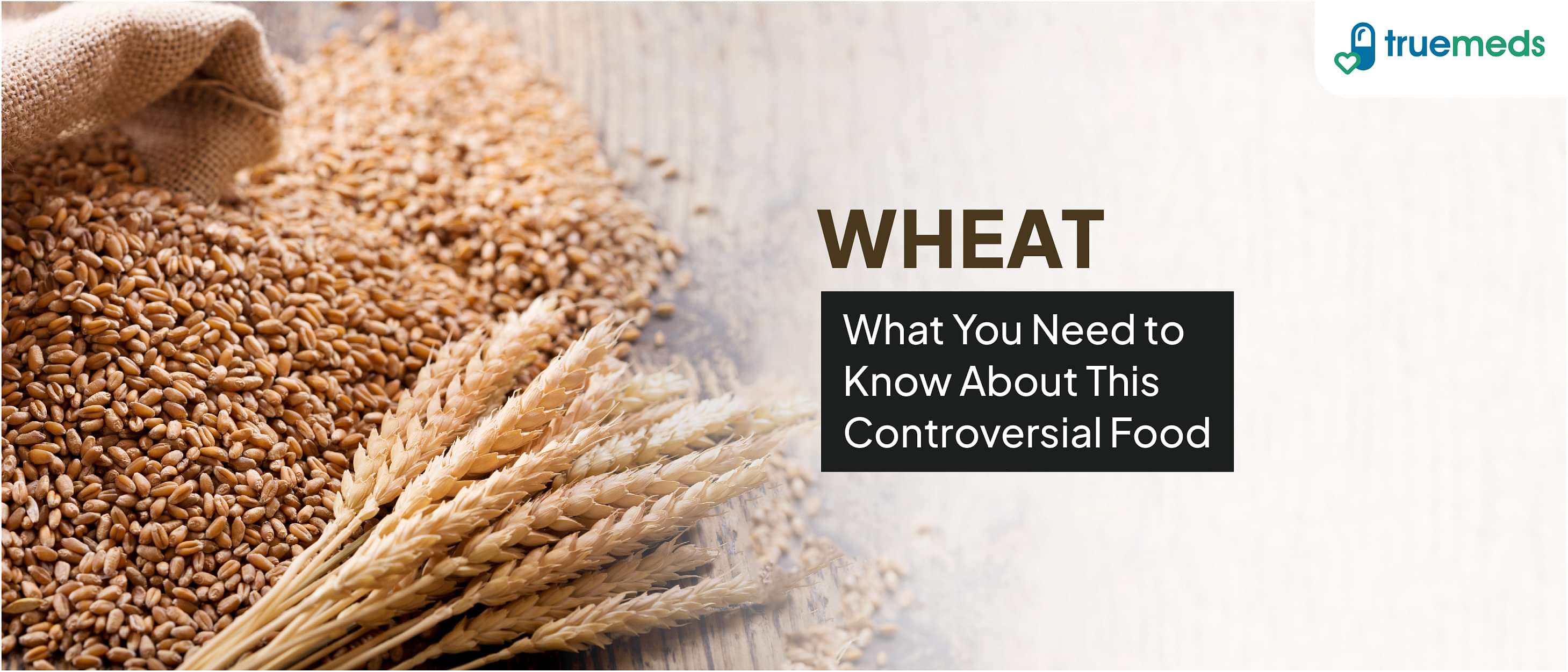
Wheat Nutrition Facts, Benefits And Its Side Effect
Last updated on : 30 Nov, 2025
Read time : 7 min
Wheat is one of the most commonly consumed grains worldwide and an essential part of many diets. Rich in fibre, protein, vitamins, and minerals, wheat contributes to digestive health, sustained energy, and overall nutritional balance. It is a good source of complex carbohydrates that provide long-lasting energy. However, like any food, it is important to consume wheat in moderation as part of a balanced diet. While wheat offers several health benefits, such as supporting digestive health and aiding in weight management, it is crucial to remember it is unsuitable for individuals with celiac disease, gluten intolerance, or wheat allergies [5].
In this article, we will explore the nutritional profile of wheat, its health benefits, and any potential side effects to consider for a safe and informed consumption.
Wheat Nutrition Facts (Per 100g)
A 3.5-ounce (100g) serving of unenriched whole wheat flour provides the following approximate nutritional values:
| Component | Amount | Component | Amount |
| Wheat Calories | 364 Kcal | Calcium | 38 mg |
| Carbohydrate | 71.2 g | Magnesium | 136 mg |
| Protein in wheat | 15 g | Phosphorus | 352 mg |
| Dietary fibre | 10.6 g | Potassium | 376 mg |
| Niacin | 5.5 mg | Folate | 39 ug |
| Thiamin | 0.5 mg | Source: USDA FoodData Central | — |
1. Carbohydrates
Wheat, like all cereal grains, is mostly constituted of carbohydrates. Starch, the primary carbohydrate in plants, accounts for more than 90% of wheat’s total carbohydrate content.
2. Fibre
Compared to processed wheat, whole wheat is rich in fibre, with a fibre level of between 12% and 15% of its dry weight. This crucial fibre is concentrated in the bran, which is removed from refined flour during the milling process.
3. Protein
Protein content in wheat ranges from 7–22% of its dry weight. Gluten proteins account for roughly 80% of the total, giving wheat dough its distinctive elasticity and stickiness that is essential for breadmaking.
4. Vitamins and Minerals
Whole-grain wheat is a significant source of several essential vitamins and minerals, including selenium, manganese, phosphorus, copper, and folate. Refined wheat is deficient in many of these nutrients, as they are concentrated in the bran and germ, which are removed during milling.
5. Other Plant Compounds
The aleurone layer of wheat bran is especially rich in antioxidants and other beneficial compounds, including:
- Ferulic acid
- Phytic acid (Phytate)
- Alkylresorcinols
- Lignans
- Lutein
Top 6 Health Benefits of Wheat
Whole wheat benefits the body primarily through its high fibre content and rich supply of micronutrients and phytochemicals.
1. Improves Body Metabolism & Supports Weight Management:
The high fibre content of whole wheat is directly linked to improved digestion and metabolism [4]. Furthermore, its high fibre content promotes satiety, which may help reduce overall calorie intake. Regular consumption of whole-grain wheat has been linked to gradual and sustained weight loss in individuals with obesity, likely through mechanisms independent of gut microbiota [7].
2. May Help Manage Type 2 Diabetes:
Regular consumption of whole wheat may help reduce the risk of developing type 2 diabetes by improving blood sugar control [2]. Studies suggest that individuals can benefit from replacing refined grains with whole wheat products to support better glycemic control [2].
3. Helps Reduce Chronic Inflammation:
Wheat contains beneficial compounds like betaine, which may help alleviate symptoms of chronic inflammation by reducing certain inflammatory markers [4]. This anti-inflammatory action is suggested to lower the risk of chronic conditions, including heart disease and type 2 diabetes [4].
4. Prevents Gallstones:
Consuming fibre-rich foods, such as whole wheat, may help prevent gallstones [6]. The insoluble fibre in wheat may help reduce the production of bile acids, which, when concentrated, can lead to gallstone formation in the body [6].
5. Prevents Heart Attacks:
Consuming foods high in dietary fibre, such as whole grains, is consistently associated with supporting healthy blood pressure and potentially reducing the risk of recurrent heart attacks [1]. For optimal heart benefits, a whole-grain diet should be combined with regular exercise [1].
6. Prevents Breast Cancer:
Preliminary research suggests that the fibre and phytochemicals in wheat bran may offer protection against certain cancers [3]. Whole-grain wheat may also influence estrogen regulation, potentially lowering the risk of conditions like breast cancer [3].
Potential Side Effects & Risks of Wheat
While whole wheat offers benefits, its consumption poses serious health risks for some individuals, primarily due to the presence of gluten.
Celiac Disease:
This is a serious autoimmune disorder where ingesting gluten triggers an immune response that damages the small intestine lining, reducing its ability to absorb nutrients.
Non-Celiac
Wheat Sensitivity: This condition is characterized by an intolerance to wheat that causes symptoms similar to Celiac Disease (like abdominal pain, bloating, and fatigue) but does not involve the same autoimmune or allergic response [5].
Irritable Bowel Syndrome (IBS):
Wheat intolerance is common in IBS sufferers. The fermentable carbohydrates (FODMAPs) found in wheat can trigger symptoms like abdominal pain, bloating, diarrhoea, and constipation.
Allergy:
Wheat allergy is an immune reaction to specific wheat proteins, usually manifested as hives, swelling, or difficulty breathing. It is estimated that approximately 0.2% to 1% of children are allergic to wheat proteins [5].
Antinutrients:
Whole-grain wheat contains phytic acid (phytate), which is sometimes termed an “antinutrient” because it can impair the absorption of certain minerals, particularly iron and zinc, by binding to them in the gut.
Takeaway: Is Wheat Good for You?
Wheat, particularly in its whole-grain form, can offer numerous health benefits for digestion, weight management, and chronic disease risk reduction. However, for those with celiac disease, wheat sensitivity, or IBS, avoiding gluten is essential [5].
The key is moderation and choosing the correct form. Always opt for whole wheat over refined white flour for maximum nutritional value. If you experience persistent digestive issues or have known allergies, consult your healthcare professional or a registered dietitian before including wheat in your daily diet.
Expert Quote
“Whole wheat is a versatile whole grain and a powerhouse of fibre and nutrients. While it is a staple in most parts of India, those with gluten sensitivity should avoid consuming it or consult a healthcare provider before including it in their diet.”
-Dr. Sachin Singh
References
[1] Zeng, Y., Pu, X., Yang, X., Yang, J., Du, J., Yang, T., & Li, X. (2017). Strategies of functional foods for heart disease prevention in human beings. In Strategies of functional foods for heart disease prevention in human beings (pp. 108–123). De Gruyter Open Poland. https://d-nb.info/1167366255/34#page=124
[2] Hu, Y., Ding, M., Sampson, L., Willett, W. C., Manson, J. E., Wang, M., Rosner, B., Hu, F. B., & Sun, Q. (2020). Intake of whole grain foods and risk of type 2 diabetes: results from three prospective cohort studies. BMJ, m2206. https://doi.org/10.1136/bmj.m2206
[3] Ferguson, L. R., & Harris, P. J. (1999). Protection against cancer by wheat bran: Role of dietary fibre and phytochemicals. European Journal of Cancer Prevention, 8(1), 17–26. https://journals.lww.com/eurjcancerprev/Abstract/1999/02000/protection_against_cancer_by_wheat_bran__role_of.3.aspx
[4] Afzal, S., Shehzad, A., Randhawa, M., Asghar, A., Shoaib, M., & Jahangir, M. (2013). Health benefits and importance of utilizing wheat and rye. Pak J Agri Sci, 23(4), 212–222. https://www.researchgate.net/publication/328052439_Health_benefits_and_importance_of_utilizing_wheat_and_rye
[5] Patel, N., & Samant, H. (2025). Wheat allergy. In StatPearls. StatPearls Publishing. https://www.ncbi.nlm.nih.gov/books/NBK536992/
[6] National Institute of Diabetes and Digestive and Kidney Diseases. (2025, August 28). Eating, diet, & nutrition for gallstones. NIDDK. https://www.niddk.nih.gov/health-information/digestive-diseases/gallstones/eating-diet-nutrition
[7] Wu, W.-C., Inui, A., & Chen, C.-Y. (2020). Weight loss induced by whole grain-rich diet is through a gut microbiota-independent mechanism. World Journal of Diabetes, 11(2), 26–32. https://doi.org/10.4239/wjd.v11.i2.26
















Disclaimer
Our healthcare experts have carefully reviewed and compiled the information presented here to ensure accuracy and trustworthiness. It is important to note that this information serves as a general overview of the topic and is for informational purposes only. It is not intended to diagnose, prevent, or cure any health problem. This page does not establish a doctor-patient relationship, nor does it replace the advice or consultation of a registered medical practitioner. We recommend seeking guidance from your registered medical practitioner for any questions or concerns regarding your medical condition.
Popular Articles



Recommended Articles



Recent Articles









Company
About UsHealth ArticleHealth StoriesHealth LibraryDiseases & Health ConditionsAyurvedaAll MedicinesAll BrandsNeed HelpFAQSecuritySubscribe
Registered Office Address
Grievance Officer
Download Truemeds


Contact Us
Our customer representative team is available 7 days a week from 9 am - 9 pm.
v4.9.0

2025 - Truemeds | All rights reserved. Our content is for informational purposes only. See additional information.

Our Payment Partners