

- Medicines
- Personal Care
- Skin Cream
- Sunscreen
- Face Wash
- Skin and Body Soap
- Acne Care
- Body Lotions
- Moisturising Lotion
- Moisturising Cream
- Mosquito Repellent
- Moisturising Gel
- Body Wash
- Hair Oils
- Hair Shampoo
- Hair Conditioners
- Hair Supplements
- Hair Colour
- Hair Serum
- Hair Mask
- Hair Solutions
- Baby Diapers and Wipes
- Baby Lotion and Moisturising Cream
- Baby Bath Essentials
- Baby Skin Care
- Baby and Infant Food
- Baby Healthcare
- Women Multivitamins
- Ovulation Test Kit and Women Intimate Care
- Sanitary Pads
- Nutritional Drinks
- Condoms
- Lubricants
- Massage Gels
- Personal Body Massagers
- Men Performance Booster
- Sexual Health Supplements
- Massage Oils
- Ayurveda
- Tooth Paste
- Mouth Ulcer Gel
- Mouthwash
- Toothache and Gum Pain
- Tooth Brush
- Gargle Solution
- Orthopaedic Supports
- Adult Diapers
- Footwear
- Mobility and Support Accessories
- Urinary Support and Care
- Health Conditions
- Bone and Joint Care
- Digestive Care
- Eye Care
- Pain Relief
- Smoking Cessation
- Liver Care
- Stomach Care
- Cold and Cough
- Heart Care
- Kidney Care
- Piles, Fissures & Fistula
- Respiratory Care
- Mental Wellness
- Derma Care
- Pre and Probiotics
- Acidity
- Gas
- Constipation
- Loose Motion/Diarrhoea
- Digestive Fibres
- Digestive Enzymes
- Eye Lubricant Drops
- Lens Solution
- Safety Eye Wear
- Eye Cream
- Eye Vitamins and Supplements
- Eye Drops
- Eye Ointment and Gel
- Nicotine Patch
- Nicotine Gum
- Nicotine Lozenges
- Cough Syrups
- Chest Rubs and Balms
- Nasal Spray
- Lozenges
- Inhalant Capsules
- Cold and Cough Tablets
- Vitamins & Supplements
- Diabetes Care
- Healthcare Devices
- Homeopathic Medicine
- Health Guide
Tapioca: Nutrition, Uses, and Health Benefits
Last updated on : 30 Nov, 2025
Read time : 9 min
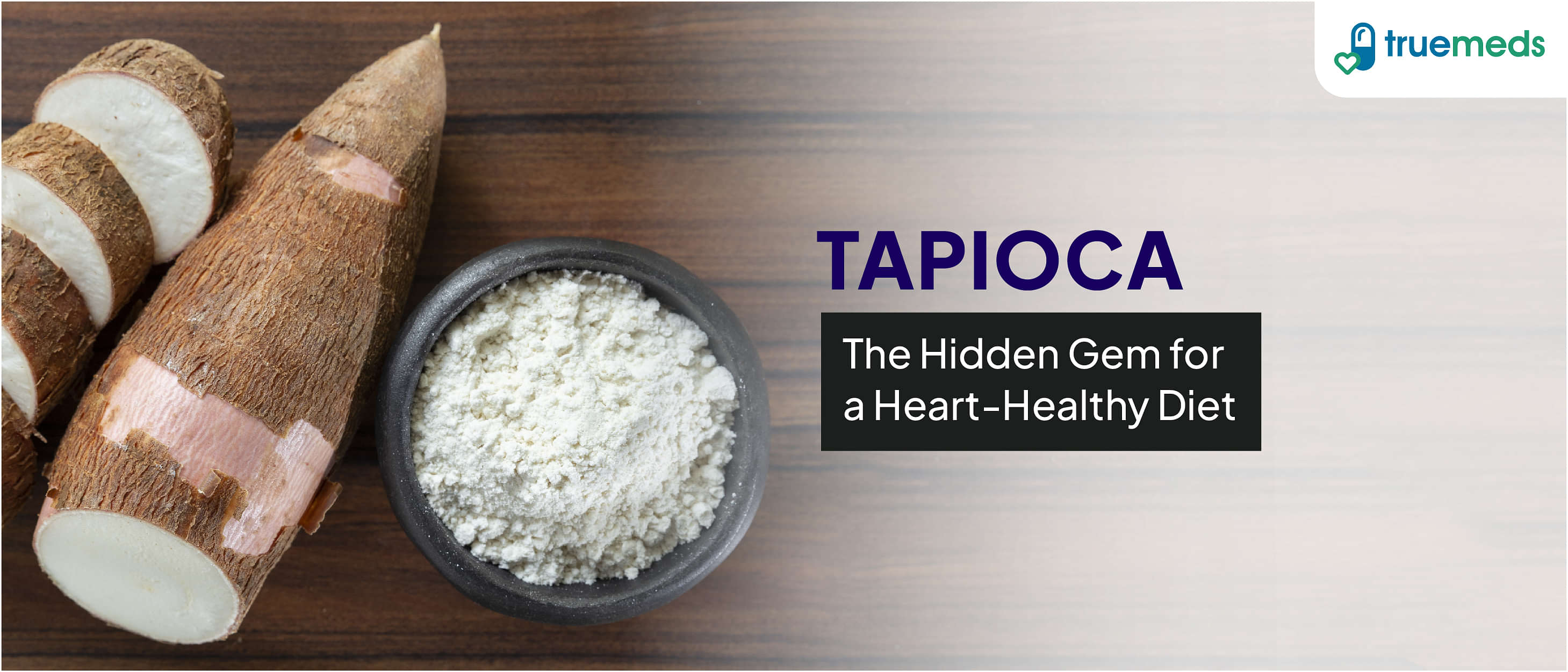
Tapioca is neither a vegetable nor a fruit. It’s a starchy material which is extracted from the roots of the cassava plant. Tapioca belongs to the Euphorbiaceae family and is scientifically known as Manihot esculenta. It is primarily composed of carbohydrates but contains very little protein, fibre, or other nutrients. Tapioca’s main value is its utility as a gluten-free alternative to wheat and other grains, a factor that has recently gained popularity. Cassava roots are edible, and a large part of the plant is harvested for starch.
Nutritional Highlights
- Rich in starch (carbohydrates)
- Very low in protein and fiber
- Naturally gluten-free
- Contains trace minerals like calcium and iron
Tapioca is not recommended for individuals on low-carb or ketogenic diets, as its high carbohydrate content can significantly impact blood sugar levels due to its high glycemic index (GI). However, for those who do not need to restrict carbohydrates, tapioca can be an energy-boosting and easily digestible ingredient in a balanced diet [1].
Preparation of Tapioca
Tapioca pearls are commonly known as sabudana in India. Cassava roots naturally contain a chemical called linamarin, which can convert to cyanide and is toxic in its raw form. Tapioca, as a food product, is a by-product of cassava roots that is produced only after the roots are treated and processed to extract and remove this toxic chemical.
It is prepared by chopping raw cassava roots in a tank and storing the juice. The starchy liquid is separated, and the water is allowed to evaporate. Once the water has completely evaporated, a fine tapioca powder remains. This white powder is sieved, resulting in the desired shapes, such as flakes or pearls (sabudana).
Tapioca Nutritional Value
The nutrition facts below are for a one-cup serving (approx. 152 grams) of dry tapioca pearls, based on well-researched data provided by the USDA (United States Department of Agriculture) [3]:
|
Nutrient |
Amount |
| Water | 14 g |
| Calories | 544 |
| Carbohydrates | 135 g |
| Fibre | 1.37 g |
| Protein | 0.29 g |
| Cholesterol | 0 mg |
| Fat | 0.03 g |
| Calcium | 30.4 mg |
| Iron | 2.4 mg |
| Magnesium | 1.52 mg |
| Potassium | 16.7 mg |
| Sodium | 2 mg |
| Thiamin | 1 mg |
| Vitamin B5 | 2 mg |
| Vitamin B6 | 1 mg |
| Folate | 1 mg |
| Choline | 1.2 mg |
Tapioca is almost entirely made up of carbohydrates, primarily in the form of starch. It contains very little protein, fat, or fiber, and only trace amounts of vitamins and minerals. Compared to most grains and flours, tapioca is nutritionally limited, especially in terms of protein and micronutrients.
However, its naturally gluten-free nature makes it a valuable option for people with celiac disease or gluten intolerance, and it can serve as a calorie-dense energy source in a balanced diet.
Uses of Tapioca
Tapioca’s mild flavor allows it to be used as a versatile component in many dishes.
- Flour & Thickener: Tapioca flour can be used to make gluten-free and grain-free bread, or as a thickening agent in soups, sauces, and gravies without altering the original flavor.
- Moisture & Texture: Tapioca starch can improve the moisture content and texture of dough and burger patties.
- Desserts & Drinks: Tapioca pearls (sabudana) are used to make puddings, kheer, and bubble teas.
Here are several common ways tapioca can be used:
- Boiled: Boiled tapioca (kappa) is often served as a main dish or side, especially in cuisines like that of Kerala, India.
- Tapioca Chips: Thinly sliced and fried or baked until crispy.
- Tapioca Flour: Used as a gluten-free alternative in baking.
- Tapioca Pearls/Sabudana: Used in desserts like pudding or in savory Indian dishes like sabudana khichdi.
- Tapioca Pudding: A creamy dessert made by simmering tapioca pearls in milk or coconut milk.
What Are Tapioca Pearls?
Tapioca pearls, commonly known as sabudana in India, are small, round balls made from tapioca starch. They are a staple in Indian cooking, used to prepare dishes such as sabudana khichdi (a savory dish made with spices, potatoes, and peanuts), sabudana kheer (a sweet, pudding-like dessert), and savory sabudana tikkis.
To prepare tapioca pearls, they must first be soaked in water for a few hours until they become soft and translucent. They can then be boiled, steamed, or fried according to the recipe.
Potential Health Contributions of Tapioca
While tapioca is primarily a starchy, high-calorie food, its consumption in the context of a balanced diet may contribute to health in a few specific ways:
- Aids in Easy Digestion (Gluten-Free) Tapioca starch is naturally gluten-free, making it an excellent alternative to wheat-based flours for individuals with celiac disease or gluten sensitivity. It is generally considered gentle on the stomach and easy to digest for most people [2].
- Excellent Energy Booster As an almost pure carbohydrate source, tapioca is an effective and readily available source of energy for the body [2]. Its high calorie and carbohydrate content can help maintain energy levels and enhance satiety when consumed in appropriate portions.
- Supports Healthy Weight Gain For individuals aiming to increase their body weight, tapioca’s high carbohydrate and calorie density offers a healthy and easy option to increase daily caloric intake without adding significant fat or cholesterol.
- Source of Trace Minerals Tapioca contains trace amounts of minerals like iron and calcium. While not a primary source of these nutrients, the iron content can contribute to red blood cell formation, and calcium is vital for bone health [3].
Side Effects and Word of Caution
Tapioca is generally safe and nourishing when consumed in moderation as part of a balanced diet; however, its excessive use or improper preparation can pose risks.
- Blood Sugar Management: Tapioca has a high glycemic index (GI), meaning it can cause a rapid increase in blood sugar levels when overconsumed. This may be problematic for individuals with diabetes or insulin resistance, who should monitor their intake carefully.
- Digestive Issues: While easy to digest, tapioca is very low in fiber. Consuming it in excess, without adequate dietary fiber, may contribute to constipation or digestive discomfort for some individuals.
- Cyanide Risk: Raw, improperly processed cassava root is toxic because it contains linamarin, which converts to cyanide. It is crucial to only consume commercially processed tapioca products, as the preparation process effectively removes the toxic compounds. Never consume wild or unprocessed cassava root.
- Calorie Density: Due to its high carbohydrate and calorie content, those managing their weight should consume tapioca in small, controlled amounts as part of a low-calorie or weight-loss diet.
Expert Perspective
“Tapioca, derived from the cassava root, is a valuable gluten-free starch that serves as an excellent energy source and is easily digestible. While its high calorie and carbohydrate content makes it a powerful fuel, it is low in protein and fiber. Therefore, it should be consumed as part of a varied diet that includes protein and vegetables to ensure complete nutrition.”
— Dr. Kavya Rejikumar
Frequently Asked Questions (FAQs)
Is tapioca a Sabudana?
Yes, tapioca pearls are also known as sabudana in Indian cuisine. They are made from tapioca starch and are commonly used in various dishes like puddings, khichdi, and snacks.
Is tapioca good for your stomach?
Tapioca is generally considered gentle on the stomach and easy to digest for most people, making it a suitable option for those with sensitive digestive systems or celiac disease due to its gluten-free nature.
Is it OK to eat tapioca every day?
Eating tapioca in moderation as part of a balanced diet is generally safe for most people. However, consuming it excessively, especially in large portions, may lead to potential side effects such as blood sugar spikes due to its high GI, so it’s best to enjoy it in controlled amounts.
Is tapioca better than Rice?
Tapioca and rice each have their own nutritional profiles. Tapioca is gluten-free and can be easier to digest for some. However, a single cup of dry tapioca pearls (544 calories) is significantly more calorie-dense than a cup of cooked white rice (approx. 206 calories) [3]. Rice typically offers more fiber and a broader range of micronutrients. Neither is inherently “better,” as the choice depends on an individual’s specific dietary needs (e.g., gluten-free diet, calorie goals).
Is tapioca good for Building Muscle?
Tapioca is primarily a source of carbohydrates, which provide the energy required for intense workouts and aid in post-exercise recovery. However, it is very low in protein. Therefore, it can support muscle growth only when combined with adequate protein intake and a regular strength-training regimen.
References
[1] Choudhury, B. H., Das, P., & Basumatary, M. U. (2016). Study on nutritional and antinutritional profile of value added products made from tapioca tubers from Assam, India. Asian Journal of Chemistry, 28(9), 2073–2076. https://doi.org/10.14233/ajchem.2016.19920
[2] Suprapto, Widiyaningsih, E. N., & Munawaroh, R. (2022). Education about The Utilization of Cassava Starch (Tapioca) for Health and Making Snack. BEMAS: Jurnal Bermasyarakat, 2(2), 81–87. https://doi.org/10.37373/bemas.v2i2.167
[3] U.S. Department of Agriculture (USDA), Agricultural Research Service. (2019). FoodData Central. Tapioca pearls, dry. https://fdc.nal.usda.gov/fdc-app.html#/food-details/170966/nutrients














Disclaimer
Our healthcare experts have carefully reviewed and compiled the information presented here to ensure accuracy and trustworthiness. It is important to note that this information serves as a general overview of the topic and is for informational purposes only. It is not intended to diagnose, prevent, or cure any health problem. This page does not establish a doctor-patient relationship, nor does it replace the advice or consultation of a registered medical practitioner. We recommend seeking guidance from your registered medical practitioner for any questions or concerns regarding your medical condition.
Popular Articles


Recommended Articles




Recent Articles









Company
About UsHealth ArticleHealth StoriesHealth LibraryDiseases & Health ConditionsAyurvedaUnderstanding Generic MedicinesAll MedicinesAll BrandsNeed HelpFAQSecuritySubscribe
Registered Office Address
Grievance Officer
Download Truemeds


Contact Us
Our customer representative team is available 7 days a week from 9 am - 9 pm.
v4.11.0

2026 - Truemeds | All rights reserved. Our content is for informational purposes only. See additional information.

Our Payment Partners




