

- Medicines
- Personal Care
- Skin Cream
- Sunscreen
- Face Wash
- Skin and Body Soap
- Acne Care
- Body Lotions
- Moisturising Lotion
- Moisturising Cream
- Mosquito Repellent
- Moisturising Gel
- Body Wash
- Hair Oils
- Hair Shampoo
- Hair Conditioners
- Hair Supplements
- Hair Colour
- Hair Serum
- Hair Mask
- Hair Solutions
- Baby Diapers and Wipes
- Baby Lotion and Moisturising Cream
- Baby Bath Essentials
- Baby Skin Care
- Baby and Infant Food
- Baby Healthcare
- Women Multivitamins
- Ovulation Test Kit and Women Intimate Care
- Sanitary Pads
- Nutritional Drinks
- Condoms
- Lubricants
- Massage Gels
- Personal Body Massagers
- Men Performance Booster
- Sexual Health Supplements
- Massage Oils
- Ayurveda
- Tooth Paste
- Mouth Ulcer Gel
- Mouthwash
- Toothache and Gum Pain
- Tooth Brush
- Gargle Solution
- Orthopaedic Supports
- Adult Diapers
- Footwear
- Mobility and Support Accessories
- Urinary Support and Care
- Health Conditions
- Bone and Joint Care
- Digestive Care
- Eye Care
- Pain Relief
- Smoking Cessation
- Liver Care
- Stomach Care
- Cold and Cough
- Heart Care
- Kidney Care
- Piles, Fissures & Fistula
- Respiratory Care
- Mental Wellness
- Derma Care
- Pre and Probiotics
- Acidity
- Gas
- Constipation
- Loose Motion/Diarrhoea
- Digestive Fibres
- Digestive Enzymes
- Eye Lubricant Drops
- Lens Solution
- Safety Eye Wear
- Eye Cream
- Eye Vitamins and Supplements
- Eye Drops
- Eye Ointment and Gel
- Nicotine Patch
- Nicotine Gum
- Nicotine Lozenges
- Cough Syrups
- Chest Rubs and Balms
- Nasal Spray
- Lozenges
- Inhalant Capsules
- Cold and Cough Tablets
- Vitamins & Supplements
- Diabetes Care
- Healthcare Devices
- Homeopathic Medicine
- Health Guide
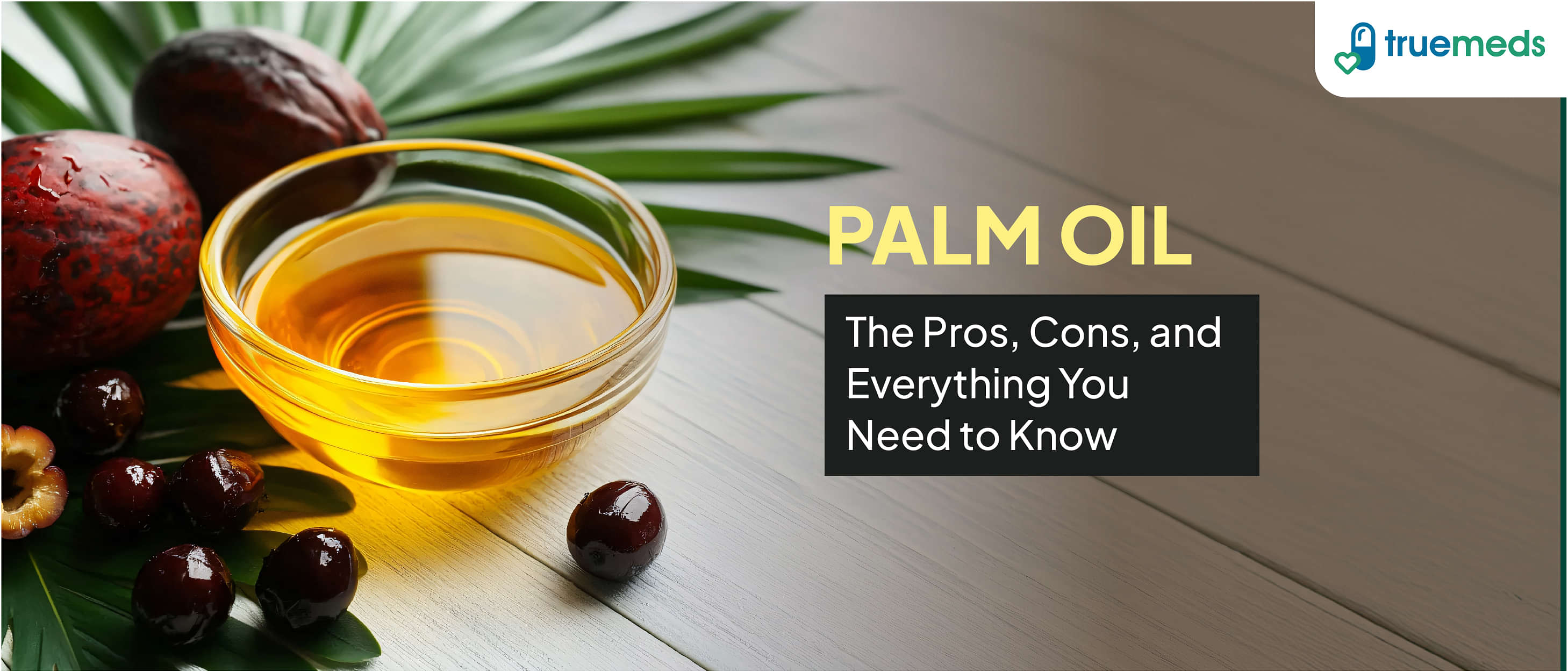
Palm Oil: The Pros, Cons, and Everything You Need to Know
Last updated on : 12 Nov, 2025
Read time : 9 min
Is palm oil bad? This is an oft-repeated question. As the most widely consumed vegetable oil globally, palm oil, extracted from the mesocarp, or reddish pulp, of the fruit of oil palms, primarily Elaeis guineensis, holds a significant place in global markets due to its versatility and high yield [1]. Its role in both food production and its saturated fat profile make a balanced understanding essential for consumers.
How is Palm Oil Used?
The utility of palm oil goes far beyond what one might assume, spilling over to both food and non-food products.
Use in Food Products
Palm oil is often found in several food products, including ready-to-eat items, baked goods, and confectioneries. As a cooking oil, it is commonly used for frying and cooking, particularly in tropical regions due to its cost-effectiveness and heat stability. You’ll find palm oil as a common ingredient in processed foods, too, such as margarine, spreads, confectionery items, ice cream, or vanaspati (a hydrogenated vegetable fat) [1].
However, while palm oil usage in food products is widespread, it is its high saturated fat content that necessitates careful consideration and moderation in one’s overall dietary pattern.
Use in Non-Food Products
Shifting our focus from the kitchen, let’s look at how palm oil is utilised beyond food products. The versatility of palm oil extends to the world of cosmetics and personal care products. Thanks to its moisturising properties and ability to create foam, you’ll find it in soaps, lotions, lipsticks, and other beauty items.
Outside of your vanity cabinet, palm oil is also playing an increasingly important role as a feedstock for biodiesel production. By contributing to renewable energy sources, it helps us move toward a more sustainable future. In addition to these uses, industrial applications also make use of palm oil, including its use in the production of detergents, oleochemicals, and more.
Nutritional Profile of Palm Oil
When it comes to nutrition, palm oil presents a unique profile. It is comprised of approximately 50% saturated fatty acids (primarily palmitic acid), 40% monounsaturated fatty acids, and 10% polyunsaturated fatty acids [2]. The high saturated fat content contributes to its semi-solid state at room temperature.
A highlight of unrefined palm oil (known as red palm oil) is its high concentration of beneficial micronutrients. It is one of the richest natural sources of beta-carotene (pro-Vitamin A), which gives it its distinct red colour, and Vitamin E [2]. These are both known for their potent antioxidant properties.
But like most things in life, palm oil has its yin and yang. The high percentage of saturated fat, specifically palmitic acid, has raised concerns about its potential impact on cardiovascular health, which must be carefully weighed against the benefits of its micronutrient content.
Exploring the Potential Health Effects
When reviewing the evidence on palm oil, it’s essential to differentiate between refined palm oil (common in processed foods) and unrefined red palm oil (often used as cooking oil in some regions and for its nutritional properties).
Antioxidant Content and Cardiovascular Markers
Crude red palm oil is a rich natural source of carotenoids, reportedly containing significantly higher levels than carrots and tomatoes [2]. The body converts some carotenoids into Vitamin A, which plays a role in supporting vision and immunity. These carotenoids and Vitamin E tocotrienols act as antioxidants, helping to protect cells from damage caused by free radicals [3]. Oxidative stress is implicated in the progression of several chronic diseases, though consuming antioxidant-rich foods is just one part of a healthy, balanced lifestyle.
Palm oil is also a good source of Vitamin E, particularly tocotrienols. Natural Vitamin E exists in eight forms. Tocotrienols, which are abundant in palm oil, have shown promising antioxidant potential in preclinical studies [4]. Ongoing human research is exploring their possible roles in supporting healthy cholesterol levels and protecting blood vessels [5].
Brain Health Research
The potential antioxidant benefits of palm oil are being investigated for brain health. The high content of tocotrienols is thought to shield brain cells from oxidative damage, which is a factor in neurodegenerative conditions. Animal and limited human studies suggest that tocotrienols may help prevent arterial blockage and protect against oxidative damage in the brain [6], [7]. However, this is an area of ongoing research, and definitive clinical recommendations cannot yet be made.
While red palm oil does possess a rich nutrient profile, it is critical to acknowledge that its consumption must be moderate and considered within the context of total daily saturated fat intake, as recommended by major health bodies.
Palm Oil Controversies: Saturated Fat and Environmental Concerns
Palm oil has faced significant controversies and criticisms, primarily due to its potential health and environmental impacts.
Health Concerns: Saturated Fat and Cholesterol
When it comes to the health impacts of palm oil, several factors need to be considered, specifically regarding its palmitic acid content (a saturated fat):
- Mixed Effects on Cholesterol: Research findings on palm oil and cholesterol are mixed and highly context-dependent [5].
- Some studies suggest that replacing a healthier unsaturated oil with palm oil may raise LDL (“bad”) cholesterol levels, which is a risk factor for cardiovascular disease [8].
- However, other reviews indicate that palm oil consumption does not negatively affect total or LDL cholesterol levels when compared to other solid fats (like butter or partially hydrogenated fats) and may even have a neutral effect when consumed as part of a traditional, whole-food diet [5], [9].
- Ischemic Heart Disease Risk: A major review of population studies found inconsistent results; some suggested a potential link to increased ischemic heart disease risk, while others did not [8]. The impact depends heavily on what palm oil replaces in the diet.
The most consistent health guidance is that palm oil is a saturated fat and should be consumed in moderation as part of an overall diet that prioritises unsaturated fats (like olive, groundnut, or canola oil) to support heart health.
Environmental and Ethical Concerns
Beyond health, palm oil production is widely linked to large-scale deforestation in regions like Southeast Asia. This practice contributes to biodiversity loss and greenhouse gas emissions, making it a major concern for environmental sustainability.
Conclusion
While palm oil has both potential nutritional benefits (when unrefined) and risks (due to its saturated fat content), striking a balance between its consumption and the related health and environmental issues is key. As consumers, it’s crucial to support sustainable palm oil by choosing brands certified by organisations like the Roundtable on Sustainable Palm Oil (RSPO) or making purchases directly from small, local farms where available and verifiable. With informed choices and responsible consumption, it’s possible to navigate through the palm oil controversy while prioritising our health and the environment.
Frequently Asked Questions (FAQs)
Is palm oil really unhealthy?
Palm oil is a source of saturated fat, and excessive consumption of saturated fat is linked to increased cardiovascular risk. Consumed in moderation and as part of a varied diet, it may not pose significant health risks, especially if it replaces unhealthier partially hydrogenated fats. The health impact depends on your overall dietary pattern and the type of palm oil consumed (refined versus unrefined red palm oil).
Is palm oil bad for deep frying?
Palm oil has a high smoke point and can tolerate high heat, making it technically suitable for deep frying. However, using any oil for deep frying increases its calorie and fat content. Also, reusing it multiple times can lead to the formation of harmful compounds, a risk common to all cooking oils when overheated and reused.
How damaging is palm oil?
Palm oil’s health impact is complex. Highly refined palm oil used in processed foods offers minimal nutritional benefit and contributes saturated fat. Conversely, minimally processed red palm oil provides beneficial antioxidants (Vitamin E and carotenoids) but still contains 50% saturated fat. The overall “damage” or benefit hinges on consumption quantity and overall diet quality.
Should I stay away from palm oil?
No single food needs to be completely avoided unless you have a specific medical condition. Instead of staying away entirely, focus on moderation and prioritising monounsaturated and polyunsaturated fats in your diet. Limit processed foods that contain large amounts of refined palm oil and, if using it as a cooking oil, choose high-quality, potentially unrefined red palm oil for its nutritional benefits, always keeping your total saturated fat intake in check.
References
[1] Odia, O. J., Ofori, S., & Maduka, O. (2015). Palm oil and the heart: A review. World Journal of Cardiology, 7(3), 144–154. https://doi.org/10.4330/wjc.v7.i3.144
[2] Cestaro, B., Porta, M., & Cazzola, R. (2017). Palm oil: Health risks and benefits. Agro Food Industry Hi Tech, 28(6), 57–59. http://dx.doi.org/
[3] Mukherjee, S., & Mitra, A. (2009). Health effects of palm oil. Journal of Human Ecology (Delhi, India), 26(3), 197–203. https://doi.org/10.1080/09709274.2009.11906182
[4] Sulaiman, N. S., Sintang, M. D., Mantihal, S., Zaini, H. M., Munsu, E., Mamat, H., Kanagaratnam, S., Jahurul, M. H. A., & Pindi, W. (2022). Balancing functional and health benefits of food products formulated with palm oil as oil sources. Heliyon, 8(10), e11041. https://doi.org/10.1016/j.heliyon.2022.e11041
[5] Ismail, S. R., Maarof, S. K., Ali, S. S., & Ali, A. (2018). Systematic review of palm oil consumption and the risk of cardiovascular disease. PLoS ONE, 13(2), e0193533. https://doi.org/10.1371/journal.pone.0193533
[6] Sen, C. K., Rink, C., & Khanna, S. (2010). Palm oil-derived natural vitamin E alpha-tocotrienol in brain health and disease. Journal of the American College of Nutrition, 29(3 Suppl), 314S–323S. https://doi.org/10.1080/07315724.2010.10719846
[7] Ramanathan, N., Tan, E., Loh, L. J., Soh, B. S., & Yap, W. N. (2018). Tocotrienol is a cardioprotective agent against ageing-associated cardiovascular disease and its associated morbidities. Nutrition & Metabolism, 15(1). https://doi.org/10.1186/s12986-018-0244-4
[8] Odia, O. J. (2015). Palm oil and the heart: A review. World Journal of Cardiology, 7(3), 144–154. https://doi.org/10.4330/wjc.v7.i3.144
[9] Fattore, E., Agostoni, C., Bosetti, C., & Galeone, C. (2014). Palm oil and blood cholesterol: A systematic review and meta-analysis of dietary intervention trials. The American Journal of Clinical Nutrition, 100(2), 574–587. https://doi.org/10.3945/ajcn.114.088012














Disclaimer
Our healthcare experts have carefully reviewed and compiled the information presented here to ensure accuracy and trustworthiness. It is important to note that this information serves as a general overview of the topic and is for informational purposes only. It is not intended to diagnose, prevent, or cure any health problem. This page does not establish a doctor-patient relationship, nor does it replace the advice or consultation of a registered medical practitioner. We recommend seeking guidance from your registered medical practitioner for any questions or concerns regarding your medical condition.
Popular Articles



Recommended Articles



Recent Articles










Company
About UsHealth ArticleHealth StoriesHealth LibraryDiseases & Health ConditionsAyurvedaAll MedicinesAll BrandsNeed HelpFAQSecuritySubscribe
Registered Office Address
Grievance Officer
Download Truemeds


Contact Us
Our customer representative team is available 7 days a week from 9 am - 9 pm.
v4.9.0

2025 - Truemeds | All rights reserved. Our content is for informational purposes only. See additional information.

Our Payment Partners