

- Medicines
- Personal Care
- Skin Cream
- Sunscreen
- Face Wash
- Skin and Body Soap
- Acne Care
- Body Lotions
- Moisturising Lotion
- Moisturising Cream
- Mosquito Repellent
- Moisturising Gel
- Body Wash
- Hair Oils
- Hair Shampoo
- Hair Conditioners
- Hair Supplements
- Hair Colour
- Hair Serum
- Hair Mask
- Hair Solutions
- Baby Diapers and Wipes
- Baby Lotion and Moisturising Cream
- Baby Bath Essentials
- Baby Skin Care
- Baby and Infant Food
- Baby Healthcare
- Women Multivitamins
- Ovulation Test Kit and Women Intimate Care
- Sanitary Pads
- Nutritional Drinks
- Condoms
- Lubricants
- Massage Gels
- Personal Body Massagers
- Men Performance Booster
- Sexual Health Supplements
- Massage Oils
- Ayurveda
- Tooth Paste
- Mouth Ulcer Gel
- Mouthwash
- Toothache and Gum Pain
- Tooth Brush
- Gargle Solution
- Orthopaedic Supports
- Adult Diapers
- Footwear
- Mobility and Support Accessories
- Urinary Support and Care
- Health Conditions
- Bone and Joint Care
- Digestive Care
- Eye Care
- Pain Relief
- Smoking Cessation
- Liver Care
- Stomach Care
- Cold and Cough
- Heart Care
- Kidney Care
- Piles, Fissures & Fistula
- Respiratory Care
- Mental Wellness
- Derma Care
- Pre and Probiotics
- Acidity
- Gas
- Constipation
- Loose Motion/Diarrhoea
- Digestive Fibres
- Digestive Enzymes
- Eye Lubricant Drops
- Lens Solution
- Safety Eye Wear
- Eye Cream
- Eye Vitamins and Supplements
- Eye Drops
- Eye Ointment and Gel
- Nicotine Patch
- Nicotine Gum
- Nicotine Lozenges
- Cough Syrups
- Chest Rubs and Balms
- Nasal Spray
- Lozenges
- Inhalant Capsules
- Cold and Cough Tablets
- Vitamins & Supplements
- Diabetes Care
- Healthcare Devices
- Homeopathic Medicine
- Health Guide
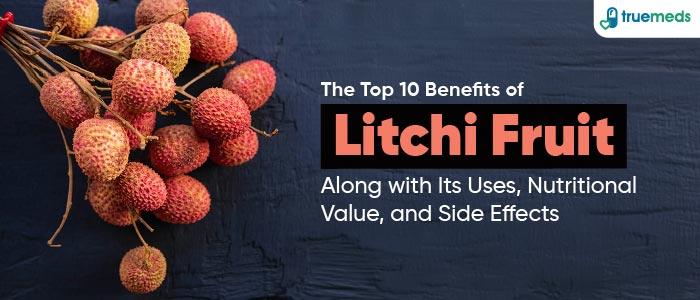
Top Benefits of Lychee Fruit: Uses, Nutritional Value, and Safety
Last updated on : 01 Dec, 2025
Read time : 7 min
Lychee (Litchi chinensis) is a delicious tropical fruit prized for its sweet, juicy flesh and bright red, textured skin. This fruit is not only refreshing but also contains valuable vitamins, minerals, and polyphenols. These components may offer potential health benefits, including supporting immune function, aiding hydration, and contributing to skin health [1].
It is critical to note that while ripe lychees are safe for consumption, unripe lychees contain toxins (hypoglycin A and methylenecyclopropylglycine) that can cause severe hypoglycemia (low blood sugar) [4]. Consumption, especially by undernourished children on an empty stomach, has been linked to severe illness.
Enjoying ripe lychees in moderation is a great way to stay hydrated and enjoy a nutritious, flavourful treat.
Lychee Nutritional Value per 100 g
Lychee fruit is approximately 82% water and 16.5% carbohydrates [2]. The fruit is notable for its high concentration of Vitamin C and also provides other essential micronutrients such as B vitamins, potassium, and magnesium [2, 3].
Lychees are naturally low in sodium and saturated fat.
Here is the Lychee nutrition profile per 100 grams of edible portion [3]:
| Nutrients |
Nutritional Value |
| Calories | 66 kcal |
| Carbohydrates | 16.5 g |
| Sugars | 15.2 g |
| Dietary Fiber | 1.3 g |
| Protein | 0.8 g |
| Fat | 0.4 g |
| Vitamin C | 71.5 mg (88% of the Daily Value, DV) |
| Potassium | 171 mg (5% DV) |
| Magnesium | 10 mg (2% DV) |
Note: (The Daily Values percentage is based on a 2,000-calorie adult diet.)
Potential Health Benefits of Lychee Fruit
Research into the health benefits of lychee primarily focuses on its rich content of bioactive compounds, particularly Vitamin C and polyphenols [1, 4].
1. Supports Immune Function
Lychee is an excellent source of Vitamin C (ascorbic acid), a powerful antioxidant that is essential for a healthy immune system [3]. Consuming foods rich in Vitamin C may help support the body’s natural defences against illness [1].
2. Potential Anti-inflammatory Effects
Lychee contains polyphenolic compounds like Oligonol and flavonoids, which have demonstrated anti-inflammatory activity in laboratory (in vitro) and animal studies [1, 5]. This suggests a potential role in helping to manage general inflammation, though human clinical evidence is needed to confirm this effect.
3. Aids in Digestion
Lychee is a good source of dietary fibre, which is known to promote healthy bowel movements and help prevent constipation [2]. This fibre content contributes to a smoothly running digestive system and general gut health.
4. Supports Vascular and Blood Pressure Health
The combination of potassium and antioxidants in lychee may help support healthy blood vessel integrity and maintain normal blood pressure levels [1]. Potassium is crucial for regulating fluid balance and counteracting the effects of sodium, which helps in the maintenance of healthy blood pressure [2].
5. Preliminary Role in Blood Sugar and Lipid Management
Certain extracts from lychee have been studied for their potential to inhibit the enzyme aldose reductase, which is implicated in diabetes complications [4]. Additionally, lychee consumption has been observed in animal models to help reduce cholesterol and triglyceride levels [1]. However, due to the fruit’s high sugar content, individuals with diabetes must consume it in strict moderation and monitor their blood sugar levels carefully [4].
6. Contributes to Skin Health
The high concentration of Vitamin C and other antioxidants in lychee may help protect the skin from oxidative stress caused by free radicals [1]. Vitamin C is also vital for the synthesis of collagen, a protein essential for skin structure and elasticity [2].
7. Hydration and Weight Management Support
With approximately 82% water content and a relatively low-calorie profile (66 kcal per 100g) [3], lychee is a refreshing and hydrating choice that can be included in a balanced diet for those seeking weight management. The high water and fibre content can promote a feeling of fullness [2].
8. Supports Bone Health
Lychee provides essential minerals such as magnesium, phosphorus, and manganese, all of which are vital cofactors in maintaining strong bone density and overall skeletal health [2].
How to Use Lychee
Lychees are a versatile fruit that can be enjoyed in various ways:
- Fresh Snack: Peel off the skin and remove the seed to enjoy the sweet, juicy flesh as a simple, refreshing summer snack.
- Beverages: Blend fresh, peeled lychees with water or other fruit juices to create a hydrating lychee juice or smoothie. They can also be added to iced tea, mocktails, or lemonade.
- Culinary Uses: Incorporate lychees into fruit salads with other seasonal fruits like mangoes and pineapples, or use them to add a tropical twist to Indian desserts such as kheer or fruit custard.
- Frozen Treats: Prepare homemade lychee sherbet or ice cream for a cooling dessert.
Side Effects and Crucial Precautions of Lychee
While ripe lychees are safe when consumed in moderation, attention to safety is crucial, especially regarding blood sugar and allergies.
Other Precautions:
- Blood Sugar Management: Lychee is relatively high in natural sugars (15.2 g per 100g) [3]. Individuals with diabetes or pre-diabetes must consume lychees in moderation and monitor their blood sugar levels closely [4].
- Allergic Reactions: Though rare, allergic reactions to lychee may occur. Symptoms can include itching, swelling of the mouth/throat, or difficulty breathing. Seek immediate medical advice if these symptoms appear.
- Moderation is Key: Eating 5-10 ripe lychees a day is generally considered a safe and moderate intake that balances nutritional benefits with sugar content.
Frequently Asked Questions (FAQs)
What is the main benefit of Lychee fruit?
The main benefit of lychee comes from its high Vitamin C and antioxidant content, which may support the immune system and promote skin health [1]. It is also excellent for hydration due to its high water content.
How many Lychees should I eat a day?
Eating 5-10 ripe lychees a day is generally considered a moderate and safe amount, providing nutrients without an excessive sugar intake.
Is Lychee safe for children?
Ripe lychees can be safe for children as a treat, but they must not be consumed on an empty stomach, especially in large quantities. Unripe lychees must be strictly avoided by everyone, particularly children, due to the risk of severe hypoglycemia [4].
Is Lychee high in sugar?
Yes, lychee is relatively high in natural sugars (15.2 g per 100g) [3]. Therefore, moderation is necessary, especially for individuals managing blood sugar conditions.
Is Lychee good for skin whitening?
No. Lychee is not directly linked to skin whitening. Its high Vitamin C and antioxidant content may contribute to overall skin health, reducing oxidative stress and potentially supporting a healthy complexion, but it should not be considered a skin-whitening agent [1].
References
[1] Sun, W., Shahrajabian, M. H., Shen, H., & Cheng, Q. (2021). Lychee (Litchi chinensis Sonn.), the King of Fruits, with Both Traditional and Modern Pharmacological Health Benefits. Pharmacognosy Communications, 11(1), 22–25. https://doi.org/10.5530/pc.2021.1.5
[2] Anjum, J., Lone, R., & Khursheed Alam Wani. (2017). Lychee (Litchi chinensis): Biochemistry, Panacea, and Nutritional Value. In Exotic Fruits (pp. 371–386). Academic Press. https://doi.org/10.1007/978-981-10-4247-8_14
[3] U.S. Department of Agriculture. (2019). FoodData Central, Litchis, raw (FDC ID: 171729). Retrieved October 27, 2025, from https://fdc.nal.usda.gov/fdc-app.html#/food-details/171729/nutrients
[4] Zhao, L., Wang, K., Wang, K., Zhu, J., & Hu, Z. (2020). Nutrient components, health benefits, and safety of litchi (Litchi chinensis Sonn.): A review. Comprehensive Reviews in Food Science and Food Safety, 19(4), 2139–2163. https://doi.org/10.1111/1541-4337.12590
[5] Gangehei, L., Ali, M., Zhang, W., Chen, Z., Wakame, K., & Haidari, M. (2010). Oligonol a low molecular weight polyphenol of lychee fruit extract inhibits proliferation of influenza virus by blocking reactive oxygen species-dependent ERK phosphorylation. Phytomedicine, 17(13), 1047–1056. https://doi.org/10.1016/j.phymed.2010.03.016















Disclaimer
Our healthcare experts have carefully reviewed and compiled the information presented here to ensure accuracy and trustworthiness. It is important to note that this information serves as a general overview of the topic and is for informational purposes only. It is not intended to diagnose, prevent, or cure any health problem. This page does not establish a doctor-patient relationship, nor does it replace the advice or consultation of a registered medical practitioner. We recommend seeking guidance from your registered medical practitioner for any questions or concerns regarding your medical condition.
Popular Articles



Recommended Articles




Recent Articles










Company
About UsHealth ArticleHealth StoriesHealth LibraryDiseases & Health ConditionsAyurvedaAll MedicinesAll BrandsNeed HelpFAQSecuritySubscribe
Registered Office Address
Grievance Officer
Download Truemeds


Contact Us
Our customer representative team is available 7 days a week from 9 am - 9 pm.
v4.9.0

2025 - Truemeds | All rights reserved. Our content is for informational purposes only. See additional information.

Our Payment Partners