

- Medicines
- Personal Care
- Skin Cream
- Sunscreen
- Face Wash
- Skin and Body Soap
- Acne Care
- Body Lotions
- Moisturising Lotion
- Moisturising Cream
- Mosquito Repellent
- Moisturising Gel
- Body Wash
- Hair Oils
- Hair Shampoo
- Hair Conditioners
- Hair Supplements
- Hair Colour
- Hair Serum
- Hair Mask
- Hair Solutions
- Baby Diapers and Wipes
- Baby Lotion and Moisturising Cream
- Baby Bath Essentials
- Baby Skin Care
- Baby and Infant Food
- Baby Healthcare
- Women Multivitamins
- Ovulation Test Kit and Women Intimate Care
- Sanitary Pads
- Nutritional Drinks
- Condoms
- Lubricants
- Massage Gels
- Personal Body Massagers
- Men Performance Booster
- Sexual Health Supplements
- Massage Oils
- Ayurveda
- Tooth Paste
- Mouth Ulcer Gel
- Mouthwash
- Toothache and Gum Pain
- Tooth Brush
- Gargle Solution
- Orthopaedic Supports
- Adult Diapers
- Footwear
- Mobility and Support Accessories
- Urinary Support and Care
- Health Conditions
- Bone and Joint Care
- Digestive Care
- Eye Care
- Pain Relief
- Smoking Cessation
- Liver Care
- Stomach Care
- Cold and Cough
- Heart Care
- Kidney Care
- Piles, Fissures & Fistula
- Respiratory Care
- Mental Wellness
- Derma Care
- Pre and Probiotics
- Acidity
- Gas
- Constipation
- Loose Motion/Diarrhoea
- Digestive Fibres
- Digestive Enzymes
- Eye Lubricant Drops
- Lens Solution
- Safety Eye Wear
- Eye Cream
- Eye Vitamins and Supplements
- Eye Drops
- Eye Ointment and Gel
- Nicotine Patch
- Nicotine Gum
- Nicotine Lozenges
- Cough Syrups
- Chest Rubs and Balms
- Nasal Spray
- Lozenges
- Inhalant Capsules
- Cold and Cough Tablets
- Vitamins & Supplements
- Diabetes Care
- Healthcare Devices
- Homeopathic Medicine
- Health Guide
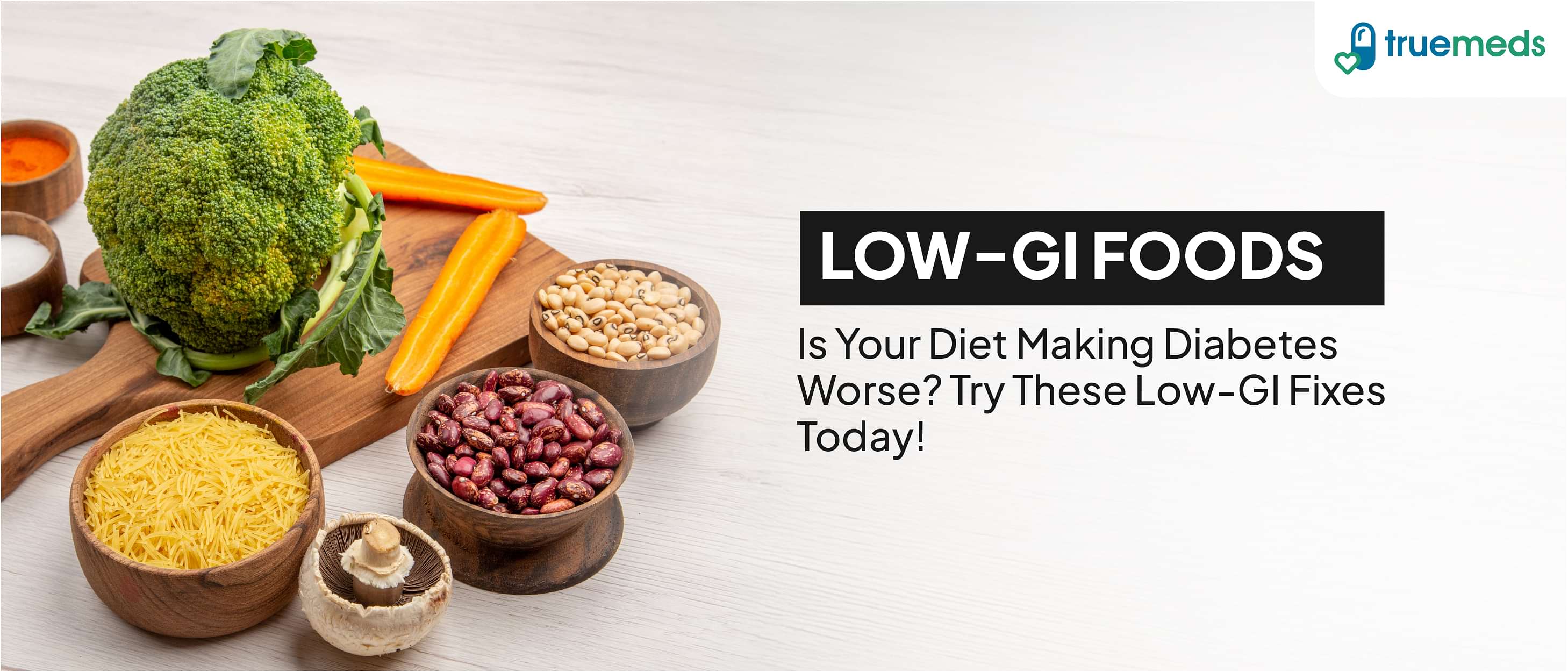
Low-GI Foods for Diabetics: A Guide to Better Blood Sugar Control
Last updated on : 07 Nov, 2025
Read time : 8 min
Managing diabetes requires a careful balance of lifestyle factors, and incorporating low-GI foods into your diet can be a crucial strategy for better blood sugar control. The Glycemic Index (GI) is a tool that ranks carbohydrate-containing foods based on how quickly they raise blood glucose levels after eating. These foods are designed to cause a slower and more gradual increase in blood glucose levels, making them an ideal choice for those living with diabetes when combined with appropriate portion control and meal planning [1]. In this guide, we’ll explore the concept of the glycemic index and how low-GI foods can benefit diabetics.
The Science Behind Low-GI Diets and Glycemic Control
Low-GI foods offer numerous benefits for individuals with diabetes, helping to maintain stable blood sugar levels and improve overall health outcomes when integrated into a balanced, physician-approved diet [2]. Here are some key advantages, supported by clinical evidence:
- Improved Long-Term Glycemic Control: Consistently following low-GI diets has been shown in systematic reviews and meta-analyses to slightly reduce the haemoglobin A1c (HbA1c) level in people with type 2 diabetes, indicating better long-term blood sugar management [3], [4].
- Reduced Postprandial Glycemia: The slower digestion and absorption of low-GI carbohydrates result in a more controlled and gradual rise in blood sugar levels after meals, minimising the rapid spikes and fluctuations associated with high-GI foods [3].
- Support for Weight Management: Low-GI diets, which are often rich in fibre, may contribute to increased satiety (feeling of fullness), which can be beneficial in achieving small reductions in body fat and overall weight [2].
- Cardiovascular Health Benefits: Low-GI dietary patterns are associated with improvements in blood lipid profiles and a lower risk of cardiovascular disease, a common comorbidity for individuals with diabetes [2], [4].
- Nutrient-Rich Options: Many low-GI foods are naturally rich in essential nutrients, including dietary fibre, protein, and healthy fats (e.g., vegetables, beans, whole grains), supporting overall nutritional health.
Smart Low-GI Food Choices for Diabetics
Incorporating low glycaemic index (GI) foods into your diet is a key strategy for managing blood sugar levels if you have diabetes. It is crucial to remember that portion size (Glycemic Load) and food preparation methods also significantly impact blood sugar response. Below are some of the best low-GI options across different food groups to support a healthy and balanced diabetic diet.
1. Low-GI Non-Starchy Vegetables
Non-starchy vegetables are foundationally low-GI, rich in fibre, vitamins, and minerals, while being low in digestible carbohydrates. These options are highly recommended and can be consumed in larger quantities to help regulate blood sugar without compromising nutrition.
- Green peas
- Onions
- Lettuce
- Cabbage
- Leafy greens (Spinach, Collards, Kale, and Beet Greens)
- Green beans
- Tomatoes
- Cucumbers
- Bok choy
- Brussels sprouts
- Broccoli
- Cauliflower
- Celery
- Eggplant
- Zucchini
- Mushrooms
2. Low-GI Fruits
While fruits contain natural sugars (fructose), some options have a lower glycaemic index due to high fibre and specific sugar content. These low-GI fruits may be incorporated into a diabetic diet in moderation and are rich in fibre and antioxidants.
- Apples
- Pears
- Plum
- Avocado
- Olives
- Cherries (Notably low-GI, often ranked at GI 20)
- Unripe banana (GI increases as the banana ripens)
- Peaches
- Strawberries
- Oranges
- Coconut
- Grapefruit
- Cranberries
- Blueberries
Note: Dried apricots are generally moderate-GI and should be consumed sparingly due to concentrated sugar.
3. Low-GI Grains and Legumes
Whole grains and legumes (beans, peas, and lentils) are essential components of a low-GI diet, as they are rich in fibre and protein, which slow digestion and help maintain stable blood sugar levels.
- Legumes: Lentils, Chickpeas, Kidney Beans, Black Beans, Soybeans
- Grains: Barley, Whole-grain pumpernickel bread, Oat bran, Whole-grain pasta (al dente preparation helps lower GI)
- Processed Grains (Use with caution): Sourdough bread, Traditional whole-wheat bread (GI can vary widely, look for high-fibre, dense loaves)
- Note: Whole wheat tortillas are often moderate-GI due to processing and should be consumed with portion control.
4. Proteins and Healthy Fats (Minimal or Zero GI)
Most non-carbohydrate foods like meat, fish, eggs, nuts, and healthy fats have a minimal or zero impact on the glycemic index. While they don’t affect GI, they are crucial for a diabetic diet as they provide sustained energy, increase satiety, and are essential for overall health.
- Nuts and Seeds: Almonds, Walnuts, Pistachios, Pumpkin, Chia, Sunflower, and Flax seeds, and natural nut butters.
- Protein Sources: Poultry (chicken and turkey), Eggs and egg whites, Fish and shellfish, Lean cuts of meat (beef and pork).
- Dairy (Low-GI): Plain yoghurt (Greek or regular), Cheese, Cottage cheese, Milk, Soy milk and yoghurt. Choose unsweetened versions.
- Fats: Oils such as extra virgin olive oil and canola oil, Avocado, Lard, Shortening, and Butter. These should be consumed in moderation as part of healthy fat intake.
Conclusion
A low-GI diet can be an effective tool for people with diabetes to help manage blood sugar levels. By including low-GI foods like non-starchy vegetables, whole grains, legumes, and nuts and consistently monitoring portion sizes, diabetics can improve glycemic control [3]. Combined with other health measures, such as regular physical activity and a comprehensive treatment plan developed with a healthcare professional, this approach can help reduce the risk of cardiovascular disease and other diabetes-related complications [4].
Frequently Asked Questions (FAQs)
What are the best low-GI foods for diabetics?
Non-starchy vegetables (e.g., broccoli, leafy greens), most legumes (e.g., lentils, chickpeas), whole grains (e.g., barley, oats), and low-GI fruits (e.g., cherries, grapefruit) are among the best choices.
What foods are generally low-GI?
Foods with a GI of 55 or less are considered low-GI. Examples include whole grains like barley and oats, non-starchy vegetables, most legumes, and nuts.
Should diabetics eat low-GI foods?
Yes, the American Diabetes Association suggests that choosing foods with a lower GI may help maintain stable blood sugar levels, though it is one of several dietary management tools [1].
Which fruits are low-GI?
Fruits such as cherries (GI approx 20), grapefruit (GI approx 25), pears (GI approx 38), and apples (GI approx 39) are considered low-GI [5].
Is basmati rice low-GI?
Traditional long-grain white Basmati rice has a moderate GI (approximately 58-60), not a low GI, but it often has a lower GI than regular white rice.
Are bananas low-GI?
A slightly unripe banana has a moderate GI of approximately 51. The GI value increases significantly as the banana ripens and turns spotty, often reaching 60 or higher.
Are tomatoes low-GI?
Yes, tomatoes are non-starchy vegetables and are considered low-GI.
What foods have a near-zero glycemic index?
Foods that contain virtually no carbohydrates, such as pure egg whites, lean meat, fish, and pure oils/fats, have a glycemic index of zero [5].
What is low-GI atta?
“Atta” (flour) is a general term. Low-GI atta is usually whole wheat flour or a multi-grain blend minimally processed with a high proportion of fiber to slow down digestion.
Which sugar is low-GI?
Fructose has a low GI (approx 19) but should not be consumed in excess. Natural sweeteners like honey (moderate GI, approximately 61) and maple syrup (moderate GI, approximately 54) are generally moderate-GI foods and should be used sparingly [5].
Disclaimer
This article is for informational purposes only and is not a substitute for personalized professional medical advice, diagnosis, or treatment. Please consult a healthcare provider, such as your Primary Care Physician or a Registered Dietitian, before beginning any new wellness practice, especially if you have an existing medical condition or are on medication.
References
[1] ElSayed, N. A., Aleppo, G., Aroda, V. R., Bannuru, R. R., Brown, F. M., Bruemmer, D., Collins, B. S., Hilliard, M. E., Isaacs, D., Johnson, E. L., Kahan, S., Khunti, K., Leon, J., Lyons, S. K., Perry, M. L., Prahalad, P., Pratley, R. E., Seley, J. J., & Stanton, R. C. (2023). Standards of Care in Diabetes—2023. Diabetes Care, 46(Suppl 1), S1–S291. https://doi.org/10.2337/dc23-S001
[2] Zafar, M. I., Mills, K. E., Zheng, J., Regmi, A., Hu, S. Q., Gou, L., & Chen, L.-L. (2019). Low-glycemic index diets as an intervention for diabetes: a systematic review and meta-analysis. The American Journal of Clinical Nutrition, 110(4), 891–902. https://doi.org/10.1093/ajcn/nqz149
[3] Gerontiti, E., Shalit, A., Katerina Stefanaki, Paraskevi Kazakou, Karagiannakis, D. S., Melpomeni Peppa, Psaltopoulou, T., & Paschou, S. A. (2024). The role of low glycemic index and load diets in medical nutrition therapy for type 2 diabetes: an update. Hormones, 23. https://doi.org/10.1007/s42000-024-00566-7
[4] Peres, M. J., Costa, H. S., Silva, M. A., & Albuquerque, T. G. (2023). The Health Effects of Low Glycemic Index and Low Glycemic Load Interventions on Prediabetes and Type 2 Diabetes Mellitus: A Literature Review of RCTs. Nutrients, 15(24), 5060–5060. https://doi.org/10.3390/nu15245060
[5] Eleazu, C. O. (2016). The concept of low glycemic index and glycemic load foods as panacea for type 2 diabetes mellitus; prospects, challenges and solutions. African Health Sciences, 16(2), 468. https://doi.org/10.4314/ahs.v16i2.15














Disclaimer
Our healthcare experts have carefully reviewed and compiled the information presented here to ensure accuracy and trustworthiness. It is important to note that this information serves as a general overview of the topic and is for informational purposes only. It is not intended to diagnose, prevent, or cure any health problem. This page does not establish a doctor-patient relationship, nor does it replace the advice or consultation of a registered medical practitioner. We recommend seeking guidance from your registered medical practitioner for any questions or concerns regarding your medical condition.
Popular Articles


Recommended Articles




Recent Articles









Company
About UsHealth ArticleHealth StoriesHealth LibraryDiseases & Health ConditionsAyurvedaUnderstanding Generic MedicinesAll MedicinesAll BrandsNeed HelpFAQSecuritySubscribe
Registered Office Address
Grievance Officer
Download Truemeds


Contact Us
Our customer representative team is available 7 days a week from 9 am - 9 pm.
v4.10.1

2025 - Truemeds | All rights reserved. Our content is for informational purposes only. See additional information.

Our Payment Partners