

- Medicines
- Personal Care
- Skin Cream
- Sunscreen
- Face Wash
- Skin and Body Soap
- Acne Care
- Body Lotions
- Moisturising Lotion
- Moisturising Cream
- Mosquito Repellent
- Moisturising Gel
- Body Wash
- Hair Oils
- Hair Shampoo
- Hair Conditioners
- Hair Supplements
- Hair Colour
- Hair Serum
- Hair Mask
- Hair Solutions
- Baby Diapers and Wipes
- Baby Lotion and Moisturising Cream
- Baby Bath Essentials
- Baby Skin Care
- Baby and Infant Food
- Baby Healthcare
- Women Multivitamins
- Ovulation Test Kit and Women Intimate Care
- Sanitary Pads
- Nutritional Drinks
- Condoms
- Lubricants
- Massage Gels
- Personal Body Massagers
- Men Performance Booster
- Sexual Health Supplements
- Massage Oils
- Ayurveda
- Tooth Paste
- Mouth Ulcer Gel
- Mouthwash
- Toothache and Gum Pain
- Tooth Brush
- Gargle Solution
- Orthopaedic Supports
- Adult Diapers
- Footwear
- Mobility and Support Accessories
- Urinary Support and Care
- Health Conditions
- Bone and Joint Care
- Digestive Care
- Eye Care
- Pain Relief
- Smoking Cessation
- Liver Care
- Stomach Care
- Cold and Cough
- Heart Care
- Kidney Care
- Piles, Fissures & Fistula
- Respiratory Care
- Mental Wellness
- Derma Care
- Pre and Probiotics
- Acidity
- Gas
- Constipation
- Loose Motion/Diarrhoea
- Digestive Fibres
- Digestive Enzymes
- Eye Lubricant Drops
- Lens Solution
- Safety Eye Wear
- Eye Cream
- Eye Vitamins and Supplements
- Eye Drops
- Eye Ointment and Gel
- Nicotine Patch
- Nicotine Gum
- Nicotine Lozenges
- Cough Syrups
- Chest Rubs and Balms
- Nasal Spray
- Lozenges
- Inhalant Capsules
- Cold and Cough Tablets
- Vitamins & Supplements
- Diabetes Care
- Healthcare Devices
- Homeopathic Medicine
- Health Guide
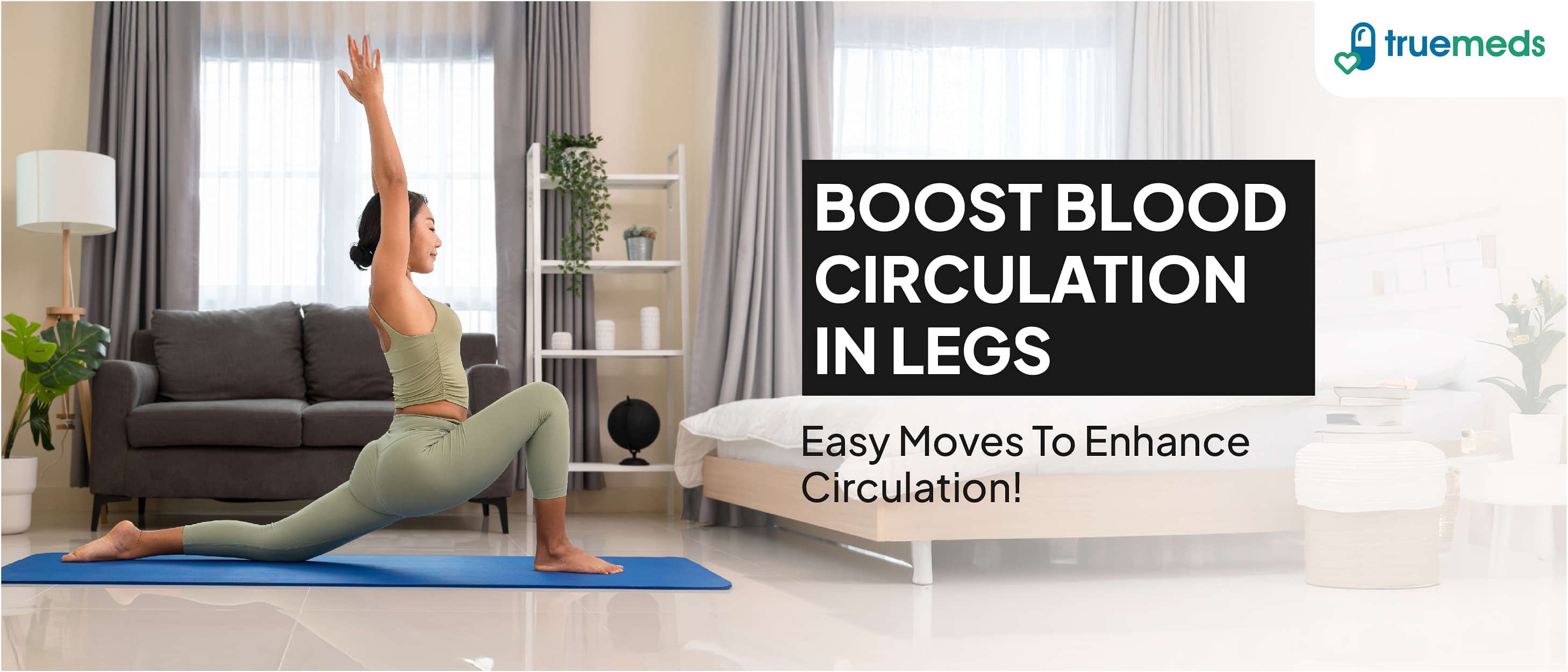
Top 5 Leg Exercises To Boost Blood Flow
Last updated on : 19 Nov, 2025
Read time : 9 min
Maintaining optimal blood circulation in the legs is fundamental for overall well-being, especially for those who experience symptoms such as swelling, numbness, or pain. Regular and targeted exercise can significantly improve blood flow, which is crucial for minimising the risk of complications like blood clots (e.g., Deep Vein Thrombosis – DVT) and enhancing overall mobility.
In this article, we will explore five highly effective leg exercises that can help boost circulation, offering an evidence-based and straightforward way to keep your legs healthy.
Understanding Blood Circulation in the Legs
Blood circulation in the legs is crucial for supplying oxygen and nutrients to the muscles and tissues. The peripheral circulation is a low-pressure system where blood relies on the powerful action of the “skeletal muscle pump” to return to the heart. Various factors, such as a sedentary lifestyle, obesity, smoking, and medical conditions like Peripheral Artery Disease (PAD) or chronic venous insufficiency, can lead to poor circulation. When blood flow is compromised, it can cause symptoms like leg cramps, fatigue, and swelling. Efficient blood circulation depends on the contraction and relaxation of muscles, particularly in the lower limbs, which helps pump blood back towards the heart against gravity. Regular physical activity and specific leg exercises can significantly improve the efficiency of this muscle pump, ensuring blood flows smoothly and reducing the risk of related health problems.
Benefits of Targeted Leg Exercise for Circulation
Engaging in regular leg exercises offers a multitude of benefits for improving blood circulation in the lower extremities. Some key advantages include:
- Increased Venous Return: Exercises like walking and targeted resistance work help to enhance blood circulation, ensuring that your leg muscles and tissues receive an adequate supply of oxygen and nutrients. Muscle contractions squeeze the deep veins, propelling blood upwards [1]. Specific actions, like those involved in walking, have been shown to significantly increase peak popliteal venous flow, which helps reduce venous stasis [2].
- Enhanced Angiogenesis: Activities such as consistent, rhythmic exercise can stimulate the formation of new collateral blood vessels (angiogenesis) over time [3].
- Improved Cardiovascular Function: Leg exercises can increase your heart rate and contribute to overall cardiovascular health by improving endothelial function (the health of the inner lining of blood vessels).
- Reduced Risk of Venous Complications: By improving blood circulation, leg exercises help to prevent conditions like varicose veins and reduce the risk of venous stasis, a key factor in the development of Deep Vein Thrombosis (DVT) [2].
- Arterial Health Improvement: Simple leg movements and regular aerobic exercise can contribute to reducing arterial stiffness and improving cardiorespiratory fitness [4]. However, highly restricted blood flow exercise must be used cautiously, especially in individuals with compromised cardiac health [5].
- Fluid Regulation: Regularly exercising your legs helps to prevent ankle and foot swelling (edema) by promoting efficient lymphatic drainage and reducing fluid retention.
Top 5 Exercises to Boost Leg Blood Flow
Engaging in specific exercises can significantly improve blood flow, reducing the risk of various circulatory issues. Let us explore the top five exercises that can effectively boost circulation in your legs.
1. Walking: The Foundation of Circulation
One of the simplest and most effective ways to enhance blood circulation in the legs is through walking. This low-impact, functional exercise engages the leg muscles, especially the calves and hamstrings, promoting blood flow throughout the limbs and the entire body. A brisk walking pace of at least 3 miles per hour (4.8 km/h) can significantly activate the muscle pump. Gradually increasing the duration or pace of your walks can further improve circulation. Incorporate walking into your daily routine, whether it is a purposeful stroll in the park or a brisk walk around the neighbourhood, to keep your legs healthy and well-circulated.
2. Ankle Pumps and Circles (For Limited Mobility or Desk Breaks)
For individuals who are sedentary, recovering from surgery, or have limited mobility, exercises performed while lying down or seated can be particularly beneficial for improving leg circulation. The goal is movement without resistance. Some effective exercises include:
- Ankle Pumps: While lying or seated, flex your foot to move your toes up towards your head (dorsiflexion) and then point them away (plantarflexion), stimulating the calf muscles and deep veins. Perform 10-15 repetitions every hour to interrupt periods of prolonged sitting or lying.
- Heel Slides: Drag your heels on the surface (bed or floor) to bend and extend your knee, gently targeting the knee flexor and extensor muscles.
- Ankle Circles: Rotate your ankles slowly in a circular motion, first clockwise and then counter-clockwise, to improve range of motion and local blood flow.
3. Calf Raises (Heel Raises)
The calf muscles are often called the “second heart” due to their powerful role in venous return. Performing heel raises is an excellent way to activate the leg muscles and enhance circulation.
- Heel Raises: Stand near a wall or chair for balance. Slowly push up onto your tiptoes, contracting the calf muscles forcefully. Hold for one second, and then slowly lower your heels back down. Aim for 3 sets of 10-15 repetitions daily to strengthen the muscle pump.
4. The Bridge Pose (Gravity-Assisted Flow)
While not a conventional leg exercise, the bridge pose from yoga is highly effective because it uses gravity to assist blood return.
- Execution: Lie on your back with your knees bent and feet flat on the floor, hip-width apart. Lift your hips off the floor until your body forms a straight line from your shoulders to your knees. This slightly elevates the legs above the heart, facilitating venous return. Hold the position for 30 seconds, breathing deeply, and then slowly lower back down.
5. Seated Alternating Marching
Seated exercises offer a convenient way to improve leg circulation, particularly for individuals who spend extended periods sitting at a desk.
- Seated Marching: While seated with your feet flat on the floor, lift your right knee towards your chest and then lower it. Immediately alternate to the left knee. Continue this marching motion slowly and rhythmically for 1-2 minutes at a time, performing this several times throughout a period of prolonged sitting. This simple movement engages the hip flexors and subtly compresses the deep veins in the thigh, preventing blood pooling.
Tips for Maximising Circulation Benefits
To maximise the benefits of leg exercises on blood circulation, consider the following tips:
- Gradual Progression: Start slowly and gradually increase the intensity and duration of your workouts to avoid overwhelming your circulatory system. Listen to your body.
- Hydration is Key: Stay well-hydrated by drinking plenty of water before, during, and after exercise to maintain blood volume and optimal blood viscosity. Dehydration causes blood volume to drop and viscosity to increase, which is detrimental to circulation.
- Avoid Constriction: Wear loose, comfortable clothing that does not constrict blood flow to the legs, and avoid crossing your legs for prolonged periods.
- Micro-Breaks: Take regular breaks, especially during prolonged sitting, to stand up, stretch, and move around, preventing blood from pooling in the legs. Set a reminder to perform ankle pumps or seated marches every 30-45 minutes.
- Consult a Specialist: If you have severe swelling or pain, wear physician-prescribed compression stockings as directed by your doctor.
Conclusion
In conclusion, improving blood circulation in the legs is essential for overall health and well-being. By incorporating simple, rhythmic, and effective exercises such as walking, ankle pumps, calf raises, and seated marches into your daily routine, you can enhance blood flow, reduce swelling, and alleviate symptoms of poor circulation. Consistency and integrating these movements into your daily life are essential for long-term vascular health. If you are managing an underlying condition like diabetes, regular movement is even more critical for preventing peripheral complications.
Frequently Asked Questions (FAQs)
How can I increase blood flow to my legs?
Walking, even short walks, is highly effective. Additional methods include stretching, using pneumatic compression devices (if medically recommended), and elevating your legs above heart level for 15-minute intervals, 3-4 times a day.
What are the symptoms of poor circulation in the legs?
The symptoms include muscle cramping (especially at night), foot pain, numbness or tingling (paresthesia), cold feet, restless legs, varicose veins, and a feeling of heaviness or swelling (edema) in the legs and feet. Changes in skin color (blue or purple) or slow-healing wounds are also serious signs that require medical evaluation.
Can poor leg circulation be reversed?
Poor leg circulation can often be significantly improved through lifestyle changes such as regular walking, quitting smoking, and wearing compression stockings. However, underlying chronic conditions like severe Peripheral Artery Disease (PAD) may require medical or surgical intervention. The degree of reversibility depends heavily on the underlying cause and severity.
Which foods improve circulation?
Foods rich in nitrates (e.g., beetroot, leafy greens), omega-3 fatty acids (e.g., salmon, mackerel), and antioxidants (e.g., berries, citrus fruits) can help improve circulation by supporting healthy blood vessel function. These dietary components contribute to the production of nitric oxide, which helps blood vessels relax and widen.
Disclaimer
This article is for informational and educational purposes only and is not a substitute for professional medical advice, diagnosis, or treatment. Please consult a healthcare provider (e.g., your Primary Care Physician, a Certified Physical Therapist, or a Vascular Specialist) before beginning any new wellness practice, especially if you have an existing medical condition (such as PAD, DVT history, or severe heart disease) or are on medication.
References
[1] Zell, D., Schreier, R., Rupp, R., Eberhard, S., Colombo, G., & Dietz, V. (2004). Movement of the center of gravity and the center of pressure during treadmill gait in paraplegic patients with the walking orthosis Lokomat. Journal of NeuroEngineering and Rehabilitation, 1(1), 4. https://doi.org/10.1186/1743-0003-1-4
[2] Hitos, K., Cannon, M., Cannon, S., Garth, S., & Fletcher, J. P. (2007). Effect of leg exercises on popliteal venous blood flow during prolonged immobility of seated subjects: implications for prevention of travel-related deep vein thrombosis. Journal of Thrombosis and Haemostasis, 5(9), 1890–1895. https://doi.org/10.1111/j.1538-7836.2007.02664.x
[3] Zada, F. S. M., Naseri, K., & Zalmai, M. R. (2024). Effects of exercise training on blood circulation system. Sprin Journal of Arts Humanities and Social Sciences, 3(5), 87–90. https://doi.org/10.55559/sjahss.v3i5.326
[4] Jackson, A. S., Sui, X., Hébert, J. R., Church, T. S., & Blair, S. N. (2009). Role of lifestyle and aging on the longitudinal change in cardiorespiratory fitness. Archives of Internal Medicine, 169(19), 1781–1787. https://doi.org/10.1001/archinternmed.2009.309
[5] Renzi, C. P., Tanaka, H., & Sugawara, J. (2010). Effects of Leg Blood Flow Restriction during Walking on Cardiovascular Function. Medicine & Science in Sports & Exercise, 42(4), 726–732. https://doi.org/10.1249/mss.0b013e3181bdb454














Disclaimer
Our healthcare experts have carefully reviewed and compiled the information presented here to ensure accuracy and trustworthiness. It is important to note that this information serves as a general overview of the topic and is for informational purposes only. It is not intended to diagnose, prevent, or cure any health problem. This page does not establish a doctor-patient relationship, nor does it replace the advice or consultation of a registered medical practitioner. We recommend seeking guidance from your registered medical practitioner for any questions or concerns regarding your medical condition.
Popular Articles

Recommended Articles


Recent Articles







Company
About UsHealth ArticleHealth StoriesHealth LibraryDiseases & Health ConditionsAyurvedaUnderstanding Generic MedicinesAll MedicinesAll BrandsNeed HelpFAQSecuritySubscribe
Registered Office Address
Grievance Officer
Download Truemeds


Contact Us
Our customer representative team is available 7 days a week from 9 am - 9 pm.
v4.11.1

2026 - Truemeds | All rights reserved. Our content is for informational purposes only. See additional information.
Our Payment Partners