

- Medicines
- Personal Care
- Skin Cream
- Sunscreen
- Face Wash
- Skin and Body Soap
- Acne Care
- Body Lotions
- Moisturising Lotion
- Moisturising Cream
- Mosquito Repellent
- Moisturising Gel
- Body Wash
- Hair Oils
- Hair Shampoo
- Hair Conditioners
- Hair Supplements
- Hair Colour
- Hair Serum
- Hair Mask
- Hair Solutions
- Baby Diapers and Wipes
- Baby Lotion and Moisturising Cream
- Baby Bath Essentials
- Baby Skin Care
- Baby and Infant Food
- Baby Healthcare
- Women Multivitamins
- Ovulation Test Kit and Women Intimate Care
- Sanitary Pads
- Nutritional Drinks
- Condoms
- Lubricants
- Massage Gels
- Personal Body Massagers
- Men Performance Booster
- Sexual Health Supplements
- Massage Oils
- Ayurveda
- Tooth Paste
- Mouth Ulcer Gel
- Mouthwash
- Toothache and Gum Pain
- Tooth Brush
- Gargle Solution
- Orthopaedic Supports
- Adult Diapers
- Footwear
- Mobility and Support Accessories
- Urinary Support and Care
- Health Conditions
- Bone and Joint Care
- Digestive Care
- Eye Care
- Pain Relief
- Smoking Cessation
- Liver Care
- Stomach Care
- Cold and Cough
- Heart Care
- Kidney Care
- Piles, Fissures & Fistula
- Respiratory Care
- Mental Wellness
- Derma Care
- Pre and Probiotics
- Acidity
- Gas
- Constipation
- Loose Motion/Diarrhoea
- Digestive Fibres
- Digestive Enzymes
- Eye Lubricant Drops
- Lens Solution
- Safety Eye Wear
- Eye Cream
- Eye Vitamins and Supplements
- Eye Drops
- Eye Ointment and Gel
- Nicotine Patch
- Nicotine Gum
- Nicotine Lozenges
- Cough Syrups
- Chest Rubs and Balms
- Nasal Spray
- Lozenges
- Inhalant Capsules
- Cold and Cough Tablets
- Vitamins & Supplements
- Diabetes Care
- Healthcare Devices
- Homeopathic Medicine
- Health Guide
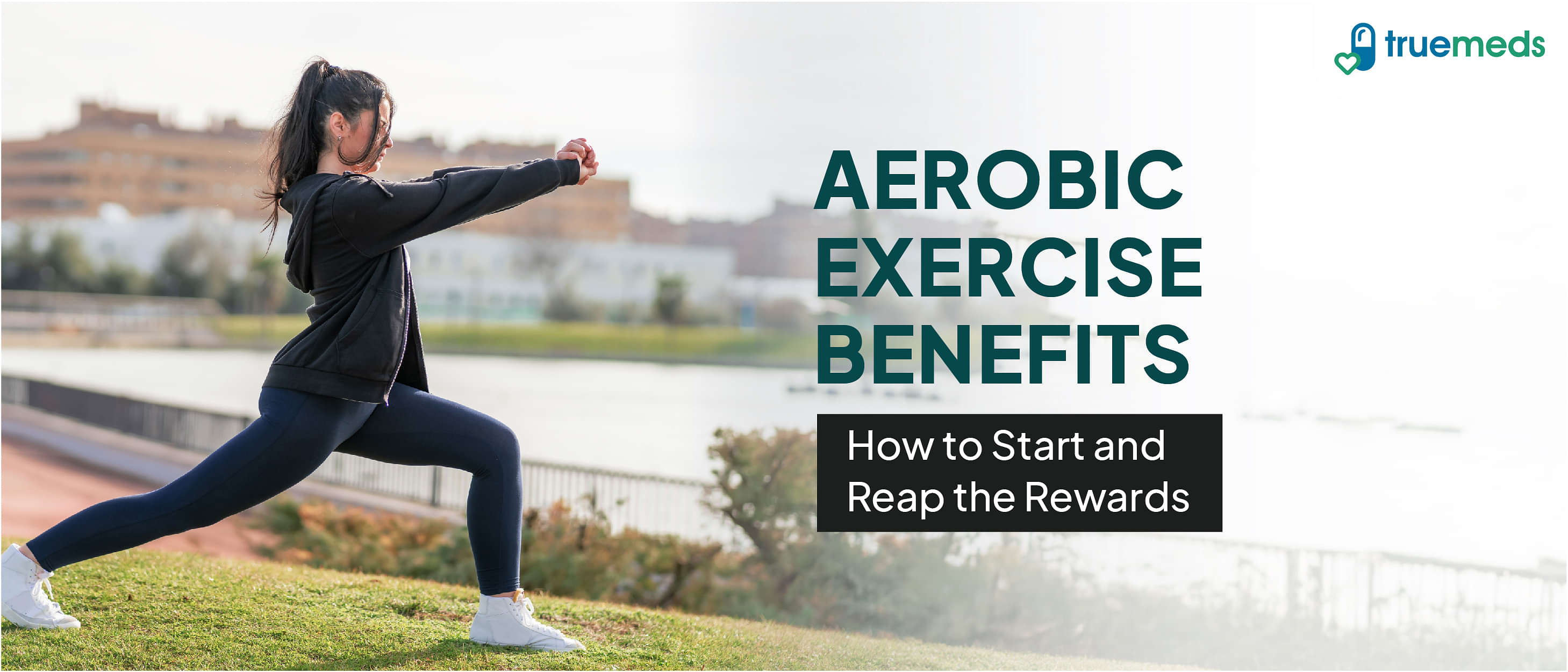
Aerobic Exercise: Benefits, Types, and How to Get Started at Home
Last updated on : 01 Dec, 2025
Read time : 12 min
What is Aerobic Exercise?
Aerobic exercise, also known as cardio or cardiovascular exercise, involves physical activities that significantly increase your heart rate and enhance oxygen consumption by your body. The term “aerobic” means “with oxygen,” indicating that these exercises rely on oxygen to generate energy. During aerobic exercise, your heart beats faster, and your lungs take in more oxygen, which is then used by your muscles to sustain prolonged activity.
Health Benefits of Aerobic Exercise
Aerobic exercise is a vital component of a healthy lifestyle, offering numerous benefits for both physical and mental well-being. Let us explore these benefits in more detail.
1. Improves Cardiovascular Health
Aerobic exercise plays a crucial role in maintaining a healthy heart, lungs, and blood vessels. By engaging in regular aerobic activities, individuals can help to lower their blood pressure, raise HDL (good) cholesterol, and reduce LDL (harmful) cholesterol levels [1]. Regular engagement in these activities may reduce the risk of developing heart disease, stroke, and coronary artery disease [2].
2. Helps With Weight Management
For those seeking to manage their weight, aerobic exercise is a valuable tool. By creating a caloric deficit, where the body consumes more calories than it takes in, aerobic activities such as walking, jogging, or cycling can lead to significant weight loss over time [3]. Furthermore, maintaining a regular aerobic exercise routine helps individuals maintain a healthy weight in the long run, preventing weight regain [4]. For example, vigorous physical activity like cycling can burn hundreds of calories per hour, making it an effective strategy for managing body weight and body composition [3].
3. Enhances Lung Function
Engaging in aerobic exercise not only benefits the heart but also improves lung capacity and efficiency [5]. As individuals participate in aerobic activities, their body’s ability to take in and utilise oxygen increases. This occurs because the working muscles demand more oxygen, thereby training the lungs to process larger volumes of air more efficiently. This enhanced respiratory capacity supports overall physical fitness and endurance, enabling individuals to perform daily tasks and sustained activities with greater ease and comfort.
4. Boosts Mental Health
Regular aerobic activities have been shown to reduce symptoms of depression and anxiety, improve overall mood, and enhance cognitive performance [6], [7]. The release of endorphins during exercise acts as a natural mood elevator. By engaging in aerobic exercise, individuals can effectively manage stress levels, boost attention and working memory [8], and may even delay cognitive decline associated with ageing [6]. The mental health benefits of aerobic exercise make it a valuable tool for promoting emotional well-being and resilience.
Types of Aerobic Exercises
Aerobic exercises come in various forms, catering to different preferences and fitness levels. Each of these activities offers unique benefits and can be adapted to suit individual needs and goals.
1. Walking
Walking is a low-impact aerobic exercise that is gentle on the joints and accessible to most people, regardless of their fitness level. Whether done at a leisurely pace or increased to brisk walking, this activity effectively raises the heart rate and improves cardiovascular health.
2. Running and Jogging
For those seeking a more intense aerobic workout, running and jogging are excellent options. Jogging benefits include improved cardiovascular fitness, calorie burning, increased stamina, and enhanced overall health. While they are high-impact and excellent for strengthening bone density, they may not be suitable for individuals with certain joint conditions [9]. Both running and jogging can be adapted to different fitness levels, from casual jogging to competitive running, making them ideal for a wide range of individuals.
3. Cycling
Cycling is another low-impact aerobic exercise that offers a great way to improve cardiovascular health while being gentle on the joints. Whether done indoors on a stationary bike or outdoors on a road bike, cycling engages the leg muscles and provides a challenging workout.
4. Swimming
Swimming is often considered the ideal low-impact exercise because it uses nearly all major muscle groups while the buoyancy of water reduces strain on the joints. Regular swimming can significantly improve cardiovascular endurance, lung capacity, and muscle tone.
5. Dancing
By combining movement with music, dancing can be enjoyed at various intensity levels, ranging from moderate to high, making it adaptable to different fitness levels. Dance-based workouts like Zumba have gained popularity in recent years, offering a lively and social atmosphere while improving cardiovascular health, coordination, and overall physical fitness.
How Often Should You Do Aerobic Exercise?
To maximise the benefits of aerobic exercise, aim to engage in at least 150 minutes of moderate-intensity (like brisk walking) or 75 minutes of vigorous-intensity (like running) aerobic activity per week, as recommended by the WHO and AHA [9]. This can be spread out over the course of the week, such as 30 minutes of moderate-intensity exercise five days a week or a combination of both moderate and vigorous activities. Consistency is key to reaping the rewards of aerobic exercise, so find a schedule that works for you and stick to it. Always consult your doctor before beginning a new exercise regimen, especially if you have pre-existing health conditions.
Aerobic Exercise at Home:
You do not need a fancy gym membership or expensive equipment to enjoy the benefits of aerobic exercise. In fact, there are several effective aerobic exercises you can do right in the comfort of your own home, with no equipment necessary.
1. Jumping Jacks
Jumping jacks are a timeless aerobic exercise that can be done virtually anywhere, making them perfect for at-home workouts. This full-body exercise involves jumping your feet apart while simultaneously raising your arms above your head, then returning to the starting position. Jumping jacks are an excellent way to get your heart rate up, improve cardiovascular fitness, and burn calories.
2. Burpees
Burpees are a high-intensity aerobic exercise that combines strength training and cardio, making them a highly effective workout. To perform a burpee, start in a standing position, then drop down into a squat. From there, kick your feet back into a plank position and perform a push-up. Quickly bring your feet back to the squat position and stand up, finishing the move with a jump. Due to their high intensity, Burpees can be modified to suit different fitness levels by omitting the push-up or jump if needed.
3. Mountain Climbers
Mountain climbers are another intense aerobic exercise that primarily targets the core and legs. To perform mountain climbers, start in a plank position with your hands shoulder-width apart and your body in a straight line from head to heels.
Bring one knee up towards your chest, then quickly switch to the other knee, mimicking the motion of running. Continue alternating legs at a quick pace. This exercise is excellent for improving cardiovascular endurance, strengthening the core, and burning calories.
4. Step Aerobics
Step aerobics is a low-impact aerobic exercise that can easily be done at home using a simple step bench or even just a set of stairs. This workout involves stepping up and down on the bench or stairs in various patterns to elevate your heart rate and improve cardiovascular fitness. You can follow pre-designed step aerobic routines or create your own to keep the workout engaging and challenging.
Fun Fact: Aerobic exercise, often regarded as a modern fitness phenomenon, has roots that trace back to ancient practices.
One of the oldest forms of aerobic exercise is running, which has been an integral part of human culture for thousands of years. Historically, running served not only as a means of transportation but also as a method for physical training in various societies, including Ancient Greece, where it was central to athletic competitions.
Aerobic Exercise for Beginners
If you’re new to aerobic exercise, it’s essential to start with manageable and enjoyable activities. Here are some tips to help you get started:
- Begin with low-impact activities such as walking, swimming, or cycling, which are gentle on your joints and easy to incorporate into your daily routine.
- Start slowly with short sessions of 15-20 minutes and gradually increase the duration and intensity as you become more comfortable. Aim to increase duration by no more than 10% per week to prevent injury [9].
- Always include a 5-10 minute warm-up and cool-down period to prevent injuries and aid in recovery [9].
- Choose activities that you find fun, such as dancing or step aerobics, to keep you motivated and consistent.
Common Mistakes to Avoid in Aerobic Exercise
To ensure a safe and effective aerobic exercise routine, it’s crucial to avoid these common mistakes:
- Ignoring Proper Form: Focus on maintaining correct posture and technique to prevent injuries, especially in activities like step aerobics or running [9].
- Skipping the Warm-Up and Cool-Down: Failing to warm up and cool down can lead to muscle strains and other injuries [9].
- Overexertion: Start slowly and progress gradually; pushing too hard, too quickly, can lead to burnout or injury. A general rule is to be able to talk, but not sing, during moderate exercise [9].
- Not Staying Hydrated: Ensure you drink enough water before, during, and after your workout to prevent dehydration.
- Ignoring Body Signals: Listen to your body and rest when needed; ignoring pain or discomfort can exacerbate existing injuries.
Who Should Avoid Aerobic Exercise?
While aerobic exercise is generally beneficial for most people, some individuals should approach it with caution or avoid it altogether [9]:
- People with severe medical conditions, such as serious heart problems (e.g., unstable angina, recent heart attack) or severe respiratory issues (e.g., uncontrolled asthma). These individuals must seek clearance and guidance from a cardiologist or pulmonologist before starting.
- Pregnant women with complications or specific health concerns. Consult an obstetrician for tailored exercise recommendations.
- Individuals recovering from recent injuries [9].
- Older adults with significant mobility problems or balance issues. Start with seated exercises or water aerobics under supervision.
Takeaway
Aerobic exercise offers a wide range of physical and mental health benefits. Whether you prefer simple workouts or advanced ones, such as burpees and mountain climbers, the key to making the most of aerobic exercises is consistency.
Start slow, stay safe, and choose exercises you enjoy. By incorporating aerobic exercise into your routine, you’re investing in a healthier, more energetic life. Remember to always listen to your body and consult a healthcare professional regarding any medical or health concerns.
Expert Quote
“Just 30 minutes of moderate aerobic exercise a day can significantly improve cardiovascular endurance and mental clarity. The key is consistency and choosing movements you enjoy.”
–Dr Anubha Karol
Frequently Added Questions (FAQs)
What are 5 aerobic exercises?
Five excellent aerobic exercises include brisk walking, jogging, swimming, cycling, and vigorous dancing. These activities increase heart rate and oxygen usage by engaging large muscle groups.
Which is better: aerobics or gym?
Neither is universally “better”; they serve different goals. Aerobic primarily improves cardiovascular health and aids in weight loss, while gym workouts that involve strength training focus on muscle building and bone density. A combination of both is recommended for optimal health.
Is aerobic exercise good for weight loss?
Yes, aerobic exercise is highly effective for weight loss as it burns calories, increases metabolism, and improves cardiovascular health [4]. Exercises like jumping rope and running are particularly beneficial.
Is yoga an aerobic exercise?
No, yoga is generally not considered an aerobic exercise. While it can improve flexibility and strength, it typically does not raise the heart rate sufficiently to be classified as an aerobic activity. However, power yoga or Vinyasa flow can sometimes reach a moderate intensity, depending on the pace.
Is 20 minutes of aerobic exercise enough?
Yes, 20 minutes of moderate-to-vigorous aerobic exercise is certainly beneficial and contributes to the weekly recommended total. It can improve cardiovascular health and burn calories, but aiming for 30 minutes or more per session is recommended for maximum health benefits [9].
References
[1] Mersy, D. J. (1991). Health benefits of aerobic exercise. Postgraduate Medicine, 90(1), 103–107, 110–112. https://doi.org/10.1080/00325481.1991.11700983
[2] Tian, D., & Meng, J. (2019). Exercise for prevention and relief of cardiovascular disease: Prognoses, mechanisms, and approaches. Oxidative Medicine and Cellular Longevity, 2019, 3756750. https://doi.org/10.1155/2019/3756750
[3] Chiu, C.-H., Ko, M.-C., Wu, L.-S., Yeh, D.-P., Kan, N.-W., Lee, P.-F., Hsieh, J.-W., Tseng, C.-Y., & Ho, C.-C. (2017). Benefits of different intensity of aerobic exercise in modulating body composition among obese young adults: A pilot randomized controlled trial. Health and Quality of Life Outcomes, 15(1). https://doi.org/10.1186/s12955-017-0743-4
[4] Donnelly, J. E., Honas, J. J., Smith, B. K., Mayo, M. S., Gibson, C. A., Sullivan, D. K., Lee, J., Herrmann, S. D., Lambourne, K., & Washburn, R. A. (2013). Aerobic exercise alone results in clinically significant weight loss for men and women: Midwest exercise trial 2. Obesity, 21(3), E219–E228. https://doi.org/10.1002/oby.20145
[5] American Lung Association. (2020). Exercise and Lung Health. https://www.lung.org/lung-health-diseases/wellness/exercise-and-lung-health
[6] Chapman, S. B., Aslan, S., Spence, J. S., DeFina, L. F., Keebler, M. W., Didehbani, N., & Lu, H. (2013). Shorter term aerobic exercise improves brain, cognition, and cardiovascular fitness in aging. Frontiers in Aging Neuroscience, 5(75). https://doi.org/10.3389/fnagi.2013.00075
[7] Mousavi Gilani, S. R., & Khazaei Feizabad, A. (2019). The effects of aerobic exercise training on mental health and self-esteem of type 2 diabetes mellitus patients. Health Psychology Research, 7(1). https://doi.org/10.4081/hpr.2019.6576
[8] Harvard Health. (2024, April 19). Aerobic exercise cognitive fitness. https://www.health.harvard.edu/healthbeat/aerobic-exercise-cognitive-fitness
[9] Mulcahey, M. (2019, December). Aerobic Exercise – OrthoInfo – AAOS. American Academy of Orthopaedic Surgeons. https://orthoinfo.aaos.org/en/staying-healthy/aerobic-exercise/














Disclaimer
Our healthcare experts have carefully reviewed and compiled the information presented here to ensure accuracy and trustworthiness. It is important to note that this information serves as a general overview of the topic and is for informational purposes only. It is not intended to diagnose, prevent, or cure any health problem. This page does not establish a doctor-patient relationship, nor does it replace the advice or consultation of a registered medical practitioner. We recommend seeking guidance from your registered medical practitioner for any questions or concerns regarding your medical condition.
Popular Articles


Recommended Articles




Recent Articles









Company
About UsHealth ArticleHealth StoriesHealth LibraryDiseases & Health ConditionsAyurvedaUnderstanding Generic MedicinesAll MedicinesAll BrandsNeed HelpFAQSecuritySubscribe
Registered Office Address
Grievance Officer
Download Truemeds


Contact Us
Our customer representative team is available 7 days a week from 9 am - 9 pm.
v4.10.3

2025 - Truemeds | All rights reserved. Our content is for informational purposes only. See additional information.
Our Payment Partners