

- Medicines
- Personal Care
- Skin Cream
- Sunscreen
- Face Wash
- Skin and Body Soap
- Acne Care
- Body Lotions
- Moisturising Lotion
- Moisturising Cream
- Mosquito Repellent
- Moisturising Gel
- Body Wash
- Hair Oils
- Hair Shampoo
- Hair Conditioners
- Hair Supplements
- Hair Colour
- Hair Serum
- Hair Mask
- Hair Solutions
- Baby Diapers and Wipes
- Baby Lotion and Moisturising Cream
- Baby Bath Essentials
- Baby Skin Care
- Baby and Infant Food
- Baby Healthcare
- Women Multivitamins
- Ovulation Test Kit and Women Intimate Care
- Sanitary Pads
- Nutritional Drinks
- Condoms
- Lubricants
- Massage Gels
- Personal Body Massagers
- Men Performance Booster
- Sexual Health Supplements
- Massage Oils
- Ayurveda
- Tooth Paste
- Mouth Ulcer Gel
- Mouthwash
- Toothache and Gum Pain
- Tooth Brush
- Gargle Solution
- Orthopaedic Supports
- Adult Diapers
- Footwear
- Mobility and Support Accessories
- Urinary Support and Care
- Health Conditions
- Bone and Joint Care
- Digestive Care
- Eye Care
- Pain Relief
- Smoking Cessation
- Liver Care
- Stomach Care
- Cold and Cough
- Heart Care
- Kidney Care
- Piles, Fissures & Fistula
- Respiratory Care
- Mental Wellness
- Derma Care
- Pre and Probiotics
- Acidity
- Gas
- Constipation
- Loose Motion/Diarrhoea
- Digestive Fibres
- Digestive Enzymes
- Eye Lubricant Drops
- Lens Solution
- Safety Eye Wear
- Eye Cream
- Eye Vitamins and Supplements
- Eye Drops
- Eye Ointment and Gel
- Nicotine Patch
- Nicotine Gum
- Nicotine Lozenges
- Cough Syrups
- Chest Rubs and Balms
- Nasal Spray
- Lozenges
- Inhalant Capsules
- Cold and Cough Tablets
- Vitamins & Supplements
- Diabetes Care
- Healthcare Devices
- Homeopathic Medicine
- Health Guide
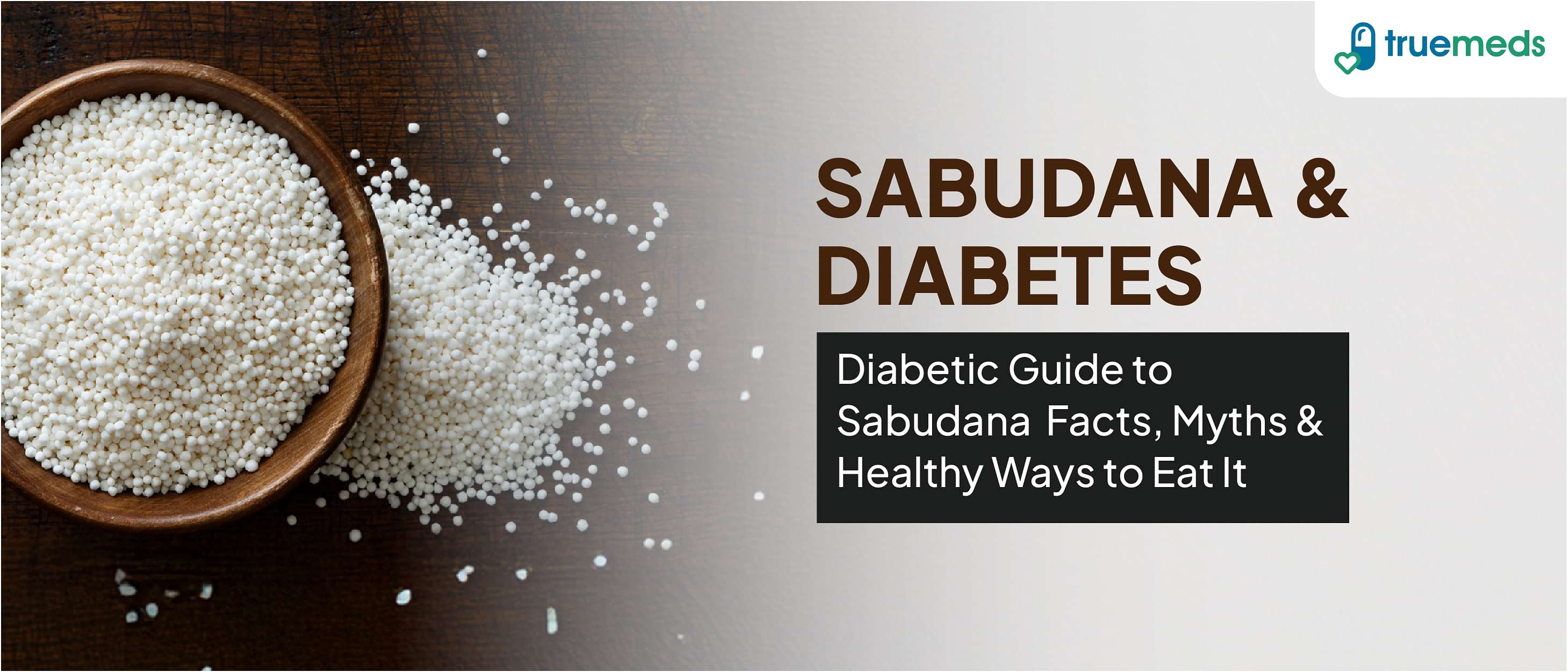
Is Sabudana Good for Diabetes? A Comprehensive Guide
Last updated on : 19 Nov, 2025
Read time : 6 min
Is sabudana good for diabetes? This question is crucial for those managing their blood sugar levels. Sabudana, also known as tapioca pearls, is a starchy food that provides instant energy but may have implications for diabetes due to its high carbohydrate and moderate-to-high glycemic index (GI) content.
Let’s dive into the nutritional value and properties of sabudana to understand its impact on diabetes management.
Understanding Sabudana’s Impact on Blood Sugar
Sabudana, a form of tapioca derived from the cassava root, is primarily composed of starch (nearly 94% carbohydrates) [1]. Due to its composition, it has a limited nutritional profile, lacking significant amounts of essential nutrients like protein, fiber, and vitamins [1].
While it can be incorporated into a diabetic diet, consumption must be strictly regulated. It serves as a quick source of energy and is gluten-free, making it suitable for those with celiac disease or gluten intolerance. However, its high carbohydrate content directly impacts blood glucose levels.
Nutritional and Potential Limited Benefits of Sabudana
Sabudana offers very few specific advantages for individuals managing diabetes, but these include:
- Energy Source: As it is high in simple carbohydrates, sabudana provides a rapid energy boost. This may be relevant for managing immediate energy dips or exercise-related needs, but it must be consumed with caution due to the risk of subsequent blood sugar spikes.
- Gluten-Free Option: For individuals with diabetes who also have gluten intolerance or celiac disease, sabudana serves as a safe, gluten-free base for dishes like khichdi or vada.
- Modest Mineral Content: Sabudana contains trace amounts of minerals, including a small amount of calcium and iron, though it should not be relied upon as a primary source for these nutrients.
Risks and Considerations for Sabudana Consumption
Due to its starch composition, consuming sabudana carries several risks for individuals with diabetes, primarily revolving around blood sugar control:
- Rapid Blood Sugar Spikes: Sabudana’s starch is easily digestible, leading to a quick conversion to glucose and potentially causing a rapid rise in blood sugar levels shortly after consumption [2].
- High Glycemic Index (GI) and Load (GL): The glycemic index of cooked sabudana is typically considered moderate to high, often reported in the range of 67 to 80, indicating a strong potential to significantly elevate blood glucose [3]. Foods with a high GI/GL are less desirable for stable diabetes management.
- Lack of Satiety and Nutritional Imbalance: It is severely lacking in both fiber and protein, which are crucial for slowing glucose absorption, promoting satiety, and maintaining effective blood sugar control in a balanced diabetic meal plan [1], [2].
Interesting Fact: Preparing sabudana can influence its glycemic impact. The process of soaking, cooking, and subsequent cooling can increase the formation of resistant starch, which acts like fiber and may slightly lower the food’s overall glycemic response, making it a potentially smarter choice when paired with protein and fiber!
Strategies for Safely Incorporating Sabudana in a Diabetic Diet
If you choose to include sabudana in your diet, the following strategies can help mitigate its impact on blood glucose:
- Strict Portion Control: Limit the serving size to a small portion (e.g., less than half a cup cooked) to minimize the carbohydrate load and prevent significant blood glucose spikes.
- Pair with Protein and Fiber: Always combine sabudana with substantial sources of protein (e.g., peanuts, yogurt, paneer) and high-fiber vegetables. This pairing helps to slow down the digestion and absorption of the sabudana’s carbohydrates, promoting a more stable blood sugar response [2].
- Opt for Preparation Methods: Consider methods that may increase resistant starch (like soaking and cooling before consumption). Avoid frying preparations like sabudana vada.
- Monitor Blood Glucose: Keep a close eye on your blood glucose levels 1 and 2 hours after eating sabudana to understand your body’s specific response. This personalized data is crucial for future dietary choices.
- Consult a Healthcare Provider: Seek personalized dietary advice from your endocrinologist or a registered dietitian who can integrate sabudana into your overall diabetes management plan.
Conclusion
In summary, while sabudana is not an optimal food choice for diabetes management due to its high carbohydrate content and elevated glycemic potential, it doesn’t need to be completely eliminated. The key to its safe consumption is strict moderation, preparation techniques that enhance resistant starch, and meticulous pairing with essential nutrients like protein and fiber. Monitoring glucose levels and seeking professional guidance are paramount for personalized dietary recommendations.
Frequently Asked Questions (FAQs)
Does sabudana increase blood sugar?
Yes, sabudana can raise blood sugar levels because its high starch content is rapidly digested, giving it a moderate-to-high glycaemic index, typically in the 67–80 range [3].
Can diabetics eat sabudana?
Diabetics can eat sabudana in very small portions and only when it is carefully paired with protein and fiber-rich foods to minimize blood sugar spikes.
Who should not eat sabudana?
While anyone can eat sabudana, individuals with poorly controlled diabetes, those prone to severe blood sugar fluctuations, or those on restrictive carbohydrate diets should exercise particular caution or avoid it.
Is sabudana a low-glycaemic food?
No, sabudana is not a low-glycaemic food; its glycaemic index is generally classified as moderate to high, depending on preparation.
What are some healthier alternatives to sabudana for diabetics?
Healthier alternatives for diabetics include whole grains like quinoa, millets (e.g., ragi, bajra), and high-fiber vegetables, which have a lower glycaemic impact and provide crucial fiber and protein.
Disclaimer: This article is for informational purposes only and does not constitute medical advice. Always consult a qualified healthcare provider, such as an endocrinologist or a registered dietitian, before beginning any new exercise, dietary, or wellness routine.
References
[1] Lokman, E. F., Bugam, S. H., Ibrahim, A. S., Yunus, N., Mansor, F., Balasubramaniam, V., Mohamad, K. M., Lazim, R. M., & Seruji, A. Z. R. A. (2023). Postprandial glucose-lowering effects by sago (Metroxylon sagu Rottb.) resistant starch in spontaneously type 2 diabetes, Goto-Kakizaki rat. Nutrition and Health, 30(4), 1–10. https://doi.org/10.1177/02601060231152060
[2] Wahjuningsih, S., Haslina, H., & Marsono, M. (2018). Hypolipidaemic Effects of High Resistant Starch Sago and Red Bean Flour- based Analog Rice on Diabetic Rats. Materia Socio Medica, 30(4), 232–239. https://doi.org/10.5455/msm.2018.30.232-239
[3] Foster-Powell, K., Holt, S. H. A., & Brand-Miller, J. C. (2002). International table of glycemic index and glycemic load values: 2002. The American Journal of Clinical Nutrition, 76(1), 5–56. https://doi.org/10.1093/ajcn/76.1.5














Disclaimer
Our healthcare experts have carefully reviewed and compiled the information presented here to ensure accuracy and trustworthiness. It is important to note that this information serves as a general overview of the topic and is for informational purposes only. It is not intended to diagnose, prevent, or cure any health problem. This page does not establish a doctor-patient relationship, nor does it replace the advice or consultation of a registered medical practitioner. We recommend seeking guidance from your registered medical practitioner for any questions or concerns regarding your medical condition.
Popular Articles


Recommended Articles



Recent Articles










Company
About UsHealth ArticleHealth StoriesHealth LibraryDiseases & Health ConditionsAyurvedaUnderstanding Generic MedicinesAll MedicinesAll BrandsNeed HelpFAQSecuritySubscribe
Registered Office Address
Grievance Officer
Download Truemeds


Contact Us
Our customer representative team is available 7 days a week from 9 am - 9 pm.
v4.10.3

2025 - Truemeds | All rights reserved. Our content is for informational purposes only. See additional information.

Our Payment Partners




