

- Medicines
- Personal Care
- Skin Cream
- Sunscreen
- Face Wash
- Skin and Body Soap
- Acne Care
- Body Lotions
- Moisturising Lotion
- Moisturising Cream
- Mosquito Repellent
- Moisturising Gel
- Body Wash
- Hair Oils
- Hair Shampoo
- Hair Conditioners
- Hair Supplements
- Hair Colour
- Hair Serum
- Hair Mask
- Hair Solutions
- Baby Diapers and Wipes
- Baby Lotion and Moisturising Cream
- Baby Bath Essentials
- Baby Skin Care
- Baby and Infant Food
- Baby Healthcare
- Women Multivitamins
- Ovulation Test Kit and Women Intimate Care
- Sanitary Pads
- Nutritional Drinks
- Condoms
- Lubricants
- Massage Gels
- Personal Body Massagers
- Men Performance Booster
- Sexual Health Supplements
- Massage Oils
- Ayurveda
- Tooth Paste
- Mouth Ulcer Gel
- Mouthwash
- Toothache and Gum Pain
- Tooth Brush
- Gargle Solution
- Orthopaedic Supports
- Adult Diapers
- Footwear
- Mobility and Support Accessories
- Urinary Support and Care
- Health Conditions
- Bone and Joint Care
- Digestive Care
- Eye Care
- Pain Relief
- Smoking Cessation
- Liver Care
- Stomach Care
- Cold and Cough
- Heart Care
- Kidney Care
- Piles, Fissures & Fistula
- Respiratory Care
- Mental Wellness
- Derma Care
- Pre and Probiotics
- Acidity
- Gas
- Constipation
- Loose Motion/Diarrhoea
- Digestive Fibres
- Digestive Enzymes
- Eye Lubricant Drops
- Lens Solution
- Safety Eye Wear
- Eye Cream
- Eye Vitamins and Supplements
- Eye Drops
- Eye Ointment and Gel
- Nicotine Patch
- Nicotine Gum
- Nicotine Lozenges
- Cough Syrups
- Chest Rubs and Balms
- Nasal Spray
- Lozenges
- Inhalant Capsules
- Cold and Cough Tablets
- Vitamins & Supplements
- Diabetes Care
- Healthcare Devices
- Homeopathic Medicine
- Health Guide
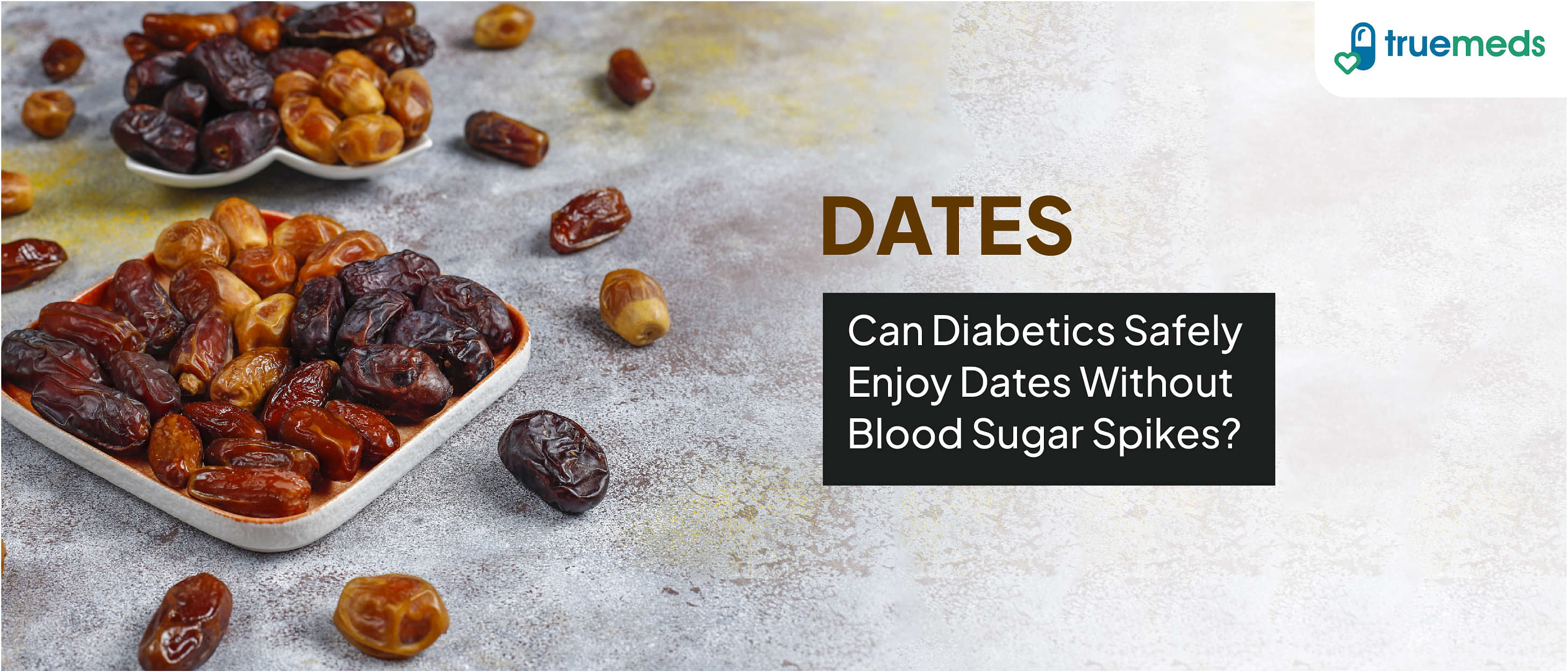
Can Diabetic People Eat Dates? A Guide to Dates and Diabetes
Last updated on : 27 Nov, 2025
Read time : 9 min
If you have diabetes, you’ve probably been told to steer clear of anything sweet. So when it comes to dates, those naturally sugary, chewy fruits, you might wonder: Can people with diabetes eat these?
The good news? Yes, people with diabetes can eat dates—but strict moderation and proper pairing are key.
This sweet and nutritious fruit is packed with fibre, vitamins, and minerals. However, its high natural sugar content may raise concerns for those managing their blood glucose levels. In this article, we’ll take a balanced look at the benefits, risks, and precautions of consuming dates for people with diabetes. By understanding the nutritional profile of dates and their impact on blood sugar, you can make informed decisions about incorporating them into your diet.
Can People with Diabetes Eat Dates?
The primary concern for individuals with diabetes is managing blood sugar levels. Dates are highly concentrated in natural sugars, but they also offer significant dietary fibre and a low to moderate Glycaemic Index (GI), which can mitigate a rapid blood glucose spike. This combination makes dates a permissible food in small, controlled portions (e.g., 1-2 dates) as part of a well-managed diabetes diet [2], but they must be counted as a carbohydrate source.
Understanding Dates and Their Nutritional Profile
Dates are a concentrated source of nutrients, as shown in the table below (values are approximate for a 100 g serving):
| Nutrient | Amount per 100g |
| Calories | 277 kcal |
| Carbohydrates | 75g |
| Fibre | 7g |
| Protein | 2g |
| Sugar | 64g |
| Potassium | 15% DV |
| Magnesium | 13% DV |
| Copper | 40% DV |
| Manganese | 13% DV |
| Iron | 5% DV |
| Vitamin B6 | 15% DV |
| Antioxidants | High levels |
While this table shows dates are nutrient-dense, their high sugar content (64g per 100g serving) is the key consideration for people with diabetes. A single Medjool date weighs approximately 24 grams and contains about 16 grams of carbohydrates (mostly sugar) and 1.6 grams of fibre. Let’s explore how dates can affect blood sugar levels and what precautions you should take when consuming them.
How Dates Affect Blood Sugar
Dates have been found to have a low to moderate Glycaemic Index (GI), with studies showing a range from 42 to 53 depending on the variety [2]. A GI under 55 is typically considered low. However, their Glycaemic Load (GL) can be high when consumed in large amounts due to the high carbohydrate content.
The fibre content in dates helps slow down sugar absorption, which is why the GI is moderate. However, if you eat several at once (high GL), your total carbohydrate intake rises significantly, and your blood sugar may still spike. Combining dates with protein or fat, such as nuts or yoghurt, can slow the sugar absorption further and improve post-meal glucose responses. This strategy is crucial for mitigating any potential rapid rise in blood sugar [1].
Benefits of Dates for People Living with Diabetes
Dates can be a nutritious part of a diabetes-friendly diet when eaten in moderation. They are rich in dietary fibre, antioxidants, and essential nutrients that may help support overall health. With a low to moderate GI, dates are often considered a healthier alternative to refined sugar, but precise portion control is essential for people with diabetes.
1. High in Dietary Fibre and its Impact on Blood Sugar
Dates are a good source of dietary fibre, with a quarter cup providing about 14% of the Daily Value (DV). Fibre slows the digestion and absorption of carbohydrates, helping to prevent sudden rises in blood glucose levels and potentially improving overall glycaemic control [3]. It also supports digestive health and may aid in weight management, which is particularly important for people with diabetes.
2. Rich Source of Antioxidants and Essential Nutrients
Another benefit of dates is their rich antioxidant content, including phenols and carotenoids. These antioxidants help protect against oxidative stress and inflammation, which are linked to various health conditions, including the progression of diabetes-related complications [4].
Dates are also a rich source of essential nutrients, including potassium and magnesium. Potassium helps maintain healthy blood pressure and supports heart function. Magnesium intake is often inversely associated with the risk of Type 2 Diabetes, and it plays a role in insulin action [3].
3. Supports Digestive and Heart Health
The high fibre content in dates promotes digestive health by ensuring regular bowel movements and preventing constipation. This is particularly important for diabetics, as maintaining a healthy digestive system can contribute to better blood sugar control. Furthermore, the combination of fibre, potassium, and antioxidants contributes to heart health by helping to manage blood pressure and reduce the risk of cardiovascular diseases, a primary concern for those with diabetes [3], [4].
Risks and Considerations
Keep these risks in mind when consuming dates if you are diabetic:
- Risk of Hyperglycaemia: High natural sugar content in dates may lead to blood glucose spikes if consumed excessively, regardless of the moderate GI.
- Practice portion control by limiting intake to 1–2 small dates at a time to prevent significant blood sugar fluctuations.
- Monitor blood sugar levels closely when introducing dates into your diet, especially if you have diabetes, as individual responses can vary greatly [2].
- Avoid processed date products like syrups or candies, which may contain added sugars and have a higher GI/GL than whole dates.
- Always consult your healthcare provider or a Registered Dietitian before incorporating dates into your diabetes management plan.
How to Safely Incorporate Dates into a Diabetic Diet
- Practice Moderation: Limit your intake to 1–2 small dates per serving to minimise blood sugar spikes and keep carbohydrate counts manageable.
- Combine with Protein or Healthy Fats: Pair dates with a small handful of nuts (almonds, walnuts), seeds, or Greek yoghurt to significantly slow down sugar absorption and improve satiety.
- Check Your Blood Sugar: Regularly monitor your blood glucose levels 1-2 hours after eating dates to understand your body’s specific response. This is the most reliable way to determine your tolerance.
- Opt for Whole Dates: Steer clear of processed date products, date pastes, or syrups that may contain added sugars or preservatives and lack the full fibre benefits.
- Seek Professional Advice: Consult your healthcare provider or a Registered Dietitian for personalised dietary recommendations based on your specific medication, blood sugar goals, and total daily carbohydrate allowance.
By following these guidelines, you can safely enjoy the benefits of dates while managing your diabetes effectively.
Dates can be a nutritious and enjoyable part of a diabetic diet—if consumed mindfully. Their fibre, antioxidants, and nutrients can provide benefits, but their natural sugar content still demands careful portion control. By combining dates with protein or fats and monitoring your blood glucose response, you can safely include them in your meal plan. Remember, dates are a concentrated source of carbohydrates and must be accounted for in your daily carbohydrate budget. Never make significant dietary changes without consulting your healthcare provider or dietitian.
Frequently Asked Questions (FAQs)
Are dates safe for diabetics?
Yes, dates are generally safe for people with diabetes when consumed in very small portions (1-2 dates) due to their low-to-moderate GI and high fibre content. Consult your dietitian to integrate them into your meal plan.
How many dates can a diabetic eat in a day?
Typically, 1–2 small dates (around 15-30 grams total) per day is a safe guideline. The exact amount depends on your total daily carbohydrate allowance and how your body responds (monitor post-meal blood sugar).
Do dates raise blood sugar levels?
Yes, any food containing carbohydrates will raise blood sugar. Dates contain natural sugars. However, their high fibre content and low GI (42-53) mean the sugar is released slowly, causing a less rapid spike than refined sugars.
Which type of dates are best for diabetics?
The portion size is far more important than the specific variety (e.g., Medjool, Deglet Noor). Focus on eating only 1 or 2 small dates, regardless of the type.
Can diabetics eat dates on an empty stomach?
It is not recommended. Diabetic people should eat dates with other foods, such as nuts, seeds, or protein, to significantly slow down glucose absorption and prevent a rapid blood sugar rise.
Are dried dates suitable for diabetics?
Dried dates are the most common form and are suitable for people with diabetes when consumed in strict moderation. The key is always portion control (1-2 dates).
Can dates replace sugar in recipes for diabetics?
Dates can be used as a natural sweetener, offering more nutrients than refined sugar. However, they remain a source of concentrated sugar and carbohydrates. Portion control is essential to manage the carbohydrate impact on blood glucose.
What are the health benefits of dates for diabetics?
The fibre, potassium, and antioxidants in dates support digestive health, heart function, and offer anti-inflammatory benefits—provided they are consumed in small, controlled portions to avoid negatively impacting blood glucose management.
References
[1] Alkaabi, J. M., Al-Dabbagh, B., Ahmad, S., Saadi, H. F., Gariballa, S., & Ghazali, M. A. (2011). Glycemic indices of five varieties of dates in healthy and diabetic subjects. Nutrition Journal, 10(1), 59. https://doi.org/10.1186/1475-2891-10-59
[2] Mirghani, H. O. (2021). Dates fruits effects on blood glucose among patients with diabetes mellitus: A review and meta-analysis. Pakistan Journal of Medical Sciences Quarterly, 37(4), 1230–1236. https://doi.org/10.12669/pjms.37.4.4112
[3] Mirghani, H. O. (2024). Effect of dates on blood glucose and lipid profile among patients with type 2 diabetes. World Journal of Diabetes, 15(6), 1079–1085. https://doi.org/10.4239/wjd.v15.i6.1079
[4] Rahmani, A. H., Aly, S. M., Ali, H., Babiker, A. Y., Sauda Srikar, & Khan, A. A. (2014). Therapeutic effects of date fruits (Phoenix dactylifera) in the prevention of diseases via modulation of anti-inflammatory, anti-oxidant and anti-tumour activity. International Journal of Clinical and Experimental Medicine, 7(3), 483. https://pmc.ncbi.nlm.nih.gov/articles/PMC3992385/















Disclaimer
Our healthcare experts have carefully reviewed and compiled the information presented here to ensure accuracy and trustworthiness. It is important to note that this information serves as a general overview of the topic and is for informational purposes only. It is not intended to diagnose, prevent, or cure any health problem. This page does not establish a doctor-patient relationship, nor does it replace the advice or consultation of a registered medical practitioner. We recommend seeking guidance from your registered medical practitioner for any questions or concerns regarding your medical condition.
Popular Articles



Recommended Articles



Recent Articles










Company
About UsHealth ArticleHealth StoriesHealth LibraryDiseases & Health ConditionsAyurvedaAll MedicinesAll BrandsNeed HelpFAQSecuritySubscribe
Registered Office Address
Grievance Officer
Download Truemeds


Contact Us
Our customer representative team is available 7 days a week from 9 am - 9 pm.
v4.8.2

2025 - Truemeds | All rights reserved. Our content is for informational purposes only. See additional information.

Our Payment Partners




