

- Medicines
- Personal Care
- Skin Cream
- Sunscreen
- Face Wash
- Skin and Body Soap
- Acne Care
- Body Lotions
- Moisturising Lotion
- Moisturising Cream
- Mosquito Repellent
- Moisturising Gel
- Body Wash
- Hair Oils
- Hair Shampoo
- Hair Conditioners
- Hair Supplements
- Hair Colour
- Hair Serum
- Hair Mask
- Hair Solutions
- Baby Diapers and Wipes
- Baby Lotion and Moisturising Cream
- Baby Bath Essentials
- Baby Skin Care
- Baby and Infant Food
- Baby Healthcare
- Women Multivitamins
- Ovulation Test Kit and Women Intimate Care
- Sanitary Pads
- Nutritional Drinks
- Condoms
- Lubricants
- Massage Gels
- Personal Body Massagers
- Men Performance Booster
- Sexual Health Supplements
- Massage Oils
- Ayurveda
- Tooth Paste
- Mouth Ulcer Gel
- Mouthwash
- Toothache and Gum Pain
- Tooth Brush
- Gargle Solution
- Orthopaedic Supports
- Adult Diapers
- Footwear
- Mobility and Support Accessories
- Urinary Support and Care
- Health Conditions
- Bone and Joint Care
- Digestive Care
- Eye Care
- Pain Relief
- Smoking Cessation
- Liver Care
- Stomach Care
- Cold and Cough
- Heart Care
- Kidney Care
- Piles, Fissures & Fistula
- Respiratory Care
- Mental Wellness
- Derma Care
- Pre and Probiotics
- Acidity
- Gas
- Constipation
- Loose Motion/Diarrhoea
- Digestive Fibres
- Digestive Enzymes
- Eye Lubricant Drops
- Lens Solution
- Safety Eye Wear
- Eye Cream
- Eye Vitamins and Supplements
- Eye Drops
- Eye Ointment and Gel
- Nicotine Patch
- Nicotine Gum
- Nicotine Lozenges
- Cough Syrups
- Chest Rubs and Balms
- Nasal Spray
- Lozenges
- Inhalant Capsules
- Cold and Cough Tablets
- Vitamins & Supplements
- Diabetes Care
- Healthcare Devices
- Homeopathic Medicine
- Health Guide
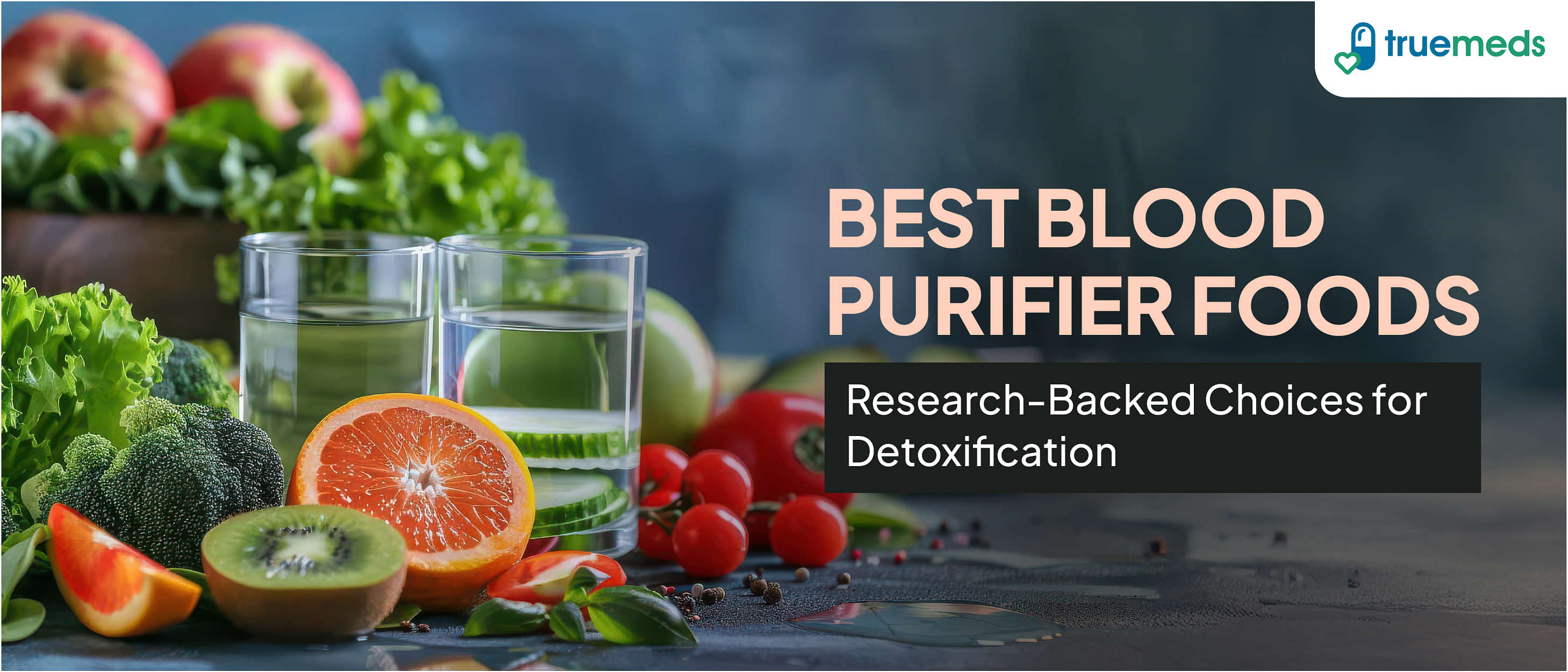
Blood Purifier Foods: Top Foods to Support Your Body’s Natural Filtration
Last updated on : 01 Dec, 2025
Read time : 8 min
Blood plays a vital role in maintaining our overall health by transporting essential nutrients, oxygen, and hormones throughout the body, while helping to remove waste products. Effective blood circulation is crucial for the proper functioning of organs and tissues [1].
Modern lifestyles, including exposure to environmental pollutants and unhealthy dietary habits, can sometimes challenge the body’s natural ability to maintain optimal blood quality. Fortunately, the body possesses two highly efficient natural filtration organs—primarily the liver and kidneys—that continuously work to filter and eliminate waste and toxins. Certain foods and herbs can provide nutritional support to these critical organs.
Incorporating nutrient-rich foods and herbs that support liver and kidney health may help maintain efficient bodily functions and promote overall wellness. In this article, we will explore the significance of maintaining healthy blood and ways to nutritionally support your body’s natural filtering processes.
Best Foods to Nutritionally Support Your Natural Filtration
Eating nutrient-rich foods can support your body’s natural detoxification processes by promoting the optimal function of the liver and kidneys and may help maintain healthy blood. Incorporating these foods into your diet may promote overall well-being:
- Garlic Garlic contains allicin, a compound activated when crushed or chopped, which may help support liver enzyme function involved in detoxification pathways [2]. Its antimicrobial properties can also contribute to digestive health. Regular consumption of garlic might promote better circulation and cardiovascular wellness.
- Cilantro (Coriander Leaves) Cilantro is recognised for its high chlorophyll and antioxidant content. In traditional use and some animal studies, it has been noted for its potential to support the elimination of heavy metals [3]. Adding cilantro to meals can support the body’s natural cleansing pathways and reduce inflammation.
- Beetroot Beets are rich in antioxidants and nutrients that support liver health and may enhance the body’s ability to detoxify. Including beetroot in your diet can promote healthy blood flow and reduce inflammation.
- Turmeric Turmeric contains curcumin, a potent antioxidant that may stimulate the activity of detoxifying enzymes in the liver [4], [5]. Using turmeric in cooking or teas can help support your body’s natural detoxification functions.
- Cayenne Pepper The capsaicin in cayenne pepper can stimulate circulation and may support metabolism, potentially aiding in waste elimination. Adding a pinch to your dishes can boost flavor and support healthy circulation.
- Lemon Lemon juice is rich in vitamin C, an antioxidant that may support liver function and the body’s natural detoxification processes. Drinking lemon water, particularly on an empty stomach, may help promote hydration and support overall wellness.
- Water Staying well-hydrated is essential for kidney and liver function, which play critical roles in filtering and eliminating waste from the bloodstream. Aiming to drink at least eight glasses of water daily may help support the body’s natural cleansing processes. Note: While these foods can support your body’s natural filtration systems, they are not a replacement for medical treatment. Consult your healthcare provider before making significant changes to your diet, especially if you have health conditions or are taking medication.
Additional Food Sources for Aiding Overall Well-Being
Diet plays a vital role in supporting blood health. Including certain foods can help your body naturally manage waste elimination and promote overall health. Consider adding these nutrient-rich options to your daily meals:
- Blueberries These small berries are packed with antioxidants, especially flavonoids, which protect against oxidative stress and inflammation. Blueberries may help support healthy blood circulation and contribute to heart health by helping maintain healthy cholesterol levels. They may also support cognitive function.
- Broccoli Rich in vitamins C and K, fibre, and compounds like sulforaphane, broccoli may support liver function and help reduce inflammation, contributing to the body’s natural detoxification processes.
- Jaggery A traditional sweetener made from unrefined sugarcane or palm sap, jaggery is rich in iron and minerals. In traditional practices, it is often used to help improve haemoglobin levels and is believed to aid in promoting blood health. It should be consumed in moderation due to its high sugar content.
- Hibiscus Enjoying hibiscus tea provides antioxidants that may help lower blood pressure and cholesterol. Its natural diuretic properties also may support kidney health and aid in waste elimination.
Dandelion Often overlooked, dandelion is a herb traditionally used to support liver and kidney health [6]. Its leaves and roots contain vitamins and minerals that can support liver function and enhance detoxification.
Herbs for Kidney and Liver Health Support
The health of your kidneys and liver is essential to blood health. Incorporate these herbs to help maintain and support these vital organs:
- Holy Basil (Tulsi) Known for its antioxidant and anti-inflammatory properties, holy basil may support kidney and liver health by combating oxidative stress [7].
- Neem Neem is renowned for its traditional use in supporting blood health, often associated with promoting healthy skin [8]. It may help detoxify the blood and supports liver function.
- Ginger More than just a flavorful spice, ginger possesses anti-inflammatory and antioxidant properties that can support circulation and liver health.
- Green Tea Rich in catechins and antioxidants, green tea reduces oxidative stress and inflammation, making it a valuable aid for supporting the body’s natural filtration.
- Parsley Beyond being a garnish, parsley contains chlorophyll that supports detoxification and may help eliminate toxins through its mild diuretic effect on the kidneys and liver support.
Expert Quote
Including whole, nutrient-rich foods such as leafy greens, beets, berries, and turmeric in your daily meals can aid your body’s natural detox systems. These foods are rich in antioxidants, anti-inflammatory agents, and essential nutrients that support the health of the liver and kidneys, the organs primarily responsible for filtering and purifying the blood. That said, there is no food that can “detox” the blood instantly; the most effective way to support these organs is through long-term, balanced nutrition and healthy lifestyle habits.
– Dr. Kavya Rejikumar
Conclusion
Understanding the importance of nutritionally supporting your blood health through dietary choices can greatly enhance overall health and well-being. By incorporating a variety of organ-supporting foods and herbs into your daily meals, you can support your body’s natural detoxification processes. Nutrient-rich options like blueberries, garlic, lemon, broccoli, ginger, holy basil, and neem are powerful allies in promoting optimal liver and kidney function. These foods not only help improve organ function but also are part of a holistic approach that reduces the risk of chronic diseases. Embrace these natural health-supporting foods today and take a proactive step toward achieving optimal health!
Frequently Asked Questions (FAQs)
What foods support the removal of waste and toxins from the blood?
Foods such as garlic, beetroot, leafy greens, and apples may help support the body’s natural detoxification processes by supplying key nutrients and antioxidants that aid the liver and kidneys.
What is the most effective way to support the blood’s natural filtration?
The most effective way is to maintain a consistently healthy lifestyle that includes a balanced, whole-food diet, adequate hydration, regular exercise, and minimal alcohol intake. Drinking a daily mix of lemon juice, honey, and warm water is a popular natural routine that can support hydration and liver function.
Which food is best for supporting the body’s natural detox processes?
A balanced diet rich in fruits, vegetables, lean proteins, and whole grains may support the body’s natural detoxification processes by providing nutrients that help maintain overall wellness. No single food is a magic “detox” solution.
How to remove impurities from blood naturally?
The body naturally removes impurities via the liver and kidneys. You can support this process by maintaining a healthy diet full of antioxidant-rich foods, staying hydrated, and engaging in regular exercise.
Which fruit supports blood health?
Fruits like pomegranate, berries (strawberries, blueberries), and oranges can support blood purification due to their high antioxidant and vitamin content, which helps protect blood cells from oxidative damage.
How can I support my blood cells naturally?
Stay hydrated, eat antioxidant-rich foods such as greens and citrus fruits, include herbs like turmeric and ginger, and maintain healthy lifestyle habits like regular exercise and proper sleep.
Which fruit aids the body’s detoxification process?
Fruits such as papaya, watermelon, and apples aid in detoxification by promoting hydration, fiber intake, and liver health.
References
[1] Hall, J. E., & Hall, M. E. (2021). Guyton and Hall textbook of medical physiology (14th ed.). Elsevier. https://shop.elsevier.com/books/guyton-and-hall-textbook-of-medical-physiology/hall/978-0-323-59712-8
[2] Ghasemi, Z., Bakhshaian, M., & Haghani, K. (2018). The effect of Allium sativum (garlic) on liver enzymes: A systematic review and meta-analysis of randomized controlled trials. Journal of Herbs, Spices & Medicinal Plants, 24(4), 346–357. Link Text: https://www.researchgate.net/publication/339728289_Effects_of_garlic_supplementation_on_liver_enzymes_A_systematic_review_and_meta-analysis_of_randomized_controlled_trials
[3] Karunamoorthi, K., Kim, H. Y., & Hur, Y. K. (2011). Cilantro (Coriandrum sativum L.)—An ethnomedicinal, pharmacological, and phytochemistry review. International Journal of Integrative Biology, 12(3), 85–93. Link Text: https://pmc.ncbi.nlm.nih.gov/articles/PMC8588955/
[4] National Center for Complementary and Integrative Health. (2023, September). Turmeric: Usefulness and safety. U.S. Department of Health and Human Services. Retrieved July 2, 2025, from https://nccih.nih.gov/health/turmeric
[5] National Center for Biotechnology Information. (2025). Turmeric — LiverTox: Clinical and research information on drug-induced liver injury. National Institutes of Health. Retrieved July 2, 2025, from https://www.ncbi.nlm.nih.gov/books/NBK548561/
[6] Yarnell, E. (2020). Botanical treatments for disorders of the kidney and urinary tract. In L. M. Bove (Ed.), The Textbook of Botanical Medicine: A Functional Approach (pp. 535-560). CRC Press. https://www.routledge.com/The-Textbook-of-Botanical-Medicine-A-Functional-Approach/Bove/p/book/9781138479530
[7] Cohen, M. M. (2014). Tulsi—Ocimum sanctum: A review of human studies. Evidence-Based Complementary and Alternative Medicine, 2014, 827943. https://doi.org/10.1155/2014/827943
[8] World Health Organization. (2022). WHO Monographs on selected medicinal plants: Volume 5. WHO Press. https://www.who.int/publications/i/item/9241545178
















Disclaimer
Our healthcare experts have carefully reviewed and compiled the information presented here to ensure accuracy and trustworthiness. It is important to note that this information serves as a general overview of the topic and is for informational purposes only. It is not intended to diagnose, prevent, or cure any health problem. This page does not establish a doctor-patient relationship, nor does it replace the advice or consultation of a registered medical practitioner. We recommend seeking guidance from your registered medical practitioner for any questions or concerns regarding your medical condition.
Popular Articles


Recommended Articles




Recent Articles










Company
About UsHealth ArticleHealth StoriesHealth LibraryDiseases & Health ConditionsAyurvedaUnderstanding Generic MedicinesAll MedicinesAll BrandsNeed HelpFAQSecuritySubscribe
Registered Office Address
Grievance Officer
Download Truemeds


Contact Us
Our customer representative team is available 7 days a week from 9 am - 9 pm.
v4.10.2

2025 - Truemeds | All rights reserved. Our content is for informational purposes only. See additional information.

Our Payment Partners