

- Medicines
- Personal Care
- Skin Cream
- Sunscreen
- Face Wash
- Skin and Body Soap
- Acne Care
- Body Lotions
- Moisturising Lotion
- Moisturising Cream
- Mosquito Repellent
- Moisturising Gel
- Body Wash
- Hair Oils
- Hair Shampoo
- Hair Conditioners
- Hair Supplements
- Hair Colour
- Hair Serum
- Hair Mask
- Hair Solutions
- Baby Diapers and Wipes
- Baby Lotion and Moisturising Cream
- Baby Bath Essentials
- Baby Skin Care
- Baby and Infant Food
- Baby Healthcare
- Women Multivitamins
- Ovulation Test Kit and Women Intimate Care
- Sanitary Pads
- Nutritional Drinks
- Condoms
- Lubricants
- Massage Gels
- Personal Body Massagers
- Men Performance Booster
- Sexual Health Supplements
- Massage Oils
- Ayurveda
- Tooth Paste
- Mouth Ulcer Gel
- Mouthwash
- Toothache and Gum Pain
- Tooth Brush
- Gargle Solution
- Orthopaedic Supports
- Adult Diapers
- Footwear
- Mobility and Support Accessories
- Urinary Support and Care
- Health Conditions
- Bone and Joint Care
- Digestive Care
- Eye Care
- Pain Relief
- Smoking Cessation
- Liver Care
- Stomach Care
- Cold and Cough
- Heart Care
- Kidney Care
- Piles, Fissures & Fistula
- Respiratory Care
- Mental Wellness
- Derma Care
- Pre and Probiotics
- Acidity
- Gas
- Constipation
- Loose Motion/Diarrhoea
- Digestive Fibres
- Digestive Enzymes
- Eye Lubricant Drops
- Lens Solution
- Safety Eye Wear
- Eye Cream
- Eye Vitamins and Supplements
- Eye Drops
- Eye Ointment and Gel
- Nicotine Patch
- Nicotine Gum
- Nicotine Lozenges
- Cough Syrups
- Chest Rubs and Balms
- Nasal Spray
- Lozenges
- Inhalant Capsules
- Cold and Cough Tablets
- Vitamins & Supplements
- Diabetes Care
- Healthcare Devices
- Homeopathic Medicine
- Health Guide
Benefits of Pavanamuktasana (Gas Release Yoga Pose) and How to Do It
Last updated on : 01 Dec, 2025
Read time : 7 min
What is Pavanamuktasana?
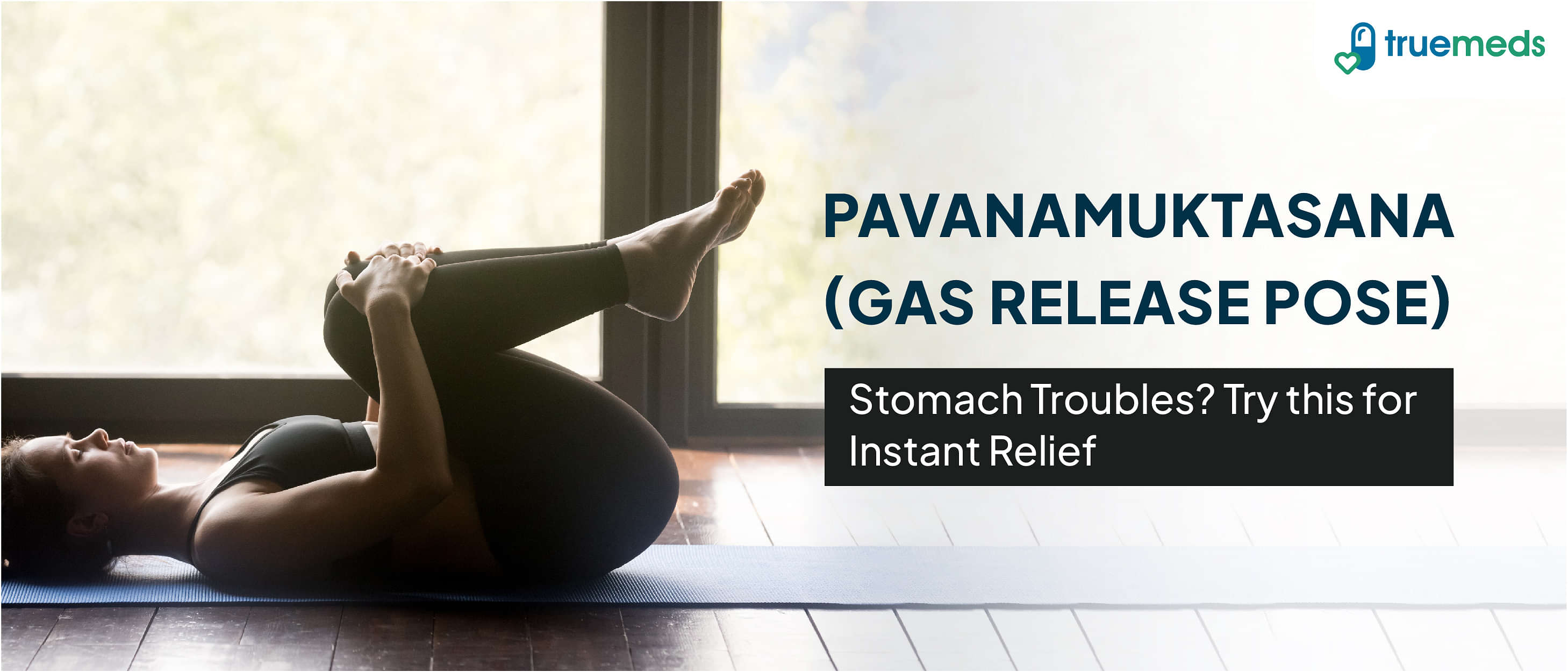
Pavanamuktasana is a restorative yoga pose that derives its name from the Sanskrit words ‘pavana’ (wind), ‘mukta’ (to release), and ‘asana’ (pose). The name reflects its purpose: to aid in the release of accumulated intestinal gas and to support overall digestive function. Here are some key points to help you understand this pose better:
- Primary Objective: The primary objective of Pavanamuktasana is to help relieve abdominal discomfort by applying gentle pressure on the abdomen, which stimulates the digestive organs and helps move trapped gas along the digestive tract [1]. This may help decrease digestive discomforts, such as indigestion, constipation, and bloating.
- Benefits: Practising Pavanamuktasana regularly may help strengthen the back and core muscles, enhance blood circulation in the hip joints, and support smoother digestive transit.
- Variations: Depending on your flexibility and comfort level, you can practice Pavanamuktasana with one leg (Eka Pada Pavanamuktasana) or both legs (Dwi Pada Pavanamuktasana).
How to do Pavanamuktasana?
Knowing how to practice Pavanamuktasana properly is crucial so that the body remains aligned and free from strain, thereby maximising the benefits of this pose while minimising the risk of injury. Here are the steps to perform this basic therapeutic asana effectively:
- Start Position: Lie flat on your back on a yoga mat, legs straight and arms relaxed at your sides.
- Knee to Chest (Right Leg): Inhale deeply, and as you exhale, draw your right knee towards your chest, clasping it with both hands just below the knee.
- Lift the Head (Optional): Inhale again, and as you exhale, gently lift your head off the ground, aiming to touch your chin to your right knee. Only do this if your neck is comfortable.
- Switch Legs: Lower your head back down and release the right leg. Repeat the process with the left knee.
- Both Knees: Bring both knees to your chest together, holding them with your hands.
- Final Compression: While holding both knees, exhale and gently tighten your grip around them, pressing them closer to your abdomen to create the desired compression.
- Release: Inhale deeply, then exhale as you relax and slowly lower both legs back to the mat.
- Repetitions: Repeat this sequence for 3 to 4 rounds, focusing on deep and synchronized breathing throughout the movement.
Important Note: Lifting the head is optional and should be avoided for individuals with known neck pain, cervical spondylosis, or severe spinal issues [2]. This pose primarily aids in alleviating digestive discomfort and helps enhance flexibility in the hips and lower back.
Benefits of Pavanamuktasana
Pavanamuktasana offers a wide array of potential benefits for the body and mind. Practised with proper form and breathing, this pose may help improve digestion, enhance flexibility, alleviate mild back discomfort, and support better sleep.
1. Benefits of Pavanamuktasana for the Digestive System
Pavanamuktasana’s primary benefit is the gentle stimulation of digestion. The focused abdominal compression applies pressure that helps encourage peristalsis—the natural, wave-like movements of the intestines—which facilitates smoother bowel movements and the passage of gas [1]. This makes the pose a supportive practice for people experiencing functional digestive issues like mild constipation, excess gas accumulation, and bloating.
2. Benefits of Pavanamuktasana on Circulation
Practising Pavanamuktasana may help improve blood circulation, particularly in the lower abdominal area and hip joints. As you bring your knees towards your chest, the temporary compression limits blood flow. When you release the pose, fresh, oxygenated blood rushes back into the organs, which can enhance overall local circulation and potentially support the health of the abdominal organs [3].
3. Supportive Role for Metabolic Health
While Pavanamuktasana is not a direct medical treatment for metabolic conditions like diabetes, the gentle, rhythmic compression and release in the abdominal area are believed to stimulate organs including the pancreas. Improved digestion and circulation throughout the abdominal region are often cited as supportive factors for overall metabolic health when combined with prescribed medical management and a healthy lifestyle.
Clarification: Pavanamuktasana’s effect on blood sugar is indirect and supportive only; it does not directly affect insulin sensitivity or replace medication for diabetes [4].
4. Musculoskeletal Benefits of Pavanamuktasana
In addition to its digestive support, Pavanamuktasana also offers advantages for the muscular system. This pose may help strengthen and tone the core muscles in the abdominal area and lower back. By stretching the muscles of the hips, lower back, and thighs, Pavanamuktasana can increase flexibility and reduce stiffness over time with consistent practice [2].
5. Other Potential Benefits of Pavanamuktasana
Apart from digestive and muscular support, consistent practice of Pavanamuktasana may also:
- May help strengthen the lower back and reduce general stiffness.
- May enhance mobility in the hip joints.
- May help relieve mild menstrual cramps by relaxing the lower abdominal muscles.
- Supports better sleep and stress reduction through focused, deep breathing.
Note on Weight Management: Some anecdotal reports suggest the pose aids in burning abdominal fat, but it is not a standalone exercise for significant fat loss. It can support weight management only as part of a broader, consistent routine involving cardio, strength training, and dietary changes.
Risks and Safety Considerations (Contraindications)
While Pavanamuktasana is generally considered a safe, low-impact yoga pose, it must be avoided or significantly modified in certain conditions to prevent injury or worsening of a pre-existing condition. The following are absolute or relative contraindications [2], [3]:
- Pregnancy: The pose is not safe as it creates direct pressure on the uterus and abdomen.
- Recent Abdominal Surgery: The abdominal compression could severely affect the healing process of surgical incisions.
- Hernia: The pressure can worsen the abdominal wall weakness associated with a hernia.
- Severe Spinal Issues: This includes disc herniation, severe sciatica, or acute lower back pain. Avoid the head lift completely and practice only under the guidance of a qualified therapist.
- High Blood Pressure or Heart Conditions: The pose can increase intra-abdominal pressure and blood pressure. Individuals with these conditions should seek a qualified medical opinion before attempting the pose.
Disclaimer: Always consult a healthcare provider or a certified yoga therapist before starting or continuing any yoga practice, particularly if you have underlying medical conditions, are recovering from illness or injury, or are pregnant. Yoga is a complementary practice and does not replace medical diagnosis or treatment.
Conclusion
Pavanamuktasana is a simple yet effective supine yoga pose that serves as a powerful tool for digestive wellness and musculoskeletal support. By applying gentle, therapeutic pressure, it helps to alleviate gas, reduce bloating, and encourage regular bowel movements. With proper guidance and consistent practice focused on correct alignment and breath, it can become a valuable, safe, and easily accessible part of your holistic well-being routine.
Frequently Asked Questions (FAQs)
Who should not do Pavanamuktasana?
Individuals who are pregnant, or have a hernia, high blood pressure, severe spinal injuries (like disc herniation), recent abdominal surgery, or active sciatica should avoid or significantly modify Pavanamuktasana.
Which conditions are alleviated by Pavanamuktasana?
Pavanamuktasana may help alleviate symptoms of functional digestive issues such as mild constipation, indigestion, and gas/bloating. It is important to remember that it is a complementary practice and does not cure any disease.
Does Pavanamuktasana reduce belly fat?
While Pavanamuktasana engages and tones the abdominal muscles, it does not directly cause significant fat loss on its own. Sustainable fat loss requires a consistent caloric deficit achieved through a combination of regular aerobic exercise, strength training, and a balanced diet.
What are the spiritual benefits of Pavanamuktasana?
In yogic tradition, Pavanamuktasana is believed to help activate the Manipura Chakra (Solar Plexus), which is associated with personal power, self-esteem, and motivation. These energetic and spiritual claims are experiential in nature and lack specific scientific evidence.
References
[1] Gupta, A., & Awasthi, H. (2014). A critical review of clinical application of Yogasanas with special reference to Pavanamuktasana. International Ayurvedic Medical Journal, 2(6), 1087–1098. Retrieved from http://iamj.in/posts/images/upload/1087_1098.pdf
[2] Ministry of AYUSH. (2023). Poise Magazine – Part 3. Yoga Portal. Retrieved from https://yoga.ayush.gov.in/Publications/gallery/PUBLICATION/Poise%20Magazine%20Part%203.pdf
[3] Singh, M. (2022). Concepts of Yoga and Fitness. Notion Press. Retrieved from https://www.google.co.in/books/edition/CONCEPTS_OF_YOGA_AND_FITNESS/YzVnEAAAQBAJ
[4] Manjunatha, S., Vempati, R. P., Ghosh, D., & Bijlani, R. L. (2005). An investigation into the acute and long-term effects of selected yogic postures on fasting and postprandial glycemia and insulinemia in healthy young subjects. Indian Journal of Physiology and Pharmacology, 49(3), 319–324. Retrieved from https://www.ijpp.com/IJPP%20archives/2005_49_3/319-324.pdf














Disclaimer
Our healthcare experts have carefully reviewed and compiled the information presented here to ensure accuracy and trustworthiness. It is important to note that this information serves as a general overview of the topic and is for informational purposes only. It is not intended to diagnose, prevent, or cure any health problem. This page does not establish a doctor-patient relationship, nor does it replace the advice or consultation of a registered medical practitioner. We recommend seeking guidance from your registered medical practitioner for any questions or concerns regarding your medical condition.
Popular Articles
Recommended Articles


Recent Articles





Company
About UsHealth ArticleHealth StoriesHealth LibraryDiseases & Health ConditionsAyurvedaAll MedicinesAll BrandsNeed HelpFAQSecuritySubscribe
Registered Office Address
Grievance Officer
Download Truemeds


Contact Us
Our customer representative team is available 7 days a week from 9 am - 9 pm.
v4.9.0

2025 - Truemeds | All rights reserved. Our content is for informational purposes only. See additional information.

Our Payment Partners




