

- Medicines
- Personal Care
- Skin Cream
- Sunscreen
- Face Wash
- Skin and Body Soap
- Acne Care
- Body Lotions
- Moisturising Lotion
- Moisturising Cream
- Mosquito Repellent
- Moisturising Gel
- Body Wash
- Hair Oils
- Hair Shampoo
- Hair Conditioners
- Hair Supplements
- Hair Colour
- Hair Serum
- Hair Mask
- Hair Solutions
- Baby Diapers and Wipes
- Baby Lotion and Moisturising Cream
- Baby Bath Essentials
- Baby Skin Care
- Baby and Infant Food
- Baby Healthcare
- Women Multivitamins
- Ovulation Test Kit and Women Intimate Care
- Sanitary Pads
- Nutritional Drinks
- Condoms
- Lubricants
- Massage Gels
- Personal Body Massagers
- Men Performance Booster
- Sexual Health Supplements
- Massage Oils
- Ayurveda
- Tooth Paste
- Mouth Ulcer Gel
- Mouthwash
- Toothache and Gum Pain
- Tooth Brush
- Gargle Solution
- Orthopaedic Supports
- Adult Diapers
- Footwear
- Mobility and Support Accessories
- Urinary Support and Care
- Health Conditions
- Bone and Joint Care
- Digestive Care
- Eye Care
- Pain Relief
- Smoking Cessation
- Liver Care
- Stomach Care
- Cold and Cough
- Heart Care
- Kidney Care
- Piles, Fissures & Fistula
- Respiratory Care
- Mental Wellness
- Derma Care
- Pre and Probiotics
- Acidity
- Gas
- Constipation
- Loose Motion/Diarrhoea
- Digestive Fibres
- Digestive Enzymes
- Eye Lubricant Drops
- Lens Solution
- Safety Eye Wear
- Eye Cream
- Eye Vitamins and Supplements
- Eye Drops
- Eye Ointment and Gel
- Nicotine Patch
- Nicotine Gum
- Nicotine Lozenges
- Cough Syrups
- Chest Rubs and Balms
- Nasal Spray
- Lozenges
- Inhalant Capsules
- Cold and Cough Tablets
- Vitamins & Supplements
- Diabetes Care
- Healthcare Devices
- Homeopathic Medicine
- Health Guide
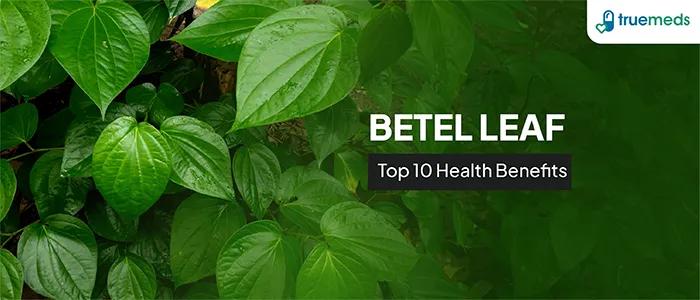
Top 9 Surprising Health Benefits of Betel Leaf (Paan Leaf)
Last updated on : 09 Nov, 2025
Read time : 7 min
Betel leaf (Piper betle), commonly known as paan leaf, is widely used in India in cultural and religious traditions. The fresh, pure betel leaf on its own has many potential health benefits [9]. Betel leaves are a source of antioxidants, fibre, Vitamin C, and beta-carotene, which may help improve digestion, boost immunity, and support skin and heart health [1], [4]. Unlike commercial paan that contains harmful additives, pure betel leaves can be beneficial if consumed in moderation.
Health Benefits of Pure Betel Leaves
Betel leaves have been traditionally used for their antimicrobial, anti-inflammatory, and antioxidant properties [4].
Here are some of the potential benefits of consuming pure paan leaf:
1. Improves Digestion
Traditional medicine suggests chewing 1–2 fresh betel leaves after meals. Betel leaves stimulate the production of digestive juices and enzymes, which makes it easier to break down food [6]. The fibre content also aids healthy bowel movements, potentially reducing bloating and indigestion.
2. Boosts Oral Health
Betel leaves possess natural antimicrobial and antibacterial properties that help fight common oral germs [4]. A clinical study on betel leaf-based dentifrice (toothpaste) showed beneficial effects on oral hygiene parameters [7]. Chewing fresh leaves may reduce bad breath and slow down plaque build-up, serving as a natural aid for improved oral hygiene.
3. Supports Respiratory Health
Guava leaves have been traditionally used as an expectorant, helping to remove mucus from the respiratory system, which may be useful in the treatment of coughs and colds [4], [9]. Their anti-inflammatory qualities may help soothe irritated airways, supporting better breathing.
4. Enhances Skin Health
Betel leaves possess anti-inflammatory and antioxidant properties [8]. Applying betel leaf paste or juice topically may help soothe skin, reduce inflammation associated with acne, and potentially treat minor fungal infections [4]. The antioxidants may help protect the skin from environmental damage.
5. Manages Blood Sugar Levels
Studies suggest that betel leaf extracts contain anti-diabetic properties that aid in regulating blood sugar levels and may enhance insulin sensitivity [4]. Regular consumption of betel leaf tea or extract, under medical supervision, may be beneficial for individuals with diabetes or those at risk [9]. This is not a substitute for prescribed medication.
6. Relieves Pain and Inflammation
Betel leaf is traditionally used for its natural anti-inflammatory and mild pain-relieving properties [4]. The application of betel leaf paste or its use in traditional remedies may help ease discomfort from muscle pain, joint stiffness, or menstrual cramps.
7. Potential for Weight Loss
Chewing betel leaves is traditionally believed to slightly increase metabolism [9]. Additionally, the fibre content can prolong feelings of fullness, which may aid in weight management by lessening the propensity to overeat.
8. Promotes Wound Healing
The natural antimicrobial properties of betel leaves may help protect small cuts and minor wounds from infection [4]. Applying betel leaf juice or a clean paste on minor, superficial wounds may support faster healing.
9. Potential Anti-cancer Properties
Studies using betel leaf compounds (like Hydroxychavicol) have shown promise in laboratory and animal models by inhibiting the growth of cancer cells (e.g., prostate cancer) [2], [3]. While research is ongoing, these findings suggest a potential preventative role for the pure leaf, as highlighted by multiple reviews [5]. Crucially, the pure leaf is not a cure for cancer, and the combination with areca nut/tobacco is carcinogenic.
How to Use Pure Betel Leaves
There are several methods to utilise pure betel leaves to maximise their health benefits:
- Chewing: Chewing 1–2 fresh, clean betel leaves after meals is the most popular way to promote oral health and aid digestion. (Do not chew with areca nut or tobacco).
- Juice: Betel leaf juice can be ingested in small amounts (diluted) to support respiratory and immune system function.
- Paste: A paste made from crushed fresh leaves can be applied topically to minor skin irritations, wounds, or rashes.
- Infusion (Tea): Boiling betel leaves in water creates an infusion that can be ingested to support healthy digestion and ease respiratory conditions.
Side Effects and Precautions of Betel Leaf (Paan Leaf)
While pure betel leaves are largely safe when consumed in moderation, misuse or excessive intake poses risks.
Critical warnings: Harmful Additives
The most significant health risk comes from combining betel leaves with highly addictive and carcinogenic additives:
- Areca Nut (Supari) and Tobacco: This combination drastically increases the risk of oral submucous fibrosis (OSF) and various forms of oral cancer [5].
- Slaked Lime (Chuna): Often mixed with paan, it is caustic and damages the oral mucosa, increasing the cancer risk.
Possible Side Effects (Pure Leaf Overuse)
- Liver Strain: Certain compounds in the leaves may strain the liver if consumed excessively [9]. Moderation is key to avoiding potential toxicity.
- Mouth/Stomach Irritation: Excessive chewing or use of a strong infusion may cause mild irritation in the mouth or stomach.
- Drug Interactions: Due to potential effects on blood sugar, betel leaf may interact with anti-diabetic medications.
Expert Opinion:
“We need to separate the cultural habits from the plant itself. Betel leaf on its own—clean, fresh, and free from additives—is a nutrient-rich herb with real therapeutic potential. The key is strict moderation and, crucially, avoiding any combination with areca nut, tobacco, or slaked lime to use it safely.”
– Dr. Lakshmi Vaswani
Disclaimer: The information provided in this article is for informational and educational purposes only and is not intended to be a substitute for professional medical advice, diagnosis, or treatment. Always seek the advice of a qualified healthcare provider, physician, or a Registered Dietitian with any questions you may have regarding a medical condition, dietary changes, supplement use, or before starting any new health regimen.
References
[1] Singh, T., et al. (2023). A Literature Review on Bioactive Properties of Betel Leaf (Piper Betel L.) and Its Applications in Food Industry. Food Chemistry Advances, 3, 100536. https://doi.org/10.1016/j.focha.2023.100536
[2] Gundala, S. R., et al. (2014). Hydroxychavicol, a betel leaf component, inhibits prostate cancer through ROS-driven DNA damage and apoptosis. Toxicology and Applied Pharmacology, 280(1), 86–96. https://doi.org/10.1016/j.taap.2014.07.012
[3] Paranjpe, R., et al. (2013). Piper betel leaf extract: anticancer benefits and bio-guided fractionation to identify active principles for prostate cancer management. Carcinogenesis, 34(7), 1558–1566. https://doi.org/10.1093/carcin/bgt066
[4] Madhumita, M., Guha, P., & Nag, A. (2020). Bio-actives of betel leaf (Piper betle L.): A comprehensive review on extraction, isolation, characterization, and biological activity. Phytotherapy Research: PTR, 34(10), 2609–2627. https://doi.org/10.1002/ptr.6715
[5] Rai, M. P., et al. (2011). Piper betel Linn (betel vine), the maligned Southeast Asian medicinal plant possesses cancer preventive effects: time to reconsider the wronged opinion. Asian Pacific Journal of Cancer Prevention: APJCP, 12(9), 2149–2156. https://pubmed.ncbi.nlm.nih.gov/22296348/
[6] Prabhu, M. S., et al. (1995). Effect of orally administered betel leaf (Piper betle Linn.) on digestive enzymes of pancreas and intestinal mucosa and on bile production in rats. Indian Journal of Experimental Biology, 33(10), 752–756. https://pubmed.ncbi.nlm.nih.gov/8575807/
[7] Ali, M. Z., et al. (2022). Effect of a Novel Betel Leaf Dentifrice on Commonly Seen Oral Hygiene Parameters—A Randomized Clinical Crossover Study. Dentistry Journal, 10(9), 166. https://doi.org/10.3390/dj10090166
[8] Alam, M. B., et al. (2023). Antioxidant Potential-Rich Betel Leaves (Piper betle L.) Exert Depigmenting Action by Triggering Autophagy and Downregulating MITF/Tyrosinase In Vitro and In Vivo. Antioxidants, 12(2), 374. https://doi.org/10.3390/antiox12020374
[9] Toprani, R., & Patel, D. (2013). Betel leaf: Revisiting the benefits of an ancient Indian herb. South Asian Journal of Cancer, 2(3), 140–141. https://doi.org/10.4103/2278-330X.114120












Disclaimer
Our healthcare experts have carefully reviewed and compiled the information presented here to ensure accuracy and trustworthiness. It is important to note that this information serves as a general overview of the topic and is for informational purposes only. It is not intended to diagnose, prevent, or cure any health problem. This page does not establish a doctor-patient relationship, nor does it replace the advice or consultation of a registered medical practitioner. We recommend seeking guidance from your registered medical practitioner for any questions or concerns regarding your medical condition.
Popular Articles
Recommended Articles
Recent Articles









Company
About UsHealth ArticleHealth StoriesHealth LibraryDiseases & Health ConditionsAyurvedaAll MedicinesAll BrandsNeed HelpFAQSecuritySubscribe
Registered Office Address
Grievance Officer
Download Truemeds


Contact Us
Our customer representative team is available 7 days a week from 9 am - 9 pm.
v4.9.0

2025 - Truemeds | All rights reserved. Our content is for informational purposes only. See additional information.

Our Payment Partners




