

- Medicines
- Personal Care
- Skin Cream
- Sunscreen
- Face Wash
- Skin and Body Soap
- Acne Care
- Body Lotions
- Moisturising Lotion
- Moisturising Cream
- Mosquito Repellent
- Moisturising Gel
- Body Wash
- Hair Oils
- Hair Shampoo
- Hair Conditioners
- Hair Supplements
- Hair Colour
- Hair Serum
- Hair Mask
- Hair Solutions
- Baby Diapers and Wipes
- Baby Lotion and Moisturising Cream
- Baby Bath Essentials
- Baby Skin Care
- Baby and Infant Food
- Baby Healthcare
- Women Multivitamins
- Ovulation Test Kit and Women Intimate Care
- Sanitary Pads
- Nutritional Drinks
- Condoms
- Lubricants
- Massage Gels
- Personal Body Massagers
- Men Performance Booster
- Sexual Health Supplements
- Massage Oils
- Ayurveda
- Tooth Paste
- Mouth Ulcer Gel
- Mouthwash
- Toothache and Gum Pain
- Tooth Brush
- Gargle Solution
- Orthopaedic Supports
- Adult Diapers
- Footwear
- Mobility and Support Accessories
- Urinary Support and Care
- Health Conditions
- Bone and Joint Care
- Digestive Care
- Eye Care
- Pain Relief
- Smoking Cessation
- Liver Care
- Stomach Care
- Cold and Cough
- Heart Care
- Kidney Care
- Piles, Fissures & Fistula
- Respiratory Care
- Mental Wellness
- Derma Care
- Pre and Probiotics
- Acidity
- Gas
- Constipation
- Loose Motion/Diarrhoea
- Digestive Fibres
- Digestive Enzymes
- Eye Lubricant Drops
- Lens Solution
- Safety Eye Wear
- Eye Cream
- Eye Vitamins and Supplements
- Eye Drops
- Eye Ointment and Gel
- Nicotine Patch
- Nicotine Gum
- Nicotine Lozenges
- Cough Syrups
- Chest Rubs and Balms
- Nasal Spray
- Lozenges
- Inhalant Capsules
- Cold and Cough Tablets
- Vitamins & Supplements
- Diabetes Care
- Healthcare Devices
- Homeopathic Medicine
- Health Guide
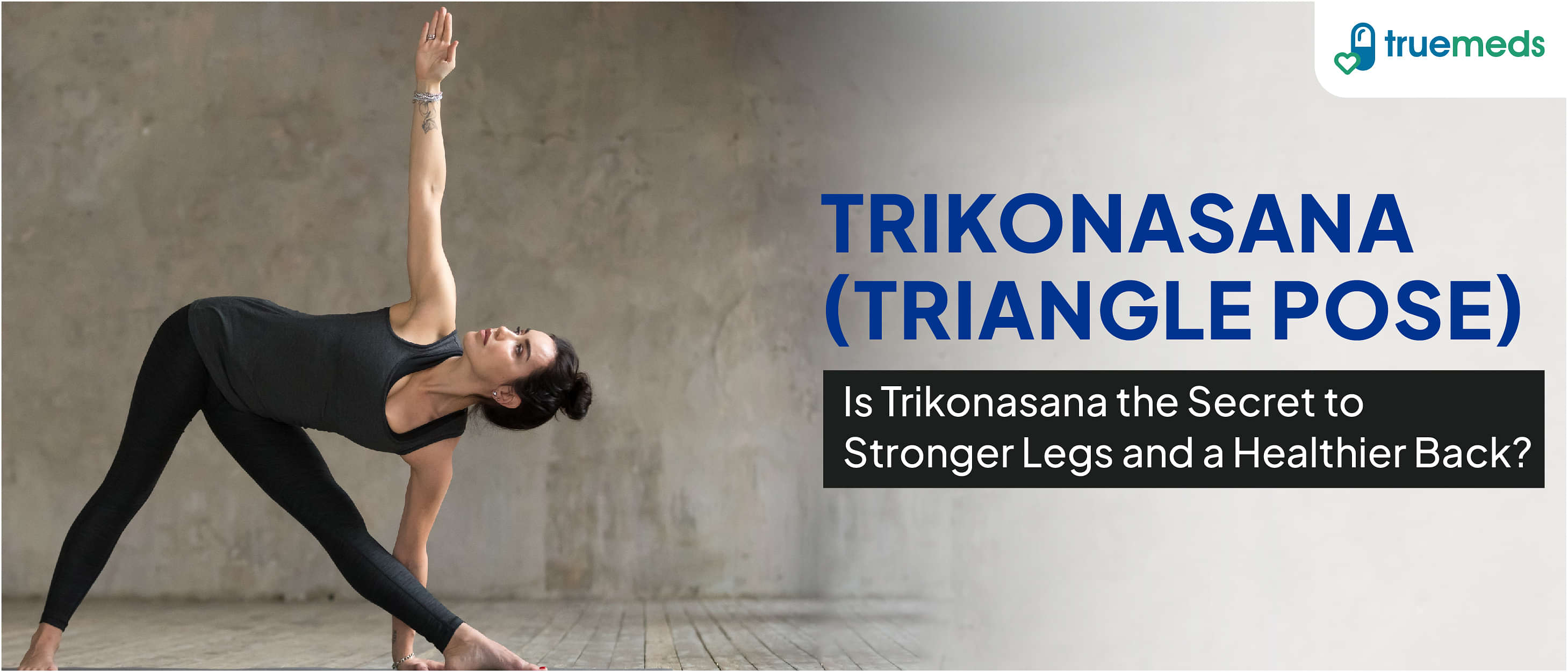
Health Benefits of Trikonasana: How to Do, Benefits & Precautions
Last updated on : 01 Dec, 2025
Read time : 8 min
What is Trikonasana?
Trikonasana, also known as the Triangle Pose, is a fundamental yoga posture that promotes strength, stability, and flexibility. The triangular shape formed by the body stretches and activates the spine, hips, legs, and core, while improving balance and posture.
Beyond physical fitness, Trikonasana is believed to support digestion, reduce tension, and encourage deep breathing, potentially enhancing lung capacity and mental clarity. Regular practice of this asana helps harmonise the body, mind, and breath, making it a valuable addition to any yoga routine [4].
Benefits of the Triangle Pose
Let’s explore the different benefits of Trikonasana:
- Strengthens the Legs Trikonasana engages the thighs, calves, and knees, building strength, endurance, and stability in the lower body. The grounding through the feet helps tone leg muscles over time [1].
- Stretches Hamstrings and Hips The lateral stretch in this pose releases tension in the hamstrings and hips, improving flexibility and mobility, especially beneficial for those with sedentary lifestyles or tight hip flexors.
- Aids in Digestion The gentle twisting motion of Trikonasana, particularly when performed as a modification or variation, is often linked in yogic philosophy to stimulating the abdominal organs, which may aid in detoxification and improving digestion [1].
- Improves Balance and Stability Maintaining the pose challenges balance and strengthens the core, promoting overall stability and body awareness. This can be particularly beneficial for improving static balance [2].
- Opens Chest and Shoulders The extended arms and torso stretch open up the chest and shoulders, enhancing posture, upper body mobility, and respiratory function.
- May Help Alleviate Mild Back Pain When performed with proper alignment, Trikonasana gently stretches the spine and strengthens supporting muscles, which may help alleviate mild to moderate non-specific back pain by increasing spine flexibility [3].
- Calms the Mind The combination of controlled breathing and meditative focus in Trikonasana induces mental calmness and relaxation, fostering a stronger mind-body connection.
- Supports Blood Circulation The full-body stretch and extension are thought to support improved blood flow, enhancing oxygen delivery to tissues. While not a direct substitute for cardiovascular exercise, its regular practice supports overall circulatory health [4].
- Promotes Better Posture Regular practice aligns the spine, strengthens the core, and may help reduce the risk of postural issues, helping maintain an upright and balanced stance.
How to Do Trikonasana (Triangle Pose)
Let’s get to know the steps for performing Trikonasana:
a) Starting Position
Start by standing in Mountain Pose (Tadasana). Stand upright with your legs wide apart, about 3 to 4 feet apart (or an easily maintained distance). Turn your right foot out 90 degrees and your left foot slightly in (about 15 degrees).
b) Arm Movement
Inhale and raise your arms parallel to the floor, palms facing down.
c) Torso Bend
Exhale and, keeping your spine straight, extend your torso over your right leg. Bend from the hip joint, not the waist.
d) Arm Slide
Simultaneously, gently lower your right arm down alongside your right leg or rest your hand on your shin, ankle, or a yoga block. Extend your left arm straight towards the ceiling. The two arms should form a straight vertical line.
e) Pose Hold
Hold the position with knees and elbows straight. Maintain the pose for 30 seconds, focusing on deep, even breaths.
f) Returning to Stand
Inhale and press firmly into your feet as you stand straight, bringing your arms back to the starting parallel position.
g) Repeat on the Other Side
Perform the same sequence on the other side for a balanced practice.
Following these step-by-step pointers will guide you through the Trikonasana, ensuring proper form and alignment.
Safety and Modifications for the Triangle Pose
Trikonasana offers numerous benefits, but like any physical activity, it requires mindfulness and attention to safety. Here are essential safety tips and precautions to consider when practising Trikonasana:
- Consultation with a Healthcare Professional: Individuals with pre-existing or chronic conditions, especially concerning the spine, hips, or heart, or those who have recently undergone surgery should consult a healthcare provider and a certified yoga instructor before starting any new yoga practice.
- Warm-Up Adequately: Begin your yoga session with a proper warm-up routine. Engaging in gentle stretches and movements prepares your body for the more intense aspects of Trikonasana.
- Listen to Your Body: If you experience pain, dizziness, or discomfort, ease out of the pose immediately.
- Modify as Needed: It’s essential to acknowledge that everyone’s body is different. If you find Trikonasana challenging or uncomfortable, consider modifying the pose to make it more comfortable. Use props like blocks under your lower hand for support and slowly work towards the full expression of the pose.
- Avoid Overstretching: While the stretch in Trikonasana is beneficial, avoid overstretching to prevent injury. Maintain a comfortable stretch and focus on proper alignment rather than pushing your body beyond its limits.
- Care for the Neck: If you have neck issues, keep your gaze straight or downward rather than turning upward. Avoid straining the neck by looking up, especially if it causes discomfort.
- Sturdy Footing: Ensure a solid foundation by planting your feet firmly on the ground. This provides stability and prevents slipping, reducing the risk of injuries.
- Avoid Jerky Movements: Smooth, controlled movements are crucial in Trikonasana. Avoid sudden or jerky motions, as these can strain muscles and joints.
- Breath Awareness: Maintain deep, even breaths throughout the pose to support stability and relaxation. Avoid holding breath, as proper breathing enhances the benefits of the practice.
- Specific Health Conditions: Those with uncontrolled low blood pressure, migraines, diarrhoea, or in later stages of pregnancy should either avoid or modify the pose under expert guidance [4]. Individuals with serious neck or back injuries (like a herniated disc) should avoid the pose or seek a doctor’s clearance.
Potential Risks and Contraindications
While the Triangle Pose is generally safe, it’s vital to be aware of the potential risks and contraindications.
- Strain on Hips and Knees: The wide stance can strain the hips and knees, particularly for individuals with pre-existing joint issues. Ensure your front knee is not locked and the arch of the front foot aligns with the heel of the back foot.
- Neck Discomfort: Maintaining an extended neck position can cause discomfort for individuals with pre-existing neck problems. As noted above, keep the gaze straight ahead or down.
- Risk of Overstretching: Excessive reaching or a lack of proper warm-up may cause muscle strain, particularly in the hamstrings and groin.
- Balance Challenges: The pose demands balance. Individuals with poor balance or inner ear disorders may struggle to maintain the pose and should use a wall for support.
- Low Blood Pressure Concerns: Due to the body’s position change, individuals with low blood pressure should rise slowly from the pose to avoid dizziness.
- Back Issues: People with severe back issues, such as herniated discs or sciatica, should consult with a healthcare professional before attempting Trikonasana [4].
- Digestive Discomfort: The mild compression on the abdomen should be avoided immediately after a heavy meal.
Takeaway
Trikonasana is a powerful yoga posture that promotes strength, balance, and flexibility while fostering mental clarity and emotional calm. Its benefits span musculoskeletal health, digestion, circulation, and stress reduction. However, achieving its full potential depends on safe, mindful execution tailored to your body’s unique needs.
Whether you’re managing a condition or seeking to improve your posture and vitality, incorporating Trikonasana into your routine can be a significant step in your wellness journey. Always listen to your body, consult professionals when needed, and practise with awareness.
Frequently Asked Questions (FAQs)
What are the three types of Trikonasana?
Trikonasana has three variations – Utthita Trikonasana (Extended Triangle Pose), Parivrtta Trikonasana (Revolved Triangle Pose), and Baddha Trikonasana (Bound Triangle Pose). Each variation offers unique benefits and challenges.
What are Trikonasana’s aims?
Trikonasana aims to improve flexibility, balance, strength, and digestion. It also supports mental focus and calmness by integrating breath with movement.
Who cannot perform Trikonasana?
Individuals with uncontrolled low blood pressure, migraines, herniated discs, or recent abdominal surgeries should avoid or modify the pose. Pregnant women and those with neck or spinal issues should consult a professional before practising [4].
Is Trikonasana for obesity?
Trikonasana can be one part of a weight management program, as it aids in toning muscles, stimulating digestion, and promoting calorie burn when practised in conjunction with a healthy diet and regular exercise.
Is Trikonasana good for the heart?
Trikonasana may support cardiovascular health by improving circulation and reducing stress. However, those with known heart conditions should get clearance from their doctor before practising.
References
[1] Omkar, S., Kumar, A., Kapse, R., Paul, N., & Vanjare, A. (2018). Musculoskeletal modelling and analysis of trikonasana. International Journal of Yoga, 11(3), 201–208. https://doi.org/10.4103/ijoy.ijoy_1_18
[2] Mishra, R. K., Kumar, S., & Bhardwaj, D. (2023). Effect of Hatha yoga on static balance and core stability in middle-aged women. Journal of Education and Health Promotion, 12(1), 44. https://doi.org/10.4103/jehp.jehp_1212_22
[3] Tekur, P., Singphow, C., Nagendra, H. R., & Raghuram, N. (2008). Effect of yoga on quality of life and pain in patients with chronic low back pain: A randomized controlled trial. International Journal of Yoga, 1(1), 10–20. https://doi.org/10.4103/0973-6131.31707
[4] Jois, V. (2018). Yoga Mala: The Original Teachings of Ashtanga Yoga. Farrar, Straus and Giroux. Government of India YOGA. (n.d.). Common Yoga Protocol. Retrieved October 29, 2025, from https://main.ayush.gov.in/sites/default/files/Common%20Yoga%20Protocol%202024.pdf













Disclaimer
Our healthcare experts have carefully reviewed and compiled the information presented here to ensure accuracy and trustworthiness. It is important to note that this information serves as a general overview of the topic and is for informational purposes only. It is not intended to diagnose, prevent, or cure any health problem. This page does not establish a doctor-patient relationship, nor does it replace the advice or consultation of a registered medical practitioner. We recommend seeking guidance from your registered medical practitioner for any questions or concerns regarding your medical condition.
Popular Articles


Recommended Articles



Recent Articles









Company
About UsHealth ArticleHealth StoriesHealth LibraryDiseases & Health ConditionsAyurvedaUnderstanding Generic MedicinesAll MedicinesAll BrandsNeed HelpFAQSecuritySubscribe
Registered Office Address
Grievance Officer
Download Truemeds


Contact Us
Our customer representative team is available 7 days a week from 9 am - 9 pm.
v4.11.1

2026 - Truemeds | All rights reserved. Our content is for informational purposes only. See additional information.

Our Payment Partners




