

- Medicines
- Personal Care
- Skin Cream
- Sunscreen
- Face Wash
- Skin and Body Soap
- Acne Care
- Body Lotions
- Moisturising Lotion
- Moisturising Cream
- Mosquito Repellent
- Moisturising Gel
- Body Wash
- Hair Oils
- Hair Shampoo
- Hair Conditioners
- Hair Supplements
- Hair Colour
- Hair Serum
- Hair Mask
- Hair Solutions
- Baby Diapers and Wipes
- Baby Lotion and Moisturising Cream
- Baby Bath Essentials
- Baby Skin Care
- Baby and Infant Food
- Baby Healthcare
- Women Multivitamins
- Ovulation Test Kit and Women Intimate Care
- Sanitary Pads
- Nutritional Drinks
- Condoms
- Lubricants
- Massage Gels
- Personal Body Massagers
- Men Performance Booster
- Sexual Health Supplements
- Massage Oils
- Ayurveda
- Tooth Paste
- Mouth Ulcer Gel
- Mouthwash
- Toothache and Gum Pain
- Tooth Brush
- Gargle Solution
- Orthopaedic Supports
- Adult Diapers
- Footwear
- Mobility and Support Accessories
- Urinary Support and Care
- Health Conditions
- Bone and Joint Care
- Digestive Care
- Eye Care
- Pain Relief
- Smoking Cessation
- Liver Care
- Stomach Care
- Cold and Cough
- Heart Care
- Kidney Care
- Piles, Fissures & Fistula
- Respiratory Care
- Mental Wellness
- Derma Care
- Pre and Probiotics
- Acidity
- Gas
- Constipation
- Loose Motion/Diarrhoea
- Digestive Fibres
- Digestive Enzymes
- Eye Lubricant Drops
- Lens Solution
- Safety Eye Wear
- Eye Cream
- Eye Vitamins and Supplements
- Eye Drops
- Eye Ointment and Gel
- Nicotine Patch
- Nicotine Gum
- Nicotine Lozenges
- Cough Syrups
- Chest Rubs and Balms
- Nasal Spray
- Lozenges
- Inhalant Capsules
- Cold and Cough Tablets
- Vitamins & Supplements
- Diabetes Care
- Healthcare Devices
- Homeopathic Medicine
- Health Guide
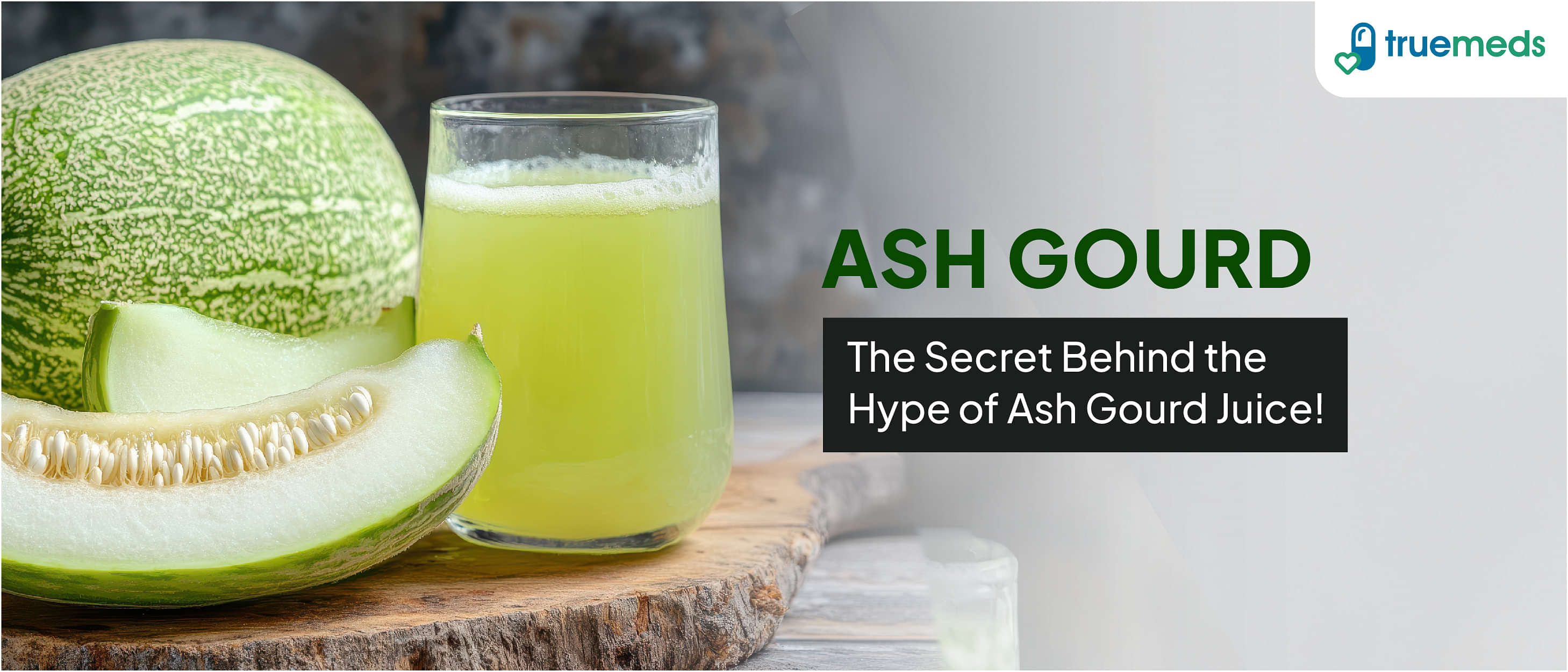
Ash Gourd Juice: Uses, Benefits, Safety, and More!
Last updated on : 11 Nov, 2025
Read time : 9 min
Ash gourd, also called winter melon or ‘petha’ in India, is a large, pale green fruit with smooth skin that develops a white, waxy, ash-like coating upon maturity. It is commonly used in many Indian dishes, from curries and soups to the popular sweet confection ‘petha’. As a food source, it is low in calories and high in water, making it a healthy choice for maintaining a balanced diet. It is traditionally recognized to support digestion, may help regulate blood sugar levels, and promote overall well-being. In this article, we explore the nutrition, evidence-based health benefits, and simple ways to incorporate ash gourd into your meals.
Ash Gourd Nutrition Values
Ash gourd, or petha, is mainly composed of over 90% water and is very low in calories, fat, protein, and carbohydrates. It provides essential vitamins and minerals, including Vitamin C and the B-complex vitamins niacin (B3), thiamine (B1), and riboflavin (B2). Additionally, ash gourd is a source of various micronutrients and macrominerals, including iron, potassium, calcium, and magnesium.
Here is the nutritional value of a 100 g serving of raw ash gourd (Benincasa hispida) [1]:
|
Component |
Value (per 100 g) |
| Calories | 13 kcal |
| Total Fat | 0.2 g |
| Saturated Fat | 0.04 g |
| Total Carbohydrate | 3 g |
| Protein | 0.4 g |
| Dietary Fibre | 0.5 g |
| Calcium (Ca) | 19 mg |
| Iron (Fe) | 0.4 mg |
| Magnesium (Mg) | 10 mg |
| Phosphorus (P) | 19 mg |
| Potassium (K) | 6 mg |
| Sodium (Na) | 111 mg |
| Zinc (Zn) | 0.61 mg |
| Vitamin C (Total ascorbic acid) | 13 mg |
| Thiamine (Vitamin B1) | 0.04 mg |
| Riboflavin (Vitamin B2) | 0.11 mg |
| Niacin (Vitamin B3) | 0.4 mg |
Health Benefits of Ash Gourd Juice
Ash gourd has been studied in traditional medicine and modern research for its potential health effects. The benefits are primarily attributed to its high water content, dietary fiber, and various phytochemicals, including saponins and triterpenoids [2]. The previous, broad list of “Properties” has been consolidated and verified below:
1. Digestive Health and Ulcer Support
Ash gourd is rich in water and fiber, which are crucial for maintaining regular bowel movements and preventing constipation [1]. It is also recognized for its mild laxative effect.
Research suggests that ash gourd extracts may possess antiulcer properties. One study found that extracts of Benincasa hispida were effective in preventing the development of experimental ulcers, possibly due to its ability to strengthen the gastric mucosal barrier and reduce acid secretion [3]. Its mucilaginous nature is believed to offer a soothing, protective effect on the digestive tract lining.
2. Hydration and Energy Support
Composed of over 90% water, ash gourd juice is an excellent natural way to support deep hydration [1]. It contains a small amount of natural carbohydrates and electrolytes, which can provide a quick, sustainable energy boost, making it a good choice for fluid replacement.
3. Potential for Weight Management
With its extremely low-calorie count and high water content, ash gourd can promote feelings of satiety (fullness), which may help reduce overall caloric intake [1]. The presence of dietary fiber further supports healthy digestion and metabolism, aiding in weight management efforts.
4. Blood Sugar Support
Ash gourd is considered beneficial for individuals managing blood sugar due to its very low glycemic index (GI) [2]. Consuming ash gourd as part of a balanced diet may potentially help modulate blood sugar levels and may improve insulin sensitivity, supporting overall diabetes management [4]. However, individuals with diabetes should monitor their blood sugar levels closely and consult their doctor before making significant dietary changes.
5. Antioxidant and Anti-inflammatory Properties
Ash gourd juice contains various compounds, including Vitamin C, that exhibit antioxidant properties, helping to combat oxidative stress in the body [2]. Preliminary research also suggests it may possess mild anti-inflammatory actions [5].
6. Support for Kidney and Detoxification Pathways
Due to its high fluid content and mild diuretic properties, ash gourd juice can support the body’s natural elimination pathways, including promoting healthy urinary flow and aiding the flushing of toxins [2].
Safety, Side Effects, and Precautions
While ash gourd juice is generally considered safe for most people, moderation is key. It is essential to be aware of the potential side effects, especially with excessive or long-term consumption:
1. Respiratory and Phlegm Concerns
Traditional use and some anecdotal evidence suggest that excessive or prolonged consumption of ash gourd juice may lead to increased phlegm production due to its cooling effect (known as ‘Sheet Virya’ in Ayurveda) [5]. This can pose a risk, particularly for individuals with pre-existing respiratory conditions like asthma or bronchitis.
2. Risk of Hindered Nutrient Absorption
Ash gourd, like many plant-based foods, contains anti-nutritional factors such as phytates and oxalates. These compounds can bind to minerals, such as calcium, and may potentially hinder their absorption in the gut if consumed in very large quantities or without proper preparation [2].
3. Caution for Individuals with Kidney Stones
While ash gourd’s diuretic properties may support general kidney health, individuals with a history of calcium oxalate kidney stones should consume the juice in moderation. Although the exact risk is debated, due to its natural mineral and oxalate content, consulting a nephrologist or dietitian is crucial to ensure it aligns with a low-oxalate diet, if required.
4. Hypoglycemia Risk
Because ash gourd may help lower blood sugar, individuals with diabetes, especially those taking insulin or oral hypoglycemic medications, must monitor their blood sugar levels closely. Excessive intake could potentially increase the risk of hypoglycemia (low blood sugar).
How to Consume Ash Gourd Juice?
Ash gourd juice can be incorporated into the diet in various ways:
- Morning Intake: For maximum nutrient absorption, drink fresh ash gourd juice on an empty stomach.
- Blending: Mix with complementary low-sugar fruit or vegetable juices, such as cucumber or lime, to enhance flavor.
- Smoothies: Use it as a base with ingredients like lime juice, rock salt, or a small amount of amla juice for added health benefits.
- Flavour Adjustments: Add a pinch of rock salt, black pepper, or a squeeze of lemon juice. Avoid adding excessive sugar or honey, as this negates its low-calorie benefits.
- Medical Guidance: Always consult a qualified healthcare professional before beginning regular consumption of any juice or supplement, especially if you have a medical condition or are taking prescription medications.
Takeaway
Ash gourd juice is a highly hydrating, low-calorie beverage rich in essential nutrients like calcium, iron, and Vitamin C. Its high water and fiber content makes it beneficial for detoxification support, hydration, and digestive health, particularly for constipation and potential ulcer relief [3].
To prepare the juice, it is essential to wash the fruit thoroughly and remove the seeds before blending. Due to the strong, sometimes grassy taste, it is often best consumed chilled and with a minimal flavor additive like lime. Always remember to consume it in moderation and listen to your body’s response.
Frequently Asked Questions (FAQs)
Is ash gourd good for the kidneys?
Ash gourd may benefit kidney health due to its hydrating properties and potential to support urine production, which helps flush out toxins and supports kidney function. However, individuals with existing kidney stones or severe kidney disease should consult a doctor and consume it in moderation.
Who should be cautious about drinking ash gourd juice?
Individuals with a history of calcium oxalate kidney stones, severe respiratory conditions like asthma or bronchitis, or those prone to hypoglycemia should exercise caution or avoid drinking ash gourd juice, especially in large amounts. Individuals with known allergies to ash gourd or similar fruits should refrain from consuming the juice.
Does ash gourd increase uric acid?
Ash gourds are not known to increase uric acid levels. In fact, its hydrating and potential diuretic effect promotes the production and excretion of urine, which can help in the elimination of uric acid, potentially benefiting individuals with high uric acid levels or gout.
Can we store ash gourd juice in the fridge?
You can store freshly made ash gourd juice in the fridge for up to 24 hours in a clean, airtight container. However, it is highly recommended to consume it fresh for maximum nutritional benefits and potency, as enzyme activity and nutrient degradation begin immediately after preparation.
Does ash gourd juice clear skin?
Ash gourd juice may contribute to healthier skin due to its hydrating and antioxidant properties, which can help moisturise the skin and protect against damage from free radicals. However, individual results may vary, and maintaining overall skincare habits is essential for achieving optimal skin health.
Can I drink ash gourd on an empty stomach?
Yes, traditionally, ash gourd juice is consumed on an empty stomach to aid in detoxification and promote digestive health. However, its strong nature can cause digestive discomfort or a sudden feeling of coldness in some individuals. If you have existing digestive issues, you should start with small amounts and monitor your body’s response.
References
[1] United States Department of Agriculture (USDA). (2019). Ash Gourd, raw (Winter Melon). FoodData Central. https://fdc.nal.usda.gov/fdc-app.html#/food-details/168172/nutrients
[2] Gupta, P., Chikkala, S., & Kundu, P. (2019). Ash gourd and its applications in the food, pharmacological and biomedical industries. International Journal of Vegetable Science, 27(1), 44–53. https://doi.org/10.1080/19315260.2019.1699222
[3] Grover, J. K., Adiga, G., Vats, V., & Rathi, S. S. (2001). Extracts of Benincasa hispida prevent development of experimental ulcers. Journal of Ethnopharmacology, 78(2-3), 159–164. https://doi.org/10.1016/s0378-8741(01)00334-8
[4] Yadav, S., Singh, D. V., & Saxena, A. (2020). Assessment of Antidiabetic Activity of Benincasa hispida (Ash Gourd) Fruit Extract in Alloxan-Induced Diabetic Rats. Journal of Pharmaceutical Research International, 32(31), 1-8. https://journalpals.com/storage/epaper/antidiabetic-activity-of-benincasa-hispida-thumb-cogn-fruit-peels-on-alloxan-induced-diabetic-rats.pdf
[5] Souza, S. (2022). Clinical Significance of Drinking Ash Gourd Juice: A Review Article. Nutrition and Food Sciences Research, 9(4), 11–17. https://nfsr.sbmu.ac.ir/article-1-570-en.pdf
















Disclaimer
Our healthcare experts have carefully reviewed and compiled the information presented here to ensure accuracy and trustworthiness. It is important to note that this information serves as a general overview of the topic and is for informational purposes only. It is not intended to diagnose, prevent, or cure any health problem. This page does not establish a doctor-patient relationship, nor does it replace the advice or consultation of a registered medical practitioner. We recommend seeking guidance from your registered medical practitioner for any questions or concerns regarding your medical condition.
Popular Articles



Recommended Articles




Recent Articles










Company
About UsHealth ArticleHealth StoriesHealth LibraryDiseases & Health ConditionsAyurvedaUnderstanding Generic MedicinesAll MedicinesAll BrandsNeed HelpFAQSecuritySubscribe
Registered Office Address
Grievance Officer
Download Truemeds


Contact Us
Our customer representative team is available 7 days a week from 9 am - 9 pm.
v4.10.3

2025 - Truemeds | All rights reserved. Our content is for informational purposes only. See additional information.

Our Payment Partners




