

Key Takeaways
- Walking is a simple, low-cost activity linked to a lower risk of heart disease and early death. It is also associated with a better mood.
- 10,000 steps a day is a popular goal, not a proven requirement. The association between daily step counts and a lower risk of early death levels off at about 6,000–8,000 steps a day in adults aged 60 and over, and about 8,000–10,000 steps a day in younger adults.
- Research suggests that higher daily step counts may be associated with better health outcomes, although an association does not necessarily prove cause and effect.
- Walking can support weight management. It works best as part of a strategy that includes dietary changes and regular physical activity.
- Build up gradually. Increasing the frequency, intensity and duration of physical activity over time can help you progress towards your fitness goals.
- Talk to your doctor first if you have heart disease, uncontrolled high blood pressure, diabetes or joint problems. Stop and get medical help for chest pain, severe breathlessness or dizziness.
Walking is one of the simplest forms of physical activity, and most adults can do it. Any level of physical activity provides health benefits, and you can gradually increase how often, how fast and how long you walk over time [1]. Research links higher daily step counts with a lower risk of heart disease, certain cancers and early death[2]. Studies also associate regular walking with a lower risk of type 2 diabetes.
The popular goal of 10,000 steps a day is not a proven threshold. Research suggests that benefits begin at much lower step counts and level off at about 6,000–8,000 steps a day for adults aged 60 and over, and about 8,000-10,000 steps a day for younger adults[13]. This guide explains what research shows about walking and your health, how many steps you really need, how to build up safely, and who should take extra care.
How Many Steps Do You Really Need?
There is little research evidence behind 10,000 steps as a magic number. The figure is often traced to a 1960s Japanese pedometer marketing campaign [14], not to a specific evidence-based health target. What studies show is that higher daily step counts are associated with lower health risks, with benefits reported at relatively low step counts [13][15]:
These are observational studies. They show associations, not that steps cause the benefit, and step counts may also reflect a person's existing health status. Studies also differ: some find the benefit levels off [13], while others find an association with lower mortality risk at higher step counts. Choose a step count you can maintain and increase it gradually.
Key Benefits of Walking 10,000 Steps Daily
According to WHO guidelines, regular physical activity in adults is associated with a lower risk of early death and heart disease. It is also associated with a reduced risk of conditions such as hypertension, certain cancers, and type 2 diabetes. In addition, staying active may support mental well-being, brain function, sleep quality, and a healthy body weight[3].
The benefits of walking extend across multiple body systems, making it a comprehensive approach to maintaining and improving health throughout life.
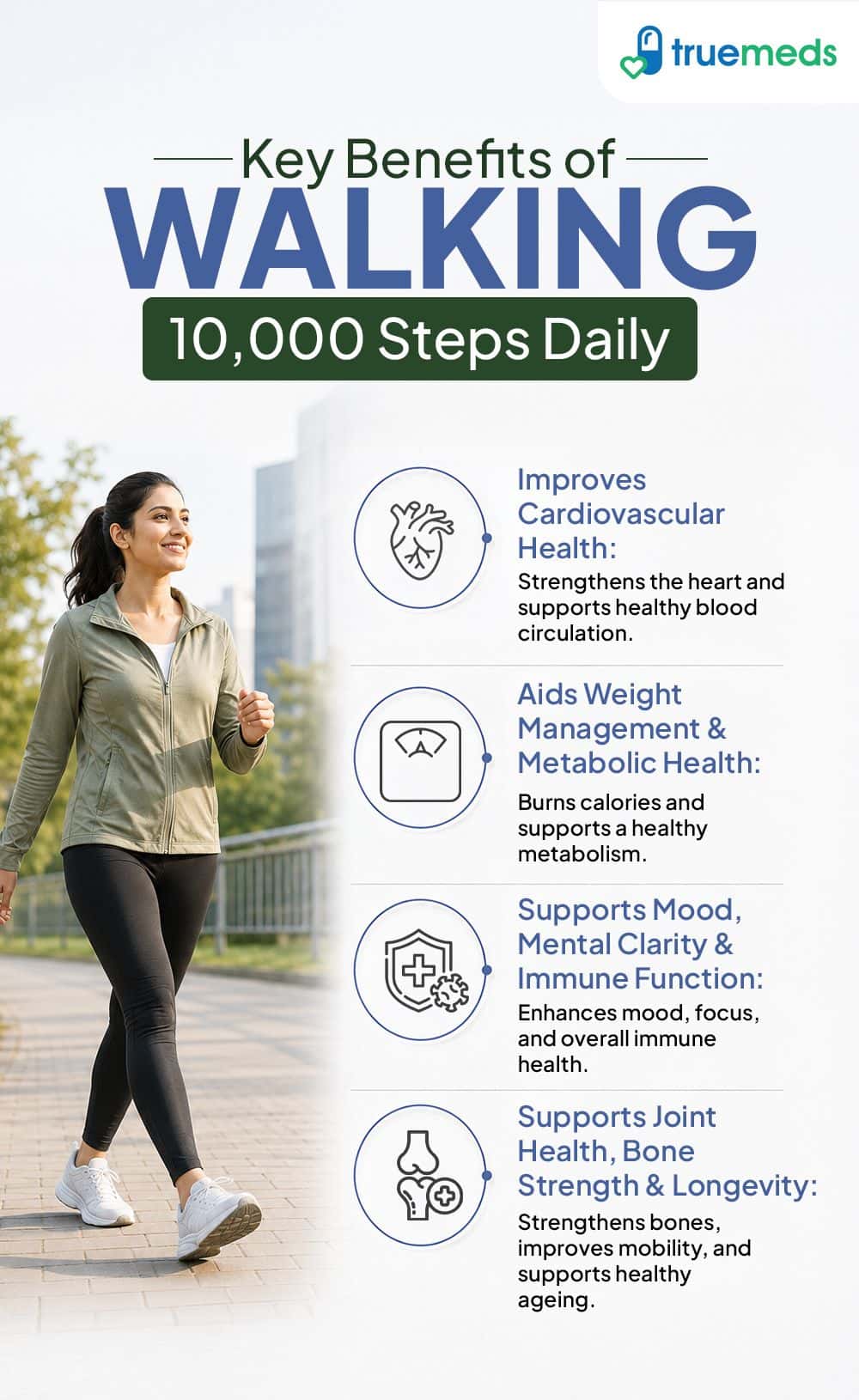
1. Improves Cardiovascular Health
Cardiovascular disease is the leading cause of death worldwide, and walking is a simple way for most adults to stay active. Regular walking may help reduce sedentary time, increase overall activity levels, and support cardiovascular health[4].
Research demonstrates that higher daily step counts (7,000 steps or more) may be associated with a lower risk of cardiovascular disease and reduced all-cause mortality[5]. These impressive statistics highlight how regular walking may strengthen your heart, improve circulation, and help maintain healthy blood pressure levels.
2. Aids Weight Management and Metabolic Health
Walking fits naturally into a fitness routine that supports weight management and metabolic function. A 12-week programme that combined dietary changes with moderate walking was associated with greater reductions in fat mass compared with diet alone. Adding moderate walking was also linked to improved fat loss outcomes and better serum insulin levels[6].
Additionally, in a 24-week regular walking programme, researchers noted improvements in obesity-related measures and metabolic risk factors. These included changes in weight, body fat percentage, body mass index, waist circumference, blood pressure, and triglyceride levels[7]. These mechanisms make walking an effective component of any weight management strategy.
Consult your healthcare provider before starting any new exercise programme, especially if you have pre-existing health conditions.
3. Boosts Mood, Mental Clarity and Immune Function
The benefits of walking daily extend well beyond physical health to encompass significant mental health improvements. Evidence suggests that walking may be associated with reduced symptoms of depression and anxiety compared to physical inactivity[8].
Beyond mood enhancement, walking strengthens immune function. Some research suggests regular walking may be associated with fewer sick days, though findings vary across studies[9]. This combination of mental clarity and immune support makes daily walking a powerful tool for overall well-being.
4. Supports Joint Health, Bone Strength, and Longevity
Walking is a weight-bearing activity that places mechanical load on the skeleton while remaining lower impact than running or jumping. Research in postmenopausal women indicates that walking intensity, rather than distance alone, may influence bone mineral outcomes. Higher-intensity walking has been associated with better preservation of leg bone mineral density compared with lower-intensity walking in some studies[10].
Walking may help strengthen bones and support joint flexibility. As a low-impact activity, it places relatively minimal stress on joints and may suit individuals with arthritis or mobility concerns[11]. Research involving older women suggests that higher daily step counts may be associated with lower mortality than lower step counts. The findings indicate a gradual decline in mortality risk with increasing daily steps, up to a certain threshold[12]. These findings demonstrate that walking can help you maintain independence, strength, and quality of life as you age.
Do You Really Need to Walk 10,000 Steps a Day?
The idea of walking 10,000 steps a day has become a popular fitness goal, but it is not a one-size-fits-all recommendation. While it can be a helpful target for many people, research suggests that increasing your daily step count from your current level is more important than reaching an exact number.
Key points to remember include:
- 10,000 steps is a practical goal, not a medical requirement. It can help encourage regular physical activity, but there is no universal step count that everyone must achieve.
- Lower step counts can still provide meaningful health benefits. Studies suggest that even walking around 6,000–8,000 steps per day, particularly in older adults, may be associated with improved health outcomes compared with being inactive.
- Your ideal daily step goal depends on several factors, including your age, fitness level, lifestyle, existing medical conditions, and mobility.
- If you are new to walking, start gradually. Increasing your daily steps over time is often safer and more sustainable than trying to reach 10,000 steps immediately.
- Quality matters as much as quantity. Walking at a brisk pace, staying consistent, and combining walking with strength and flexibility exercises can provide greater overall health benefits.
- Choose a goal that you can maintain long-term. A realistic, consistent walking routine is more beneficial than aiming for an ambitious target that is difficult to sustain.
How Far, How Long and How Many Calories Are in 10,000 Steps?
Note: These are general estimates and may vary between individuals. Fitness trackers and smartphone apps may report different values because each device uses its own method to estimate distance, step length, and calorie expenditure.
Simple Ways to Reach 10,000 Steps Each Day
Reaching 10,000 steps a day does not have to involve a single long walk. Small changes to your daily routine can help you stay active and gradually increase your step count.
- Walk after meals: A 10–15 minute walk after breakfast, lunch, or dinner can add steps while also supporting healthy blood sugar regulation and digestion.
- Take the stairs whenever possible: Choosing stairs instead of lifts or escalators is an easy way to increase daily activity.
- Park farther away: Park at the far end of a car park or get off public transport one stop earlier to include extra walking.
- Walk during phone calls: Pace around your home or office while talking instead of sitting.
- Schedule short walking breaks: Take a 5–10 minute walk every hour if you have a desk job to help reduce prolonged sitting.
- Track your progress: Use a smartphone app or fitness tracker to monitor your daily steps and stay motivated by setting realistic goals.
Myths About Walking 10,000 Steps
Walking is one of the easiest ways to stay active, but several myths can lead to unrealistic expectations. Understanding the facts can help you develop a healthier and more sustainable exercise routine.
Myth 1: More steps are always better.
- Increasing your daily steps is beneficial, but walking far beyond your fitness level is not always necessary. Focus on gradual, consistent progress rather than chasing the highest step count.
Myth 2: Everyone needs exactly 10,000 steps a day.
- The ideal step goal varies depending on age, fitness level, lifestyle, and health conditions. Even lower daily step counts can provide meaningful health benefits.
Myth 3: Walking alone is enough for complete fitness.
- Walking improves cardiovascular health and endurance, but a balanced fitness routine should also include strength training, flexibility exercises, and balance activities.
Myth 4: Missing one day ruins your progress.
- An occasional missed walk is unlikely to affect your long-term progress. Long-term consistency is more important than achieving your step goal every single day.
Myth 5: Only outdoor walking counts.
- Steps taken indoors—whether at home, in shopping centres, on treadmills, or at work—also contribute to your daily activity and overall fitness.
Myth 6: Walking faster is always necessary.
- A brisk pace can increase exercise intensity, but any additional walking is generally better than remaining sedentary. Choose a pace that suits your fitness level and allows you to stay active consistently.
Who Should Take Extra Care, and When to Stop
- People with existing health conditions: If you have heart disease, uncontrolled high blood pressure, diabetes or another chronic condition, consult your healthcare provider before significantly increasing your daily step count.
- Individuals with joint pain or mobility issues: If you have arthritis, a recent injury, balance difficulties or problems walking comfortably, choose a suitable pace and distance. Consider professional guidance to help prevent falls or worsening discomfort.
- People recovering from illness, injury or surgery: Follow your healthcare provider’s advice on when and how to resume walking. Increase your activity gradually as your recovery allows.
- Stop if you experience unusual symptoms: Stop walking if you develop chest pain, dizziness, faintness, unusual shortness of breath or a racing or irregular heartbeat. Seek urgent medical attention for chest pain, fainting or severe breathing difficulty.
- Do not push through persistent pain or exhaustion: Mild muscle fatigue can occur when you increase your activity, but persistent joint pain, worsening discomfort or excessive fatigue may indicate that you need to reduce your walking intensity or duration. Consult a healthcare professional if symptoms persist.
FAQs
Is walking 10,000 steps every day necessary to gain health benefits?
No, health benefits begin at much lower step counts. Research shows meaningful benefits starting at 2,000-4,000 steps daily, with substantial improvements at 7,000-7,500 steps. However, 10,000 steps provides optimal benefits for most adults. Higher daily step counts are associated with a lower risk of all-cause mortality, although the evidence is observational and does not establish a direct causal relationship.
How long does it take before I see real benefits from walking daily?
Some effects, such as improved mood and alertness, may be noticed shortly after walking. Other benefits, including metabolic, cardiovascular, and weight-related changes, tend to develop gradually with regular practice. The timeline varies based on individual health status, walking intensity, and overall lifestyle. Consistent participation plays an important role in experiencing the broader benefits of walking.
Can walking replace other forms of exercise in a fitness routine?
The benefits of walking include support for cardiovascular and overall health, but routines should also include strength and flexibility training. Walking can serve as a foundation for physical activity, but adding resistance exercises twice a week and stretching can improve overall health outcomes. The combination helps support cardiovascular fitness, muscle strength, and joint mobility in a balanced manner.
What speed or intensity should I walk at to maximise benefits?
Brisk walking (approximately 100 steps per minute) provides greater benefits of walking than leisurely strolling. You should be able to talk but not sing comfortably during your walk. However, any level of activity is better than being sedentary. Start at a comfortable pace and gradually increase your speed as your fitness improves over weeks and months.
Are there any days I should skip or reduce steps (e.g., illness, injury)?
Rest during acute illness with fever, flu symptoms, or active infections. Listen to your body's signals. For minor ailments such as slight fatigue or mild cold symptoms, gentle walking may actually help recovery. Reduce intensity but try to maintain some movement if possible. Always consult your healthcare provider if you have persistent pain, chronic conditions, or concerns about exercise safety.
Is walking 10,000 steps beneficial for everyone regardless of age, gender, or health condition?
Walking is associated with health benefits across age groups and health statuses, though optimal step counts vary. Evidence suggests that benefits may level off at different age ranges. Individuals with medical conditions should seek personalised medical advice.
Can beginners aim for 10,000 steps a day?
Yes, beginners can work towards 10,000 steps a day, but they do not need to reach this target immediately. Starting with a comfortable step goal and increasing it gradually helps improve fitness while reducing the risk of fatigue or injury.
Do indoor steps count towards a 10,000-step goal?
Yes, indoor steps count the same as outdoor steps. Walking around your home, office, shopping centre, or on a treadmill contributes to your daily step total and helps you stay physically active throughout the day.
Is walking 10,000 steps every day good for weight management?
Walking 10,000 steps daily may support weight management by increasing daily calorie expenditure. However, maintaining a healthy weight also depends on balanced nutrition, adequate sleep, regular physical activity, and individual metabolic factors.
What should I wear when walking long distances?
Wear comfortable, well-fitting walking shoes that provide good cushioning and support. Lightweight, breathable clothing is recommended, and if walking outdoors, consider using sunscreen, a hat, and reflective clothing when visibility is poor.
Can I split my daily step goal into multiple walks?
Yes, your daily step goal can be divided into several shorter walks. Walking after meals, during work breaks, or throughout the day provides similar activity benefits and may be easier to maintain consistently.
How can I track my daily steps accurately?
You can monitor your daily steps using a fitness tracker, smartwatch, smartphone app, or pedometer. These devices provide useful estimates, although the recorded step count may vary depending on the device, walking speed, and terrain.
Is walking 10,000 steps enough exercise on its own?
Walking is an excellent aerobic exercise, but it should ideally be combined with muscle-strengthening, flexibility, and balance exercises. Following a varied exercise routine supports overall fitness and aligns with general physical activity recommendations.
When should I stop walking and seek medical advice?
Stop walking and seek medical attention if you experience chest pain, severe breathlessness, dizziness, fainting, or intense joint pain. Consult your doctor before starting a walking programme if you have a chronic medical condition or mobility concerns.
Can I walk 10,000 steps if I have joint pain?
Many people with mild joint pain can continue walking if it remains comfortable. Start gradually, wear supportive footwear, and reduce your activity if pain worsens. Seek medical advice if symptoms persist or significantly limit your movement.
Medical Disclaimer
This article is for informational purposes only and does not constitute medical advice. The information provided should not be used for diagnosing or treating health conditions. Always consult a qualified healthcare provider for diagnosis, treatment, and personalised medical advice. Do not disregard professional medical advice or delay seeking it because of information found in this article. If you have a medical emergency, contact your doctor or emergency services immediately.
References
World Health Organisation. (2020). WHO guidelines on physical activity and sedentary behaviour. PMC. https://pmc.ncbi.nlm.nih.gov/articles/PMC7719906/
Del Pozo Cruz, B., Ahmadi, M. N., Lee, I., & Stamatakis, E. (2022). Prospective associations of daily step counts and intensity with cancer and cardiovascular disease incidence and mortality, and all-cause mortality. JAMA Internal Medicine, 182(11), 1139. https://doi.org/10.1001/jamainternmed.2022.4000
National Centre for Biotechnology Information. (2020). WHO guidelines recommendations. NCBI. https://www.ncbi.nlm.nih.gov/books/NBK566046/
Centres for Disease Control and Prevention. (2019). Walking as a cardiovascular disease prevention. CDC. https://www.cdc.gov/pcd/issues/2019/18_0690.htm