
Feeling tired after climbing a few stairs or struggling to keep up during a workout can be frustrating. Stamina is the strength and energy to do physical or mental activity for a long time[1]. Regular physical activity can improve cardiometabolic health, support mental and cognitive health, and enhance overall health and quality of life[2]. Building stamina naturally involves consistent lifestyle changes rather than quick fixes.
In this blog, we will explore how you can increase your stamina through daily habits, exercise, nutrition, and breathing techniques, helping you feel more energetic and perform better in everyday activities.
Why Does Stamina Matter?
Stamina reflects your body’s ability to sustain physical activity over time. This fitness component determines how well you can handle sustained physical activities such as brisk walking, stair climbing, and household chores for longer periods without undue fatigue. When you improve your endurance through regular aerobic training, your body develops greater cardiac output, increased maximal oxygen uptake (VO₂ max - the maximum rate at which your body can use oxygen during exercise), and improved mitochondrial function in muscle cells (mitochondria are the energy-producing units of cells, often referred to as the cell's powerhouse). These physiological adaptations allow your cardiovascular system and muscles to work more efficiently, enabling you to maintain energy levels throughout the day and perform better during physical activities[3].
Daily Habits That Improve Stamina Naturally
Building stamina starts with consistent daily habits that support your body's energy systems. Small, sustainable changes often deliver better results than sporadic, intense efforts.
1.Sleep Quality and Duration
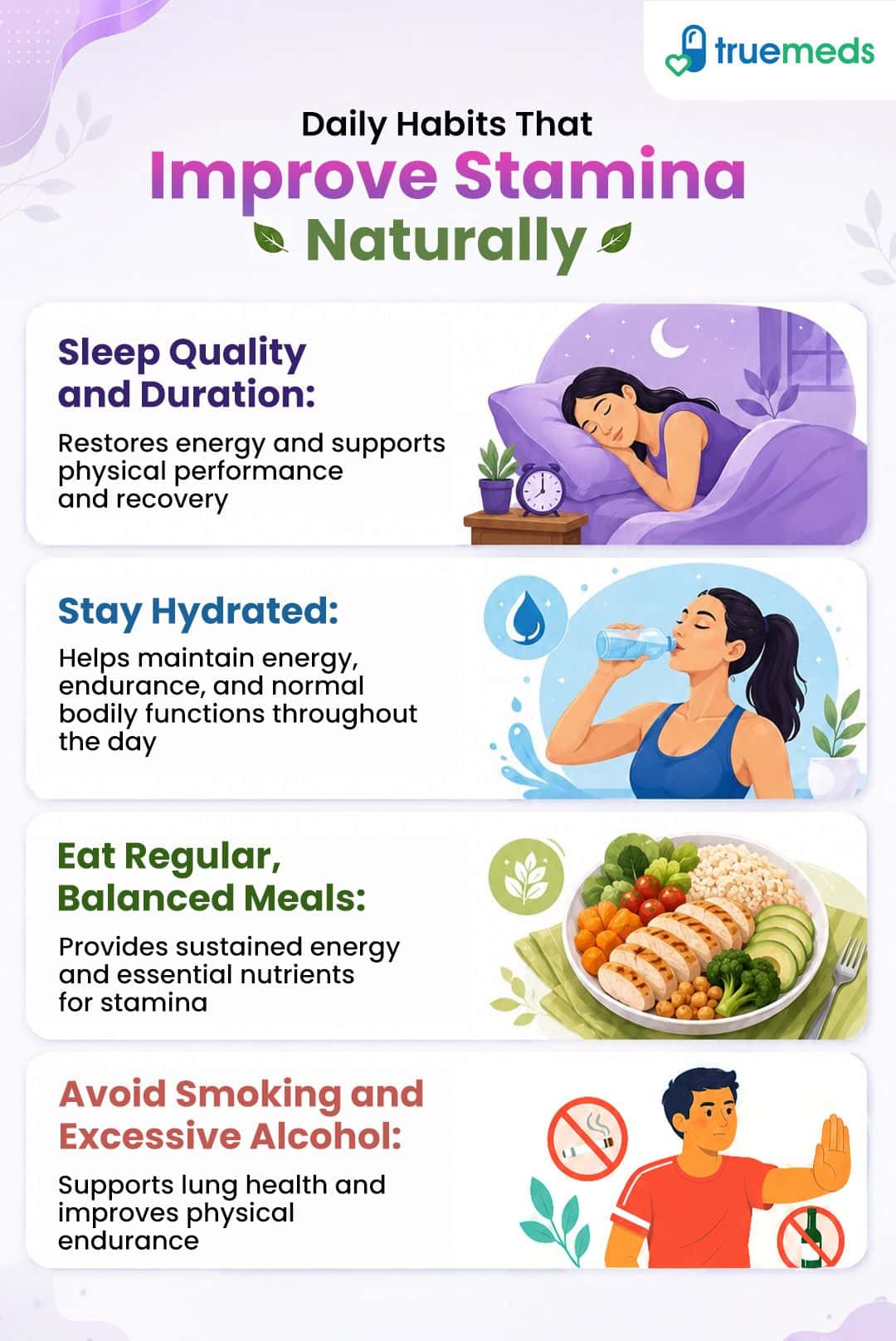
Adults should aim for 7-9 hours of quality sleep each night. Inadequate sleep can impair exercise performance, affect recovery and physical performance, and increase fatigue. During sleep, your body releases hormones that support muscle repair and recovery, helping prepare the body for physical activity[4].
2.Proper Hydration
Staying well-hydrated helps maintain blood volume and regulate body temperature during exercise. Even mild dehydration, around 2-3% body weight loss, can significantly impair endurance performance[5]. Aim to drink water regularly throughout the day, not just during exercise.
For long-duration or intense exercise, water alone may not be enough; electrolytes (sodium/potassium) are needed to prevent cramping.
3.Regular Meal Timing
Eating regular meals and having a consistent meal pattern helps support more stable metabolic responses and may reduce large swings in blood glucose throughout the day, which can contribute to better energy balance and overall metabolic health[6]. Skipping meals can lead to fatigue and reduced performance.
4.Avoid Smoking and Excessive Alcohol
Smoking reduces oxygen delivery to tissues and impairs cardiovascular function[7]. Excessive alcohol consumption may interfere with sleep quality and the body’s recovery processes[4]. Both habits can significantly reduce your stamina over time.
Focus on maintaining regular sleep schedules, hydration patterns, and meal timings rather than making dramatic changes you cannot sustain.
Exercises to Increase Stamina Naturally
Physical activity directly supports cardiovascular health and overall fitness when performed consistently. Moderate-intensity aerobic activities such as brisk walking, jogging, cycling, and swimming provide important health benefits when performed for at least 150-300 minutes of moderate-intensity aerobic activity per week, complemented by muscle-strengthening activities on 2 or more days per week[8]. Start with activities you can complete comfortably, then slowly increase the challenge over weeks and months. Allowing time for rest and recovery between exercise sessions helps the body adapt to physical activity and may reduce the risk of injury[9].
Recovery is the process by which your body adapts to exercise stress and builds stamina. Skipping adequate recovery can lead to fatigue and decreased performance.
Consult your healthcare provider before starting a new exercise programme, especially if you have cardiovascular disease, diabetes, hypertension, asthma, musculoskeletal injuries, or other pre-existing health conditions. Do not begin an exercise programme without medical clearance if you have any of these conditions.
Breathing Techniques to Boost Stamina
Deep belly breathing, where you breathe into your diaphragm rather than shallow chest breathing, may improve breathing efficiency and reduce respiratory rate. This technique may help improve breathing patterns during exercise, which can support endurance performance[10]. To practise, place one hand on your chest and one on your belly, then breathe so only your belly hand moves.
Maintaining rhythmic breathing patterns synchronised with your movement can help ensure steady oxygen delivery[11]. For example, during jogging, try inhaling for two steps and exhaling for two steps. This creates a rhythm that becomes automatic over time.
Regular breathing exercises can promote parasympathetic nervous system activation, reducing stress and supporting recovery between exercise sessions. Reduced stress levels contribute to better sleep and overall energy, both of which support stamina improvement[10].
Foods That Help Increase Stamina Naturally
Nutrition provides the raw materials your body needs to produce energy and recover from physical activity. Choosing the right foods can support sustained energy levels throughout the day.
1. Complex Carbohydrates and Proteins
Complex carbohydrates provide energy to your body more gradually than simple sugars. Your muscles store energy as glycogen, a complex carbohydrate that can be quickly converted to energy during physical activity. Good sources include whole grains, oats, brown rice, quinoa, and sweet potatoes. Protein supports muscle recovery and maintenance. Include lean meats, fish, eggs, legumes, and dairy products in your diet[12].
2. Iron-Rich Foods
Foods like tofu, beans, lentils, and leafy greens provide iron, which supports haemoglobin production and oxygen transport, which are critical for endurance[13]. Combining iron-rich plant foods with vitamin C sources like citrus fruits can improve iron absorption. While dietary iron is essential, avoid self-supplementing iron without a confirmed diagnosis of iron deficiency from a blood test. Excess iron can be harmful. Consult a doctor if you suspect iron deficiency.
3. Healthy Fats
Nuts, seeds, avocados, and olive oil contain healthy unsaturated fats that support cardiovascular health[14]. These fats also serve as an important energy source during longer-duration activities, as the body increasingly relies on fat as a fuel during low-to-moderate intensity extended exercise, while carbohydrates remain the primary fuel for high-intensity activity.
For personalised meal plans or medical nutrition therapy, consult a qualified healthcare provider or registered dietitian.
Conclusion
Improving stamina naturally requires a combination of consistent habits rather than any single quick solution. Regular physical activity, adequate sleep, proper hydration, and balanced nutrition form the foundation for building endurance. Incorporating accessible exercises like walking, cycling, or bodyweight training, along with proper breathing techniques, can enhance your cardiovascular and muscular endurance over time. Remember that stamina development is gradual, and sustainable progress comes from maintaining these healthy habits rather than seeking instant results. Start with small, manageable changes and build from there.
FAQs
Which foods increase stamina?
Complex carbohydrates like whole grains and oats, protein from lean meat, eggs, and legumes, iron-rich foods like spinach and beans, and healthy fats from nuts and seeds provide sustained energy and support muscle recovery. Eating a balanced diet with these food groups helps maintain energy throughout the day.
What is the fastest way to get stamina?
No instant solution exists for building stamina. The most effective approach combines regular aerobic exercise for at least 150 minutes weekly, adequate sleep of 7-9 hours, proper hydration, and balanced nutrition.
How to increase stamina naturally at home?
Practice bodyweight exercises like squats, lunges, push-ups, walking or jogging in place, skipping rope, climbing stairs, and following online workout videos. Maintain consistent sleep schedules, eat regular, balanced meals, stay hydrated, and practise breathing exercises to support your stamina-building efforts.
What is the best exercise to build stamina?
Moderate-intensity aerobic activities, such as brisk walking, jogging, cycling, or swimming, performed consistently, are most effective. The best exercise is one you enjoy and can maintain regularly, as consistency matters more than choosing the "perfect" activity.
How long does it take to improve stamina?
With regular exercise and healthy habits, most people notice improvements in 4-8 weeks. Significant gains may take 3-6 months. Progress varies based on your starting fitness level, consistency, and adherence to healthy lifestyle habits. These timelines are approximate and vary based on individual fitness level, age, health status, and training consistency. Consult a fitness professional for a personalised assessment.
Can walking increase stamina?
Yes, brisk walking is an effective moderate-intensity aerobic activity that improves cardiovascular endurance when done regularly. Aim for 30 minutes daily or 150 minutes weekly. Walking is accessible, low-impact, and suitable for most fitness levels.
How to boost stamina without going to the gym?
Home-based activities include bodyweight exercises, walking, jogging, skipping, stair climbing, cycling, and online workout videos. Outdoor activities like hiking or playing sports also build stamina effectively.
Does drinking water improve stamina?
Yes, proper hydration helps maintain blood volume and regulate temperature during exercise. Even mild dehydration, with about 2-3% body weight loss, can significantly impair endurance performance and energy levels. Drink water regularly throughout the day, not just during activity.
How to increase running stamina for beginners?
Start with walk-run intervals, gradually increasing running duration while decreasing walking time. Progress slowly by increasing distance or time by no more than 10% weekly. Include rest days, stay hydrated, and maintain a consistent training schedule for steady improvement.
What should I avoid to maintain good stamina?
Avoid smoking, which reduces oxygen capacity; excessive alcohol that impairs recovery; inadequate sleep; skipping meals; dehydration; and overtraining without rest days. Consistency in healthy habits matters more than occasional intense efforts.
How to increase stamina quickly before a workout?
Eat a light carbohydrate-rich snack 30-60 minutes beforehand, stay well-hydrated, perform dynamic warm-up exercises, and practise controlled breathing. However, these steps prepare you for that workout rather than building long-term stamina, which develops over weeks of consistent training.
Can stress reduce stamina and energy?
Yes, chronic stress can reduce both physical and mental stamina by affecting sleep, recovery, and overall energy levels. Managing stress through regular exercise, relaxation techniques, and adequate sleep can help improve endurance and support long-term energy levels.
What supplements are effective for boosting stamina?
Most people can improve stamina through regular exercise, balanced nutrition, and adequate sleep. Supplements should not replace a healthy lifestyle and are only recommended when advised by a healthcare provider to address a specific nutritional deficiency or medical condition.
How does mental stamina affect physical endurance?
Mental stamina helps you stay focused, motivated, and resilient during physical activity. Better mental endurance can improve exercise consistency and performance, while stress, poor sleep, and mental fatigue may reduce your ability to sustain prolonged physical activity.
Is it possible to increase stamina quickly?
There is no safe shortcut to building stamina. Although some people notice improvements within a few weeks of regular training, lasting results require regular exercise, balanced nutrition, adequate sleep, and proper recovery over time.
How do I know if low stamina is due to a medical condition?
If low stamina persists despite healthy lifestyle changes or is accompanied by symptoms such as chest pain, breathlessness, dizziness, fainting, or unexplained weight loss, consult a qualified healthcare provider for a thorough medical evaluation.
Medical Disclaimer
This article is for informational purposes only and does not constitute medical advice. The information provided should not be used for diagnosing or treating health conditions. Always consult a qualified healthcare provider for diagnosis, treatment, and personalised medical advice. Do not disregard professional medical advice or delay seeking it because of information found in this article. If you have a medical emergency, contact your doctor or emergency services immediately.
References
National Cancer Institute. (n.d.). Stamina. In NCI Dictionary of Cancer Terms. U.S. Department of Health and Human Services. https://www.cancer.gov/publications/dictionaries/cancer-terms/def/stamina
World Health Organization. (2023). Physical Activity. World Health Organization. https://www.who.int/news-room/fact-sheets/detail/physical-activity
Franklin, B. A., Eijsvogels, T. M. H., Pandey, A., Quindry, J., & Toth, P. P. (2022). Physical activity, cardiorespiratory fitness, and cardiovascular health: A clinical practice statement of the ASPC Part I: Bioenergetics, contemporary physical activity recommendations, benefits, risks, extreme exercise regimens, potential maladaptations. American Journal of Preventive Cardiology, 12, 100424. https://pmc.ncbi.nlm.nih.gov/articles/PMC9586848/
Nobari, H., Banihashemi, M., Saedmocheshi, S., Prieto-González, P., & Oliveira, R. (2023). Overview of the impact of sleep monitoring on optimal performance, immune system function and injury risk reduction in athletes: A narrative review. Science Progress, 106(4), 368504231206265. https://pmc.ncbi.nlm.nih.gov/articles/PMC10666701/