
Key Takeaways
- Phytoestrogens are plant compounds that can interact with oestrogen receptors and may influence hormonal activity, particularly during menopause.
- Top food sources include flaxseeds, soy products (tofu, tempeh, edamame), sesame seeds, garlic, peaches, and dried fruits.
- These foods may help ease hot flashes, support bone health, and promote heart health, although evidence varies and effects may differ between individuals.
- Moderate consumption is generally safe, but those with hormone-sensitive conditions should consult a doctor.
- No specific daily recommendation exists; include these foods as part of a balanced, varied diet.
Oestrogen is an essential hormone that supports many functions in the body, particularly reproductive health in women. It plays a vital role in puberty, menstrual cycle regulation, fertility, bone strength, brain function, and overall well-being[1].
While the body produces oestrogen naturally, certain foods contain phytoestrogens, which are naturally occurring plant compounds that can interact with oestrogen receptors and produce similar effects in the body[2].
These compounds have attracted interest for their potential to support hormonal balance and help manage symptoms associated with hormonal fluctuations, especially during menopause[2]. Including phytoestrogen-rich foods as part of a healthy diet may help ease symptoms such as hot flashes in some individuals, although the effects can vary from person to person and scientific evidence remains mixed[3].
What is Oestrogen and Its Role in the Body?
Phytoestrogens are naturally occurring plant compounds that have a chemical structure similar to oestrogen; although found in higher levels in women, they are also present in men in lesser quantities[2].
- Because of this similarity, they can bind to oestrogen receptors in the body and mimic or modulate the hormone's effects, depending on existing hormone levels[2].
- There are several types of phytoestrogens, including isoflavones, lignans, and coumestans, which are found in various plant-based foods such as soy, flaxseeds, lentils, and whole grains[4].
- Though weaker than natural oestrogen, phytoestrogens can interact with oestrogen receptors and may influence hormonal activity. They are often studied for their potential role during menopause[2].
- Research suggests that phytoestrogens may help ease symptoms such as hot flashes and may support bone and heart health in some people[5].
The effects of phytoestrogens can vary from person to person, depending on individual health status, hormone levels, and overall diet.
Top 10 Estrogen-Rich Foods
Incorporating estrogen-rich foods into your diet may be a natural way to support hormonal balance and overall well-being[3]. From flaxseeds to soy products, these nutrient-dense foods may help you maintain optimal oestrogen levels and promote various aspects of your health[2]. Here are the top 10 foods high in oestrogens, each offering unique health benefits:
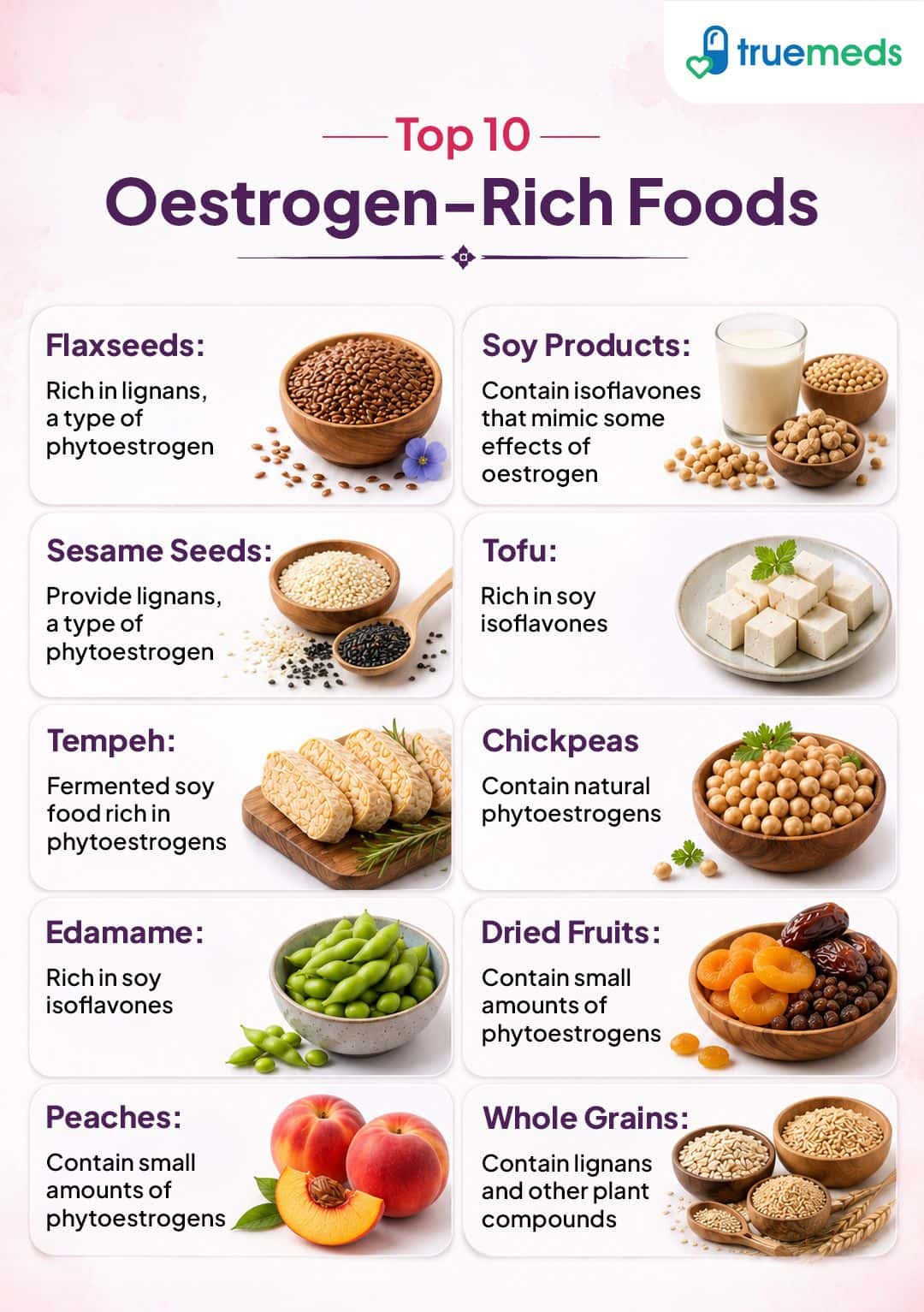
1. Flaxseeds
Flaxseeds are one of the richest sources of lignans, a type of phytoestrogen that may help support hormonal balance[5]. They are also rich in fibre, which supports digestive health and may contribute to heart health[4]. Some studies suggest that flaxseeds may help ease menopausal symptoms, such as hot flashes[2].
Health Benefits
- May support hormonal balance
- May help manage menopausal symptoms
- Supports heart health
- Promotes digestive health
How to Include It in Your Diet
- Add to smoothies
- Mix into yoghurt or oatmeal
- Sprinkle over salads
- Use in baking recipes
Who Can Benefit
- Women experiencing menopause
- Individuals looking to support hormonal health
- People looking to increase fibre intake
Things to Consider
- Consume with adequate water
- Start with small amounts and gradually increase intake
2. Soy Products
Soy products like tofu, tempeh, and edamame are among the richest sources of isoflavones, a type of phytoestrogen known for its oestrogen-like effects in the body[2].
- Isoflavones such as genistein and daidzein can interact with oestrogen receptors and may influence hormonal activity[2].
- These compounds are often studied for their potential role during menopause, including possible effects on hot flashes and bone health, although responses can vary[5].
- Some studies suggest that regular intake of soy-based foods may be associated with cardiovascular health benefits and a potential link to a lower risk of certain hormone-related cancers, though the evidence is inconclusive. These effects vary by population and the timing of intake[1].
Consult your healthcare provider before making significant dietary changes for hormone management.
Incorporating soy into your diet may offer a natural and plant-based way to support oestrogen levels.
Recipe: Tofu & Edamame Stir-Fry (Vegan)
- Sauté 1 cubed, pressed block of tofu in 1 tbsp sesame oil until golden. Remove.
- In the same pan, cook 1 tsp grated ginger, 2 minced garlic cloves, 1 cup broccoli, and 1 sliced red bell pepper for 3–4 mins.
- Add 1 cup edamame, tofu, 1 tbsp soy sauce, and 2 tsp rice vinegar. Stir-fry 2–3 mins.
- Serve over brown rice or quinoa. Top with sesame seeds, spring onions, or chilli flakes.
Health Benefits
- May help support hormonal balance during menopause.
- May help reduce the frequency of hot flashes in some individuals.
- Supports bone health.
- Provides high-quality plant-based protein.
How to Include It in Your Diet
- Add tofu or tempeh to stir-fries and curries.
- Snack on steamed edamame.
- Use soy milk in smoothies or cereals.
- Add roasted soy nuts to salads.
Who Can Benefit from It
- Women experiencing menopause.
- People following a vegetarian or vegan diet.
- Individuals looking to increase plant-based protein intake.
Recommended Intake
- Around 1–2 servings of whole soy foods daily can be included as part of a balanced diet.
- There is no established recommendation to consume soy specifically to increase oestrogen levels.
Best Time to Consume
- Can be consumed at any time of the day as part of regular meals.
- Including soy with a balanced meal may help improve overall dietary quality.
Things to Consider Before Consumption
- Choose minimally processed soy foods where possible.
- Avoid soy products if you have a soy allergy.
- If you have a hormone-sensitive condition or thyroid disorder, consult your healthcare provider before making significant dietary changes.
3. Sesame Seeds
Sesame seeds are a rich source of lignans, a type of phytoestrogen that may influence hormonal activity in the body. After consumption, lignans are converted by gut bacteria into compounds with mild oestrogen-like effects, which may play a supportive role in oestrogen balance. In addition, sesame seeds provide nutrients such as calcium, magnesium, and healthy fats and are often associated with benefits for heart health and inflammation support[6].
Including sesame seeds in your diet can be an easy and nutritious way to boost phytoestrogen intake[4].
Health Benefits
- May help support hormonal balance due to their lignan content.
- Supports bone health by providing calcium and magnesium.
- Contributes healthy fats that support heart health.
- Provides antioxidants that help protect cells from oxidative stress.
How to Include It in Your Diet
- Sprinkle over salads, soups, or stir-fries.
- Mix into yoghurt or oatmeal.
- Blend into smoothies.
- Use tahini as a spread or salad dressing.
Who Can Benefit from It
- Women looking to increase phytoestrogen intake.
- Individuals aiming to support bone health.
- People looking to include healthy fats in their diet.
Recommended Intake
- About 1–2 tablespoons of sesame seeds daily can be included as part of a balanced diet.
Best Time to Consume
- Can be consumed with any meal or snack.
Things to Consider Before Consumption
- Sesame is a common food allergen.
- Consume in moderation if following a calorie-controlled diet, as sesame seeds are energy-dense.
4. Garlic
Garlic, widely known for its medicinal and culinary uses, is not a significant source of phytoestrogens and does not meaningfully contribute to oestrogenic activity in the body. However, it may support hormonal and overall health through its antioxidant and anti-inflammatory properties[4]. Garlic is particularly valued for its potential role in supporting bone health, especially in postmenopausal women, possibly through mechanisms related to reduced oxidative stress rather than direct effects on oestrogen levels[7].
Additionally, garlic is rich in antioxidants and has powerful anti-inflammatory and heart-protective properties. Regular consumption may also help lower cholesterol and support immune function[7]. Incorporating garlic into your meals enhances flavour and offers subtle hormonal and overall health benefits[4].
Health Benefits
- Provides antioxidants that support overall health.
- May help support heart health.
- May contribute to maintaining bone health, particularly after menopause.
- Supports a healthy immune system.
How to Include It in Your Diet
- Add fresh garlic to curries, soups, and stir-fries.
- Roast whole garlic cloves and spread them on wholegrain toast.
- Mix minced garlic into salad dressings or marinades.
- Add to sautéed vegetables.
Who Can Benefit from It
- Adults looking to support heart health.
- Postmenopausal women seeking foods that support bone health.
- Individuals wanting to increase antioxidant-rich foods in their diet.
Recommended Intake
- One to two fresh garlic cloves daily can be included in a balanced diet, depending on individual tolerance.
Best Time to Consume
- Can be eaten with lunch or dinner as part of regular meals.
Things to Consider Before Consumption
- Large amounts may cause heartburn or digestive discomfort in some people.
- Garlic may interact with blood-thinning medicines. Consult your healthcare provider if you are taking anticoagulants or are scheduled for surgery.
5. Peaches
Peaches contain small amounts of phytoestrogens, mainly lignans, that may help support healthy oestrogen levels[4].
- These plant compounds can bind to oestrogen receptors and offer mild hormonal effects, making them particularly beneficial for women experiencing hormonal fluctuations[2].
- In addition to their phytoestrogen content, peaches are rich in vitamins A and C, fibre, and antioxidants, supporting immune function and skin health[8].
Adding fresh or dried peaches to your diet can be a sweet and nutritious way to enhance overall well-being[4].
Health Benefits
- Provides antioxidants that support overall health.
- Contributes fibre that supports digestive health.
- Supplies vitamins A and C, which support immune function and skin health.
- May modestly contribute to phytoestrogen intake.
How to Include It in Your Diet
- Enjoy fresh as a snack.
- Add sliced peaches to yoghurt or porridge.
- Blend into smoothies.
- Toss into fruit salads.
Who Can Benefit from It
- People looking to increase their fruit intake.
- Women seeking a varied diet containing phytoestrogen-rich foods.
- Individuals aiming to increase fibre intake.
Recommended Intake
- One medium peach can be enjoyed as part of your daily fruit intake.
Best Time to Consume
- Can be eaten as a mid-morning or afternoon snack or added to breakfast.
Things to Consider Before Consumption
- Wash fresh peaches thoroughly before eating.
- Dried peaches contain more concentrated natural sugars and should be consumed in moderation.
6. Berries
Berries, such as strawberries and blueberries, are delicious as a snack. Although they are minor contributors of phytoestrogens, they contain essential nutrients such as vitamin C, polyphenols, potassium, and manganese[4].
- These tiny fruits contain lignans and flavonols, which are known to weakly modulate oestrogen receptors in the body[2].
- Consuming berries regularly can help support bone health and potentially reduce the risks associated with oestrogen deficiency[5].
- Additionally, the antioxidant and anti-inflammatory properties of berries further enhance their benefits, making them a powerhouse for hormone balance and overall wellness[6].
Health Benefits
- Rich in antioxidants that help protect cells from oxidative stress.
- Supports heart health.
- Provides fibre that promotes digestive health.
- Contributes vitamins and minerals that support overall well-being.
How to Include It in Your Diet
- Add to breakfast cereals or oatmeal.
- Mix into yoghurt.
- Blend into smoothies.
- Enjoy fresh as a snack.
Who Can Benefit from It
- Individuals looking to increase antioxidant intake.
- People aiming to support heart health.
- Women wanting to include a variety of plant foods in their diet.
Recommended Intake
- Around ½–1 cup of fresh or frozen berries can be included as part of your daily fruit intake.
Best Time to Consume
- Can be enjoyed with breakfast or as a healthy snack.
Things to Consider Before Consumption
- Wash fresh berries before eating.
- Choose unsweetened frozen berries if fresh berries are unavailable.
7. Dried Fruits
Dried fruits such as apricots, dates, and prunes contain lignans, a type of phytoestrogen. Because the dehydration process removes water, these compounds become more concentrated per gram compared to fresh fruit[4]. While dried fruits contribute to overall lignan intake, they are moderate rather than highly concentrated sources when compared with foods like flaxseeds or sesame seeds[4].
While specific studies on dried fruits are less prevalent, their fresh and dried forms are well known for promoting oestrogen-like activity, supporting bone density, and mitigating menopausal symptoms[2]. The high fibre and polyphenol content in these fruits also aid digestion and provide antioxidant protection[6].
Health Benefits
- Provides dietary fibre that supports digestive health.
- Contains antioxidants that support overall well-being.
- Contributes modest amounts of phytoestrogens.
- Provides a convenient source of energy.
How to Include It in Your Diet
- Add to oatmeal or breakfast cereals.
- Mix into homemade trail mix.
- Include in salads.
- Enjoy as a snack with nuts.
Who Can Benefit from It
- Individuals looking to increase fibre intake.
- People seeking convenient nutrient-rich snacks.
- Women wanting to include a variety of phytoestrogen-containing foods.
Recommended Intake
- A small handful (about 30 g) can be enjoyed as part of a balanced diet.
Best Time to Consume
- Can be eaten as a snack or included with breakfast.
Things to Consider Before Consumption
- Dried fruits contain concentrated natural sugars and should be consumed in moderation.
- Choose products without added sugar whenever possible.
8. Tofu
Tofu, a staple in many plant-based diets, is a soy-based product rich in isoflavones, such as genistein and daidzein[2]. These compounds function as phytoestrogens, mimicking the effects of oestrogen in the body. Regular consumption of soy isoflavones may help reduce menopausal hot flashes, improve bone mineral density, and lower the risk of heart disease by modulating lipid profiles[5].
While the relationship between soy consumption and hormone-dependent cancer risk remains nuanced, some studies indicate that tofu may have a protective effect[5]. Beyond its phytoestrogenic properties, tofu is also an excellent source of plant-based protein and is incredibly versatile in cooking, making it a valuable addition to an oestrogen-supportive diet[2].
Health Benefits
- Provides high-quality plant-based protein.
- May help support bone health during menopause.
- May help support hormonal balance.
- Supports muscle maintenance as part of a balanced diet.
How to Include It in Your Diet
- Add to stir-fries, curries, or soups.
- Grill or bake as a main protein source.
- Crumble into vegetable scrambles.
- Add to salads or grain bowls.
Who Can Benefit from It
- Vegetarians and vegans.
- Women experiencing menopause.
- Individuals looking to increase plant-based protein intake.
Recommended Intake
- One serving (approximately 80–100 g) can be included as part of a balanced diet.
Best Time to Consume
- Can be enjoyed at lunch or dinner or included in breakfast dishes.
Things to Consider Before Consumption
- Choose calcium-set tofu where available to increase calcium intake.
- People with a soy allergy should avoid tofu.
9. Tempeh
Tempeh is a fermented soy product that is rich in isoflavones, a type of phytoestrogen. These compounds have mild oestrogen-like activity and can bind to oestrogen receptors in the body. In women, tempeh’s isoflavones may help reduce menopausal symptoms and support hormonal balance[9].
They may also contribute to bone health by supporting bone density when natural oestrogen levels decline. In men, moderate soy intake has not been shown to lower testosterone levels and may support heart health by improving cholesterol profiles. Beyond phytoestrogens, tempeh is rich in high-quality plant protein and provides important nutrients, including iron, calcium, magnesium, and B vitamins[9]. The fermentation process enhances digestibility.
Health Benefits
- Provides high-quality plant-based protein.
- May help support hormonal balance during menopause.
- Supports bone health.
- The fermentation process may improve digestibility.
How to Include It in Your Diet
- Slice into stir-fries.
- Grill or bake as a meat alternative.
- Add to salads or grain bowls.
- Use in sandwiches or wraps.
Who Can Benefit from It
- Vegetarians and vegans.
- Women experiencing menopause.
- People looking to include fermented plant-based foods in their diet.
Recommended Intake
- One serving (approximately 75–100 g) can be included as part of a balanced diet.
Best Time to Consume
- Can be eaten at lunch or dinner.
Things to Consider Before Consumption
- People with soy allergy should avoid tempeh.
- Introduce fermented foods gradually if you are not accustomed to eating them regularly.
10. Nuts and Seeds
Nuts and seeds, including almonds and walnuts, contain modest amounts of phytoestrogens and provide a range of nutrients that support overall hormonal health[4]. Rather than acting as strong oestrogen mimics, the phytoestrogenic compounds in these foods may gently support hormonal balance as part of a nutrient-rich diet, alongside benefits from healthy fats, fibre, and antioxidants[2].
- Almonds, for example, are rich in phytoestrogens that may help alleviate menopause symptoms and support cardiovascular well-being[4].
- Walnuts contain moderate amounts of phytoestrogens, mainly lignans, which have mild oestrogen-like effects in the body. These plant compounds may support heart health, provide antioxidant and anti-inflammatory benefits, and help gently regulate hormones, particularly in postmenopausal women[6].
Incorporating a variety of nuts and seeds into your diet can provide a natural way to support oestrogen levels and promote overall wellness[4].
Health Benefits
- Provides healthy fats that support heart health.
- Supplies fibre that supports digestive health.
- Rich in antioxidants that support overall well-being.
- May contribute to hormonal balance as part of a varied diet.
How to Include It in Your Diet
- Add to breakfast cereals or yoghurt.
- Sprinkle over salads.
- Blend into smoothies.
- Enjoy as a snack.
Who Can Benefit from It
- Individuals looking to support heart health.
- People seeking nutrient-dense snacks.
- Women wanting to include more phytoestrogen-containing foods in their diet.
Recommended Intake
- A small handful (about 30 g) of unsalted nuts and seeds daily can be included as part of a healthy diet.
Best Time to Consume
- Can be eaten as a snack or included with meals throughout the day.
Things to Consider Before Consumption
- Choose unsalted varieties whenever possible.
- Be mindful of portion sizes, as nuts and seeds are energy-dense.
- Avoid nuts or seeds that trigger any known allergies.
Benefits of Oestrogen-Rich Foods
Consuming oestrogen-rich foods can offer several health benefits, including:
- Hormone Balance: Phytoestrogens found in foods such as soy and flaxseeds may help modulate oestrogen activity and are often studied for their potential role in managing menopausal symptoms and menstrual irregularities[2].
- Bone Health: Oestrogen-like compounds in these foods may support bone density, particularly in postmenopausal women, though effects can vary[5].
- Heart Health: Isoflavones and lignans have been associated in some studies with improved cholesterol levels and blood vessel function, which may support cardiovascular health[5].
- Cancer Prevention: Some preliminary research suggests that phytoestrogens may influence hormone-related cancer risk, depending on factors such as intake, life stage, and overall diet[5].
The effects of phytoestrogens can vary from person to person. The evidence is inconclusive, and these foods should be viewed as part of a balanced diet rather than as a treatment. Individuals with hormone-sensitive conditions should consult a healthcare professional for personalised advice.
Potential Side Effects
Although consuming oestrogen-rich foods can be beneficial, it's crucial to be mindful of potential side effects:
- Allergic Reactions: Some individuals may experience allergic or sensitive reactions to certain foods high in phytoestrogens, such as soy products.
- Overconsumption: Consuming excessive amounts of phytoestrogens can affect those individuals with iodine deficiency or with very high soy intake. It can exacerbate hormone-sensitive conditions like endometriosis and breast cancer.
- Digestive Issues: Gastrointestinal discomfort may occur, particularly if there is an intolerance to specific foods containing phytoestrogens.
- Interaction With Medication: Phytoestrogens have the potential to interact with certain medications, including hormone replacement therapy, so it's essential to consult with a doctor if you have any concerns.
Do not self-medicate or make significant dietary changes without professional medical supervision.
Final Thoughts
Including phytoestrogen-rich foods such as soy, flaxseeds, nuts, and seeds can be part of a varied, nutrient-rich diet. Their potential effects on menopausal symptoms and hormonal health may vary between individuals, so they should not be considered a substitute for medical treatment. If you have a hormone-sensitive condition or take medicines that may interact with these foods, speak with your healthcare provider before making significant dietary changes.
FAQs
What are phytoestrogens, and how do they work?
Phytoestrogens are plant-based compounds that mimic the effects of oestrogen in the body. They bind to oestrogen receptors, potentially influencing hormonal activity and balance.
Can consuming oestrogen-rich foods help with menopausal symptoms?
Some studies suggest phytoestrogens may alleviate hot flashes by weakly modulating oestrogen receptors, though evidence remains inconsistent. Consult your doctor for personalised advice.
Are there any risks associated with increasing phytoestrogen intake?
Excessive intake may disrupt endocrine function, particularly thyroid health or hormone-sensitive conditions. However, moderate consumption of foods high in phytoestrogens is generally safe.
How much of these oestrogen-rich foods should be consumed daily?
There is no specific daily recommendation for oestrogen-rich foods. It is best to include them as part of a varied and balanced diet without excessive consumption.
Can men benefit from consuming oestrogen-rich foods?
Yes, men can benefit from consuming oestrogen-rich foods in moderation, as phytoestrogens may support heart health, reduce inflammation, and promote hormonal balance without significantly disrupting testosterone levels.
Do cooking methods affect the phytoestrogen content in foods?
Yes, cooking and processing methods can alter phytoestrogen content and bioavailability; fermentation often increases absorption. For example, heat exposure during cooking may reduce isoflavones, a type of phytoestrogen, in soybeans.
Are there any foods that should be avoided to maintain balanced oestrogen levels?
Focus on moderation: avoid ultra-processed soy products and prioritise whole oestrogen-rich foods like flaxseeds, lentils, and edamame within balanced diets.
What are the best foods high in oestrogen naturally?
Foods commonly referred to as oestrogen-rich foods contain phytoestrogens, which are naturally occurring plant compounds that can interact with estrogen receptors in the body. Some of the best sources include flaxseeds, soybeans, tofu, tempeh, sesame seeds, legumes, dried fruits, whole grains, and certain fruits and vegetables. Including a variety of these foods in your daily diet may help support hormonal balance while also providing fibre, vitamins, minerals, and other beneficial nutrients.
Which fruit is highest in oestrogen?
Fruits do not contain human oestrogen, but some are good sources of phytoestrogens. Dried fruits such as apricots, dates, and prunes are considered among the richest fruit sources of these plant compounds. Fresh fruits like peaches, strawberries, and berries also contain smaller amounts. Although fruits generally provide fewer phytoestrogens than foods like flaxseeds or soy, they can still contribute to overall phytoestrogen intake as part of a balanced and varied diet.
Are oestrogen-rich foods safe to consume daily?
For most healthy individuals, oestrogen-rich foods containing phytoestrogens can be consumed daily as part of a balanced diet. Foods such as soy products, flaxseeds, legumes, whole grains, fruits, and vegetables offer important nutrients in addition to phytoestrogens. However, individual needs may vary, particularly for people with certain hormone-sensitive conditions. It is generally best to consume these foods in moderation and seek advice from a healthcare professional if you have specific health concerns.
What is the best way to include oestrogen-rich foods in your diet?
The best way to include oestrogen-rich foods in your diet is to incorporate a variety of phytoestrogen-containing foods into regular meals and snacks. For example, you can add ground flaxseeds to smoothies or oatmeal, include soy products such as tofu or edamame in meals, and choose legumes, whole grains, fruits, and vegetables as part of a balanced eating pattern. Consuming a range of these foods may help increase phytoestrogen intake while supporting overall nutritional needs.
Can oestrogen-rich foods be included in a weight-management diet?
Yes, many oestrogen-rich foods can be included in a weight-management diet. Foods such as legumes, soy products, fruits, vegetables, whole grains, and flaxseeds are often rich in fibre and other nutrients that can help promote fullness and support overall dietary quality. When consumed as part of a balanced diet and healthy lifestyle, these foods can support nutritional goals while also providing phytoestrogens that may help maintain hormonal health.
Medical Disclaimer
This article is for informational purposes only and does not constitute medical advice. The information provided should not be used for diagnosing or treating health conditions. Always consult a qualified healthcare provider for diagnosis, treatment, and personalised medical advice. Do not disregard professional medical advice or delay seeking it because of information found in this article. If you have a medical emergency, contact your doctor or emergency services immediately.
References
National Center for Biotechnology Information. (2019). Phytoestrogens and Their Health Effect. PubMed Central. https://www.ncbi.nlm.nih.gov/pmc/articles/PMC6390141/
National Center for Biotechnology Information. (2011). The pros and cons of phytoestrogens. PubMed Central. https://www.ncbi.nlm.nih.gov/pmc/articles/PMC3074428/
Healthdirect Australia. (2024). Oestrogen. Healthdirect. https://www.healthdirect.gov.au/oestrogen
National Center for Biotechnology Information. (2008). Phytoestrogen content of beverages, nuts, seeds, and oils. https://www.ncbi.nlm.nih.gov/pubmed/18671400/