


Apples are a delicious and nutritious fruit, with potential benefits for individuals with diabetes. They are low in calories, high in fibre, and have a low glycaemic index, making them an excellent choice for managing blood sugar levels. Apples are also rich in various vitamins, minerals, and antioxidants, potentially contributing to overall health and well-being[1]. Incorporating apples into a balanced diet may help people with diabetes maintain better blood sugar control and reduce the risk of complications associated with the condition.
Nutritional profile of apples
Apples are packed with essential nutrients, making them a valuable addition to a diabetic diet. Here is what a 100-gram raw Gala apple with skin contains[2]:
Additionally, apples are a good source of vitamin C and contain various antioxidants, including quercetin and catechin[3]. The nutrient combination in apples may contribute to better diabetes management and overall health.
Benefits of apples for individuals with diabetes
Apples may offer significant benefits for individuals with diabetes, primarily through their ability to regulate blood sugar levels, potentially reducing the risk of developing type 2 diabetes[4].
Here are some of the benefits of apples for patients with diabetes:
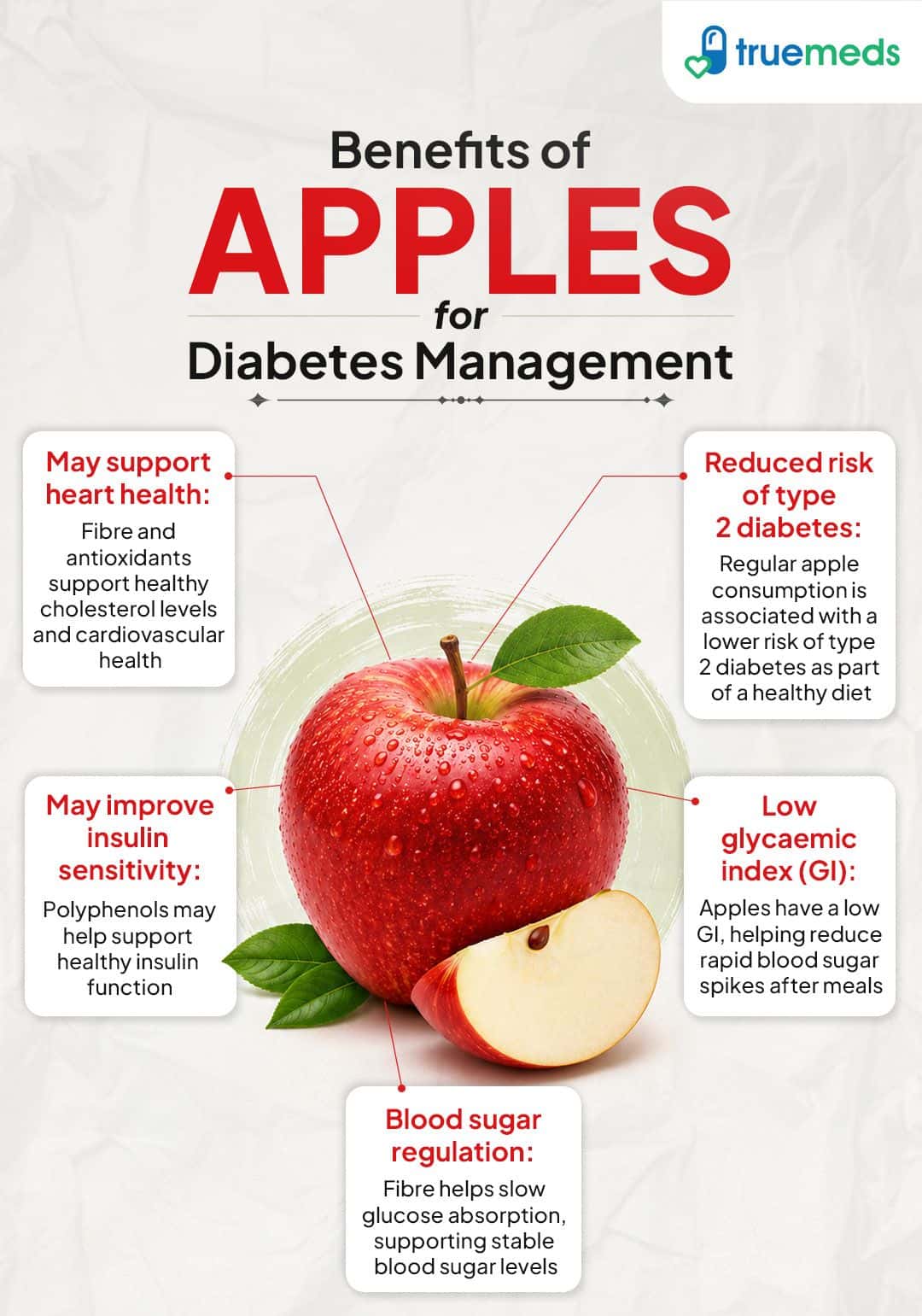
1. Blood sugar regulation
The high fibre content in apples plays a crucial role in supporting blood sugar levels. Soluble fibre, in particular, helps slow down the digestion and absorption of carbohydrates, preventing rapid spikes in blood glucose. When you eat an apple, the fibre forms a gel-like substance in your digestive tract, which slows down the digestion process and the absorption of glucose into your bloodstream[5]. This gradual release of sugar helps maintain stable blood glucose levels, reducing the risk of hyperglycaemia (high blood sugar) and its associated complications. Additionally, the polyphenols found in apple skin have been shown to improve insulin sensitivity, further aiding in blood sugar management[4].
2. Reduced risk of type 2 diabetes
Incorporating apples into your diet may help lower the risk of developing type 2 diabetes. Studies have shown a correlation between higher apple consumption and a reduced risk of this chronic condition[4]. The fibre and antioxidants present in apples contribute to this protective effect by improving insulin sensitivity and supporting effective blood sugar management. Regular apple consumption, as part of a balanced diet, has been associated with a decreased likelihood of developing type 2 diabetes[4]. By introducing apples into your diet, you can potentially reduce the risk of secondary metabolic complications.
Remember that for individuals with diabetes, apples may support better glycaemic control but do not prevent or reverse diabetes. Always follow your doctor's recommendation before adding anything new to your diet in conjunction with your antidiabetic medicines.
3. May improve insulin sensitivity
One of the advantages of apples for diabetes is their ability to improve insulin sensitivity. The skin of apples contains polyphenols, which are compounds that enhance the body's ability to use insulin effectively to regulate blood glucose levels. Preliminary laboratory models suggest that apple polyphenol extracts may interact with pathways like PI3K and PPARγ, which can help reduce insulin resistance, a key factor in the development of type 2 diabetes[6]. Regular consumption of apples has been linked to a lower risk of type 2 diabetes, as the components in apples may help the body manage glucose more efficiently[4].
4. Low glycaemic index (GI)
The glycaemic index (GI) is a measure of how quickly a food raises blood sugar levels[7]. Apples have a low GI, typically ranging between 28 and 44 depending on variety and ripeness. This means that the carbohydrates in apples are digested and absorbed slowly, resulting in a gradual increase in blood glucose rather than a sharp spike. The fibre content of apples, especially the soluble fibre found in the skin, helps slow digestion and sugar absorption, contributing to the low GI effect[5]. As a result, apples cause only a mild increase in blood sugar, potentially making them a suitable fruit choice for people managing diabetes.
5. May support heart health
Cardiovascular health is a critical concern for people with diabetes, and apples can be beneficial in this regard. Apples are rich in antioxidants, particularly flavonoids and polyphenols, which help reduce oxidative stress and inflammation[8]. The soluble fibre in apples can also help lower LDL cholesterol, a major risk factor for cardiovascular disease[5]. The regular consumption of apples in individuals with diabetes can help lower LDL cholesterol and reduce oxidative stress, which potentially contributes to improved heart health[8]. Therefore, including apples as part of a balanced diet may potentially support heart health alongside blood sugar management for individuals with diabetes.
How to incorporate apples into a diabetic diet?
Incorporating apples into a diabetes diet is simple and beneficial. Enjoy whole apples as a snack, paired with a source of healthy fats like nuts or nut butter to enhance satiety and slow down sugar absorption. This combination of fibre, protein, and healthy fats may help regulate blood sugar levels and support overall health.
1. Whole apples vs apple juice
When it comes to blood sugar control, whole apples are a better choice than apple juice. Here's a comparison of their characteristics:
The fibre in whole apples is key to their blood sugar-regulating properties. When considering portion control and timing, keep these differences in mind.
2. Portion control and timing of consumption
When incorporating apples into your diabetic diet, it's essential to be mindful of portion sizes and the timing of consumption. Here are some guidelines to follow:
- Stick to one medium-sized apple per serving, depending on individual carbohydrate targets.
- Enjoy apples as a snack between meals to help maintain stable energy levels without causing significant blood sugar fluctuations.
- Combine apples with a source of healthy fats, like peanut butter, or protein, such as nuts or yoghurt, to slow down sugar absorption and increase feelings of fullness.
Consult your healthcare provider for personalised dietary guidance tailored to your individual needs.
By following these portion control and timing strategies, you can successfully integrate apples into your diabetes management plan while minimising the impact on your blood glucose levels.
Precautions and considerations for diabetic patients
When incorporating apples into your diabetic diet, it is crucial to keep a few key points in mind:
- Portion control is essential. Limit your intake to 1 to 2 small apples per day (one serving equals approximately 15 grams of carbohydrates).
- Regularly monitor your blood sugar to understand how apples affect your individual glucose levels.
- Choose whole, raw apples instead of juices to avoid added sugars and get more fibre.
Always consult your doctor before making significant dietary changes, especially if taking diabetes medications.
By keeping these precautions in mind, you can safely enjoy the benefits of apples in your diabetic diet.
Conclusion
Apples can be a valuable addition to a diabetic diet when eaten in moderation. The fruit's low glycaemic index and high fibre content help prevent sudden spikes in blood sugar levels. Moreover, the polyphenols found in apples may improve insulin sensitivity and decrease insulin resistance, potentially contributing to better blood sugar control over time. By including apples in a diet for diabetic individuals while being mindful of portion sizes and monitoring your blood glucose levels, you can make a healthy choice that supports your diabetes management goals.
FAQs
Is apple good for people with diabetes?
Yes, apples are good for people with diabetes. They contain fibre, vitamins, and antioxidants, which support blood sugar control when eaten in moderation with the skin.
How do apples help in controlling blood sugar levels?
Apples help control blood sugar due to their fibre content, especially pectin, which can slow glucose absorption and improve insulin sensitivity, aiding in better blood sugar regulation.
Can diabetic patients drink apple juice?
People with diabetes should exercise caution with apple juice. It contains concentrated natural sugars and little fibre, which can cause a rapid increase in blood sugar. Whole apples are generally a better choice, as their fibre helps slow sugar absorption.
How much apple can a diabetic person eat per day?
Most individuals can safely consume 1 to 2 small apples daily, spaced throughout the day.
Can eating apples lower the risk of type 2 diabetes?
Eating apples may help lower the risk of type 2 diabetes when included as part of a healthy diet. Apples contain fibre and natural plant compounds that support better blood sugar control and improve insulin sensitivity over time.
Are there any side effects of eating apples for diabetics?
For most people with diabetes, apples are safe when eaten in moderation. However, eating them in large amounts may raise blood sugar levels, and apple juice can cause quicker spikes due to low fibre. Portion control and overall diet balance matter.
Can diabetic patients eat apples every day?
Yes, many people with diabetes can include apples in their daily diet. Whole apples provide fibre, which helps slow sugar absorption. Consuming 1 to 2 small apples per day as part of a balanced meal plan is generally considered appropriate.
Which apple variety is best for diabetes?
No single apple variety is considered best for diabetes. Green, red, and other apple varieties can all be included in moderation. The fibre content, portion size, and overall carbohydrate intake are generally more important than the specific variety chosen.
Can apples be eaten on an empty stomach by diabetics?
Many individuals with diabetes can eat apples on an empty stomach. However, blood sugar responses may vary. Pairing an apple with a source of protein or healthy fats, such as nuts, may help promote steadier blood glucose levels.
What is the glycaemic load of an apple?
A small apple (approximately 120 g) has a low glycaemic load of around 5–6, meaning it has a relatively modest effect on blood sugar when eaten in appropriate portions. Its fibre content helps slow carbohydrate absorption and supports better blood glucose management.
Is green apple better than red apple for diabetes?
No. Both green and red apples can be included in a diabetes diet.
Medical Disclaimer
This article is for informational purposes only and does not constitute medical advice. The information provided should not be used for diagnosing or treating health conditions. Always consult a qualified healthcare provider for diagnosis, treatment, and personalised medical advice. Do not disregard professional medical advice or delay seeking it because of information found in this article. If you have a medical emergency, contact your doctor or emergency services immediately.
References
U.S. Department of Agriculture. (2019). Apples, raw, with skin. FoodData Central. https://fdc.nal.usda.gov/fdc-app.html#/food-details/171688/nutrients
Apples, with skin, Gala, raw nutrition facts and analysis. (n.d.). Nutritional Values For Common Foods And Products. https://www.nutritionvalue.org/Apples%2C_with_skin%2C_gala%2C_raw_nutritional_value.html
Hyson, D. A. (2011). A comprehensive review of apples and apple components and their relationship to human health. Advances in Nutrition, 2(5), 408-420. https://pubmed.ncbi.nlm.nih.gov/22332082/
Inoue, Y., Cormanes, L., Yoshimura, K., Sano, A., Hori, Y., Suzuki, R., & Kanamoto, I. (2022). Effect of Apple Consumption on Postprandial Blood Glucose Levels in Normal Glucose Tolerance People versus Those with Impaired Glucose Tolerance. Foods, 11(12), 1803. https://doi.org/10.3390/foods11121803