

- Medicines
- Personal Care
- Skin Cream
- Sunscreen
- Face Wash
- Skin and Body Soap
- Acne Care
- Body Lotions
- Moisturising Lotion
- Moisturising Cream
- Mosquito Repellent
- Moisturising Gel
- Body Wash
- Hair Oils
- Hair Shampoo
- Hair Conditioners
- Hair Supplements
- Hair Colour
- Hair Serum
- Hair Mask
- Hair Solutions
- Baby Diapers and Wipes
- Baby Lotion and Moisturising Cream
- Baby Bath Essentials
- Baby Skin Care
- Baby and Infant Food
- Baby Healthcare
- Women Multivitamins
- Ovulation Test Kit and Women Intimate Care
- Sanitary Pads
- Nutritional Drinks
- Condoms
- Lubricants
- Massage Gels
- Personal Body Massagers
- Men Performance Booster
- Sexual Health Supplements
- Massage Oils
- Ayurveda
- Tooth Paste
- Mouth Ulcer Gel
- Mouthwash
- Toothache and Gum Pain
- Tooth Brush
- Gargle Solution
- Orthopaedic Supports
- Adult Diapers
- Footwear
- Mobility and Support Accessories
- Urinary Support and Care
- Health Conditions
- Bone and Joint Care
- Digestive Care
- Eye Care
- Pain Relief
- Smoking Cessation
- Liver Care
- Stomach Care
- Cold and Cough
- Heart Care
- Kidney Care
- Piles, Fissures & Fistula
- Respiratory Care
- Mental Wellness
- Derma Care
- Pre and Probiotics
- Acidity
- Gas
- Constipation
- Loose Motion/Diarrhoea
- Digestive Fibres
- Digestive Enzymes
- Eye Lubricant Drops
- Lens Solution
- Safety Eye Wear
- Eye Cream
- Eye Vitamins and Supplements
- Eye Drops
- Eye Ointment and Gel
- Nicotine Patch
- Nicotine Gum
- Nicotine Lozenges
- Cough Syrups
- Chest Rubs and Balms
- Nasal Spray
- Lozenges
- Inhalant Capsules
- Cold and Cough Tablets
- Vitamins & Supplements
- Diabetes Care
- Healthcare Devices
- Homeopathic Medicine
- Health Guide
Parkinson's Disease
Parkinson's disease is a progressive neurological disorder that primarily affects movement, balance, and coordination. It results from the progressive loss of dopamine-producing neurons in the brain, leading to a deficiency in dopamine, a neurotransmitter essential for motor control. The exact cause of Parkinson's disease is still unknown, but it is believed to involve a combination of genetic, environmental, and lifestyle factors.
 50
50Last updated on : 30 Apr, 2026
Read time : 13 mins
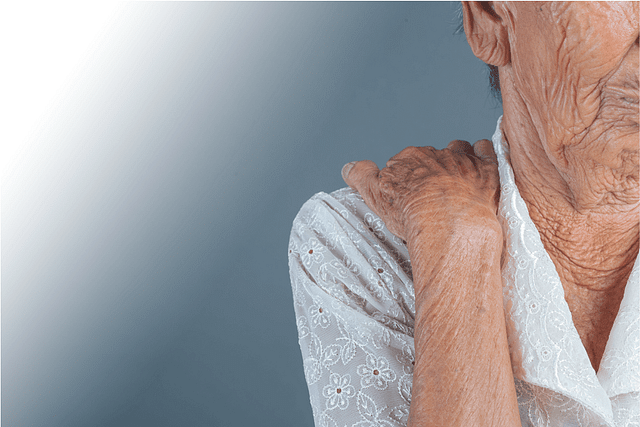
Overview of Disease
Parkinson's disease, also known as idiopathic Parkinson's disease or primary Parkinson's disease, is a debilitating neurological condition that affects millions of people worldwide. Historically, it has been referred to as paralysis agitans or shaking palsy due to its characteristic motor symptoms. While there is currently no cure for Parkinson's disease, various treatments and management strategies can help alleviate symptoms and improve quality of life. Understanding the nature of this condition is crucial for those affected by it and their caregivers.
What is Parkinson's Disease?
Parkinson's disease is a progressive nervous system disorder that affects movement. It is mainly caused by the degeneration of nerve cells in the substantia nigra. This region plays a key role in regulating movement. As these nerve cells die or become damaged, they lose their ability to produce dopamine. Reduced dopamine levels disrupt normal motor control pathways, leading to Parkinson's characteristic symptoms.
The exact cause of this degeneration is not fully understood. This is why the condition is also referred to as idiopathic Parkinson's disease or primary Parkinson's disease. As the disease progresses, the symptoms become more pronounced and can significantly impact a person's quality of life.
Key Factors about Parkinson's Disease
| Category | Details |
| Also Referred to as | Paralysis agitans, Shaking palsy |
| Commonly Occurs In | Men, Older adults (typically begins around age 60) |
| Affected Organ | Brain (specifically the substantia nigra and basal ganglia) |
| Type | Progressive neurodegenerative disorder, progressive movement disorder |
| Common Signs | Tremor, Muscle stiffness, Slowness of movement, Impaired balance and coordination, Depression, Sleep problems, Difficulty swallowing, chewing, and speaking |
| Consulting Specialist | Neurologists, especially those with training in movement disorders |
| Treatment Procedures | Medications (levodopa, carbidopa), Deep-brain stimulation (DBS), Surgery |
| Managed By | Neurologists, Other specialists (collaboration) |
| Mimicking Condition | Parkinsonism (e.g., multiple system atrophy, corticobasal degeneration, drug-induced parkinsonism) |
Symptoms of Parkinson's Disease
The symptoms of Parkinson's disease can vary from person to person, but several primary symptoms are commonly associated with the condition. These include:
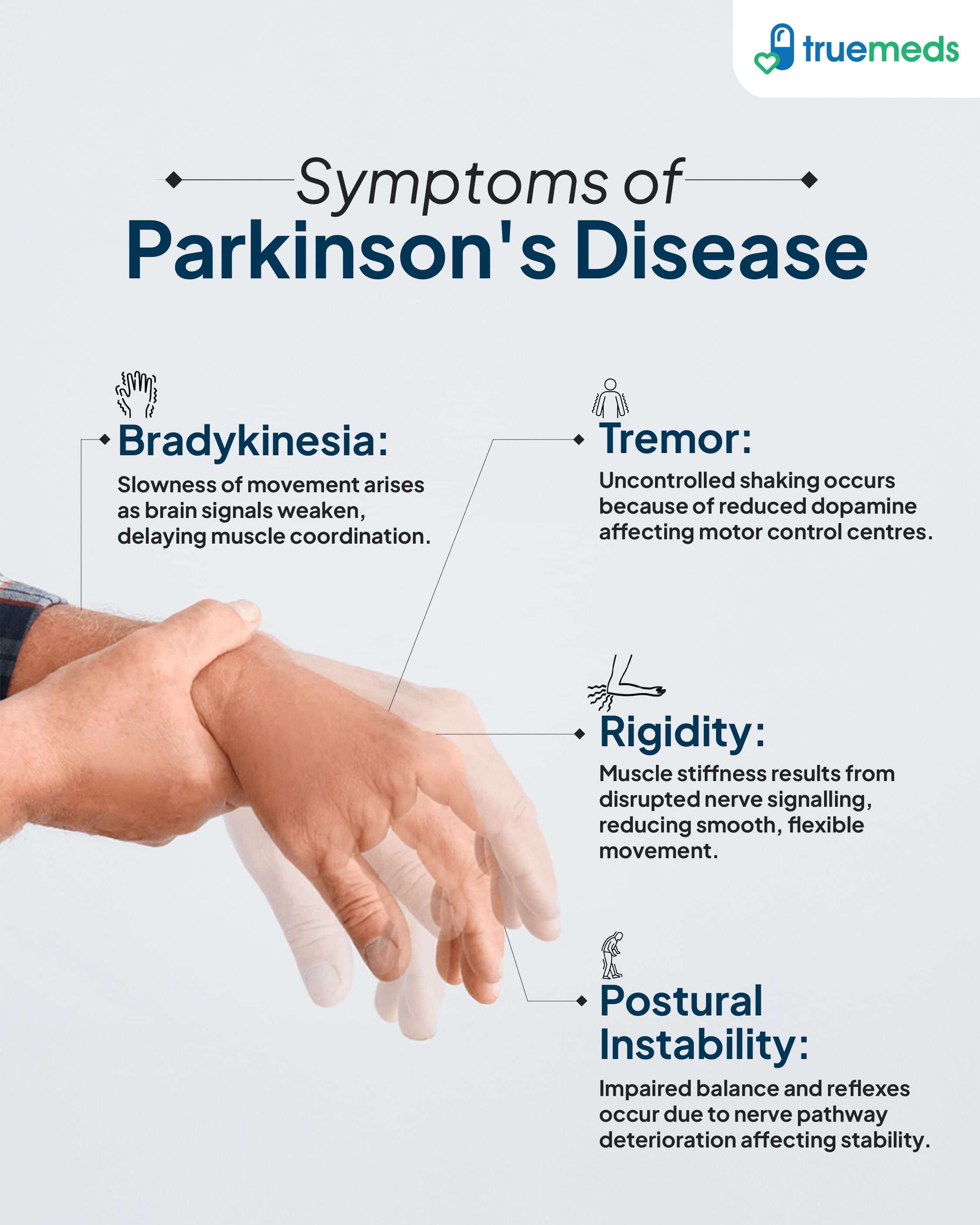
- Tremor: Involuntary and rhythmic movements of the hands, arms, legs, and jaw.
- Rigidity: Stiffness of the limbs, which can lead to muscle or joint pain.
- Bradykinesia: Slowness of movement, which can make everyday tasks difficult (Bloem et al., 2021).
- Postural Instability: Impaired balance and coordination can increase the risk of falls.
- Loss of sense of smell (hyposmia): It is often an early non-motor symptom.
In addition to motor symptoms, people with Parkinson's disease may experience various non-motor symptoms. These include cognitive impairment, mental health disorders, and dementia. Sleep disorders, pain, and sensory disturbances can also occur. As the disease progresses, the severity of these symptoms may increase. Therefore, individuals with Parkinson's should seek appropriate medical care and explore treatment options.
Stages of Parkinson's Disease
Parkinson's disease, also known as shaking palsy, is a progressive neurological disorder that affects movement, balance, and coordination. The disease progresses through five distinct stages, each with characteristic symptoms and challenges.
- Stage 1: It is the mildest form of Parkinson's disease, with minimal symptoms typically affecting one side of the body. Patients may experience slight tremors and changes in posture, facial expressions, and walking. However, these symptoms are often not severe enough to interfere with daily tasks.
- Stage 2: This stage is considered a moderate form of Parkinson's, with more noticeable symptoms affecting both sides of the body. Tremors, stiffness, and trembling are more pronounced, and changes in facial expressions and posture are more apparent. Daily tasks may take longer to complete, but balance is generally not impaired.
- Stage 3: It marks a significant turning point in the disease progression. Symptoms are more severe and include postural instability, slowed movements, and impaired balance responses. Falls become more common, and daily tasks are significantly affected. Parkinson's disease treatments, such as medication and occupational therapy, may help manage symptoms at this stage (NICE, 2022).
- Stage 4: This stage makes daily activities even more challenging. Patients may be able to stand without assistance but require a walker or other assistive devices to walk. Independent living is often not possible, and constant care may be necessary.
- Stage 5: This is the most advanced stage of Parkinson's disease. Patients may be unable to stand or walk due to stiffness and require a wheelchair for mobility. Constant care is necessary to prevent falls and manage daily activities. Dementia and confusion are also common at this stage.
Causes of Parkinson's Disease
The exact cause of primary or idiopathic Parkinson's disease remains unknown. However, it is believed to result from a complex interplay of genetic and environmental factors. One proposed theory, Braak's hypothesis, suggests that the disease may begin in the gut or nasal cavity, but this mechanism remains unproven. This leads to the aggregation of an abnormal protein called α-Synuclein. This protein then spreads to the central nervous system, causing the degeneration of dopaminergic neurons in the brain's substantia nigra.
The death of dopamine-producing neurons is a key factor in Parkinson's disease symptoms. Dopamine is a neurotransmitter essential for regulating movement. Its loss causes the characteristic motor symptoms, including tremors, rigidity, and bradykinesia (slowness of movement).
In addition to the loss of dopaminergic neurons, other factors that may contribute to the development of Parkinson's disease include:
- Genetic Mutations: Certain genetic variations, such as mutations in the LRRK2, SNCA, and PRKN genes, have been linked to an increased risk of developing Parkinson's disease (Armstrong & Okun, 2020).
- Environmental Toxins: Exposure to certain pesticides, herbicides, and heavy metals has been associated with an increased risk of Parkinson's disease.
- Age: The risk of developing Parkinson's disease increases with age, with the average age of onset being around 60 years.
- Gender: Men are slightly more likely to develop Parkinson's disease than women.
While the exact cause remains elusive, ongoing research helps discover the various factors contributing to its development. This is paving the way for more targeted and effective Parkinson's disease treatments in the future.
Effects of Parkinson's Disease
Parkinson's disease affects various aspects of an individual's life, with symptoms that can significantly impact daily functioning and quality of life. The primary effects of Parkinson's disease include:
- Motor Symptoms: The most recognisable symptoms of Parkinson's disease are related to movements, such as tremors, rigidity, bradykinesia, and postural instability. These symptoms can make it difficult for patients to perform everyday tasks, such as dressing, eating, and walking.
- Non-Motor Symptoms: Parkinson's disease can also lead to various non-motor symptoms. These include cognitive impairment, depression, and anxiety. Sleep disorders and autonomic dysfunction, such as constipation, urinary issues, and orthostatic hypotension, may also occur. Constipation is particularly common and may occur years before motor symptoms appear (Bloem et al., 2021).
- Social and Emotional Impact: As the disease progresses, patients may experience social isolation, reduced independence, and a decreased sense of self-worth. The emotional toll of living with a chronic, progressive condition can be significant for both patients and their loved ones.
- Economic Burden: Parkinson's disease can lead to substantial healthcare costs, lost productivity, and increased financial strain on families. This is especially true in advanced stages when patients require more extensive care and support.
Risk Factors
Several factors can increase the likelihood of developing Parkinson's disease. These risk factors include:
- Age: The risk of developing Parkinson's disease increases significantly after the age of 60, with an average age of onset around 60 years.
- Genetics: Having a close relative with Parkinson's disease slightly increases the risk. Also, rare genetic mutations can contribute to the development of the disease.
- Gender: Men are approximately 50% more likely to develop Parkinson's disease compared to women.
- Environmental Exposure: Exposure to certain toxins, such as pesticides, herbicides, heavy metals, and solvents, has been linked to an increased risk of Parkinson's disease.
- Head Trauma: Repeated head injuries may increase the risk of developing Parkinson's disease, although the causal relationship is not yet fully understood.
- Other Factors: Rural living, exposure to oils and metals, and certain lifestyle factors may also play a role in the development of Parkinson's disease.
These risk factors can contribute to the development of Parkinson's disease. However, it is important to note that having one or more of these factors does not necessarily mean an individual will develop the condition.
Prevention of Parkinson's Disease
While there is no cure for Parkinson's disease, and no proven method to prevent it, certain lifestyle measures may help improve overall brain health and support better symptom management. Below are key strategies involving physical activity, diet, and other factors that may offer protection.
1. Physical Activity
- Regular physical activity may help support brain health and improve symptoms, although evidence for risk reduction remains limited.
- Aerobic exercises like running, walking, and cardiovascular workouts improve gait, balance, strength, and physical fitness.
Other beneficial forms of exercise include:
- Dancing: Enhances mobility and balance.
- Traditional Chinese Martial Arts (e.g., Tai Chi): Improves balance and coordination.
- Yoga: Strengthens flexibility and cognitive functions.
- Weight Training: Boosts strength and mobility, potentially delaying disease progression.
2. Dietary Choices
A balanced diet may support overall brain health, although no dietary intervention has been proven to prevent Parkinson’s disease. A balanced diet should include:
- Plant-Based Foods: Due to their high fibre content, fruits, vegetables, beans, legumes, and whole grains reduce inflammation and support a healthy gut microbiome.
- Heart-Healthy Diet: A diet that includes lean proteins, healthy fats, and Omega-3 fatty acids benefits brain health and overall well-being.
3. Other Lifestyle Factors
- Hydration: Proper hydration is essential, as medications used in Parkinson's treatment may cause dehydration.
- Environmental Risk Reduction: Minimising exposure to pesticides and avoiding traumatic brain injury can reduce the risk of Parkinson's disease.
Diagnosis & Tests
Diagnosing Parkinson's disease can be challenging, as there are currently no widely established clinical biomarkers, although research into biomarkers is ongoing. The diagnosis is primarily based on a comprehensive clinical evaluation, which includes:
- Medical History: A thorough review of the patient's medical history, including any family history of Parkinson's disease and exposure to environmental toxins.
- Physical Examination: Assessment of the patient's motor symptoms, such as tremors, rigidity, bradykinesia (slow movement), and postural instability.
- A DaTscan (Ioflupane SPECT) may help support the diagnosis by showing reduced dopaminergic activity, although it cannot distinguish Parkinson's disease from atypical Parkinsonian disorders (NICE, 2022).
- Imaging Tests: MRI or CT scans may be used to rule out other conditions that can mimic Parkinson's disease symptoms, such as brain tumours or strokes.
- Response to Medication: A positive response to Parkinson's disease medications, such as levodopa, can support the diagnosis of Parkinson's disease.
The presence of Lewy bodies, which are clumps of protein that include alpha-synuclein, in the brain is a hallmark of Parkinson's disease. However, this can only be confirmed through post-mortem examination. Accurately diagnosing Parkinson's disease is crucial for determining the most appropriate management and treatment options.
Treatment & Management
While there is currently no cure for Parkinson’s disease, various treatments aim to manage symptoms and maintain quality of life. Management typically involves a combination of medications, surgery, and non-pharmacological therapies.
1. Medications
- Levodopa + Carbidopa: Levodopa is converted to dopamine in the brain to improve motor symptoms, while carbidopa prevents its premature breakdown, enhancing effectiveness and reducing side effects (Armstrong & Okun, 2020).
- Pramipexole: It stimulates dopamine receptors in the brain, helping to improve movement and reduce symptoms in early and advanced Parkinson's disease.
- Ropinirole: Acts on dopamine receptors to mimic dopamine’s action, helping reduce tremors, stiffness, and slowness of movement.
- Selegiline: A selective MAO-B inhibitor that slows dopamine breakdown in the brain, helping to enhance and prolong the effects of levodopa.
- Rasagiline: A MAO-B inhibitor used to improve motor symptoms in early and advanced Parkinson’s disease by increasing dopamine levels.
- Safinamide: A selective MAO-B inhibitor that increases dopamine availability and helps manage motor fluctuations in advanced Parkinson’s disease.
- Entacapone: It prevents peripheral breakdown of levodopa, thereby extending its effect and improving symptom control.
- Tolcapone: It enhances and prolongs the action of levodopa, used when motor fluctuations are not well controlled.
- Opicapone: It improves levodopa effectiveness and helps reduce "off" periods in advanced Parkinson’s disease.
- Trihexyphenidyl: An anticholinergic agent used to reduce tremors and muscle stiffness, especially in younger patients with Parkinson’s disease.
- Benztropine: An anticholinergic agent used to manage tremors and muscle stiffness, particularly helpful in younger patients with Parkinson’s disease. These anticholinergic medications are generally avoided in older adults due to cognitive side effects and are mainly used in younger patients with prominent tremor.
- Amantadine: Enhances dopamine release and blocks its reuptake, also helps manage levodopa-induced dyskinesias in advanced stages.
2. Surgical Interventions
- Deep Brain Stimulation (DBS): Recommended for advanced Parkinson’s when medications are no longer effective. Electrodes are implanted in specific brain areas to regulate abnormal activity and reduce motor symptoms.
3. Non-pharmacological Therapies
- Physical Therapy and Exercise: Improves balance, flexibility, and muscle strength.
- Occupational Therapy: Assists with performing everyday tasks independently.
- Speech and Swallowing Therapy: Helps with communication difficulties and swallowing issues.
- Nutritional Support: Promotes a balanced diet and addresses weight loss or constipation.
- Psychological Support: Includes counselling, psychotherapy, and support groups to manage anxiety, depression, or cognitive changes.
As the disease progresses, treatment plans are personalised and regularly reviewed by a multidisciplinary care team to optimise outcomes and address evolving symptoms.
When to See a Doctor?
If you or someone you know shows possible Parkinson's symptoms, consult a doctor for evaluation and diagnosis. Some signs that warrant medical attention include:
- Tremors or shaking in the hands, arms, legs, or jaw
- Slowed movement (bradykinesia)
- Stiffness or rigidity in the muscles
- Difficulty with balance or frequent falls
- Changes in sleep patterns
- Constipation
- Depression
- Anxiety
- Cognitive impairment
- Loss of sense of smell
- Difficulties with speech
- Changes in facial expressions
While there is no cure for Parkinson's disease, early consultation with a healthcare provider can help in diagnosing and managing the disease more effectively.
FAQs
What are the consequences of having Parkinson's disease?
Can individuals with Parkinson's disease maintain a regular lifestyle?
What is the primary cause of Parkinson's disease?
How does Parkinson's disease impact a person's daily life?
Is there a cure for Parkinson's disease?
Do people with Parkinson's disease experience pain?
References
- Postuma, R. B., et al. (2015). MDS clinical diagnostic criteria for Parkinson’s disease: MDS-PD Clinical Diagnostic Criteria. Movement Disorders: Official Journal of the Movement Disorder Society, 30(12), 1591–1601. https://doi.org/10.1002/mds.26424
- NICE. (2017, July 19). Overview | Parkinson’s disease in adults | Guidance | NICE. https://www.nice.org.uk/guidance/ng71
- Parkinson’s disease in adults: Diagnosis and management.
https://www.nice.org.uk/guidance/ng71 - Bloem, B. R., et al. (2021). Parkinson’s disease. The Lancet, 397(10291), 2284–2303.
https://doi.org/10.1016/S0140-6736(21)00218-X - Armstrong, M. J., & Okun, M. S. (2020). Diagnosis and treatment of Parkinson's disease: A review. JAMA, 323(6), 548–560.
https://doi.org/10.1001/jama.2019.22360 - Greenland JC, Barker RA. The Differential Diagnosis of Parkinson’s Disease. In: Stoker TB, Greenland JC, editors. Parkinson’s Disease: Pathogenesis and Clinical Aspects [Internet]. Brisbane (AU): Codon Publications; 2018 Dec 21. Chapter 6. Available from: https://www.ncbi.nlm.nih.gov/books/NBK536715/
Check Related Salts
Latest health articles

Top Health Essentials















Disclaimer
Top-Selling Medicines:
...View more
Top-OTC medicines:
...View more
Company
About UsHealth ArticleHealth StoriesHealth LibraryDiseases & Health ConditionsAyurvedaUnderstanding Generic MedicinesAll MedicinesAll BrandsNeed HelpFAQSecuritySavings CalculatorAdvertise with UsSubscribe
Registered Office Address
Grievance Officer
Download Truemeds


Contact Us
Our customer representative team is available 7 days a week from 9 am - 9 pm.
v4.28.18

2026 - Truemeds | All rights reserved. Our content is for informational purposes only. See additional information.

Our Payment Partners




