

Mephentermine
Uses of Mephentermine
Mephentermine is a vasopressor medicine used in clinical settings to treat dangerously low blood pressure (hypotension).
It is commonly used for:
• Hypotension during surgery or medical procedures: Rapidly raises blood pressure during clinically significant drops.
• Hypotension due to spinal or epidural anaesthesia: Counteracts the blood-pressure-lowering effects of anaesthetic agents.
• Perioperative hypotension: Maintains adequate blood pressure and circulation during surgery.
• Shock states: May be used in selected cases of shock to support blood pressure while the underlying cause is treated.
Side effects of Mephentermine
Headache
Tremors
Rapid heartbeat
Nausea
Vomiting
Dizziness
Restlessness
How Mephentermine works
Mephentermine works by stimulating the heart and blood vessels to raise blood pressure when it falls to abnormally low levels.
It belongs to a group of medicines called sympathomimetic amines and promotes the release of noradrenaline from nerve endings, which stimulates adrenergic receptors in blood vessels and the heart.
Stimulating receptors in blood vessels causes them to narrow, increasing resistance and raising blood pressure. Stimulating receptors in the heart increases the rate and force of heart contractions.
Together, these actions raise blood pressure quickly, making Mephentermine useful in emergency and clinical settings.
Certified content
Written By

BDS, MDS
Reviewed By

BAMS, FMC, MD Resident
Expert Advice
Dosage Forms Available
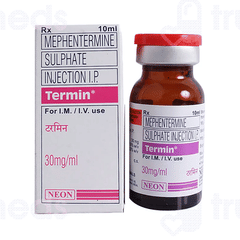
Mephentermine is available as an injectable solution. It is administered either intramuscularly or by slow intravenous infusion.
Age and Dose Restrictions
Mephentermine is meant for use in adults only.
Contraindications
Mephentermine is contraindicated in individuals with tachyarrhythmias or ventricular arrhythmias, severe coronary artery disease, and angle-closure glaucoma. It should not be used during cyclopropane or halogenated anaesthesia.
Other Medications to Avoid
This medicine may interact with monoamine oxidase inhibitors (such as phenelzine and tranylcypromine), tricyclic antidepressants (like amitriptyline, and clomipramine), ergot alkaloids (such as ergotamine), and oxytocic medicines (like oxytocin).
Overdose and Missed Dose
- Mephentermine is administered in clinical settings under medical supervision, which significantly reduces the risk of accidental overdose. However, excessive dosing may cause a hypertensive crisis (dangerously high blood pressure), rapid or irregular heartbeat, severe headache, stroke, myocardial ischaemia (reduced blood flow to the heart), and in serious cases, seizures or psychosis. These require immediate emergency medical intervention.
As Mephentermine is given by a healthcare professional in a hospital or clinical setting, dose management is handled by your medical team. If a scheduled dose is missed or delayed, your doctor or nurse will advise on the appropriate course of action.
Management of Side Effects
Most side effects are temporary and generally harmless and resolve when discontinuing this medicine. However, if you experience any severe side effects or worsening of any of the symptoms, please consult your doctor.
If experiencing dizziness, ensure adequate hydration by drinking water regularly.
Use in Driving and Operating Machinery
Mephentermine may affect abilities to drive or operate heavy machinery due to potential side effects like dizziness or restlessness. Caution is advised.
Use in Pregnancy and Lactation
Mephentermine is not recommended during pregnancy and lactation unless explicitly advised by a doctor. Consult your doctor for guidance before use if you are pregnant or breastfeeding.
Caution in Other Conditions
Individuals with severe renal impairment or those with a history of psychiatric disorders should use Mephentermine with caution.
Care should also be exercised in geriatric patients due to increased sensitivity to the medicine's effects.
Special Dietary and Lifestyle Recommendations
Avoid tyramine-rich foods such as aged cheeses, smoked or cured meats, and certain alcoholic beverages to prevent hypertensive crises.
Maintain adequate hydration especially if experiencing side effects such as sweating or nausea.
Engage in stress reduction techniques like meditation or gentle yoga to manage symptoms of restlessness or anxiety induced by Mephentermine.
Ensure a well-balanced diet to support overall health and recovery, particularly if recovering from conditions that required the use of Mephentermine.
Frequently asked questions
Is Mephentermine used as an anabolic steroid?
No, Mephentermine is not an anabolic steroid. It is a type of medicine called a sympathomimetic amine and is primarily used to manage low blood pressure.
Can Mephentermine disrupt my sleep?
Mephentermine can potentially cause restlessness and insomnia as side effects in some people. However, everyone reacts differently to medicines, so this may not be the case for all.
Does Mephentermine play any role in fertility?
There is no concrete scientific evidence suggesting that Mephentermine affects fertility. However, if you are planning to conceive and have concerns about this, please consult your doctor before starting this medication.
Are there any specific foods I should avoid while on Mephentermine?
Patients on Mephentermine should avoid tyramine-rich foods as they can cause a sudden and dangerous increase in blood pressure known as a hypertensive crisis.
Is it safe to use Mephentermine every day?
The safety of daily use of Mephentermine depends on the individual patient's health condition and the doctor's recommendation. Always follow your doctor's guidance about how to use this medicine.
How long does it take for Mephentermine to start working?
After administration, Mephentermine starts working within 5-15 minutes if given intramuscularly (injected into a muscle) and even faster if given intravenously (injected into a vein).
Is there an ideal time to administer Mephentermine?
Mephentermine is usually administered when there is a need to manage low blood pressure, particularly in emergency situations such as during surgery. There isn't an 'ideal time' per se as its usage is dependent on the specific medical circumstance at hand.
What is the use of Mephentermine?
Mephentermine is used to treat low blood pressure (hypotension), especially when it occurs during spinal anaesthesia or surgical procedures. It works by stimulating the heart and constricting blood vessels, which helps increase blood pressure and maintain adequate blood flow to vital organs.
List of medicines for Mephentermine
Company
About UsHealth ArticleHealth StoriesHealth LibraryDiseases & Health ConditionsAyurvedaUnderstanding Generic MedicinesAll MedicinesAll BrandsNeed HelpFAQSecuritySavings CalculatorAdvertise with UsSubscribe
Registered Office Address
Grievance Officer
Download Truemeds


Contact Us
Our customer representative team is available 7 days a week from 9 am - 9 pm.
v4.28.16

2026 - Truemeds | All rights reserved. Our content is for informational purposes only. See additional information.

Our Payment Partners