

- Medicines
- Personal Care
- Skin Cream
- Sunscreen
- Face Wash
- Skin and Body Soap
- Acne Care
- Body Lotions
- Moisturising Lotion
- Moisturising Cream
- Mosquito Repellent
- Moisturising Gel
- Body Wash
- Hair Oils
- Hair Shampoo
- Hair Conditioners
- Hair Supplements
- Hair Colour
- Hair Serum
- Hair Mask
- Hair Solutions
- Baby Diapers and Wipes
- Baby Lotion and Moisturising Cream
- Baby Bath Essentials
- Baby Skin Care
- Baby and Infant Food
- Baby Healthcare
- Women Multivitamins
- Ovulation Test Kit and Women Intimate Care
- Sanitary Pads
- Nutritional Drinks
- Condoms
- Lubricants
- Massage Gels
- Personal Body Massagers
- Men Performance Booster
- Sexual Health Supplements
- Massage Oils
- Ayurveda
- Tooth Paste
- Mouth Ulcer Gel
- Mouthwash
- Toothache and Gum Pain
- Tooth Brush
- Gargle Solution
- Orthopaedic Supports
- Adult Diapers
- Footwear
- Mobility and Support Accessories
- Urinary Support and Care
- Health Conditions
- Bone and Joint Care
- Digestive Care
- Eye Care
- Pain Relief
- Smoking Cessation
- Liver Care
- Stomach Care
- Cold and Cough
- Heart Care
- Kidney Care
- Piles, Fissures & Fistula
- Respiratory Care
- Mental Wellness
- Derma Care
- Pre and Probiotics
- Acidity
- Gas
- Constipation
- Loose Motion/Diarrhoea
- Digestive Fibres
- Digestive Enzymes
- Eye Lubricant Drops
- Lens Solution
- Safety Eye Wear
- Eye Cream
- Eye Vitamins and Supplements
- Eye Drops
- Eye Ointment and Gel
- Nicotine Patch
- Nicotine Gum
- Nicotine Lozenges
- Cough Syrups
- Chest Rubs and Balms
- Nasal Spray
- Lozenges
- Inhalant Capsules
- Cold and Cough Tablets
- Vitamins & Supplements
- Diabetes Care
- Healthcare Devices
- Homeopathic Medicine
- Health Guide
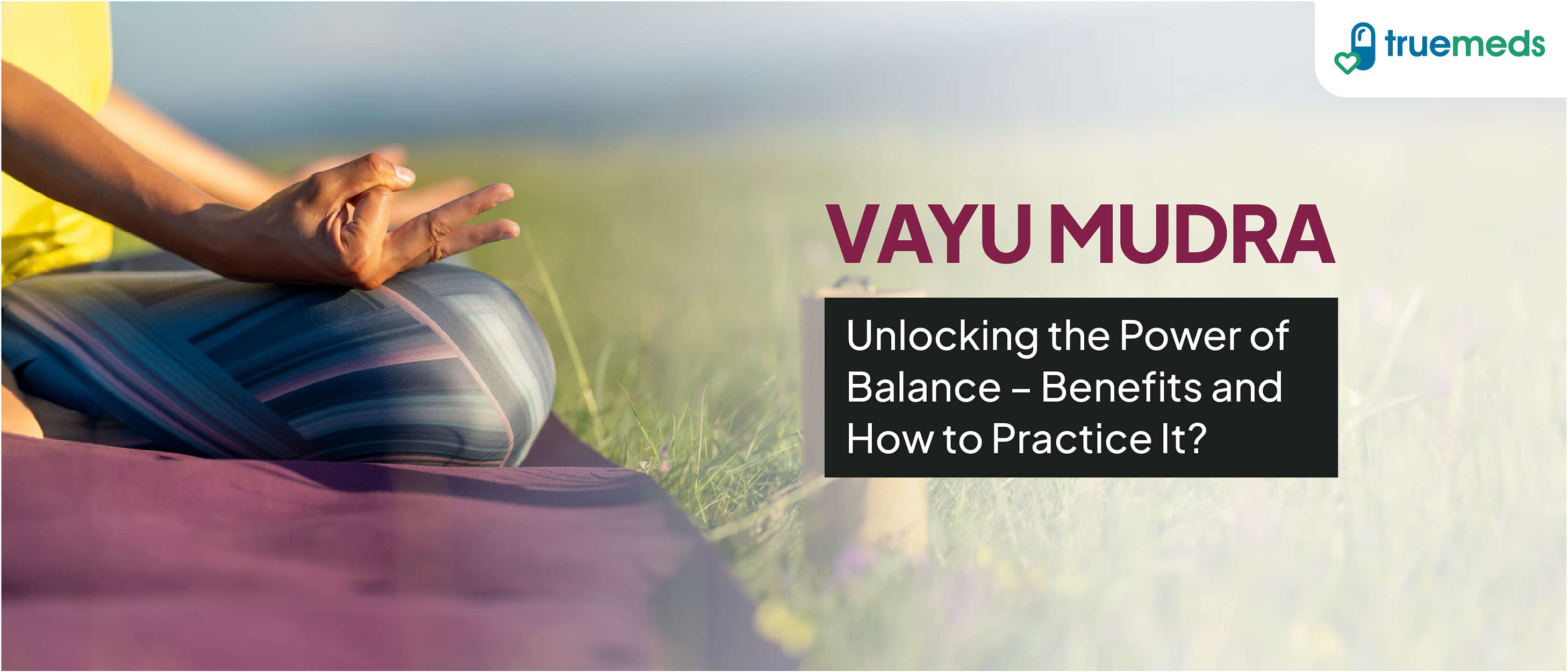
Benefits of Vayu Mudra and How to Do It
Last updated on : 30 Nov, 2025
Read time : 8 min
Explore the potential benefits of Vayu Mudra, an ancient yoga technique traditionally believed to help balance the air element (Vata Dosha) within the body, which may support overall well-being. This practice is often recognized for its traditional therapeutic value, ranging from potentially easing joint stiffness to supporting mental clarity.
In this blog, we will explore how including Vayu Mudra into your daily routine might complement your health practices and vitality.
Let’s dig deeper into understanding what Vayu Mudra is and how it works.
What is Vayu Mudra?
Vayu Mudra is a specific Hasta Mudra (hand gesture) in yoga that focuses on the regulation of the air element (Vata Dosha) as per Ayurvedic principles. To perform this mudra, all you need are your fingers. In the context of traditional yoga and Ayurveda, balancing the flow of air (Vata) in your body is thought to help address various health concerns related to excess Vayu, such as:
- Temporary joint stiffness
- Bloating and gastric problems
- Restlessness associated with neurological disorders (Note: This is a complementary practice and not a cure)
By harmonising the air element, Vayu Mudra is traditionally believed to contribute to both physical and mental well-being. In the next section, we will explore the numerous benefits of practising this powerful mudra regularly.
How To Do Vayu Mudra?
To practice Vayu Mudra, follow these simple steps:
- Sit comfortably in a meditative posture like Sukhasana, Padmasana, or Vajrasana with your back straight.
- Place your hands over your knees with palms facing upwards.
- Gently fold your index finger and touch the base of your thumb, applying a very light pressure with your thumb on the index finger (This is the key position for Vayu Mudra).
- Keep the rest of the fingers straight and relaxed.
- Close your eyes, take deep breaths, and focus on your breathing or chant “Om.”
Practice Tip: The best time to practice Vayu Mudra is early in the morning during the Brahma Muhurta (approx. 4:00 AM to 6:00 AM) or Amrit Vela, when the stomach is empty. However, there are no strict rules regarding timing. It is advised to avoid practising immediately after meals, with a recommended gap of at least 2 hours after eating a heavy meal, or 45 minutes after a light snack.
Potential Benefits of Vayu Mudra
By practicing Vayu Mudra consistently, you may experience improvements in various aspects of your well-being, from digestive support to mental clarity. Below are the traditionally documented benefits of Vayu Mudra:
1. Supporting Digestive Health
Vayu Mudra is traditionally linked to regulating the Vata element, which can be particularly beneficial for digestive health. By potentially easing the buildup of excess air (Vayu), this mudra may help reduce common symptoms like bloating, flatulence, and other gastric issues. However, it is important to understand that the direct link between Vayu Mudra and the vagus nerve is not established by modern medical science. From a holistic perspective, the calming effect of the mudra and breath focus may support digestion and help ease mild symptoms of indigestion and acid reflux, promoting overall stomach comfort [1].
2. Relieving Joint Stiffness and Discomfort
Practising Vayu Mudra may help provide relief from mild discomfort and stiffness associated with conditions like rheumatism and mild sciatica. This mudra is believed to help balance the Vata, which can manifest as stiffness and pain. The practice is thought to improve the flow of Prana (life energy), which may indirectly aid in relaxing muscles and easing tension [2]. It can be combined with other yoga poses, such as Surya Namaskar, to strengthen the shoulders and back. By doing so, it may reduce stiffness in the neck, arm, shoulder, and chest, offering comfort and improved mobility.
3. Eases Symptoms of Chronic Joint Disorders (e.g., Arthritis)
By reducing trapped wind (Vayu) in the joints, Vayu Mudra is traditionally used to help relieve the feeling of inflammation and swelling associated with mild arthritis. A study on the effects of mudras in improving health suggested that Vayu mudra can be practiced to help control rheumatoid arthritis, although more rigorous clinical research is needed to confirm this [3]. Consistent practice is believed to help manage chronic but manageable arthritic pain and support flexibility. This should not replace prescribed medical treatment.
4. Supporting Mental Calm and Focus
Vayu Mudra practice can help support nervous system health and mental well-being by promoting peace of mind. The focused, slow breathing involved in the mudra can activate the parasympathetic nervous system, leading to a calming effect [4]. It helps ease stress, sadness, and anger, while also improving memory and concentration. By creating a calm and peaceful state, this mudra promotes overall mental health and emotional balance.
5. As a Complementary Practice for Neurological Conditions
Vayu Mudra is traditionally considered to have potential benefits for individuals with certain neurological conditions, such as Parkinson’s disease, but only as a complementary method. By encouraging a calm state and regulating Prana flow, this mudra may help in managing the restlessness and tremors associated with the condition [2]. It is vital to note that Vayu Mudra is a supportive practice and is not a primary treatment or cure for neurological disorders like Parkinson’s disease, paralysis, or hysteria.
6. Relief from Neck Stiffness
Combining Vayu Mudra with other yoga poses, such as Surya Namaskar, can be an effective way to complement the reduction of neck stiffness. These practices help strengthen the shoulders and back, which in turn can alleviate pain and improve flexibility in the neck area. By incorporating Vayu Mudra into your yoga routine, you can experience relief from neck stiffness and enjoy a greater range of motion.
7. Supports Mild Ear and Eye Discomfort
While specific benefits of Vayu Mudra for the ears and eyes are not widely documented in modern literature, the general improvement in relaxation and focus resulting from this practice can contribute to better overall health. The systemic effects of a calming practice, such as reducing stress and promoting better sleep, may indirectly support the health of sensory organs.
Conclusion
In conclusion, Vayu Mudra is a yoga practice that offers numerous potential benefits for both physical and mental well-being when practiced consistently and correctly. By correctly performing this simple hand gesture, you may help reduce minor joint pain and stiffness, including discomfort associated with Vata-related issues like mild rheumatoid arthritis and sciatica. Moreover, Vayu Mudra can help ease gastric issues such as bloating and indigestion, supporting better digestive health. For those dealing with neurological disorders like Parkinson’s disease, regular practice of Vayu Mudra must be used only as a complementary aid to control tremors and balance the body’s air element, always under the guidance of a healthcare professional.
Additionally, this mudra is believed to support immunity, calm stress, and contribute to improved emotional well-being by regulating the Vata dosha. Incorporating Vayu Mudra into your daily routine can be a valuable tool for holistic health management, leading to a more balanced and harmonious life.
Expert Quote
“Vayu Mudra, as per Yogic practices, is used to support the regulation of the air element in the body. It is often practised to help the body manage joint stiffness or restlessness. As with any yogic gesture, its benefits are subtle and should be experienced over time with proper awareness.“
Dr. Anindya Debnath
Frequently Asked Questions (FAQ)
Who should avoid Vayu mudra?
People with sleep deprivation, exhaustion, stress, cold, fever, flu, active cardiac issues, hypertension, or acute injuries to the wrist, arms, and shoulders should exercise caution or avoid practising Vayu mudra.
How does one activate Vayu mudra?
To activate Vayu mudra, sit comfortably, place your hands on your knees, bring the tips of your index fingers to the base of your thumbs, and press gently.
What are the key benefits of Vayu mudra?
Vayu mudra, associated with the Vata dosha, is traditionally believed to help fix imbalances linked to the air element, potentially easing symptoms like bloating, gas, and indigestion, and improving overall digestive health.
Is there a mudra that destroys all diseases?
While no single mudra can “destroy all diseases,” Apana Vayu Mudra (also known as Mritasanjivani Mudra) is known for its comprehensive health benefits, including detoxification and promoting heart health, and is often revered in traditional texts.
What are the benefits of practising Vayu mudra?
Vayu mudra may help support immunity, manage gastric problems, ease symptoms of Vata-related discomfort in Parkinson’s disease (as a complementary practice), relieve rheumatism and sciatica pain, improve memory, and calm stress.
What chakra is associated with Vayu mudra?
Vayu mudra is associated with balancing the Vata dosha and can be practised in conjunction with meditation focusing on the Heart Chakra (Anahata Chakra), as the air element governs this energy center.
Is there a mudra that gives instant energy?
While no specific mudra instantly boosts energy, practising Vayu mudra regularly can help improve overall well-being and vitality over time by promoting a balanced system.
References
[1] Deekshitulu, P. V. B. (2019). HEALTH FOR MUDRA THERAPY. Global Journal of Religions, 1(1). https://www.researchgate.net/publication/333531331_Global_Journal_of_Religions_HEALTH_FOR_MUDRA_THERAPY
[2] Nagendra, H. R., & Patil, S. (2020). Yoga and Ayurveda: The ultimate guide to a healthy life. New World Library.
[3] Sengupta, P., Venu, A., & Jayab, M. H. (2022). Effect of yoga mudras in improving the health of users: A precautionary measure practice in daily life for resisting the deadly COVID‑19 disease. Journal of Ayurveda and Integrated Medical Sciences, 7(4), 1–7. https://doi.org/10.21760/jaims.7.4.1
[4] Sharma, V. K., & Sharma, M. (2021). Scientific evidence on the therapeutic potential of yoga mudras. Journal of Traditional and Complementary Medicine, 11(3), 205–210. https://doi.org/10.1016/j.jtcme.2020.08.006













Disclaimer
Our healthcare experts have carefully reviewed and compiled the information presented here to ensure accuracy and trustworthiness. It is important to note that this information serves as a general overview of the topic and is for informational purposes only. It is not intended to diagnose, prevent, or cure any health problem. This page does not establish a doctor-patient relationship, nor does it replace the advice or consultation of a registered medical practitioner. We recommend seeking guidance from your registered medical practitioner for any questions or concerns regarding your medical condition.
Popular Articles
Recommended Articles



Recent Articles









Company
About UsHealth ArticleHealth StoriesHealth LibraryDiseases & Health ConditionsAyurvedaUnderstanding Generic MedicinesAll MedicinesAll BrandsNeed HelpFAQSecuritySubscribe
Registered Office Address
Grievance Officer
Download Truemeds


Contact Us
Our customer representative team is available 7 days a week from 9 am - 9 pm.
v4.11.0

2026 - Truemeds | All rights reserved. Our content is for informational purposes only. See additional information.

Our Payment Partners