

- Medicines
- Personal Care
- Skin Cream
- Sunscreen
- Face Wash
- Skin and Body Soap
- Acne Care
- Body Lotions
- Moisturising Lotion
- Moisturising Cream
- Mosquito Repellent
- Moisturising Gel
- Body Wash
- Hair Oils
- Hair Shampoo
- Hair Conditioners
- Hair Supplements
- Hair Colour
- Hair Serum
- Hair Mask
- Hair Solutions
- Baby Diapers and Wipes
- Baby Lotion and Moisturising Cream
- Baby Bath Essentials
- Baby Skin Care
- Baby and Infant Food
- Baby Healthcare
- Women Multivitamins
- Ovulation Test Kit and Women Intimate Care
- Sanitary Pads
- Nutritional Drinks
- Condoms
- Lubricants
- Massage Gels
- Personal Body Massagers
- Men Performance Booster
- Sexual Health Supplements
- Massage Oils
- Ayurveda
- Tooth Paste
- Mouth Ulcer Gel
- Mouthwash
- Toothache and Gum Pain
- Tooth Brush
- Gargle Solution
- Orthopaedic Supports
- Adult Diapers
- Footwear
- Mobility and Support Accessories
- Urinary Support and Care
- Health Conditions
- Bone and Joint Care
- Digestive Care
- Eye Care
- Pain Relief
- Smoking Cessation
- Liver Care
- Stomach Care
- Cold and Cough
- Heart Care
- Kidney Care
- Piles, Fissures & Fistula
- Respiratory Care
- Mental Wellness
- Derma Care
- Pre and Probiotics
- Acidity
- Gas
- Constipation
- Loose Motion/Diarrhoea
- Digestive Fibres
- Digestive Enzymes
- Eye Lubricant Drops
- Lens Solution
- Safety Eye Wear
- Eye Cream
- Eye Vitamins and Supplements
- Eye Drops
- Eye Ointment and Gel
- Nicotine Patch
- Nicotine Gum
- Nicotine Lozenges
- Cough Syrups
- Chest Rubs and Balms
- Nasal Spray
- Lozenges
- Inhalant Capsules
- Cold and Cough Tablets
- Vitamins & Supplements
- Diabetes Care
- Healthcare Devices
- Homeopathic Medicine
- Health Guide
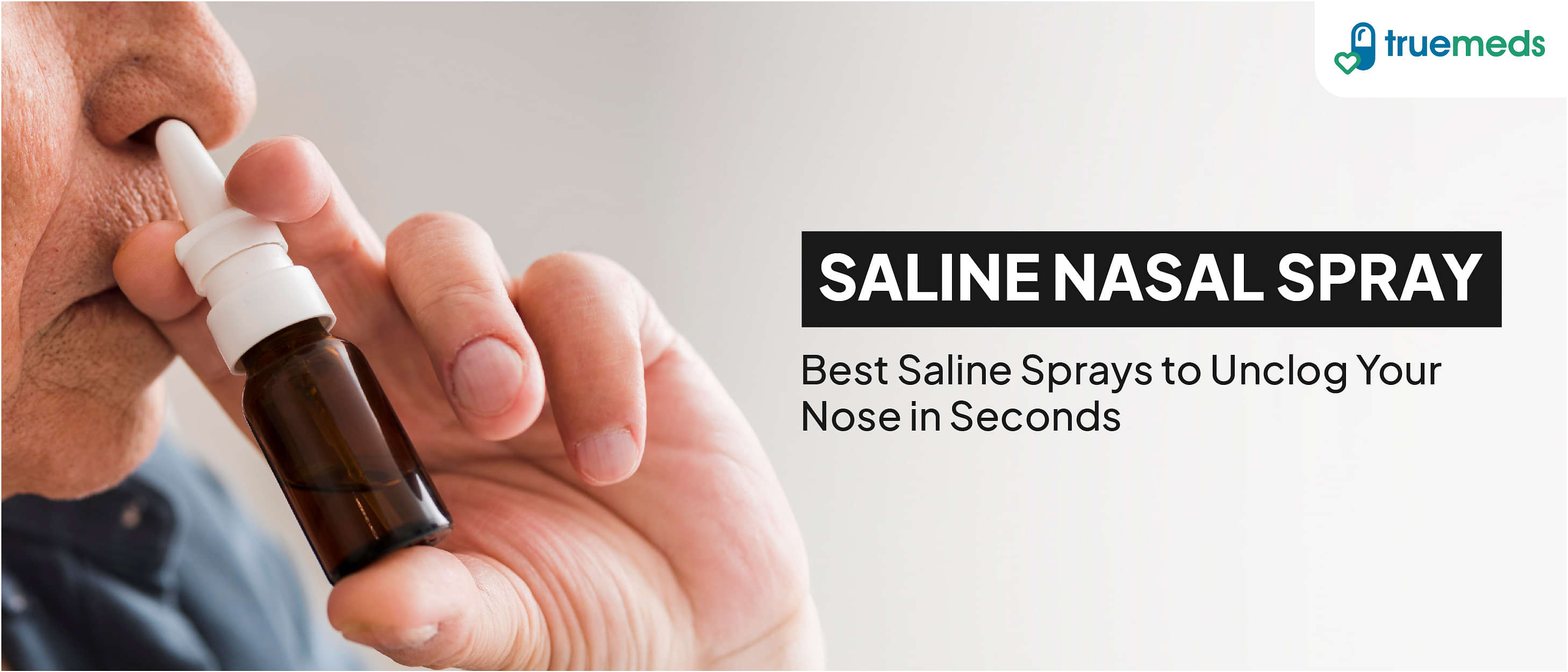
Saline Nasal Spray: Uses, Benefits, and Side Effects
Last updated on : 19 Nov, 2025
Read time : 6 min
Saline nasal sprays are a non-medicated solution, essentially sterile salt water (sodium chloride), designed to relieve common nasal symptoms. They are generally considered safe and effective for alleviating congestion, dryness, and irritation [1]. As they contain no active drug ingredients, saline nasal sprays are suitable for all age groups, from infants to older adults, and can be safely used alongside other treatments like steroid sprays or antihistamines.
In this article, we explore the mechanism of action, types, usage instructions, and potential side effects of saline nasal sprays to help you make an informed choice for nasal care.
Benefits of Saline Nasal Spray
Saline nasal sprays may provide several benefits that support nasal comfort and hygiene:
- Helps relieve nasal congestion by thinning thick mucus, making it easier to expel, and easing breathing [2].
- Moisturises nasal passages, effectively reducing dryness and irritation, particularly in dry climates or heated indoor environments.
- Keeping the nasal lining moist may help lower the risk of dryness-related nosebleeds [3].
- Rinsing out irritants, such as dust, dirt, pollen, and other environmental allergens [1].
- Preparing the nasal passages for other treatments, such as nasal steroid sprays, by clearing mucus and improving medication absorption.
- Generally considered safe for most people, with a low risk of side effects when used as directed.
- May help ease dryness caused by medical devices like Continuous Positive Airway Pressure (CPAP) machines for sleep apnea.
- Clinical studies suggest that using saline nasal drops may reduce the duration of the common cold in young children [4].
How to Use Saline Nasal Spray
To ensure effective use and proper hygiene, follow these simple steps:
- Gently blow your nose to clear out any existing mucus or debris.
- Wash your hands thoroughly to maintain hygiene and avoid introducing bacteria into the nasal passages.
- Shake the bottle and remove the cap, preparing the spray according to the manufacturer’s instructions.
- Tilt your head back slightly while sitting or standing to allow the spray to reach the nasal passages effectively.
- Plug one nostril by gently pressing on one side of your nose, directing the spray into the other nostril.
- Place the tip of the spray bottle into the open nostril, aiming towards the back and side of the nose (away from the center septum), and squeeze or pump the bottle while gently inhaling.
- Repeat the process with the other nostril.
- Avoid blowing your nose immediately after using the spray, allowing the saline solution to work for a few minutes.
- If the tip of the spray bottle comes into contact with your nose, clean it with a clean tissue immediately. Do not rinse the tip with hot water and re-use immediately as this could introduce contaminants if not dried properly.
- Always follow the specific usage guidelines provided with the product, and consult your doctor or pharmacist if you have any questions.
Side Effects of Saline Nasal Spray
While saline nasal sprays are generally safe and well-tolerated, there are a few potential side effects to be aware of:
- Mild temporary irritation or stinging, especially if the nasal passages are already very dry or inflamed.
- Temporary runny nose or mild sneezing with frequent use, as the spray helps clear the nasal passages.
- Additional irritation or stinging from sprays containing preservatives, which some individuals may be sensitive to. Using preservative-free options may be advisable for frequent use.
- Rare allergic reactions (e.g., hives, difficulty breathing, or swelling of the face, lips, tongue, or throat). Discontinue use immediately and seek emergency medical care if you suspect an allergic reaction.
Conclusion
In summary, saline nasal sprays provide a safe and effective way to manage common nasal symptoms like congestion and dryness [2]. Their utility is rooted in simple mechanics: physically washing the nasal passages and providing moisture. They are a valuable first-line therapy for people of all ages and can be used frequently as needed. Always follow the instructions provided with the product and consult your doctor or ENT specialist if you have any concerns or questions about chronic nasal issues.
Frequently Asked Questions (FAQs)
Is it okay to use a saline nasal spray daily?
Saline nasal spray is generally considered safe for daily and frequent use because it is non-medicated and non-habit-forming. Unlike medicated decongestant sprays, it does not cause rebound congestion (rhinitis medicamentosa). However, it’s best to follow the usage instructions on the label and consult a healthcare provider if you have ongoing nasal symptoms or underlying health conditions [3].
At what age can kids use a saline nasal spray?
Saline nasal sprays, often sold as drops or fine mist sprays specifically formulated for pediatric use, are generally safe for use in infants and children of all ages. However, it is always recommended to consult a pediatrician before using any product, especially daily, on children under 4 years old.
Is saline spray good for a nose infection?
Saline nasal spray can help manage the symptoms of a nose infection (like sinusitis or a common cold) by flushing out mucus and potential irritants/bacteria, which may improve comfort and promote drainage. However, it is not a treatment for the underlying infection itself. A doctor must diagnose and prescribe appropriate treatment (like antibiotics, if bacterial) for the infection [2].
When should you use a saline nasal spray for a baby?
Saline nasal spray or drops can be used as needed for babies to help clear mucus and moisturise the nasal passages, especially 10-15 minutes before feeding or sleeping to improve breathing. Please consult a doctor before using this product on babies.
What is the difference between saline spray and nasal spray?
Saline spray contains only salt and sterile water, and sometimes preservatives. Other ‘nasal sprays’ may include active medications such as decongestants (e.g., oxymetazoline), steroids (e.g., fluticasone), or antihistamines. Saline sprays are safe for daily use and are non-habit-forming, while medicated sprays require careful use according to a doctor’s recommendation.
Which is the best saline nasal spray?
There is no single “best” saline nasal spray. They are largely interchangeable, though variations exist in concentration (isotonic vs. hypertonic) and delivery mechanism (mist, jet, or drops). Isotonic (0.9% salt) is generally preferred for daily hydration, while hypertonic (greater than 0.9%) may be more effective for severe congestion but can cause more stinging. The best choice comes down to personal preference for the device and a healthcare provider’s recommendation based on your specific condition and symptoms.
References
[1] Santoro, E., Kalita, P., & Novak, P. (2021). The role of saline nasal sprays or drops in nasal hygiene: a review of the evidence and clinical perspectives. Rhinology Online, 4(4), 1–16. https://doi.org/10.4193/rhinol/20.072
[2] Head, K., Glew, K., Mattos, J., & Alt, J. (2018). Nasal saline irrigation in children with acute respiratory tract infections: A systematic review and meta-analysis. The Laryngoscope, 128(3), 754–761. https://doi.org/10.1002/lary.26715
[3] National Institute of Allergy and Infectious Diseases (NIAID). (n.d.). Using nasal washes to relieve congestion. Retrieved October 25, 2025, from https://www.niaid.nih.gov/diseases-conditions/nasal-washes-relieve-congestion
[4] Watson, P. (2024, September 11). Saline nasal drops reduce the duration of the common cold in young children by two days. ERS – European Respiratory Society. https://www.ersnet.org/news-and-features/news/saline-nasal-drops-reduce-the-duration-of-the-common-cold-in-young-children-by-two-days/












Disclaimer
Our healthcare experts have carefully reviewed and compiled the information presented here to ensure accuracy and trustworthiness. It is important to note that this information serves as a general overview of the topic and is for informational purposes only. It is not intended to diagnose, prevent, or cure any health problem. This page does not establish a doctor-patient relationship, nor does it replace the advice or consultation of a registered medical practitioner. We recommend seeking guidance from your registered medical practitioner for any questions or concerns regarding your medical condition.
Popular Articles


Recommended Articles




Recent Articles










Company
About UsHealth ArticleHealth StoriesHealth LibraryDiseases & Health ConditionsAyurvedaUnderstanding Generic MedicinesAll MedicinesAll BrandsNeed HelpFAQSecuritySubscribe
Registered Office Address
Grievance Officer
Download Truemeds


Contact Us
Our customer representative team is available 7 days a week from 9 am - 9 pm.
v4.10.1

2025 - Truemeds | All rights reserved. Our content is for informational purposes only. See additional information.
Our Payment Partners