

- Medicines
- Personal Care
- Skin Cream
- Sunscreen
- Face Wash
- Skin and Body Soap
- Acne Care
- Body Lotions
- Moisturising Lotion
- Moisturising Cream
- Mosquito Repellent
- Moisturising Gel
- Body Wash
- Hair Oils
- Hair Shampoo
- Hair Conditioners
- Hair Supplements
- Hair Colour
- Hair Serum
- Hair Mask
- Hair Solutions
- Baby Diapers and Wipes
- Baby Lotion and Moisturising Cream
- Baby Bath Essentials
- Baby Skin Care
- Baby and Infant Food
- Baby Healthcare
- Women Multivitamins
- Ovulation Test Kit and Women Intimate Care
- Sanitary Pads
- Nutritional Drinks
- Condoms
- Lubricants
- Massage Gels
- Personal Body Massagers
- Men Performance Booster
- Sexual Health Supplements
- Massage Oils
- Ayurveda
- Tooth Paste
- Mouth Ulcer Gel
- Mouthwash
- Toothache and Gum Pain
- Tooth Brush
- Gargle Solution
- Orthopaedic Supports
- Adult Diapers
- Footwear
- Mobility and Support Accessories
- Urinary Support and Care
- Health Conditions
- Bone and Joint Care
- Digestive Care
- Eye Care
- Pain Relief
- Smoking Cessation
- Liver Care
- Stomach Care
- Cold and Cough
- Heart Care
- Kidney Care
- Piles, Fissures & Fistula
- Respiratory Care
- Mental Wellness
- Derma Care
- Pre and Probiotics
- Acidity
- Gas
- Constipation
- Loose Motion/Diarrhoea
- Digestive Fibres
- Digestive Enzymes
- Eye Lubricant Drops
- Lens Solution
- Safety Eye Wear
- Eye Cream
- Eye Vitamins and Supplements
- Eye Drops
- Eye Ointment and Gel
- Nicotine Patch
- Nicotine Gum
- Nicotine Lozenges
- Cough Syrups
- Chest Rubs and Balms
- Nasal Spray
- Lozenges
- Inhalant Capsules
- Cold and Cough Tablets
- Vitamins & Supplements
- Diabetes Care
- Healthcare Devices
- Homeopathic Medicine
- Health Guide
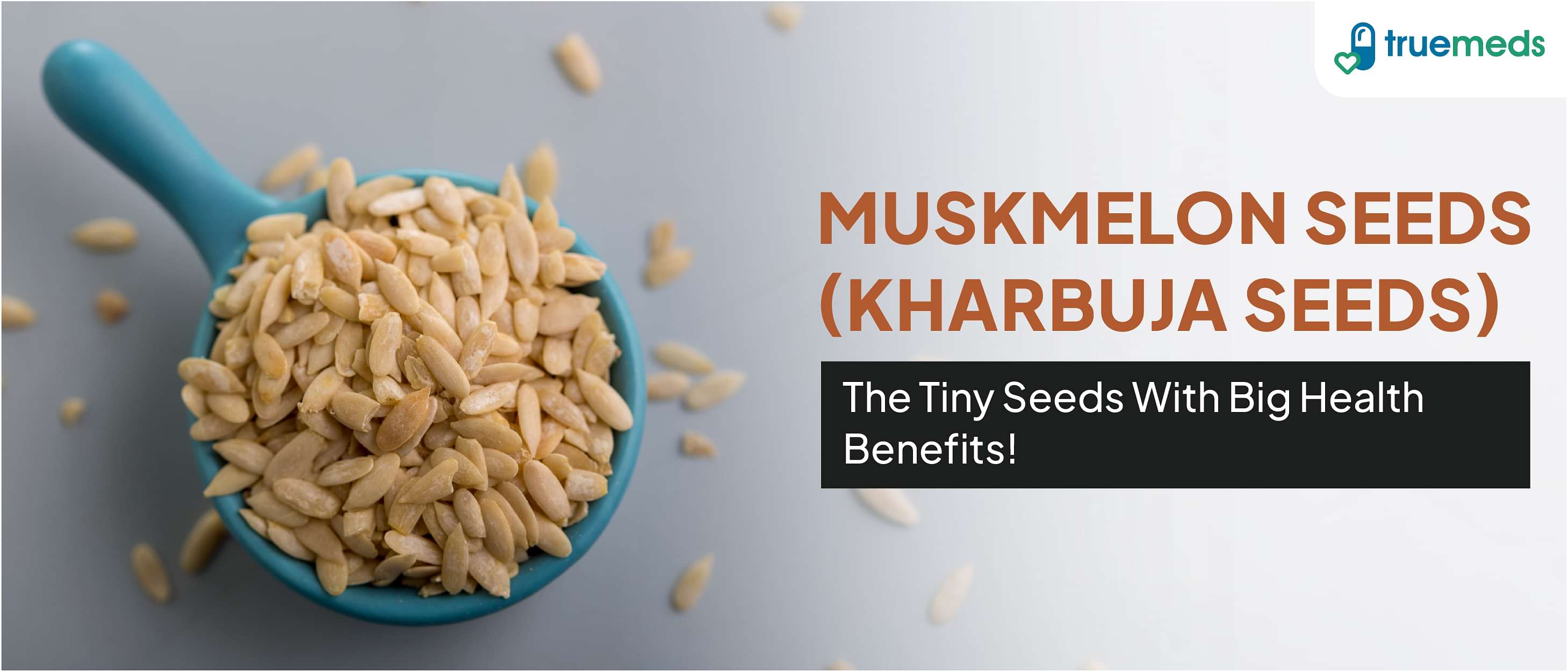
Top 10 Muskmelon/Kharbuja Seeds Nutritional Benefits You Need to Know
Last updated on : 01 Dec, 2025
Read time : 7 min
Muskmelon (Cucumis melo L.) is a nutritious and therapeutic fruit in the Cucurbitaceae family, which includes cucumbers, squash, pumpkins, and gourds. Commonly known as musk melon or cantaloupe, it is a fast-growing annual vine believed to have originated in regions of India, Africa, or the Levant. It thrives in warm tropical and subtropical climates. While the pulp is a popular summer fruit, the often-discarded seeds offer a dense profile of essential nutrients and phytochemicals.
Nutritional Composition of Muskmelon Seeds
Muskmelon seeds are a nutritious plant-based source of macro and micronutrients [1]. They typically contain around 32–33 g protein, 37 g fat (primarily unsaturated), and approximately 23 g carbohydrates per 100 g [2]. They also provide essential minerals like magnesium, potassium, phosphorus, iron, calcium, zinc, and B vitamins.
Recent analysis of seed fatty acids shows they are rich in omega‑6 linoleic acid (around 62–67% of total fats), with moderate omega‑9 and saturated fats. Their amino acid profile, while noted to be lower in some essential amino acids like lysine (“first limiting amino acid”), still supplies essential amino acids such as leucine and phenylalanine. Magnesium, potassium, and phosphorus are abundant in muskmelon seeds.
Health Benefits of Muskmelon Seeds
Incorporating muskmelon seeds into your diet may contribute to several areas of health:
- Protein & Plant Nutrition: Muskmelon seeds are a rich plant-based protein source (~32 g/100 g), making them a favourable food for vegans and vegetarians looking to increase protein intake [2].
- Digestive Health: Their high fibre content may help support bowel health, promote regular bowel movements, and contribute to a healthy gut microbiome.
- Heart Health: They are rich in heart-healthy poly- and monounsaturated fats (omega-6, omega-9) and are a good source of potassium [1]. This combination may help support cardiovascular health and may contribute to healthy blood pressure regulation by helping to balance sodium levels [3].
- Bone Support: Muskmelon seeds contribute vital minerals like calcium, magnesium, and phosphorus, all of which are essential components for bone density and strength [2].
- Immunity & Antioxidants: Vitamins A, C, E and minerals like zinc are known to be cofactors in immune function [1]. These nutrients offer antioxidant support and may help protect cells from oxidative stress.
- Skin & Hair Wellness: The combination of protein, healthy fats, and antioxidants (such as Vitamin E) found in the seeds helps maintain healthy skin structure and hair vitality [1].
- Blood Sugar Regulation & Satiety: The presence of both fibre and protein may help slow down the digestive process and glucose absorption, supporting satiety and contributing to more stable post-meal blood sugar levels [4].
- Anti-inflammatory Potential: Preliminary research, often conducted in animal models or in vitro (lab) studies, suggests that certain compounds in muskmelon seed extracts may exhibit mild anti-inflammatory and antimicrobial properties [2], [6].
- Potential for Brain Support: Muskmelon seeds contain essential fatty acids and amino acids (like tryptophan and arginine), which are precursors to neurotransmitters, and antioxidants that protect neurological cells [1], [6]. While the evidence is preliminary and primarily focused on extracts, these components may support overall cognitive health.
- Eye Health: Muskmelon seeds contain carotenoids like beta‑carotene and are a source of vitamin A precursors [2]. These compounds are crucial for vision health and may help protect against age-related eye issues.
Muskmelon Seeds Side Effects and Precautions
Muskmelon seeds are beneficial when consumed in moderation. However, it is important to distinguish the effects of the seeds from the fruit pulp when discussing side effects, as the seeds are distinct in composition.
- Digestive Discomfort: Consuming large quantities of fibre-rich seeds at a time may cause digestive issues, such as bloating, gas, and diarrhoea, particularly if they are not introduced gradually into the diet.
- Electrolyte Balance (High Potassium): This seed contains electrolytes like potassium. Consuming excessive amounts of any high-potassium food, especially in individuals with pre-existing kidney problems or those taking certain medications (like ACE inhibitors), can disrupt electrolyte balance and potentially lead to complications such as hyperkalemia (high blood potassium) [5].
- Allergic Reactions: As with any seed, there is always a potential for allergic reactions in sensitive individuals.
Note on Fruit Pulp Side Effects (Clarification): The side effects related to a “Spike in Blood Sugar” and “Weight Gain” are more accurately attributed to the fruit pulp when consumed in large, excessive quantities due to its higher sugar content and glycemic load, not typically the seeds themselves, which are high in protein and fat.
How to Include Muskmelon Seeds in Your Diet
There are numerous ways to consume muskmelon seeds, making them a versatile addition to your meals.
To prepare seeds:
- Remove pulp, rinse, and dry thoroughly.
- Roast lightly for a crunchy snack or to sprinkle over salads, fruits, yoghurt, or smoothies.
- Grind into powder for dips or spreads (e.g., seed butter) or bake into breads, cakes, or cookies.
- Use as a thickener in soups or stews.
- Make homemade seed milk (soak, blend, strain).
Precaution: It is always prudent to consult your healthcare provider if you have kidney disorders, known allergies, or are on specific medications before significantly increasing your intake of any high-potassium or highly concentrated food source.
Muskmelon seeds are a nutrient-dense food rich in plant protein, healthy fats (especially omega-6), fibre, vitamins, minerals, and antioxidants. Eating them in moderation can be a beneficial part of a balanced diet that may help support digestion, heart health, skin, and hair wellness. However, claims of curing disease, alleviating stress by increasing brain oxygen, or topical cosmetic effects are generally not backed by robust, large-scale human clinical studies. Always consult a healthcare provider or a registered dietitian before using them for therapeutic purposes or making significant changes to your nutritional regimen.
Frequently Asked Questions (FAQs)
Are muskmelon seeds safe to eat?
Yes, muskmelon seeds are edible and nutritious; they provide beneficial amounts of protein, fibre, healthy fats, vitamins, and minerals. Roasting muskmelon seeds can enhance their flavour and make them a crunchy and satisfying snack.
How many muskmelon seeds can be safely eaten per day?
There is no official or established daily intake limit. As a general guideline, consuming them in moderation—for example, 1 to 2 tablespoons of dried/roasted seeds—as part of a balanced diet is generally considered appropriate for most healthy adults.
How do you eat musk melon seeds?
Clean the seeds, roast or dry them, and then enjoy them in various ways, such as alone, sprinkled in salads, blended into smoothies, mixed into baked goods, or prepared as seed milk.
Are there any side effects to eating muskmelon seeds?
Generally safe in moderation. Excessive intake may cause gastrointestinal discomfort due to high fibre. High potassium content could be a concern for those with pre-existing kidney dysfunction or those taking certain blood pressure medications.
Why should we not eat muskmelon at night?
There’s no medical prohibition. However, high water and sugar content in the fruit pulp late at night may lead to mild digestive discomfort, frequent urination, or disturbed sleep in sensitive individuals.
How do you use muskmelon seeds for skin?
While seeds contain Vitamin E and antioxidants, claims of significant topical skin benefits for the general population lack definitive clinical backing. You may use ground seeds or derived oil for moisturising purposes, but the evidence is anecdotal. Always perform a small patch-test to check for sensitivity before applying any new ingredient to the skin.
References
[1] Chaudhary, M., Singh, R., & Chauhan, E. S. (2024). An overview: health benefits, nutritional profile of Cucurbitaceae family plants (muskmelon and pumpkin) seeds and their possible usage in energy bars for athletes. Food Research, 8(2), 397–401. https://doi.org/10.26656/fr.2017.8(2).161
[2] Hassan, S. A., Khalid, S., Javaid, H., Zafar, S., Abdi, G., & Aadil, R. M. (2025). Unlocking the potential of muskmelon seeds as sustainable ingredients for the food industry. Food Chemistry Advances, 7, 101008. https://doi.org/10.1016/j.focha.2025.101008
[3] Houston, M. C. (2005). The importance of potassium in managing hypertension. Current Hypertension Reports, 7(1), 48–56. https://doi.org/10.1007/s11906-005-0044-z
[4] Wolever, T. M., Bolognesi, C., & Wang, Q. (2000). High-protein weight-loss diets. The Journal of Nutrition, 130(2), 329S–330S. https://doi.org/10.1093/jn/130.2.329S
[5] Palmer, B. F. (2015). Regulation of potassium homeostasis. Clinical Journal of the American Society of Nephrology, 10(6), 1050–1060. https://doi.org/10.2215/CJN.08580814
[6] Khalid, W., Ahmad, A., Wani, I. A., & Masoodi, F. A. (2021). Chemical composition and health benefits of melon seed: A review. Journal of Applied and Food Technology, 11(1), 1-13. https://www.researchgate.net/publication/351109040_Chemical_Composition_and_Health_Benefits_of_Melon_Seed_A_Review













Disclaimer
Our healthcare experts have carefully reviewed and compiled the information presented here to ensure accuracy and trustworthiness. It is important to note that this information serves as a general overview of the topic and is for informational purposes only. It is not intended to diagnose, prevent, or cure any health problem. This page does not establish a doctor-patient relationship, nor does it replace the advice or consultation of a registered medical practitioner. We recommend seeking guidance from your registered medical practitioner for any questions or concerns regarding your medical condition.
Popular Articles



Recommended Articles



Recent Articles







Company
About UsHealth ArticleHealth StoriesHealth LibraryDiseases & Health ConditionsAyurvedaUnderstanding Generic MedicinesAll MedicinesAll BrandsNeed HelpFAQSecuritySubscribe
Registered Office Address
Grievance Officer
Download Truemeds


Contact Us
Our customer representative team is available 7 days a week from 9 am - 9 pm.
v4.10.2

2025 - Truemeds | All rights reserved. Our content is for informational purposes only. See additional information.

Our Payment Partners




