

- Medicines
- Personal Care
- Skin Cream
- Sunscreen
- Face Wash
- Skin and Body Soap
- Acne Care
- Body Lotions
- Moisturising Lotion
- Moisturising Cream
- Mosquito Repellent
- Moisturising Gel
- Body Wash
- Hair Oils
- Hair Shampoo
- Hair Conditioners
- Hair Supplements
- Hair Colour
- Hair Serum
- Hair Mask
- Hair Solutions
- Baby Diapers and Wipes
- Baby Lotion and Moisturising Cream
- Baby Bath Essentials
- Baby Skin Care
- Baby and Infant Food
- Baby Healthcare
- Women Multivitamins
- Ovulation Test Kit and Women Intimate Care
- Sanitary Pads
- Nutritional Drinks
- Condoms
- Lubricants
- Massage Gels
- Personal Body Massagers
- Men Performance Booster
- Sexual Health Supplements
- Massage Oils
- Ayurveda
- Tooth Paste
- Mouth Ulcer Gel
- Mouthwash
- Toothache and Gum Pain
- Tooth Brush
- Gargle Solution
- Orthopaedic Supports
- Adult Diapers
- Footwear
- Mobility and Support Accessories
- Urinary Support and Care
- Health Conditions
- Bone and Joint Care
- Digestive Care
- Eye Care
- Pain Relief
- Smoking Cessation
- Liver Care
- Stomach Care
- Cold and Cough
- Heart Care
- Kidney Care
- Piles, Fissures & Fistula
- Respiratory Care
- Mental Wellness
- Derma Care
- Pre and Probiotics
- Acidity
- Gas
- Constipation
- Loose Motion/Diarrhoea
- Digestive Fibres
- Digestive Enzymes
- Eye Lubricant Drops
- Lens Solution
- Safety Eye Wear
- Eye Cream
- Eye Vitamins and Supplements
- Eye Drops
- Eye Ointment and Gel
- Nicotine Patch
- Nicotine Gum
- Nicotine Lozenges
- Cough Syrups
- Chest Rubs and Balms
- Nasal Spray
- Lozenges
- Inhalant Capsules
- Cold and Cough Tablets
- Vitamins & Supplements
- Diabetes Care
- Healthcare Devices
- Homeopathic Medicine
- Health Guide
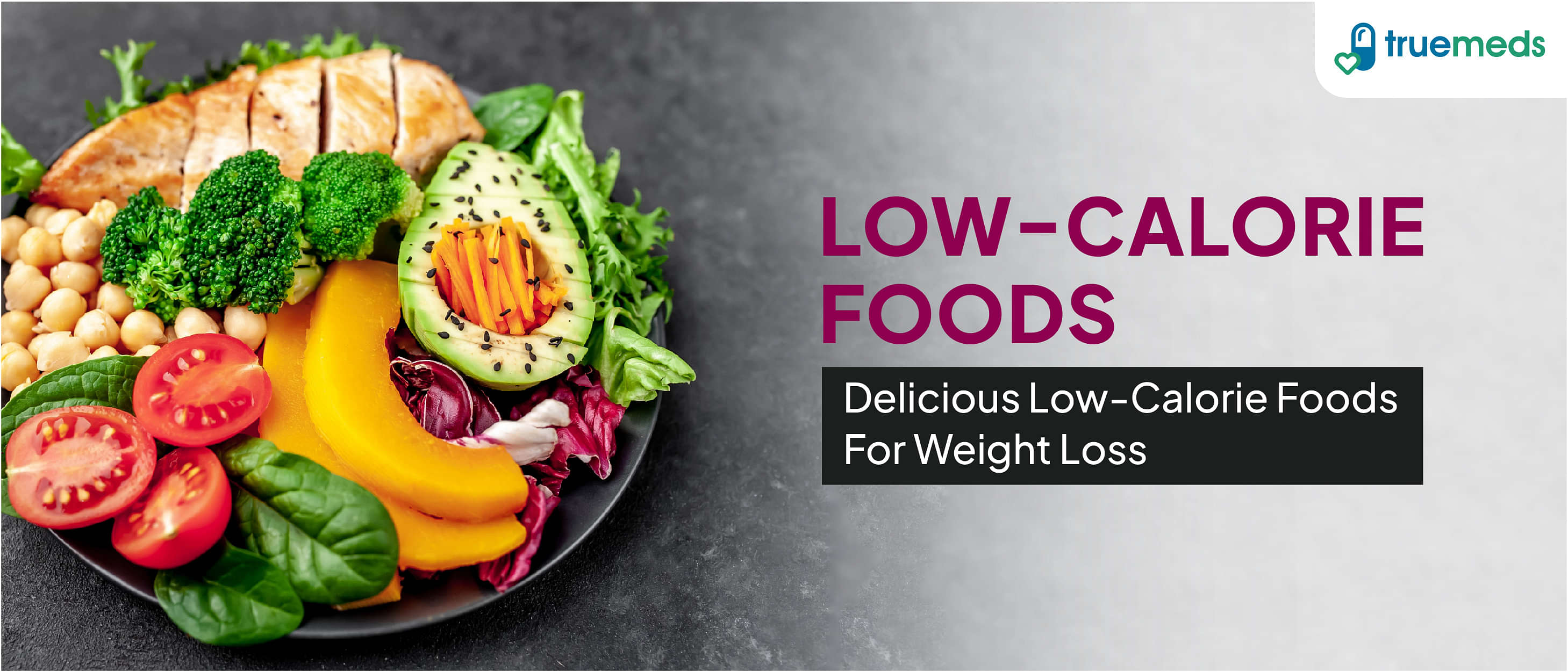
Low-Calorie Foods: A Complete Guide to Healthy Choices
Last updated on : 01 Dec, 2025
Read time : 9 min
Nutrient-dense food choices can support weight management and contribute to overall well-being when included as part of a balanced diet. These options provide essential vitamins, minerals, and fibre while keeping calorie intake in check. By incorporating these foods into your diet, you can feel full and satisfied, making healthy eating a sustainable choice.
In this guide, we’ll explore the world of low-calorie, high-nutrient foods and how they can support your health goals.
What Are Low-Calorie, Nutrient-Dense Foods?
Low-calorie foods are generally defined as those that offer a high ratio of essential nutrients (vitamins, minerals, fibre) relative to their calorie count (high nutrient density). These options include a wide range of fruits, vegetables, lean proteins, and low-fat dairy products.
Examples of highly nutrient-dense, lower-calorie foods include:
- Leafy greens like spinach and lettuce.
- Cruciferous vegetables such as broccoli and brussels sprouts.
- Fruits like strawberries and cantaloupe.
These foods are naturally rich in fibre, vitamins, and minerals, making them a helpful part of a healthy diet. By focusing on nutrient density, you can often enjoy larger, more satisfying portions without exceeding your daily caloric goals.
List of Low-Calorie Foods
When incorporating these foods into your diet, it’s essential to choose a variety of options to ensure you are getting all the necessary nutrients.
- Apples – A medium-sized apple contains approximately 95 calories and is rich in fibre, vitamins, and antioxidants, making it a healthy and satisfying snack [1].
- Strawberries – Strawberries are one of the lowest-calorie fruits, with approximately 32 calories per 100 grams [2]. They are high in vitamin C and fibre, with a half cup of diced strawberries providing a significant portion of the Recommended Daily Allowance (RDA) of vitamin C.
- Papaya – Papaya offers a high amount of vitamins A and C, potassium, and an enzyme called papain, which may aid digestion [4]. It contains about 43 calories per 100 grams [2].
- Oranges – A medium-sized orange contains around 62 calories [2] and is high in vitamin C, fibre, and flavonoids, which have various health benefits.
- Lychees – Lychees have approximately 66 calories per 100 grams [2] and are a good source of vitamin C, potassium, and fibre.
- Grapefruits – Grapefruits are naturally low in calories, with a half grapefruit containing about 52 calories [2]. They are rich in vitamin C, vitamin A, and fibre, and may support satiety, making them a useful choice for balanced meals.
Low-Calorie Leafy Green Vegetables
Leafy green vegetables are excellent low-calorie options, often providing a high volume of food for very few calories.
- Swiss Chard – Swiss chard is a lower-calorie leafy green, containing about 35 calories per cup when cooked [5]. It is rich in vitamins A, C, and K, as well as magnesium and iron.
- Kale – Kale is a nutrient-dense leafy green with only about 49 calories per cup when cooked [2]. It is high in vitamins A, C, and K, and also contains calcium and iron.
- Spinach – Spinach is very low in calories, with about 41 calories per cup when cooked [2]. It is packed with vitamins A, C, and K, as well as iron and calcium.
- Root and Cruciferous Vegetables – Root and cruciferous vegetables are another group of nutrient-rich foods that are relatively low in calories.
- Radishes – Radishes are low in calories, containing about 19 calories per cup when sliced [2]. They are rich in vitamin C, potassium, and fibre, and are also a good source of antioxidants.
- Beetroot – Beetroot has approximately 43 calories per 100 grams when raw [2]. It is high in vitamins A and C, potassium, and fibre, and is known for its antioxidant properties [6].
- Broccoli – Broccoli is a popular cruciferous vegetable, containing about 55 calories per cup when cooked [2]. It is rich in vitamins C and K, fibre, and various antioxidants.
- Cauliflower – Cauliflower contains about 27 calories per cup when cooked [2]. It is rich in vitamins C and K, fibre, and is known for its potential anti-inflammatory properties.
Water-Rich Foods for Hydration
Foods with high water content contribute significantly to satiety and are often very low in calories.
- Watermelon – Watermelon is extremely low in calories, with about 30 calories per 100 grams [2]. It is rich in vitamin C, potassium, and its high water content makes it highly hydrating.
- Celery – Celery is known for being extremely low in calories, containing only about 6 calories per medium stalk [2]. It is high in fibre, vitamins A and K, and has a very high water content.
- Cucumbers – Cucumbers are low in calories, with about 16 calories per cup when sliced [2]. They are rich in vitamin C and potassium, and have a high water content, which aids in hydration.
Health Benefits of Prioritizing Nutrient-Dense Foods
Incorporating nutrient-dense, low-calorie foods into your diet can provide numerous health benefits beyond just weight management.
- Satiety and Calorie Control: These foods are often rich in fibre and water, which helps fill the stomach and increases feelings of fullness (satiety), naturally leading to a lower overall calorie intake [7].
- Improved Nutrient Intake: Focusing on these foods naturally boosts your intake of essential vitamins, minerals, and phytonutrients, which are vital for all bodily functions.
- Reduced Risk of Chronic Conditions: Diets rich in fruits and vegetables are consistently associated with a lower risk of developing various chronic conditions, including heart disease and type 2 diabetes [7].
By making these foods a regular part of your diet, you support your overall health and long-term wellness.
Practical Tips for Integrating Low-Calorie Foods
Adding low-calorie, nutrient-dense foods to your daily routine can be simple and delicious:
- Bulk up Meals: Incorporate leafy greens (spinach, kale) or water-rich vegetables (cabbage, shredded cucumber) into main dishes like curries, sabzis, omelettes, and soups to increase volume and nutrition without adding many calories.
- Smart Snacking: Replace high-calorie, processed snacks with high-water content fruits (watermelon, muskmelon) or raw vegetables (carrots, bell peppers, radishes).
- Choose Filling Combinations: Pair these foods with lean proteins (e.g., grilled chicken, paneer, lentils/dal) and whole grains (e.g., jowar or bajra roti, brown rice) for balanced meals. Broth-based soups and oatmeal made with water are also excellent options for filling and nutritious meals.
Portion Control: Avoiding Overconsumption
While low-calorie foods are beneficial, it’s important to remember that they still contribute to your overall calorie intake. Consuming excessive amounts can still lead to a calorie surplus.
- Focus on Balanced Meals: Ensure every meal includes a source of protein and healthy fats alongside the low-calorie vegetables and fruits. This combination is more satisfying and sustainable than relying on just vegetables, which helps reduce the likelihood of overeating later [7].
- Listen to Hunger Cues: Practise mindful eating, paying attention to your body’s signals of hunger and fullness, rather than relying solely on external portion measurements.
- Prioritize Whole Foods: Focus on whole, unprocessed foods like fresh vegetables, fruits, and lean proteins instead of relying on ultra-low-calorie processed snacks, which may contain artificial ingredients.
By implementing these strategies, you build a more balanced, satisfying, and sustainable eating pattern.
Conclusion
Low-calorie, nutrient-dense foods are an invaluable component of a balanced diet and can effectively support sustainable weight management and overall well-being. By thoughtfully integrating a variety of fruits, vegetables, whole grains, and lean proteins, you can create meals that are both highly nutritious and deeply satisfying. Ultimately, the focus should shift from simply counting calories to maximizing the nutritional quality and density of your diet to achieve long-term health benefits.
Frequently Asked Questions (FAQs)
What is the lowest-calorie vegetable?
The vegetable lowest in calories is watercress, with approximately 3.74 calories per 34-gram cup [6].
What are empty-calorie foods?
Empty-calorie foods provide energy primarily from added sugars and/or solid fats but offer little to no essential nutrients. Examples include soda, most commercial pastries, candy, and highly processed snacks.
Is 900 calories a day safe for weight loss?
No. For most adults, a daily intake of 900 calories is considered a very-low-calorie diet (VLCD), which is medically restricted and potentially unsafe without strict medical supervision. Such a severe restriction can lead to nutrient deficiencies and may slow down metabolism. It’s essential to follow a personalized diet plan recommended by a healthcare professional or a registered dietitian.
What food has no calories?
No food is completely calorie-free; however, plain water and black coffee/tea (without sugar or milk) are practically calorie-free and do not significantly impact daily intake. Very water-rich vegetables are extremely low in calories.
Is rice an empty calorie food?
No. Plain, cooked rice (especially brown rice) is a source of carbohydrates and, depending on the type, fibre and some minerals; it is not considered “empty calories.” However, its nutritional contribution is minimal compared to other whole grains, and its calorie density increases significantly when highly processed or served with large amounts of added fats (like ghee or butter).
What are low-calorie Indian vegetables?
Excellent low-calorie Indian vegetables include spinach (palak), bottle gourd (lauki), snake gourd (tindli), ridge gourd (torai), cauliflower (phoolgobhi), and cucumber (kheera).
References
[1] U.S. Department of Agriculture. (2023). Apples, raw, with skin (Food ID: 2345095). FoodData Central. https://www.ers.usda.gov/amber-waves/2024/february/ers-u-s-apples-slicing-through-the-data
[2] U.S. Department of Agriculture. (2023). FoodData Central (General search for specific foods like Strawberries, Papaya, Oranges, Lychees, etc.). https://fdc.nal.usda.gov/
[3] Newerli-Guz, J., Śmiechowska, M., Drzewiecka, A., & Tylingo, R. (2023). Bioactive Ingredients with Health-Promoting Properties of Strawberry Fruit (Fragaria x ananassa Duchesne). Molecules, 28(6), 2711. https://doi.org/10.3390/molecules28062711
[4] U.S. Department of Agriculture. (2023). Chard, swiss, cooked, boiled, drained, without salt (Food ID: 170401). FoodData Central. https://snaped.fns.usda.gov/resources/nutrition-education-materials/seasonal-produce-guide/swiss-chard
[5] Ghasemian, M., Owlia, S., & Owlia, M. B. (2016). Review of anti-inflammatory, antioxidant, and immunomodulatory effects of Beta vulgaris L. (Beetroot). International Journal of Food Properties, 19(3), 473–488. https://doi.org/10.1080/10942912.2015.1017478
[6] Rolls, B. J. (2009). The relationship between dietary energy density and energy intake. Physiology & Behavior, 97(5), 609–613. https://doi.org/10.1016/j.physbeh.2009.02.007
[7] World Health Organization. (2023). Healthy diet. https://www.who.int/health-topics/healthy-diet
[8] U.S. Department of Agriculture. (2023). Watercress, raw (Food ID: 170546). FoodData Central. https://plants.usda.gov/plant-profile/NAOF
















Disclaimer
Our healthcare experts have carefully reviewed and compiled the information presented here to ensure accuracy and trustworthiness. It is important to note that this information serves as a general overview of the topic and is for informational purposes only. It is not intended to diagnose, prevent, or cure any health problem. This page does not establish a doctor-patient relationship, nor does it replace the advice or consultation of a registered medical practitioner. We recommend seeking guidance from your registered medical practitioner for any questions or concerns regarding your medical condition.
Popular Articles



Recommended Articles



Recent Articles





Company
About UsHealth ArticleHealth StoriesHealth LibraryDiseases & Health ConditionsAyurvedaAll MedicinesAll BrandsNeed HelpFAQSecuritySubscribe
Registered Office Address
Grievance Officer
Download Truemeds


Contact Us
Our customer representative team is available 7 days a week from 9 am - 9 pm.
v4.8.2

2025 - Truemeds | All rights reserved. Our content is for informational purposes only. See additional information.

Our Payment Partners