

- Medicines
- Personal Care
- Skin Cream
- Sunscreen
- Face Wash
- Skin and Body Soap
- Acne Care
- Body Lotions
- Moisturising Lotion
- Moisturising Cream
- Mosquito Repellent
- Moisturising Gel
- Body Wash
- Hair Oils
- Hair Shampoo
- Hair Conditioners
- Hair Supplements
- Hair Colour
- Hair Serum
- Hair Mask
- Hair Solutions
- Baby Diapers and Wipes
- Baby Lotion and Moisturising Cream
- Baby Bath Essentials
- Baby Skin Care
- Baby and Infant Food
- Baby Healthcare
- Women Multivitamins
- Ovulation Test Kit and Women Intimate Care
- Sanitary Pads
- Nutritional Drinks
- Condoms
- Lubricants
- Massage Gels
- Personal Body Massagers
- Men Performance Booster
- Sexual Health Supplements
- Massage Oils
- Ayurveda
- Tooth Paste
- Mouth Ulcer Gel
- Mouthwash
- Toothache and Gum Pain
- Tooth Brush
- Gargle Solution
- Orthopaedic Supports
- Adult Diapers
- Footwear
- Mobility and Support Accessories
- Urinary Support and Care
- Health Conditions
- Bone and Joint Care
- Digestive Care
- Eye Care
- Pain Relief
- Smoking Cessation
- Liver Care
- Stomach Care
- Cold and Cough
- Heart Care
- Kidney Care
- Piles, Fissures & Fistula
- Respiratory Care
- Mental Wellness
- Derma Care
- Pre and Probiotics
- Acidity
- Gas
- Constipation
- Loose Motion/Diarrhoea
- Digestive Fibres
- Digestive Enzymes
- Eye Lubricant Drops
- Lens Solution
- Safety Eye Wear
- Eye Cream
- Eye Vitamins and Supplements
- Eye Drops
- Eye Ointment and Gel
- Nicotine Patch
- Nicotine Gum
- Nicotine Lozenges
- Cough Syrups
- Chest Rubs and Balms
- Nasal Spray
- Lozenges
- Inhalant Capsules
- Cold and Cough Tablets
- Vitamins & Supplements
- Diabetes Care
- Healthcare Devices
- Homeopathic Medicine
- Health Guide
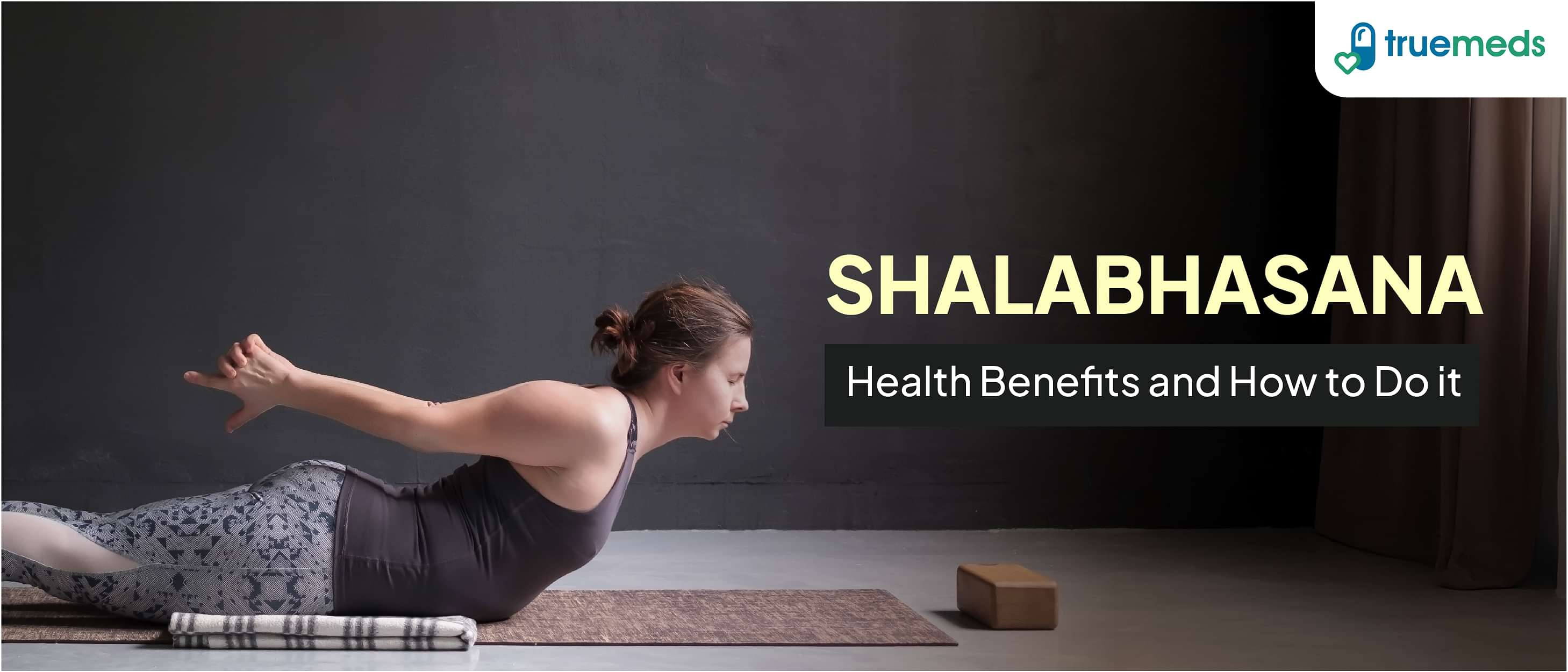
Health Benefits of Shalabhasana (Locust Pose) and How to Do It
Last updated on : 01 Dec, 2025
Read time : 8 min
Shalabhasana, or the Locust Pose, is a foundational prone backbend in yoga that offers a range of physical and mental benefits, primarily by strengthening the posterior chain of the body. Regular, safe practice of this posture can significantly enhance spinal support and posture, stimulate the abdominal region, and may contribute to stress management [1]. By focusing on controlled movement and breath, the Locust Pose can become a valuable addition to any routine aiming for improved core stability and holistic well-being.
What is Shalabhasana?
Shalabhasana (Locust Pose) originates from the Sanskrit words śalabha, meaning ‘grasshopper’ or ‘locust’, meaning ‘posture’ or ‘seat’. This yoga pose effectively mimics the shape of a locust at rest or in flight. It is performed in a prone position, where you lie on your stomach and lift your legs, upper body, and arms off the ground using the strength of your back and gluteal muscles. The posture is specifically known for its remarkable strengthening effect on the entire posterior chain, which includes the back extensors, glutes, and hamstrings [1].
Key actions and associated benefits include:
- Strengthening the back muscles and potentially enhancing spinal mobility [2].
- Gently compressing and stimulating the abdominal organs, which may support digestive function [1].
- Improving circulation and helping to mitigate symptoms of mild stress ([1]).
How to do the Shalabhasana (Locust Pose)
To perform the Shalabhasana, or Locust Pose, safely and effectively, follow these steps:
- Preparation: Find a comfortable space and lay a yoga mat down. Lie flat on your stomach.
- Alignment: Ensure your body is aligned straight. Legs should be extended and feet may be kept apart at hip-width (easier) or closer together (more challenging).
- Arm Position: Place your arms beneath your body, palms facing downwards. You may keep your hands open, clench them into fists, or interlace your fingers for a stronger lift.
- The Lift: Take a deep breath in. As you exhale, gently lift your chest, head, arms, and legs from the ground altogether. Focus on engaging the muscles of your lower back (erector spinae) and glutes; avoid pushing too hard with your arms or relying on momentum.
- Neck and Gaze: Keep a neutral neck posture by gazing slightly down or forward, maintaining the natural curve of the cervical spine. Avoid hyper-extending the neck.
- Hold and Breathe: Hold this pose for about 15 to 30 seconds, making sure you breathe steadily and comfortably.
- Release: To release the pose, exhale and slowly lower your body back onto the mat.
Tip for Progression: Building Endurance
To fully experience the benefits of the Locust Pose, try repeating the pose two to three times during your practice. Begin with a duration of 15 to 30 seconds for each hold, prioritising maintaining proper form and steady breathing over depth of the lift. As you build strength and comfort, gradually increase the duration by 5 to 10 seconds per week, ensuring no sharp or shooting pain is felt. This progressive approach allows your body to adapt and strengthen over time. Remember to always listen to your body and back off if discomfort arises.
Benefits of Shalabhasana
Shalabhasana is a powerful yet simple posture that offers numerous health benefits for both physical fitness and holistic well-being.
- Strengthens the Back Muscles (Posterior Chain): One of the primary benefits is its ability to strengthen the paraspinal muscles (specifically the Erector Spinae) along the lower and middle back. This lift engages these muscles, along with the glutes and hamstrings, which are essential for spinal support, stability, and proper functional movement [1]. This strengthening action is considered beneficial for managing mild, non-specific lower back stiffness or pain [2].
- Improves Core Stability: This pose also contributes to enhanced core stability. The abdominal muscles are engaged isometrically (without visible change in muscle length) to stabilise the torso, preventing excessive arching of the spine.
- Enhances Flexibility and Posture: Practice promotes spinal extension mobility and may gently open the anterior (front) body. Over time, consistent practice helps to counteract the effects of a hunched posture often caused by prolonged sitting by strengthening the antagonistic muscles of the back. Regular practice encourages better spinal alignment [3].
- Stimulates Abdominal Organs: The mild compression of the abdomen during the pose can gently stimulate internal organs such as the intestines, stomach, and liver. This compression is traditionally believed to aid in promoting better peristalsis (intestinal movement) and may offer relief from mild symptoms of bloating or constipation [1].
- Support for Respiratory Function: By lifting the chest, the pose encourages expansion of the thoracic cavity, which can contribute to deeper breathing. This mild chest opening may support the elasticity of the lungs and surrounding musculature [4].
Important Precautions and Risks of Exercise
It is crucial to approach this powerful pose with caution and mindfulness. While the Locust Pose has several health benefits, it’s also important to understand the associated risks and contraindications.
Contraindications (When to Avoid the Pose):
- Glaucoma and High IOP: The pose increases intra-abdominal and intrathoracic pressure, which can lead to a transient increase in intraocular pressure (IOP). Individuals with pre-existing glaucoma or high IOP must avoid this pose.
- Serious Spinal Issues: People with recent or chronic back injuries (such as a herniated disc, sciatica, or spondylolisthesis), as well as those with severe arm or shoulder pain, should avoid the pose. Only attempt after clearance from a physician or physical therapist.
- Abdominal Conditions: Those with peptic ulcers, abdominal hernias, recent abdominal surgery, or severe asthma should steer clear of this pose due to the significant pressure it places on the abdomen.
- Pregnancy and Menstruation: Pregnant women and those who are menstruating should refrain from practising this asana.
Safety Tip:
Maintaining proper form and engaging the correct muscle groups is crucial to avoid lower back strain. Always prioritise correct alignment and conscious muscular engagement over the depth or duration of the pose. It is better to perform the pose for a shorter duration with correct form than to overexert yourself. If you feel a sharp, shooting, or sudden pain in the spine or joints, release the pose immediately and consult a professional.
Conclusion
Shalabhasana (Locust Pose) is an accessible yet powerful yoga posture with multifaceted health benefits. Its primary action is strengthening the entire back line of the body, improving spinal health, enhancing posture, and supporting abdominal function. Beyond the physical, consistent practice can subtly enhance mind-body awareness and contribute to a sense of emotional balance.
When practising this pose, pay close attention to your body’s signals and ensure you are following the correct technique while being mindful of the contraindications. Over time, consistent, pain-free practice can lead to profound improvements in both physical and mental well-being. As with any physical practice, moderation, mindfulness, and consistency are key to a safe and successful yoga journey.
Incorporating the Locust Pose into your yoga or fitness regimen, with careful attention to safety, could be a significant step towards a healthier, more grounded lifestyle.
FAQs
What are the key advantages of Shalabhasana?
The Locust Pose primarily benefits the body by strengthening the posterior chain (back, glutes, hamstrings), improving core stability, and gently supporting digestive function and posture [1].
Is Shalabhasana good for back pain?
Yes, Shalabhasana can be beneficial for mild, non-specific lower back pain because it strengthens the vital back muscles (Erector Spinae) and promotes proper posture [2]. However, people with existing, chronic, or severe back pain, or any diagnosed back condition (like a herniated disc), should always consult a healthcare provider or qualified physical therapist before attempting the pose.
What should I be mindful of when doing Shalabhasana?
You should be mindful of keeping the neck neutral (not overextending), engaging the back muscles without straining the lower back, and avoiding the pose if you have glaucoma, severe spinal issues, abdominal conditions, or are pregnant.
References
[1] Bhati, K., & Debnath, A. (2024). Review on Salabhasana. ResearchGate. https://www.researchgate.net/publication/384197381_REVIEW_ON_SALABHASANA
[2] Jaiswal, V., Kumar, M., & Jaiswal, R. K. (2023). Yogic management for Chronic Lower Backache with Stress. Sagyaharan Shodh: International Peer Reviewed Journal, 26(2), 19-26. https://www.researchgate.net/publication/374421550_Yogic_management_for_Chronic_Lower_Backache_with_Stress_Yogic_management_for_Chronic_Lower_Backache_with_Stress
[3] Bhati, K. R. (2015). Clinical study on evaluation of role of Bhujangasana and Shalabhasana in Katishool in heavy vehicle drivers. International Journal of Research in Medical Sciences, 3(10), 3028–3033. https://www.researchgate.net/publication/282972761_CLINICAL_STUDY_ON_EVALUATION_OF_ROLE_OF_BHUJANGASANA_AND_SHALABHASANA_IN_KATISHOOL_IN_HEAVY_VEHICLE_DRVERS
[4] Saraswat, I., & Singh, A. (2012). Effect of short term yoga practice on pulmonary function tests. Indian Journal of Basic and Applied Medical Research; 1(3), 226-230. https://www.ijbamr.com/assets/images/issues/pdf/PDF11.pdf













Disclaimer
Our healthcare experts have carefully reviewed and compiled the information presented here to ensure accuracy and trustworthiness. It is important to note that this information serves as a general overview of the topic and is for informational purposes only. It is not intended to diagnose, prevent, or cure any health problem. This page does not establish a doctor-patient relationship, nor does it replace the advice or consultation of a registered medical practitioner. We recommend seeking guidance from your registered medical practitioner for any questions or concerns regarding your medical condition.
Popular Articles

Recommended Articles



Recent Articles








Company
About UsHealth ArticleHealth StoriesHealth LibraryDiseases & Health ConditionsAyurvedaUnderstanding Generic MedicinesAll MedicinesAll BrandsNeed HelpFAQSecuritySubscribe
Registered Office Address
Grievance Officer
Download Truemeds


Contact Us
Our customer representative team is available 7 days a week from 9 am - 9 pm.
v4.10.2

2025 - Truemeds | All rights reserved. Our content is for informational purposes only. See additional information.

Our Payment Partners




