

- Medicines
- Personal Care
- Skin Cream
- Sunscreen
- Face Wash
- Skin and Body Soap
- Acne Care
- Body Lotions
- Moisturising Lotion
- Moisturising Cream
- Mosquito Repellent
- Moisturising Gel
- Body Wash
- Hair Oils
- Hair Shampoo
- Hair Conditioners
- Hair Supplements
- Hair Colour
- Hair Serum
- Hair Mask
- Hair Solutions
- Baby Diapers and Wipes
- Baby Lotion and Moisturising Cream
- Baby Bath Essentials
- Baby Skin Care
- Baby and Infant Food
- Baby Healthcare
- Women Multivitamins
- Ovulation Test Kit and Women Intimate Care
- Sanitary Pads
- Nutritional Drinks
- Condoms
- Lubricants
- Massage Gels
- Personal Body Massagers
- Men Performance Booster
- Sexual Health Supplements
- Massage Oils
- Ayurveda
- Tooth Paste
- Mouth Ulcer Gel
- Mouthwash
- Toothache and Gum Pain
- Tooth Brush
- Gargle Solution
- Orthopaedic Supports
- Adult Diapers
- Footwear
- Mobility and Support Accessories
- Urinary Support and Care
- Health Conditions
- Bone and Joint Care
- Digestive Care
- Eye Care
- Pain Relief
- Smoking Cessation
- Liver Care
- Stomach Care
- Cold and Cough
- Heart Care
- Kidney Care
- Piles, Fissures & Fistula
- Respiratory Care
- Mental Wellness
- Derma Care
- Pre and Probiotics
- Acidity
- Gas
- Constipation
- Loose Motion/Diarrhoea
- Digestive Fibres
- Digestive Enzymes
- Eye Lubricant Drops
- Lens Solution
- Safety Eye Wear
- Eye Cream
- Eye Vitamins and Supplements
- Eye Drops
- Eye Ointment and Gel
- Nicotine Patch
- Nicotine Gum
- Nicotine Lozenges
- Cough Syrups
- Chest Rubs and Balms
- Nasal Spray
- Lozenges
- Inhalant Capsules
- Cold and Cough Tablets
- Vitamins & Supplements
- Diabetes Care
- Healthcare Devices
- Homeopathic Medicine
- Health Guide
Health Benefits of Naukasana (Boat Pose Yoga) and How to Do It
Last updated on : 01 Dec, 2025
Read time : 9 min
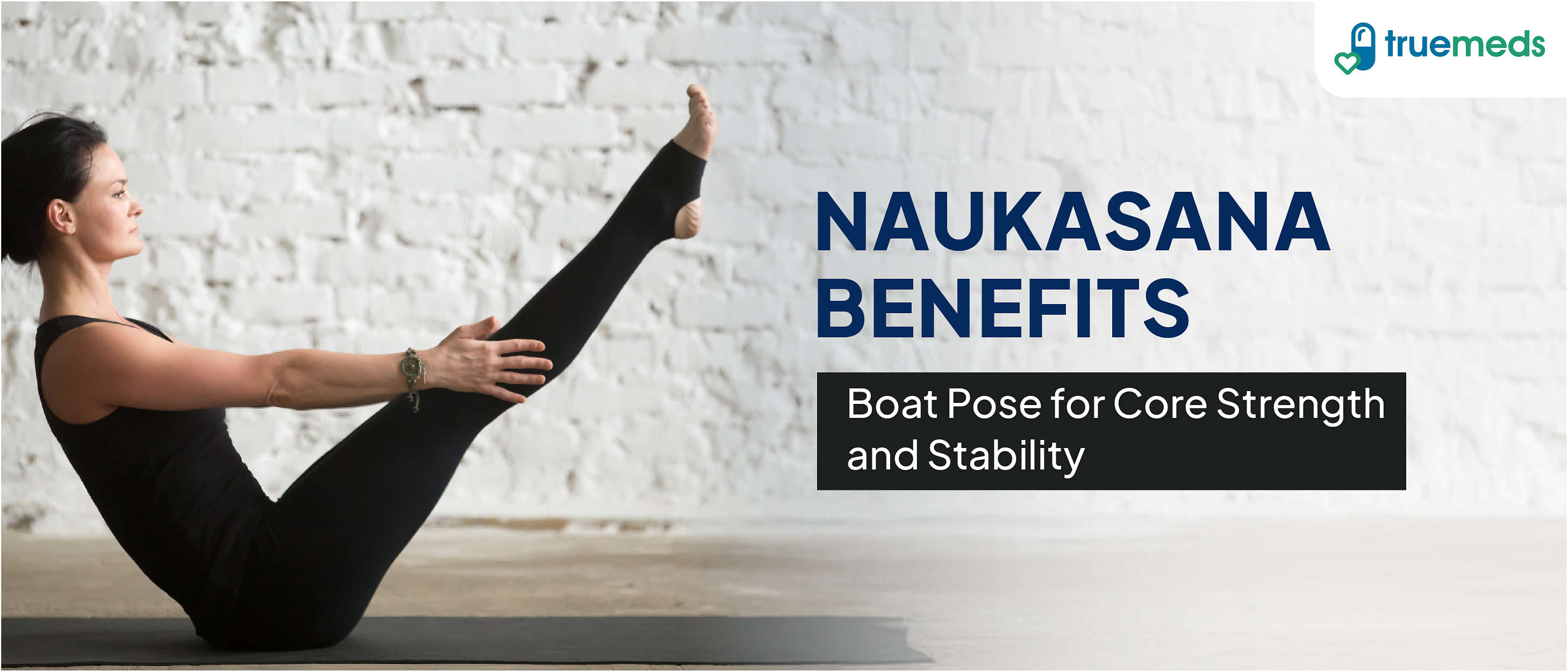
Naukasana is a yoga asana that takes its name from its resemblance to a boat. The term “Naukasana” is derived from the Sanskrit words “Nauka”, meaning boat, and “Asana”, meaning posture. In this pose, the body forms a V-shape, with the torso and legs lifted off the ground and the arms extended parallel to the floor. Naukasana is known for its potential to strengthen the back and abdominal muscles, tone the leg and arm muscles, and gently stimulate the digestive organs. Additionally, this asana may be beneficial for improving balance and mental clarity.
How to Do Naukasana: Step-by-Step Instructions
To practice Naukasana effectively, follow these steps:
- Begin by sitting on your yoga mat with your legs extended in front of you.
- As you inhale, lean back slightly and lift your legs to a 45-degree angle from the floor. If you are a beginner, start with bent knees and gradually straighten your legs as you build strength. Keep your knees bent (Ardha Naukasana) if full extension causes strain or rounding of the back.
- Simultaneously, extend your arms parallel to the ground, ensuring they are in line with your shoulders.
- Activate your core muscles by drawing your navel towards the spine. Keep your spine as straight as possible, forming a V shape with your body.
- Concentrate on elevating your chest and keeping your weight on your sitting bones. Take at least five deep breaths while maintaining the pose.
- Exhale and slowly lower your legs and torso back to the starting position.
Essential Facts and Precautions About Naukasana
Here are some key points to consider about Naukasana:
- Contraindications: Avoid this pose if you have low blood pressure, severe headache, migraine, recent spinal or neck injuries, uncontrolled asthma, heart conditions, or if you are pregnant or in the first two days of your menstrual cycle. Individuals with hernias or recent abdominal/spinal surgery should consult a physician before attempting this pose.
- Variations: There are two main variations: Ardha Naukasana (Half Boat Pose, with bent knees) for beginners and Paripurna Naukasana (Full Boat Pose, with straight legs) for those with stronger core strength.
- Energetic Focus: Naukasana is believed to activate the Manipura Chakra, associated with the solar plexus and the fire element, promoting mental focus and willpower.
- Muscular Engagement: Naukasana tones the abdominal muscles, leg muscles, and arm muscles, while also engaging the iliopsoas muscle.
Top Health Benefits of Naukasana (Boat Pose)
Naukasana is a versatile yoga asana that offers a wide range of potential health benefits. It is important to note that yoga should be practiced regularly and in conjunction with other healthy lifestyle choices to experience its full potential effects.
1. Strengthens Core Muscles
Naukasana is highly effective in strengthening the core muscles, including the abdominal muscles, hips, and spine. By engaging the navel area and maintaining a V-shaped posture, this asana tones and strengthens the deep abdominal muscles, which are essential for stability and overall physical strength [1]. Regular practice may help build strong core muscles, which can improve posture and may reduce the risk of back pain and injuries.
2. Improves Back Strength and Flexibility
Naukasana is beneficial for back health as it can help strengthen the paraspinal muscles and improve spinal flexibility [1]. The pose helps maintain a straight spine and engages the muscles along the spine, which can prevent back pain and improve posture. It is essential to only practice this pose if you have a healthy, pain-free back, as improper form can cause strain.
3. Supports Digestive Health
The Boat Pose has a profound impact on digestive health. It gently compresses and decompresses the abdominal organs, including the liver, pancreas, and kidneys, which may aid in better digestion and elimination. The pose may also help relieve symptoms of constipation and acidity by improving movement within the gastrointestinal tract.
4. Enhances Mental Focus and Reduces Stress
Yoga is known to help bust stress, reduce anxiety, and may alleviate symptoms of depression [4]. The balance and stability required to maintain Naukasana encourage practitioners to focus on their breath and body alignment, thereby improving mental clarity and concentration. This focused effort may help foster a sense of determination and self-discipline, supporting overall mental well-being.
5. Boosts Blood Circulation and Oxygenation
Naukasana can promote improved blood circulation by stimulating various muscle groups and organs. The engagement and relaxation of abdominal organs during the pose may enhance blood flow. Additionally, the deep, conscious breathing associated with this asana helps regulate blood flow, ensuring that all parts of the body receive adequate oxygenation.
Additional Potential Benefits of Naukasana
Naukasana provides a range of additional benefits:
- May Help Regulate Blood Sugar Levels: The pose may stimulate the pancreas, an organ crucial for the production of insulin, potentially aiding in the management of blood sugar levels [2].
- Tones Leg and Arm Muscles: Naukasana engages the muscles of the thighs, calves, shoulders, and neck, contributing to overall muscle tone and endurance.
- May Support Healthy Metabolism: The compression and relaxation of abdominal organs are believed to help support a healthier metabolism.
- Improves Hamstring Flexibility: This pose can help stretch the hamstrings when the legs are fully straightened, enhancing flexibility and reducing tension in the lower limbs.
Risks and When to Modify or Avoid Naukasana
While practising Naukasana can offer numerous potential benefits, it is essential to be aware of the potential risks and contraindications associated with this pose to ensure a safe practice.
Always prioritize listening to your body. If you feel sharp pain in your back, neck, or abdomen, immediately release the pose and consult a professional.
Takeaway
Naukasana (Boat Pose) is a dynamic yoga asana that offers numerous potential benefits, including core strengthening, digestive support, and enhanced mental focus. Whether you’re a beginner or an experienced yogi, adding Naukasana to your routine can be a valuable part of a holistic approach to health and well-being. Just remember to practise with proper form and be mindful of all contraindications. As always, listen to your body and consult a yoga expert or physician if you have medical concerns.
Expert Quote:
“Naukasana is one of the best yoga poses to engage the core, stimulate abdominal organs, and improve posture. When practised consistently, it can strengthen the mind-body connection and aid digestive and metabolic functions.”
– Dr Anubha Karol
Frequently Asked Questions (FAQs)
Who should avoid Naukasana?
People with existing medical conditions such as hernia, ulcer, uncontrolled high or low blood pressure, severe spinal disorders, and those with recent injuries or surgeries should avoid or modify Naukasana. Pregnant women and those with severe back issues should also exercise caution and seek professional guidance.
How to do Naukasana step by step for beginners?
To perform the beginner variation (Ardha Naukasana), sit on the mat with your legs outstretched. Bend your knees and lift your feet a few inches off the ground, ensuring stable balance. Extend your arms forward, keeping them parallel to the ground. As you engage your core, focus on maintaining a straight spine and balancing on your sitting bones. The knees should remain bent to reduce strain. Focus on breathing, holding the pose for 20 to 30 seconds before exhaling and returning to the normal position.
What is the difference between Naukasana and Navasana?
There is no distinct difference in practice between Naukasana and Navasana, as they both refer to the same basic yoga asana, the Boat Pose. Navasana is the more common Sanskrit term used globally.
How to reduce belly fat using Naukasana?
Naukasana may help support efforts to reduce belly fat by stretching, compressing, and relaxing abdominal organs, which may aid in metabolism. However, spot reduction of fat is not possible; regular practice, proper alignment, deep breathing, and a balanced diet are key to overall fat reduction.
Can I do Naukasana during my menstrual period?
While Naukasana is generally advised to be avoided during the first two days of the menstrual cycle, especially if experiencing severe cramps or pain, some may find modification helpful. Consult a doctor or certified yoga expert for personalised advice based on your symptoms.
How many times should you do Naukasana?
Beginners can start by holding Naukasana for 20-30 seconds and repeat it 2-3 times. Gradually increase the duration and repetitions as strength and flexibility improve, aiming for 3-5 repetitions with a hold of up to 60 seconds.
What are the precautions while doing Naukasana?
Ensure a straight spine (avoid rounding or slumping), avoid holding your breath, maintain proper alignment, and fully engage core muscles. Be cautious if you have existing medical conditions or injuries, and modify the pose if necessary. Ensure normal, steady breathing while in the pose.
Why is the Boat Pose so difficult?
The Boat Pose is challenging due to its demands for simultaneous core strength, balance, and spinal stability. It requires engagement of multiple deep muscle groups, including the deep core, hip flexors (iliopsoas), and paraspinal muscles, which can be demanding for beginners or those with limited strength.
References
[1] Dewan, M., Nijhawan, M., Chhabra, H. S., Shandilya, S., Kumar, P., & Phadke, V. (2023). Electromyographic analysis of trunk and hip muscles during Yoga poses prescribed for treating chronic low back pain. Journal of Bodywork and Movement Therapies, 36, 117–124. https://doi.org/10.1016/j.jbmt.2023.06.007
[2] Raveendran, A. V., Deshpande, A., & Joshi, S. R. (2018). Therapeutic role of yoga in type 2 diabetes. Endocrinology and Metabolism (Seoul, Korea), 33(3), 307–317. https://doi.org/10.3803/EnM.2018.33.3.307
[3] Kumar, V., Malhotra, V., & Kumar, S. (2019). Application of standardised yoga protocols as the basis of physiotherapy recommendation in treatment of sleep apneas: Moving beyond pranayamas. Indian Journal of Otolaryngology and Head and Neck Surgery: Official Publication of the Association of Otolaryngologists of India, 71(Suppl 1), 558–565. https://doi.org/10.1007/s12070-018-1405-5
[4] Singphow, C., Purohit, S., Tekur, P., Bista, S., Panigrahy, S. N., Raghuram, N., & Nagendra, H. R. (2022). Effect of yoga on stress, anxiety, depression, and spinal mobility in computer users with chronic low back pain. International Journal of Yoga, 15(2), 114–121. https://doi.org/10.4103/ijoy.ijoy_9_22













Disclaimer
Our healthcare experts have carefully reviewed and compiled the information presented here to ensure accuracy and trustworthiness. It is important to note that this information serves as a general overview of the topic and is for informational purposes only. It is not intended to diagnose, prevent, or cure any health problem. This page does not establish a doctor-patient relationship, nor does it replace the advice or consultation of a registered medical practitioner. We recommend seeking guidance from your registered medical practitioner for any questions or concerns regarding your medical condition.
Popular Articles

Recommended Articles



Recent Articles









Company
About UsHealth ArticleHealth StoriesHealth LibraryDiseases & Health ConditionsAyurvedaAll MedicinesAll BrandsNeed HelpFAQSecuritySubscribe
Registered Office Address
Grievance Officer
Download Truemeds


Contact Us
Our customer representative team is available 7 days a week from 9 am - 9 pm.
v4.9.0

2025 - Truemeds | All rights reserved. Our content is for informational purposes only. See additional information.

Our Payment Partners




