

- Medicines
- Personal Care
- Skin Cream
- Sunscreen
- Face Wash
- Skin and Body Soap
- Acne Care
- Body Lotions
- Moisturising Lotion
- Moisturising Cream
- Mosquito Repellent
- Moisturising Gel
- Body Wash
- Hair Oils
- Hair Shampoo
- Hair Conditioners
- Hair Supplements
- Hair Colour
- Hair Serum
- Hair Mask
- Hair Solutions
- Baby Diapers and Wipes
- Baby Lotion and Moisturising Cream
- Baby Bath Essentials
- Baby Skin Care
- Baby and Infant Food
- Baby Healthcare
- Women Multivitamins
- Ovulation Test Kit and Women Intimate Care
- Sanitary Pads
- Nutritional Drinks
- Condoms
- Lubricants
- Massage Gels
- Personal Body Massagers
- Men Performance Booster
- Sexual Health Supplements
- Massage Oils
- Ayurveda
- Tooth Paste
- Mouth Ulcer Gel
- Mouthwash
- Toothache and Gum Pain
- Tooth Brush
- Gargle Solution
- Orthopaedic Supports
- Adult Diapers
- Footwear
- Mobility and Support Accessories
- Urinary Support and Care
- Health Conditions
- Bone and Joint Care
- Digestive Care
- Eye Care
- Pain Relief
- Smoking Cessation
- Liver Care
- Stomach Care
- Cold and Cough
- Heart Care
- Kidney Care
- Piles, Fissures & Fistula
- Respiratory Care
- Mental Wellness
- Derma Care
- Pre and Probiotics
- Acidity
- Gas
- Constipation
- Loose Motion/Diarrhoea
- Digestive Fibres
- Digestive Enzymes
- Eye Lubricant Drops
- Lens Solution
- Safety Eye Wear
- Eye Cream
- Eye Vitamins and Supplements
- Eye Drops
- Eye Ointment and Gel
- Nicotine Patch
- Nicotine Gum
- Nicotine Lozenges
- Cough Syrups
- Chest Rubs and Balms
- Nasal Spray
- Lozenges
- Inhalant Capsules
- Cold and Cough Tablets
- Vitamins & Supplements
- Diabetes Care
- Healthcare Devices
- Homeopathic Medicine
- Health Guide
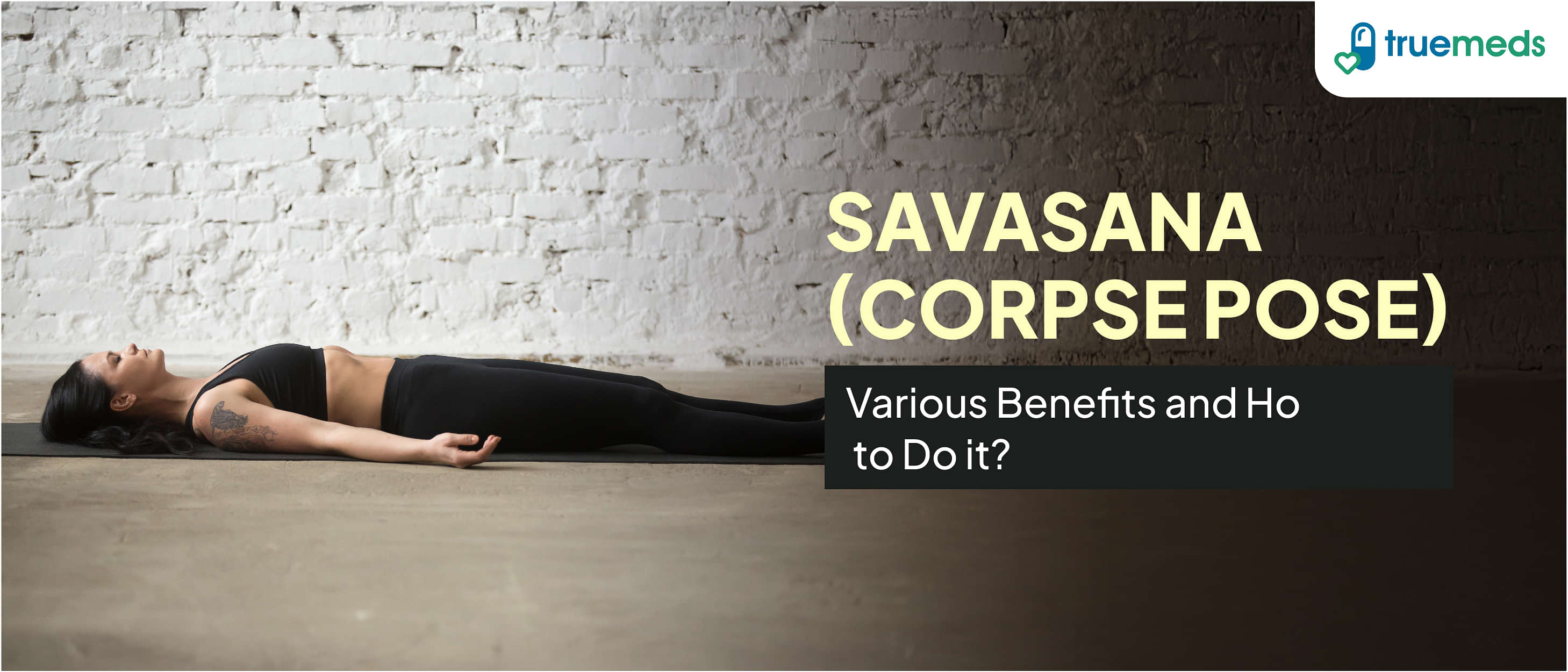
9 Benefits of Savasana (Corpse Pose) and How to Do it?
Last updated on : 01 Dec, 2025
Read time : 6 min
Welcome to our enlightening exploration of Savasana, also popularly known as the Corpse Pose. Yoga, an age-old practice rooted in Indian culture, offers a plethora of poses, each providing unique benefits. Today, we will delve into one such remarkable pose, Savasana, the final and one of the most essential poses in any yoga practice, designed for deep rest and integration of the entire session. Now, let’s embark on this enlightening journey.
How to do it?
To begin performing the Shavasana, or the corpse pose, here’s what you do:
- Lie down on your back with your legs straight. Let your arms rest relaxed by your sides.
- Allow your feet to fall naturally out to the sides, and keep your palms turned upwards in a gesture of receiving.
- Close your eyes to help focus inward.
- As you lie still, breathe naturally and let your body feel heavy against the ground beneath you. This helps in releasing tension from every part of your body, from the soles of your feet to the top of your head.
- Hold the pose for a minimum of 5-10 minutes (or 1 minute for every 10 minutes of practice) to reap the full benefits.
Exiting the pose:
- Slowly bring back awareness to your physical body.
- Begin by wriggling your fingers and toes.
- With eyes still closed, draw your knees up and slowly roll over onto either side, into the fetal position.
- Rest in this position for a moment before rising to a comfortable seated position with an inhale.
- This peace and calm that you experience in Savasana should accompany you for the rest of the day.
Benefits of Savasana
Savasana, the Corpse Pose, boasts a myriad of benefits. It can aid both your physical and mental health, offering an oasis of tranquillity amidst the hustle and bustle of daily life. Let’s explore each of these benefits in more detail, focusing on the scientific support for its deeply restorative nature.
1) Promotes Deep Relaxation
At its core, Savasana is a pose designed to induce deep relaxation. By simply lying still and focusing on your breath, you allow your body to release all existing tension. This is a time to consciously let go of muscular effort and mental chatter, encouraging a profound sense of peace and a tranquil state of mind.
2) Reduces Stress and Anxiety
Savasana has a significant impact on your stress levels. This pose may help stimulate your parasympathetic nervous system, which is responsible for the body’s “rest and digest” response, thereby counteracting the body’s stress response (fight or flight) [1]. In essence, regular practice of Savasana may lead to decreased levels of the stress hormone, cortisol, promoting a calmer state of both mind and body [3].
3) Enhances Concentration and Focus
One key advantage of Savasana is that it encourages mindfulness, which can enhance concentration and focus [2]. Quietening the mind in this pose trains the mind to stay present, which can boost your ability to concentrate on daily tasks and activities.
4) Improves Sleep Quality
If you experience sleep problems or insomnia, the deep relaxation of Savasana may help promote rest and improve sleep quality with regular practice [3]. The ability to fully relax both mind and body learned in this pose can be incorporated into your bedtime routine to encourage restful nights.
5) May Help Lower Blood Pressure
Did you know that the calming effects of Savasana may help reduce blood pressure? By promoting deep relaxation and reducing stress, this pose could support better cardiovascular health [3]. A study involving T2DM (Type 2 Diabetes Mellitus) patients noted a positive effect of Shavasana on BP and blood sugar fluctuations [3].
6) Facilitates Muscle and Post-Exercise Recovery
For those who engage in physical activities or workouts, Savasana offers the benefit of muscle relaxation. It allows your muscles to fully relax after a demanding yoga or exercise session, helping to alleviate any lingering tension and soreness. This dedicated rest period is crucial for muscle repair and recovery.
7) Supports Mental Clarity and Decision Making
The simple act of stillness and focus on breath in Savasana may lead to improved mental clarity. Frequently, practitioners report feeling more clear-headed and focused after this pose, which is often attributed to reduced mental clutter, aiding them in decision-making and problem-solving.
8) Cultivates Emotional Balance and Resilience
Savasana provides a safe space for emotional release and processing. Fostering a sense of calm and acceptance may help individuals manage their emotions more effectively, cultivating emotional resilience. By observing thoughts and emotions without judgment, one can achieve greater emotional stability.
9) Deepens Body and Mind Awareness
Last but not least, Savasana encourages a deeper connection with your body. Practitioners become more aware of physical sensations, tension, and areas that may need attention, promoting overall body awareness and mindfulness [2]. This heightened interoception is a key benefit for deepening one’s yoga practice and overall well-being.
Conclusion
In today’s fast-paced world, finding ways to slow down and relax both body and mind is essential. Incorporating Shavasana, also known as the Corpse Pose, into your yoga practice can yield significant benefits for both the body and mind. Whether you are looking to reduce stress, improve focus, or enhance your overall well-being, Savasana serves as a powerful tool for achieving a state of relaxation and integration. The benefit of Shavasana is not limited to yoga enthusiasts alone; anyone seeking mental tranquillity can make use of this restorative pose. Remember, Savasana is not just a nap; it is a conscious, restorative practice.
Frequently Asked Questions (FAQs)
How to do Savasana step by step?
Simply lie flat on your back, arms and legs relaxed. Close your eyes, breathe deeply, and release tension from each part of your body. Focus on letting your weight sink completely into the ground.
How many steps are there in Savasana?
Savasana typically follows three steps: (1) positioning the body (alignment), (2) conscious focus on the breath, and (3) systematic, mindful release of tension from each body part.
What is the science behind Savasana?
The science behind Savasana lies in activating the parasympathetic nervous system through deep, conscious rest, which positively impacts stress levels, heart rate, and blood pressure by reducing circulating cortisol levels [1], [3].
Why should you never skip Savasana?
Skipping Savasana deprives you of a valuable opportunity to rest and integrate the physical, energetic, and mental benefits of your preceding yoga practice into your physical and mental state. It is the final, essential step of a complete practice.
Disclaimer
This article is for informational purposes only and is based on traditional yoga knowledge and preliminary research. It is not a substitute for professional medical advice, diagnosis, or treatment. Please consult a healthcare provider before beginning any new wellness practice, especially if you have an existing medical condition or are on medication.
References
[1] Shinde, V., Kini, R., Naik, R., & Desousa, A. (2015). A study on the effect of relaxation techniques and Shavasana on stress and pulse rates of medical students. Journal of Exercise Science and Physiotherapy, 11(2), 123–128. https://www.airitilibrary.com/Article/Detail/09732020-201512-201602040029-201602040029-123-128
[2] Woodyard, C. (2011). Exploring the therapeutic effects of yoga and its ability to increase quality of life. International Journal of Yoga, 4(2), 49–54. https://doi.org/10.4103/0973-6131.85485
[3] Saboo, S., Saboo, B., Inamdar, A., & Sharma, H. (2021). Effect of Yogic technique Shavasana in T2DM patients on BP, blood sugar fluctuations and Sleep Quality. Endocrine Abstracts. https://doi.org/10.1530/endoabs.73.pep7.6












Disclaimer
Our healthcare experts have carefully reviewed and compiled the information presented here to ensure accuracy and trustworthiness. It is important to note that this information serves as a general overview of the topic and is for informational purposes only. It is not intended to diagnose, prevent, or cure any health problem. This page does not establish a doctor-patient relationship, nor does it replace the advice or consultation of a registered medical practitioner. We recommend seeking guidance from your registered medical practitioner for any questions or concerns regarding your medical condition.
Popular Articles
Recommended Articles



Recent Articles









Company
About UsHealth ArticleHealth StoriesHealth LibraryDiseases & Health ConditionsAyurvedaAll MedicinesAll BrandsNeed HelpFAQSecuritySubscribe
Registered Office Address
Grievance Officer
Download Truemeds


Contact Us
Our customer representative team is available 7 days a week from 9 am - 9 pm.
v4.9.0

2025 - Truemeds | All rights reserved. Our content is for informational purposes only. See additional information.

Our Payment Partners