

- Medicines
- Personal Care
- Skin Cream
- Sunscreen
- Face Wash
- Skin and Body Soap
- Acne Care
- Body Lotions
- Moisturising Lotion
- Moisturising Cream
- Mosquito Repellent
- Moisturising Gel
- Body Wash
- Hair Oils
- Hair Shampoo
- Hair Conditioners
- Hair Supplements
- Hair Colour
- Hair Serum
- Hair Mask
- Hair Solutions
- Baby Diapers and Wipes
- Baby Lotion and Moisturising Cream
- Baby Bath Essentials
- Baby Skin Care
- Baby and Infant Food
- Baby Healthcare
- Women Multivitamins
- Ovulation Test Kit and Women Intimate Care
- Sanitary Pads
- Nutritional Drinks
- Condoms
- Lubricants
- Massage Gels
- Personal Body Massagers
- Men Performance Booster
- Sexual Health Supplements
- Massage Oils
- Ayurveda
- Tooth Paste
- Mouth Ulcer Gel
- Mouthwash
- Toothache and Gum Pain
- Tooth Brush
- Gargle Solution
- Orthopaedic Supports
- Adult Diapers
- Footwear
- Mobility and Support Accessories
- Urinary Support and Care
- Health Conditions
- Bone and Joint Care
- Digestive Care
- Eye Care
- Pain Relief
- Smoking Cessation
- Liver Care
- Stomach Care
- Cold and Cough
- Heart Care
- Kidney Care
- Piles, Fissures & Fistula
- Respiratory Care
- Mental Wellness
- Derma Care
- Pre and Probiotics
- Acidity
- Gas
- Constipation
- Loose Motion/Diarrhoea
- Digestive Fibres
- Digestive Enzymes
- Eye Lubricant Drops
- Lens Solution
- Safety Eye Wear
- Eye Cream
- Eye Vitamins and Supplements
- Eye Drops
- Eye Ointment and Gel
- Nicotine Patch
- Nicotine Gum
- Nicotine Lozenges
- Cough Syrups
- Chest Rubs and Balms
- Nasal Spray
- Lozenges
- Inhalant Capsules
- Cold and Cough Tablets
- Vitamins & Supplements
- Diabetes Care
- Healthcare Devices
- Homeopathic Medicine
- Health Guide
Benefits of Anulom Vilom and How to Do It
Last updated on : 28 Nov, 2025
Read time : 7 min
Anulom Vilom pranayama, also known as alternate nostril breathing, is an ancient yogic practice that may support physical and psychological well-being. By focusing on the breath and regulating the body’s subtle energy channels (nadis), this technique is suggested to help manage stress and promote overall vitality. Incorporating this safe, non-strenuous technique into your daily routine may lead to a healthier, more centred life.
What is Anulom Vilom Pranayama?
Anulom Vilom is a specific type of pranayama, or controlled breathing technique, widely practised in Hatha and Ashtanga yoga. It involves intentionally alternating your breath between the left and right nostrils—a process traditionally believed to balance the body’s energy channels, or ‘nadis’.
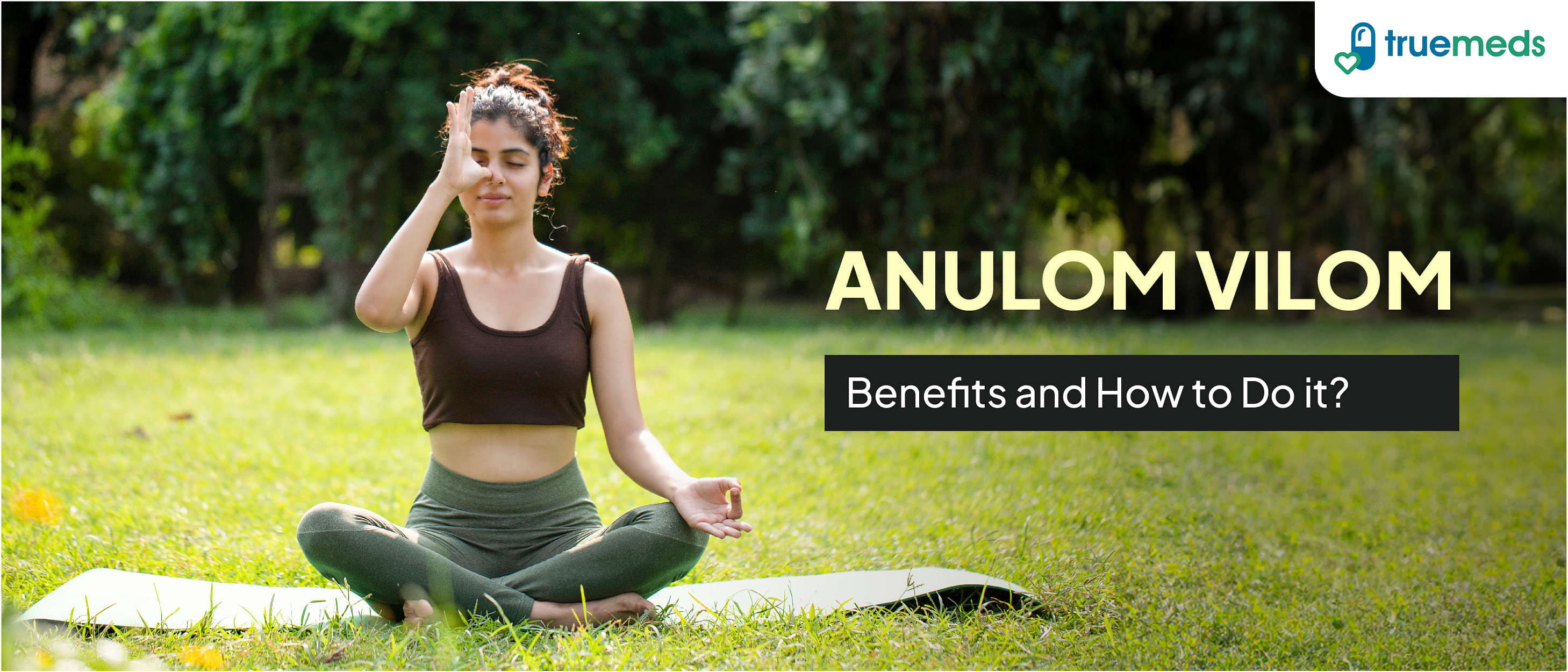
The technique involves using the thumb and ring finger to gently close one nostril while inhaling through the other, then switching to exhale. This cycle is repeated, aiming to foster a sense of calm and enhance respiratory awareness.
Scientific studies suggest that regular practice of Anulom Vilom may help improve respiratory function, reduce perceived stress levels, and support cognitive functions by increasing oxygen supply to the brain [1],[2]. It is associated with better mental clarity and emotional stability.
While some proponents claim it can help manage conditions like asthma and hypertension, current scientific evidence is limited and not conclusive. It should always be considered a supportive, complementary practice, and never a replacement for prescribed medical treatment [3].
How to Practise Anulom Vilom Pranayama (Step-by-Step Guide)
Here’s a simple step-by-step guide to help you on your journey of practising Alternate Nostril Breathing for improved wellness:
- Preparation: Find a quiet space and sit comfortably. You can sit cross-legged on the floor or in a chair. Ensure your spine is straight to allow for smooth, unobstructed breath flow.
- Centering: Gently close your eyes and take a few natural, deep breaths to center yourself.
- Hand Position (Vishnu Mudra): Place your right hand in Vishnu Mudra: curl the index and middle fingers toward the palm, leaving the thumb, ring finger, and little finger extended.
- Starting the Cycle: Use your right thumb to gently close the right nostril.
- Inhale Left: Slowly and deeply inhale through your open left nostril. Try to inhale for a count of four.
- Switch and Exhale Right: Immediately use your right ring finger to close the left nostril. Release the thumb from the right nostril and exhale gently through the right nostril for a count of eight.
- Inhale Right: Inhale through the open right nostril for a count of four.
- Switch and Exhale Left: Close the right nostril with your thumb. Release the ring finger from the left nostril and exhale gently through the left nostril for a count of eight.
- Continue: This completes one cycle. Continue this alternating pattern for about 5-10 minutes, focusing on the breath and maintaining a rhythmic flow.
Tip for Beginners: Start with an equal ratio of inhalation and exhalation (e.g., 4 counts in, 4 counts out) before progressing to a longer exhalation (4:8 ratio). Breath retention (Kumbhaka) should only be introduced under the guidance of a qualified instructor and is not recommended for beginners or individuals with heart/blood pressure conditions.
Health Benefits of Alternate Nostril Breathing
The practice of Anulom Vilom is associated with numerous potential benefits for both mind and body:
May Support Blood Pressure Regulation
Regular practice of Anulom Vilom has been shown in some studies to promote parasympathetic nervous system activity (the ‘rest and digest’ system), which may lead to relaxation and a potential reduction in both systolic and diastolic blood pressure [4].
Important Note: While supportive, this practice is not a replacement for medically prescribed therapy or medication in the management of hypertension.
Enhances Respiratory Function
Anulom Vilom encourages deep, rhythmic breathing, which can help improve vital capacity and respiratory muscle strength [2]. By enhancing the efficiency of oxygen exchange, it supports overall lung capacity and may help in clearing the airways. It is essential to note that for individuals with conditions like asthma, this practice is complementary and should be discussed with a doctor [5].
Promotes Mental Clarity and Stress
Reduction The rhythmic nature of alternate nostril breathing helps to calm the mind and reduce symptoms of anxiety and psychological stress [1],[6]. By increasing oxygen flow to the brain, it can promote better focus, concentration, and emotional stability, leading to an overall feeling of well-being.
Supports Cardiovascular Awareness
By fostering a state of relaxation and activating the parasympathetic response, Anulom Vilom may help gently lower the heart rate [4]. This reduction in physiological stress is a crucial factor in maintaining a healthy cardiovascular system.
Potential Considerations and Risks
While Anulom Vilom is a non-strenuous practice, it is important to practice mindfully:
- Proper Technique is Key: Practicing with improper technique, especially forced or strained breathing, can lead to light-headedness or hyperventilation. Always practice gently and stop if you feel dizzy.
- Individuals with Nasal Congestion: If you have severe cold or nasal blockage, it is best to avoid forceful practice and wait until breathing is clearer.
- Caution with Retention: Individuals with high blood pressure, heart conditions, or glaucoma must avoid breath retention (Kumbhaka) unless specifically cleared by a medical professional and taught by a qualified instructor.
Conclusion
Anulom Vilom Pranayama offers a wide array of potential benefits for both body and mind, making it an accessible practice for nearly all ages and fitness levels. Its simplicity, focus on rhythmic breathing, and demonstrated potential for stress reduction make it a powerful tool for holistic well-being. Always practice with a relaxed, non-forceful technique and remember that while it supports general wellness, it is not a substitute for professional medical care for existing conditions such as hypertension, asthma, or heart disease.
FAQs
What is the right way to do Anulom Vilom?
The correct way involves sitting upright, using the right thumb and ring finger to alternate closing the nostrils. You inhale through one nostril and exhale through the other, and then reverse the process, always ensuring the exhalation is longer than the inhalation.
How many minutes of Anulom Vilom should I do per day?
For beginners, 5-10 minutes of practice daily is highly recommended. Experienced practitioners can gradually extend this to 15-30 minutes for deeper benefits, but consistency is more important than duration.
Can we do Anulom Vilom in a sleeping position?
Anulom Vilom Pranayama is best performed while sitting upright with a straight spine. Lying down (sleeping position) is not ideal as it can restrict the diaphragm’s movement and make controlled, deep breathing challenging.
Can I do Anulom Vilom for 5 minutes?
Yes. Starting with 5 minutes of practice is highly beneficial, as it can help calm the nervous system and promote immediate clarity and focus.
References
[1] Sharma, V. K., Barde, P. B., Kathrotia, R., Sharma, G., Chitturi, V., Parmar, N., Dhruva, G., Kavathia, G., & Rajendran, R. (2024). Effects of an 8-week intervention of anulom vilom pranayama combined with heartfulness meditation on psychological stress, autonomic function, inflammatory biomarkers, and oxidative stress in healthcare workers during COVID-19 pandemic: a randomized controlled trial. Journal of Basic and Clinical Physiology and Pharmacology. https://doi.org/10.1515/jbcpp-2024-0001
[2] Bal, B. S. (2010). Effect of anulom vilom and bhastrika pranayama on the vital capacity and maximal ventilatory volume. Journal of Physical Education and Sport Management, 1(1), 11–15. https://academicjournals.org/journal/JPESM/article-full-text-pdf/BE71AFE678.pdf
[3] Bali, S., & Bali, S. (2024). Rationale of Anulom Vilom, The practice of alternate nostril breathing. Acta Scientific Medical Sciences, 8(2). https://actascientific.com/ASMS/pdf/ASMS-08-1858.pdf
[4] Balkrishna, A. (2014). Blood Pressure and Heart Rate Variability during Yoga-Based Alternate Nostril Breathing Practice and Breath Awareness. Medical Science Monitor Basic Research, 20, 184–193. https://doi.org/10.12659/msmbr.892063
[5] Shukla, M., Chauhan, D., & Raj, R. (2020). Breathing exercises and pranayamas to decrease perceived exertion during breath-holding while locked-down due to COVID-19 online randomized study. Complementary Therapies in Clinical Practice, 41, Article 101248. https://doi.org/10.1016/j.ctcp.2020.101248
[6] Kaushik, M., Jain, A., Agarwal, P., Joshi, S. D., & Parvez, S. (2020). Role of Yoga and Meditation as Complimentary Therapeutic Regime for Stress-Related Neuropsychiatric Disorders: Utilization of Brain Waves Activity as Novel Tool. Journal of Evidence-Based Integrative Medicine, 25. https://doi.org/10.1177/2515690×20949451














Disclaimer
Our healthcare experts have carefully reviewed and compiled the information presented here to ensure accuracy and trustworthiness. It is important to note that this information serves as a general overview of the topic and is for informational purposes only. It is not intended to diagnose, prevent, or cure any health problem. This page does not establish a doctor-patient relationship, nor does it replace the advice or consultation of a registered medical practitioner. We recommend seeking guidance from your registered medical practitioner for any questions or concerns regarding your medical condition.
Popular Articles


Recommended Articles




Recent Articles










Company
About UsHealth ArticleHealth StoriesHealth LibraryDiseases & Health ConditionsAyurvedaUnderstanding Generic MedicinesAll MedicinesAll BrandsNeed HelpFAQSecuritySubscribe
Registered Office Address
Grievance Officer
Download Truemeds


Contact Us
Our customer representative team is available 7 days a week from 9 am - 9 pm.
v4.10.1

2025 - Truemeds | All rights reserved. Our content is for informational purposes only. See additional information.

Our Payment Partners




