

- Medicines
- Personal Care
- Skin Cream
- Sunscreen
- Face Wash
- Skin and Body Soap
- Acne Care
- Body Lotions
- Moisturising Lotion
- Moisturising Cream
- Mosquito Repellent
- Moisturising Gel
- Body Wash
- Hair Oils
- Hair Shampoo
- Hair Conditioners
- Hair Supplements
- Hair Colour
- Hair Serum
- Hair Mask
- Hair Solutions
- Baby Diapers and Wipes
- Baby Lotion and Moisturising Cream
- Baby Bath Essentials
- Baby Skin Care
- Baby and Infant Food
- Baby Healthcare
- Women Multivitamins
- Ovulation Test Kit and Women Intimate Care
- Sanitary Pads
- Nutritional Drinks
- Condoms
- Lubricants
- Massage Gels
- Personal Body Massagers
- Men Performance Booster
- Sexual Health Supplements
- Massage Oils
- Ayurveda
- Tooth Paste
- Mouth Ulcer Gel
- Mouthwash
- Toothache and Gum Pain
- Tooth Brush
- Gargle Solution
- Orthopaedic Supports
- Adult Diapers
- Footwear
- Mobility and Support Accessories
- Urinary Support and Care
- Health Conditions
- Bone and Joint Care
- Digestive Care
- Eye Care
- Pain Relief
- Smoking Cessation
- Liver Care
- Stomach Care
- Cold and Cough
- Heart Care
- Kidney Care
- Piles, Fissures & Fistula
- Respiratory Care
- Mental Wellness
- Derma Care
- Pre and Probiotics
- Acidity
- Gas
- Constipation
- Loose Motion/Diarrhoea
- Digestive Fibres
- Digestive Enzymes
- Eye Lubricant Drops
- Lens Solution
- Safety Eye Wear
- Eye Cream
- Eye Vitamins and Supplements
- Eye Drops
- Eye Ointment and Gel
- Nicotine Patch
- Nicotine Gum
- Nicotine Lozenges
- Cough Syrups
- Chest Rubs and Balms
- Nasal Spray
- Lozenges
- Inhalant Capsules
- Cold and Cough Tablets
- Vitamins & Supplements
- Diabetes Care
- Healthcare Devices
- Homeopathic Medicine
- Health Guide
Appendicitis
Appendicitis is a common medical and surgical emergency that occurs when the appendix becomes inflamed and infected. It can cause severe abdominal pain, nausea, and fever and requires prompt medical attention to prevent potentially life-threatening complications. Early diagnosis is crucial to prevent serious complications such as peritonitis and sepsis. Treatment typically involves surgical removal of the appendix, known as an appendectomy.
 50
50Last updated on : 08 Apr, 2026
Read time : 13 mins

Overview of Disease
As stated by the National Library of Medicine (MedlinePlus), appendicitis is a prevalent medical and surgical condition that affects people of all ages, although it is most common in individuals in their teens and twenties. It is a serious condition that requires immediate medical attention to prevent complications and ensure a full recovery. In this article, we will explore the causes, symptoms, stages, and treatment options for appendicitis to help you better understand this condition.
What is Appendicitis?
Appendicitis is an inflammation of the vermiform appendix, a small, finger-shaped pouch attached to the large intestine on the lower right side of the abdomen. Acute appendicitis is the leading cause of abdominal surgery in children and the most prevalent abdominal surgical emergency worldwide (Lotfollahzadeh and Lopez, 2025). The appendix does not have a known function in the body, but when it becomes blocked or infected, it can cause severe pain and other symptoms. If left untreated, appendicitis can lead to a rupture of the appendix, which can spread infection throughout the abdominal cavity and cause life-threatening complications such as peritonitis and sepsis. Understanding the stages of appendicitis can help you recognise the signs and seek prompt medical attention.
Key Factors about Appendicitis
| Category | Details |
| Also Referred as | Epityphlitis |
| Commonly Occurs In | People between the ages of 10 and 30, more common in children and adolescents |
| Affected Organ | Appendix |
| Type | Acute, Chronic |
| Common Signs | Pain in the lower right abdomen, nausea, vomiting, loss of appetite, low-grade fever, constipation or diarrhoea, abdominal bloating, gas |
| Consulting Specialist | General surgeon |
| Treatement Procedures | Surgical removal of the appendix (laparotomy or laparoscopy), antibiotics |
| Managed By | Antibiotics |
| Mimiciking Condition | Mesenteric adenitis, cholecystitis, abdominal aortic aneurysm |
Early Signs of Appendicitis
Early signs of appendicitis can vary but typically include a combination of symptoms that develop gradually. These early indicators often involve the following:
Pain near the belly button that may feel dull or crampy
Pain that gradually shifts to the lower right side of the abdomen
Loss of appetite, often occurring alongside abdominal pain
Nausea that typically begins soon after the onset of pain
Vomiting that follows the initial pain and nausea
Mild fever, usually ranging from 37°C to 39°C
Tenderness in the lower right abdomen when touched
Abdominal swelling or a feeling of fullness
Identifying these early warning signs is essential for seeking medical care before the appendix ruptures, which can result in more severe complications.
Symptoms of Appendicitis
The symptoms of appendicitis can vary from person to person, but the most common signs include:
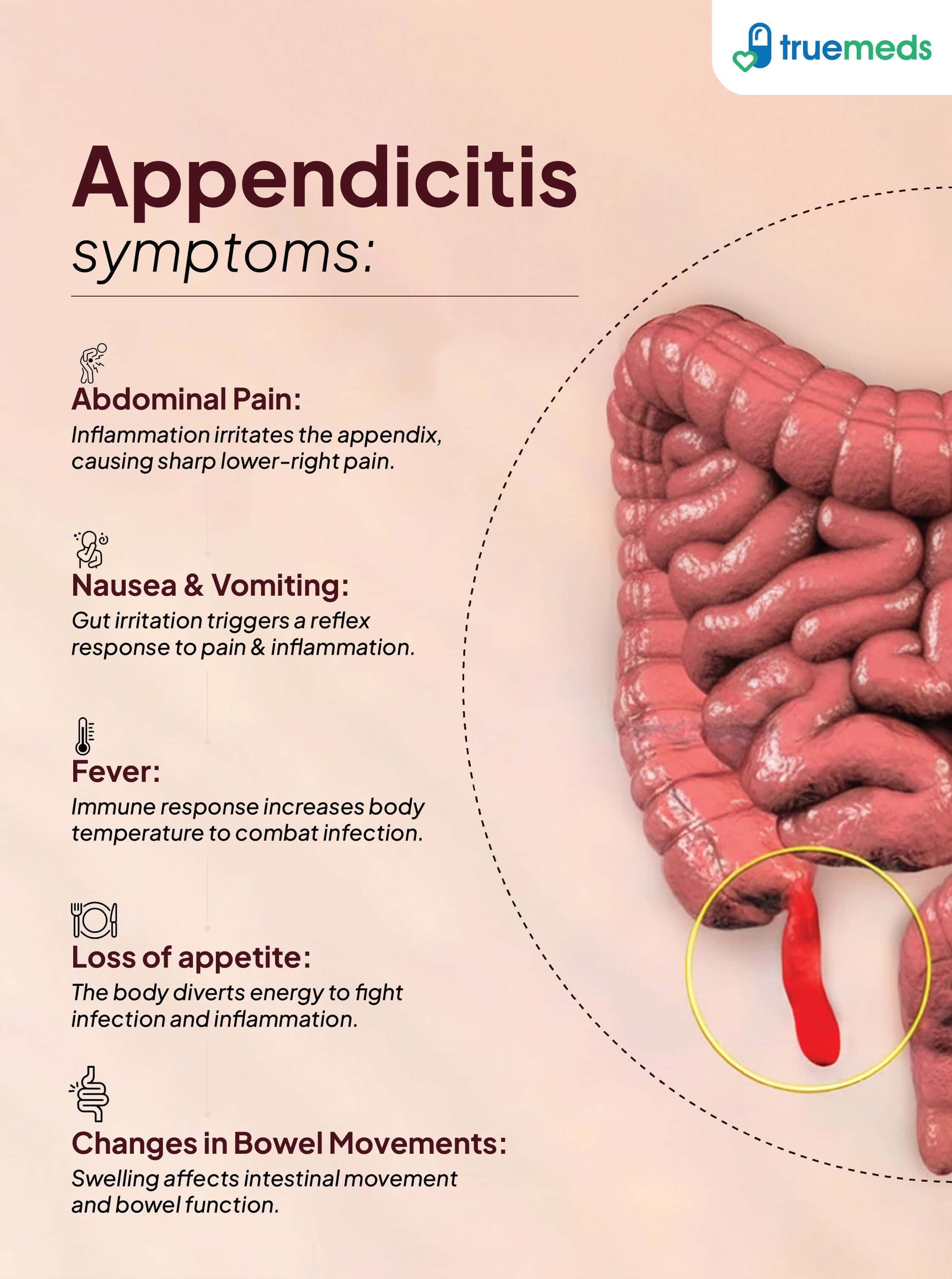
- Abdominal pain: Appendicitis typically begins with a dull, crampy pain around the belly button. This pain is initially vague and may come and go. The abdominal pain worsens with movement, such as walking or coughing, making simple activities painful.
- Nausea and vomiting: Nausea often develops soon after the pain starts, leading to vomiting. This combination is a direct result of inflammation and irritation of the gastrointestinal tract.
- Loss of appetite: A significant loss of appetite occurs, with individuals feeling unable to eat or drink, despite being normally hungry.
- Fever: A low-grade fever, typically between 37°C and 39°C, is common and indicates the body's response to infection.
- Changes in bowel movements: Some individuals experience constipation or difficulty passing gas, while others may have diarrhoea.
The commonly used diagnostic signs for appendicitis are McBurney's, Rovsing's, Psoas, and Obturator. McBurney's sign involves tenderness in the right lower quadrant of the abdomen, while Rovsing's sign is characterised by pain in the right lower quadrant upon palpating the left lower quadrant. The Psoas sign entails abdominal pain in the right lower quadrant with passive right hip extension.
In comparison, the Obturator sign involves pain in the right lower quadrant with passive right hip flexion followed by internal rotation of the right hip. These signs have varying sensitivity and specificity in diagnosing appendicitis. Guarding, rebound tenderness, and rigidity are additional clinical signs used to assess appendicitis (Echevarria & Rauf, 2023).
Stages of Appendicitis
Appendicitis typically progresses through several stages, which include:
Early appendicitis: In this stage, the appendix becomes blocked, usually by a small piece of stool, a foreign object, or an infection. This blockage causes inflammation and swelling of the appendix. Symptoms may include mild to moderate abdominal pain, nausea, vomiting, and loss of appetite.
Acute appendicitis: As the inflammation and swelling worsen, the appendix becomes more painful and tender to the touch. The pain may localise to the lower right side of the abdomen and become more severe. Other symptoms may include fever, chills, and constipation or diarrhoea.
Perforated appendicitis: If left untreated, the inflamed appendix can rupture, releasing bacteria and pus into the abdominal cavity. This stage is characterised by severe abdominal pain, high fever, and chills. A perforated appendix is a medical emergency that requires immediate surgery to remove the appendix and clean the abdominal cavity.
Abscess formation: In some cases, the body may attempt to contain the infection to fight the infection by forming a pocket of pus called an abscess. An abscess can be treated with antibiotics or drained surgically, depending on its size and location.
Peritonitis: If the infection spreads throughout the abdominal cavity, it can cause peritonitis, a serious inflammation of the abdominal lining. Peritonitis can lead to sepsis, a life-threatening condition that occurs when the body's response to infection causes widespread inflammation and organ failure. Prompt treatment with antibiotics and surgery is necessary to prevent these severe complications.
Causes of Appendicitis
Appendicitis occurs when the appendix becomes blocked and inflamed. The causes of appendicitis include:
Obstruction of the appendix: Appendicitis often begins with a blockage of the appendix's lumen. This obstruction can be caused by faecal matter, a foreign body, or cancer. The blockage leads to increased pressure, decreased blood flow, and infection within the appendix.
Infection: Bacterial infections can cause inflammation of the appendix. Common bacteria involved include those that normally reside in the intestines, such as Escherichia coli. The infection results in swelling and irritation of the appendix.
Appendiceal wall thickening: In some cases, the wall of the appendix thickens due to inflammation or infection. This thickening can lead to reduced blood flow and further inflammation, contributing to the development of appendicitis.
Inflammatory conditions: Certain inflammatory conditions, such as inflammatory bowel disease (Crohn’s disease), can cause the appendix to become inflamed. These conditions disrupt normal function and contribute to the development of appendicitis.
Trauma: In rare cases, abdominal trauma or injury can lead to appendicitis. Physical injury to the abdomen may cause direct damage or inflammation of the appendix.
Tumours: Although less common, tumours in or near the appendix can cause obstruction and inflammation. This can lead to the development of appendicitis if the tumour blocks the appendix’s opening or affects its blood supply.
Risk Factors
Several factors can increase the likelihood of developing appendicitis, including:
Age: Appendicitis is most common in individuals between the ages of 10 and 30, although it can occur at any age.
Gender: Males are more likely to develop appendicitis compared to females.
Family history: Having a family member who has had appendicitis increases your risk.
Diet: A diet low in fibre and high in processed foods may contribute to the development of appendicitis.
Inflammatory bowel disease (IBD): People with IBD, such as Crohn's disease or ulcerative colitis, have a higher risk of appendicitis.
Infection: Gastrointestinal viral infections, such as measles or mumps, may increase the risk of appendicitis.
Pregnancy: The pressure from foetal growth during pregnancy can also increase the risk of appendicitis, particularly due to the shift in the appendix's position.
Complications
If appendicitis is not detected and treated quickly, it can lead to serious complications, including:
Burst appendix: The inflamed appendix can rupture if treatment is delayed, spilling infectious material into the abdominal cavity. A burst appendix is a medical emergency requiring immediate surgery.
Peritonitis: This life-threatening condition occurs when bacteria from a ruptured appendix cause widespread inflammation of the abdominal lining (peritoneum). Peritonitis can rapidly worsen, leading to sepsis and organ failure if not treated promptly with antibiotics and surgery.
Abdominal infections: Pockets of pus called abscesses may form in the abdomen after an appendix bursts. These can cause persistent fevers and pain until they are drained surgically.
Sepsis: When the body's response to infection spirals out of control, it can lead to sepsis, a dangerous condition characterised by fever, rapid heart rate, difficulty breathing, and organ dysfunction. Sepsis is a medical emergency that can be fatal without rapid treatment.
Organ damage: If appendicitis treatment is significantly delayed and infection spreads, it can harm nearby organs like the bowel and ovaries.
Diagnosis & Tests
Diagnosing appendicitis involves a combination of clinical evaluation and imaging tests to accurately identify the condition and rule out other possible causes of abdominal pain. The diagnostic process typically includes the following steps:
- Medical history and physical exam: Your doctor will ask about your symptoms, medical history, and perform a thorough physical examination. They will check for tenderness, swelling, and rigidity in the lower right abdomen, which are common signs of appendicitis.
- Scoring systems: The AIR (Appendicitis Inflammatory Response) score and the AAS (Adult Appendicitis Score) are currently considered among the best-performing clinical prediction scores and have the highest discriminating power in adults with suspected acute appendicitis. In contrast, the two most commonly used scores in children are the Alvarado score and Samuel’s Pediatric Appendicitis Score (PAS) (De Saverio & Podda, 2020).
- Blood tests: A blood sample may be taken to check for signs of infection, such as an elevated white blood cell count (leucocytosis) and elevated CRP, which can indicate the presence of an inflammatory process in the body.
- Urine tests: Urinalysis may be performed to rule out urinary tract infections, which can sometimes cause abdominal pain similar to that of appendicitis.
- Abdominal ultrasound: This non-invasive test uses sound waves to create images of the internal organs, including the appendix. Ultrasound is often the first imaging test performed, especially in children and pregnant women, as it does not expose the patient to radiation.
- Computed tomography (CT) scan: A CT scan uses X-rays and computer technology to produce detailed cross-sectional images of the abdomen and pelvis. This test is highly accurate in diagnosing appendicitis and can help identify complications such as perforation or abscess formation.
- Magnetic resonance imaging (MRI): In some cases, particularly for pregnant patients or those who cannot undergo a CT scan, an MRI may be used to visualise the appendix and surrounding tissues.
Treatment & Management
The treatment and management of appendicitis depend on the severity of the condition and the presence of complications. Key treatment strategies include:
1. Surgical Removal (Appendectomy)
The gold-standard therapeutic intervention for acute appendicitis is appendectomy. Laparoscopic appendectomy is preferred over the open approach (Lotfollazadeh & Lopez, 2024). The choice of procedure depends on the severity of the condition and patient-specific factors.
2. Antibiotic Therapy
Cefotaxime, Ampicillin, and Sulbactam are commonly used antibiotics to treat or prevent infections associated with appendicitis. These antibiotics are initially administered intravenously and may later transition to oral forms as needed.
3. Pain Management
Pain relief is provided using medications such as acetaminophen or non-steroidal anti-inflammatory drugs (NSAIDs). In severe cases, stronger pain relievers may be required to manage discomfort effectively.
4. Fluid and Nutritional Support
Intravenous fluids are administered to maintain hydration, especially in cases where eating is restricted. As the patient recovers and tolerates food, nutritional support is gradually introduced.
Living with Disease
Living with appendicitis, particularly if it’s not promptly treated, can significantly impact daily life and health. Here are some key aspects to consider:
Regular pain management strategies, including medication and rest, are crucial for alleviating discomfort.
Following the doctor's recommendations for treatment and recovery is essential for preventing complications.
Keeping track of symptoms and any changes in health can help in seeking timely medical intervention.
Avoiding strenuous activities and modifying daily routines to accommodate recovery and prevent worsening of symptoms.
Maintaining a balanced diet and following any specific dietary advice from healthcare providers can aid in recovery and overall well-being.
Attending follow-up appointments to ensure proper healing and address any emerging issues.
When to See a Doctor?
If you experience symptoms suggestive of appendicitis, such as persistent or worsening abdominal pain, fever or chills, nausea or vomiting, bloating or abdominal swelling, and changes in bowel movements such as constipation or diarrhoea, it is essential to seek medical attention promptly. Additionally, redness, swelling, or discharge from the surgical incision site could be signs of complications. These symptoms may indicate either complications from the surgery or a recurrence of appendicitis and require prompt evaluation and treatment by a healthcare professional.
Key Takeaways
Appendicitis is a common surgical emergency characterised by inflammation of the appendix.
The most common symptom is abdominal pain that starts around the navel and shifts to the lower right abdomen.
Diagnosis is done on basis of clinical findings, laboratory tests, and imaging studies such as ultrasound or CT scan.
Treatment options include surgical removal of the appendix (appendectomy) and antibiotic therapy in selected cases of uncomplicated appendicitis.
Timely diagnosis and appropriate management are essential to prevent complications and ensure optimal outcomes.
FAQs
What causes appendicitis?
Appendicitis is mainly caused by blockage of the appendix due to hardened stool, tumours, parasites, enlarged lymphatic tissue, infections, or other conditions like inflammatory bowel disease.
What are the symptoms of appendix?
Common appendicitis symptoms include pain in the lower right abdomen, loss of appetite, nausea, vomiting, swollen belly, fever, and inability to pass gas.
How do you rule out appendicitis at home?
No, it is not recommended to diagnose appendicitis at home. Seek immediate medical attention if you suspect appendicitis for proper evaluation and diagnosis.
What are the 5 stages of appendicitis?
Appendicitis progresses through stages: initial obstruction, inflammation, perforation, abscess formation, and peritonitis. Prompt treatment is crucial to prevent complications.
What is the function of an appendix?
The appendix's exact function is unclear, but it may play a role in gut health, immune function, and maintaining beneficial gut bacteria.
Is appendicitis painful?
Yes, appendicitis can cause significant pain, typically starting near the navel and shifting to the lower right abdomen. Pain may worsen with movement or coughing.
Can we live without an appendix?
Yes, the appendix is not essential for survival, and people can live normally without it. Appendix removal (appendectomy) is a common treatment for appendicitis.
Is appendicitis a serious problem?
Yes, appendicitis is a serious condition that requires prompt medical attention. If left untreated, it can lead to life-threatening complications like a ruptured appendix.
Is it good to have an appendix?
The appendix is generally considered a vestigial organ with no essential function, but it may play a minor role in gut immunity and maintaining gut flora.
Is appendix surgery painful?
Appendectomy is performed under general anaesthesia, so patients do not feel pain during the surgery. Post-operative pain is managed with medications, and most people recover well.
References
- Johns Hopkins Medicine. (n.d.). Appendicitis. Retrieved from https://www.hopkinsmedicine.org/health/conditions-and-diseases/appendicitis
- Lotfollahzadeh, S., Lopez, R. A., & Deppen, J. G. (2024). Appendicitis. In StatPearls. StatPearls Publishing. https://www.ncbi.nlm.nih.gov/books/NBK493193/
- MedlinePlus. (2023). Appendicitis tests. U.S. National Library of Medicine. https://medlineplus.gov/lab-tests/appendicitis-tests/
- Di Saverio, S., Podda, M., De Simone, B., Ceresoli, M., Augustin, G., Gori, A., et al. (2020). Diagnosis and treatment of acute appendicitis: 2020 update of the WSES Jerusalem guidelines. World Journal of Emergency Surgery, 15, Article 27. https://doi.org/10.1186/s13017-020-00306-3
- Echevarria, S., Rauf, F., Hussain, N., Zaka, H., Farwa, U. E., Ahsan, N., Broomfield, A., Akbar, A., & Khawaja, U. A. (2023). Typical and atypical presentations of appendicitis and their implications for diagnosis and treatment: A literature review. Cureus, 15(4), e37024. https://doi.org/10.7759/cureus.37024
- National Institute of Diabetes and Digestive and Kidney Diseases. (2021). Treatment for appendicitis. U.S. Department of Health & Human Services. https://www.niddk.nih.gov/health-information/digestive-diseases/appendicitis/treatment

Latest health articles
Top Health Essentials



























Disclaimer
Top-Selling Medicines:
...View more
Top-OTC medicines:
...View more
Company
About UsHealth ArticleHealth StoriesHealth LibraryDiseases & Health ConditionsAyurvedaUnderstanding Generic MedicinesAll MedicinesAll BrandsNeed HelpFAQSecuritySavings CalculatorAdvertise with UsSubscribe
Registered Office Address
Grievance Officer
Download Truemeds


Contact Us
Our customer representative team is available 7 days a week from 9 am - 9 pm.
v4.28.13

2026 - Truemeds | All rights reserved. Our content is for informational purposes only. See additional information.

Our Payment Partners




