Key Takeaways
- AMH testing measures ovarian reserve and helps predict response to fertility treatments
- AMH reflects egg quantity, not quality, and does not directly predict pregnancy chances
- Normal AMH levels decline naturally with age, dropping below 1.2 ng/mL by age 36 on average
- Low AMH does not mean you cannot get pregnant; age remains the strongest predictor of fertility success
- Lifestyle changes, including a Mediterranean diet and healthy weight maintenance, may support ovarian health
- Supplements such as CoQ10 and DHEA may help when taken under medical supervision
- IVF and other fertility treatments can help women with low AMH achieve pregnancy
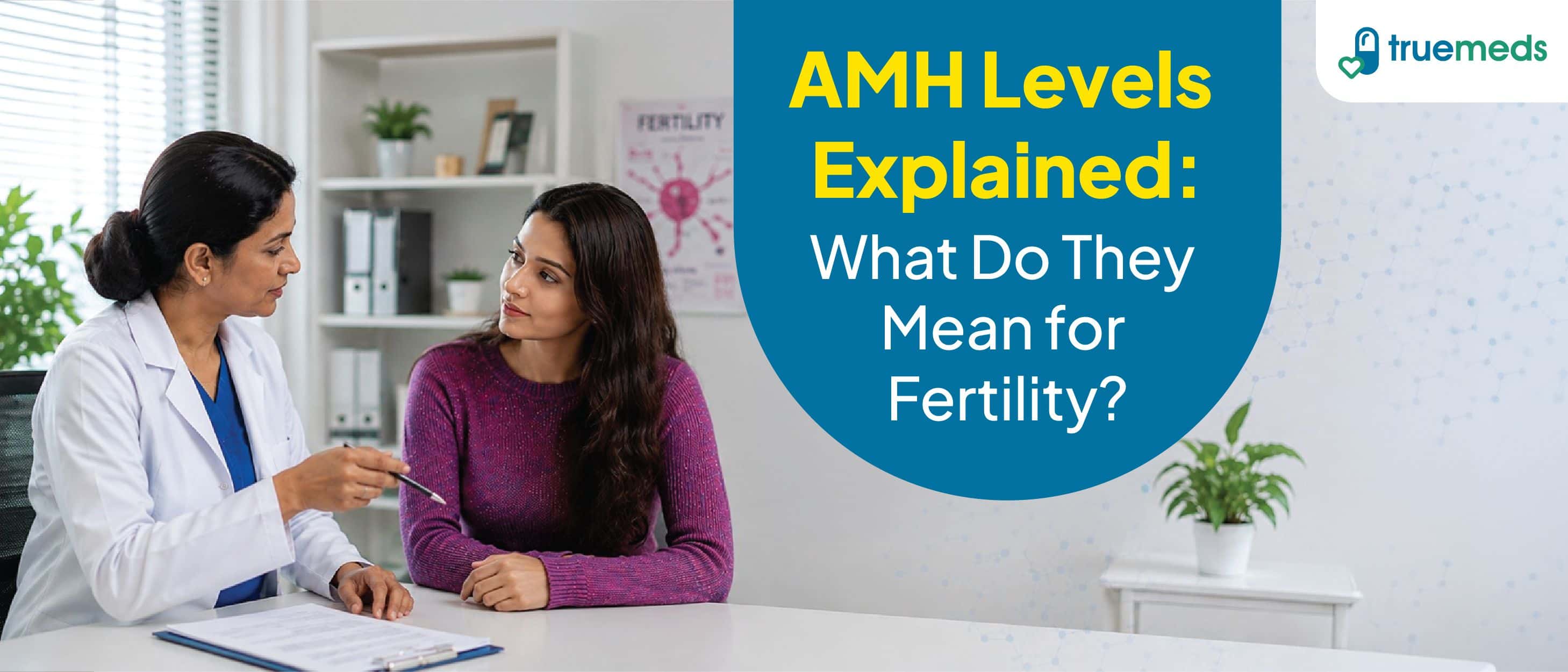
The AMH test offers a useful snapshot of ovarian reserve by measuring anti-Müllerian hormone, which is produced by developing ovarian follicles. Because AMH levels broadly reflect the pool of growing follicles, the test is often used when evaluating fertility and planning fertility treatment [1]. However, an AMH result is not a standalone measure of fertility or egg quality. Understanding what the test can, and cannot, tell you is key to interpreting your result in the right context.
What is an AMH test and why is it done?
An AMH test is a blood test that measures the level of anti-Müllerian hormone in your bloodstream. AMH is produced by cells in your ovarian follicles, and its level reflects your ovarian reserve, which represents the remaining supply of eggs in your ovaries.
Doctors use this test to estimate how many eggs you may have left and to predict how you might respond to fertility treatments [1]. The test can be done on any day of your menstrual cycle and does not require fasting.
However, AMH measures egg quantity, not quality [1]. Your AMH level tells your doctor about the number of eggs available but cannot determine whether those eggs are healthy or your likelihood of becoming pregnant.
What do your AMH levels mean?
AMH levels are measured in nanograms per millilitre (ng/mL). Understanding where your level falls can help you and your doctor plan appropriate next steps.
Low AMH levels
According to the Poseidon Classification, diminished ovarian reserve is defined as an AMH level below 1.2 ng/mL [2]. Low AMH suggests fewer eggs remaining in the ovaries, which may affect fertility treatment outcomes [1]. However, low AMH does not mean you cannot conceive naturally or with assistance.
Normal AMH levels
Normal AMH values typically exceed 2 ng/mL at age 30, approximately 1.5 ng/mL at age 35, and around 1 ng/mL at age 40 [3]. These values provide a general reference, though individual variation exists.
High AMH levels
Elevated AMH levels may indicate polycystic ovary syndrome (PCOS). Women with PCOS tend to have higher AMH levels, which can correlate with disease severity and may affect pregnancy outcomes [4].
What are normal AMH levels by age?
AMH levels naturally decline as women age. Research shows a significant negative correlation between age and AMH, with median values dropping below 1.2 ng/mL by approximately age 36 [2].
AMH levels in your 20s
Women in their twenties typically have higher AMH levels, often above 2.5 ng/mL. During this decade, ovarian reserve is generally at its peak for most women [2].
AMH levels in your 30s
By age 30, normal AMH levels are typically around 2 ng/mL, declining to approximately 1.5 ng/mL by age 35 [3]. This gradual decrease reflects natural changes in ovarian reserve.
AMH levels in your 40s and beyond
The prevalence of diminished ovarian reserve increases substantially with age, rising from approximately 16% at age 18 to 96% by age 45 [2]. By age 40, AMH levels around 1 ng/mL or below are common [3].
Can you get pregnant with low AMH?
Many women with low AMH levels successfully conceive, either naturally or with fertility treatments. Understanding what low AMH means for your fertility journey can help manage expectations.
What low AMH means for fertility
Low AMH indicates reduced egg quantity but does not reflect egg quality or your chances of conception. Age remains the strongest factor in determining success rates with fertility treatments [1]. Younger women with low AMH may still have good quality eggs capable of fertilisation.
Factors that matter beyond AMH levels
While AMH helps predict IVF outcomes, predicting live birth rates can be difficult, particularly in younger patients with low AMH [5]. Other factors influencing fertility include partner sperm quality, uterine health, fallopian tube function, and overall reproductive health [1].
What causes low AMH levels?
Several factors can contribute to low AMH levels, ranging from natural ageing to specific medical conditions.
Age-related decline
Ovarian reserve naturally decreases with age as follicular atresia (the natural loss of eggs) and ovulation deplete oocytes over time [6]. This process continues as women approach menopause, causing AMH levels to decline progressively.
Medical and lifestyle factors
Here are the various conditions that may affect AMH levels:
How to increase AMH levels: what really helps?
While you cannot stop the natural decline of AMH with age, certain approaches may support ovarian health. Consult your doctor before starting any supplements or making significant lifestyle changes.
Lifestyle changes that may support ovarian health
Maintaining a healthy weight, avoiding smoking and alcohol, and managing stress may help support overall reproductive health. While these changes cannot increase your egg count, they may help support overall fertility.
Managing underlying health conditions
Addressing conditions that affect ovarian function, such as endometriosis or PCOS, through appropriate medical care may help optimise fertility outcomes [7]. Regular monitoring and treatment of these conditions is important.
Supplements and fertility support
A meta-analysis of 16 studies involving 2,773 participants found that oral nutritional supplements, including vitamins, coenzyme Q10, and DHEA, may help improve fertility outcomes in women with diminished ovarian reserve [8].
Research also suggests that using coenzyme Q10 or a combination of nutritional supplements for more than two months may help improve serum AMH levels, follicle counts, and clinical pregnancy rates [8].
Always consult your healthcare provider before starting any supplement regimen.
What are the treatment options for low AMH?
Treatment approaches for low AMH depend on your fertility goals and overall health status.
Low AMH treatment based on fertility goals
Your doctor may recommend different approaches based on whether you are actively trying to conceive or preserving fertility for the future. Options range from lifestyle modifications to assisted reproductive technologies.
Fertility treatments your doctor may discuss
Before proceeding to IVF with ovarian stimulation, ovulation induction with or without intrauterine insemination (IUI) may be considered when appropriate [9]. This approach involves fewer procedural risks and lower costs per cycle compared to IVF.
AMH screening before fertility treatment should be used to estimate expected response, not to withhold treatment [1]. Low AMH alone should not disqualify you from pursuing fertility treatments.
When to consider specialist care
If you have low AMH levels and are planning pregnancy, consulting a reproductive endocrinologist or fertility specialist can help you understand your options. The International Evidence-Based Guideline for the Assessment and Management of Polycystic Ovary Syndrome includes AMH levels as a diagnostic tool and recommends specialist evaluation for women with concerns about ovarian reserve [10].
FAQs
How to check AMH in females?
An AMH test is a simple blood test that can be done on any day of your menstrual cycle. No fasting is required. A phlebotomist will draw blood and send it to a laboratory for analysis; results are typically available within a few days.
What are normal AMH levels by age?
Normal AMH typically exceeds 2 ng/mL at age 30, approximately 1.5 ng/mL at age 35, and around 1 ng/mL at age 40. These are general guidelines, and individual variation exists.
Can I get pregnant with low AMH?
Yes, pregnancy is possible with low AMH. This test measures egg quantity, not quality. Many women with low AMH conceive naturally or with fertility treatments. Your age and overall reproductive health also affect your chances of conceiving.
How can I increase my AMH levels naturally?
While you cannot increase your egg count, maintaining a healthy lifestyle may support ovarian health. Some studies suggest that supplements such as CoQ10 and DHEA may help, but always consult your doctor before starting any supplements.
Is it possible to improve low AMH levels?
Research suggests certain nutritional supplements, particularly CoQ10 and vitamin combinations used for over two months, may modestly improve AMH levels in some women. However, results vary individually, and medical supervision is essential.
What is the best treatment for low AMH?
Treatment depends on your goals. Options include lifestyle changes, supplements, ovulation induction, IUI, or IVF. Your doctor will recommend the best approach based on your specific situation, age, and fertility objectives.
Does low AMH mean infertility?
No, low AMH does not equal infertility. It indicates reduced ovarian reserve but does not reflect egg quality. Many women with low AMH achieve pregnancy naturally or through assisted reproduction.
At what age do AMH levels start declining?
AMH levels begin declining gradually from your late twenties, with more noticeable decreases in your mid-thirties. By age 36, median AMH levels typically fall below 1.2 ng/mL.
Can lifestyle changes improve AMH levels?
Lifestyle changes cannot increase your egg count, but healthy habits may support overall reproductive health. Avoiding smoking, maintaining a healthy weight, and managing stress may help optimise fertility outcomes.
When should I see a fertility specialist for low AMH?
Consider consulting a specialist if you have concerns about low AMH or are planning pregnancy. Early consultation allows more time to explore options.
Medical Disclaimer
This article is for informational purposes only and does not constitute medical advice. The information provided should not be used for diagnosing or treating health conditions. Always consult a qualified healthcare provider for diagnosis, treatment, and personalised medical advice. Do not disregard professional medical advice or delay seeking it because of information found in this article. If you have a medical emergency, contact your doctor or emergency services immediately.
References
National Library of Medicine. (2022). Evaluation of Female Fertility-AMH and Ovarian Reserve Testing. Journal of Clinical Endocrinology & Metabolism. https://academic.oup.com/jcem/article/107/6/1510/6518212?login=false
National Library of Medicine. (2025). Age-stratified anti-Müllerian hormone (AMH) nomogram: a comprehensive cohort study including 22,920 women. PMC. https://www.ncbi.nlm.nih.gov/pmc/articles/PMC12226283/
National Library of Medicine. (2025). Ovarian Reserve Testing. NCBI Bookshelf/Endotext. https://www.ncbi.nlm.nih.gov/books/NBK279058/
National Library of Medicine. (2023). Elevated Anti-Müllerian Hormone as a Prognostic Factor for Poor Outcomes of In Vitro Fertilization in Women with Polycystic Ovary Syndrome. Biomedicines/PMC. https://pmc.ncbi.nlm.nih.gov/articles/PMC10740605/