
Key Takeaways
- Bleeding after delivery (lochia) is normal and typically lasts for several weeks, usually stopping within 6 to 8 weeks
- Lochia progresses through three stages: red (days 1 to 3), pinkish-brown (days 4 to 10), and yellowish-white (days 10 to 28)
- Bleeding comes primarily from the placental attachment site as your uterus heals
- Breastfeeding and physical activity may temporarily increase bleeding but do not change total blood loss
- Use maternity pads only; avoid tampons and menstrual cups until your postnatal check
- Seek immediate help if you soak more than one pad per hour, pass large clots, or develop fever
- Small clots during the first few days are normal; large clots require medical attention
Experiencing bleeding after delivery can feel overwhelming for new mothers, but understanding what to expect helps ease concerns during recovery. Postpartum bleeding, medically known as lochia, affects all women who give birth, whether vaginally or through caesarean section [1]. Globally, the World Health Organisation estimates that approximately 14 million women experience postpartum haemorrhage each year, making awareness about normal versus concerning bleeding particularly important [2]. This guide explains what lochia after delivery involves, how long it typically lasts, and when you should seek medical attention.
What is bleeding after delivery?
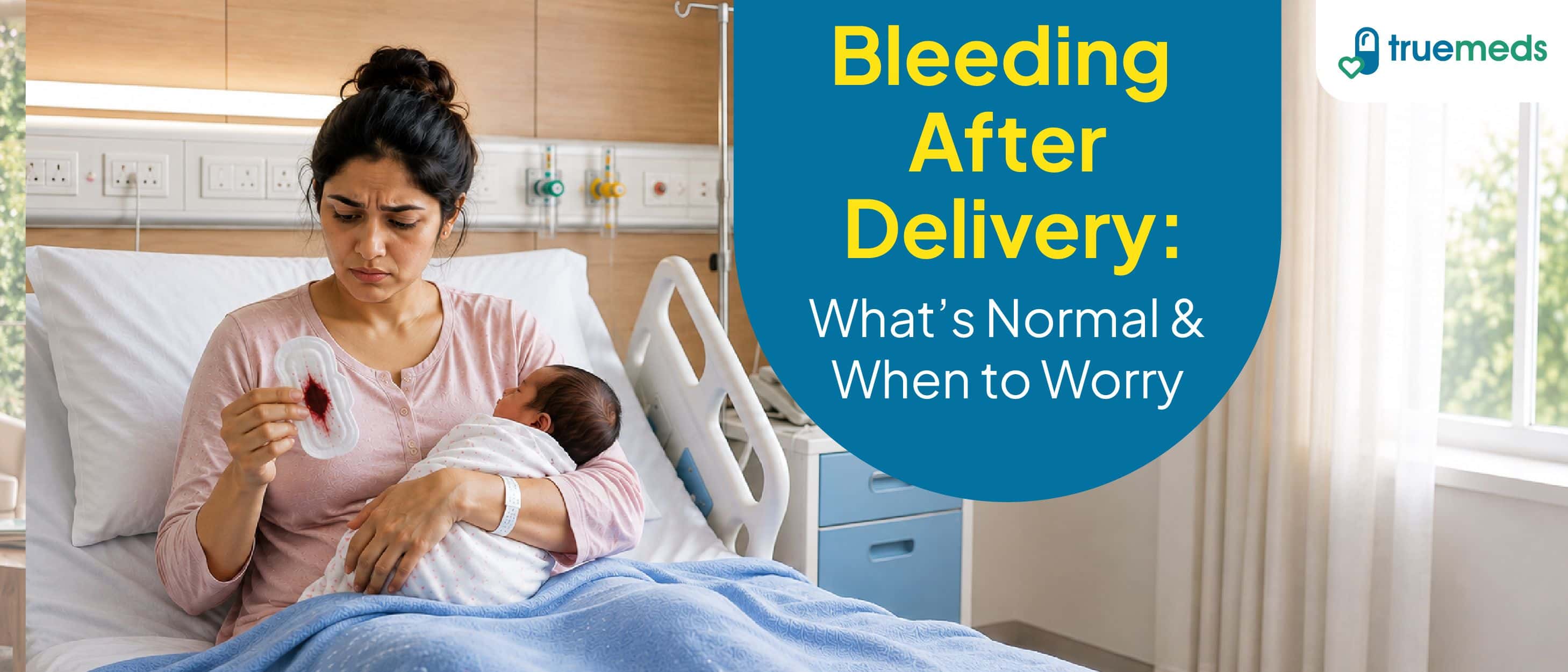
Bleeding after delivery is a normal part of postpartum recovery that occurs as your body heals following childbirth. This vaginal discharge, called lochia, consists of a combination of mucus, tissue, and blood that your womb sheds while replacing its lining [1]. The bleeding progresses through distinct stages known as lochia rubra, lochia serosa, and lochia alba, each with different characteristics [3].
Postpartum discharge is a natural healing process, but unusually heavy bleeding can indicate a complication. Your body gradually sheds old tissue from the placental attachment site while the endometrium generates new tissue, and this healing process takes several weeks to complete.
Why does bleeding after delivery occur?
The primary source of postpartum bleeding is the site where the placenta was attached to your uterine wall. When the placenta separates after birth, it leaves an open wound inside the uterus that needs time to heal. This wound bleeds as part of the natural healing process.
Additionally, your uterus sheds its thickened lining that developed during pregnancy. This discharge after childbirth occurs regardless of whether you had a vaginal delivery or caesarean section, since the bleeding originates from inside the uterus [4].
How long does bleeding after delivery last?
Most women can expect postpartum bleeding to continue for approximately 6 to 8 weeks after giving birth [5]. However, the intensity and characteristics of this bleeding change significantly throughout recovery.
Bleeding after delivery during the first week
The first day
On the first day, the blood loss is usually fresh red or brownish-red. It can be quite heavy, and you may soak a maternity sanitary towel every few hours.
During the first two to three days, you may pass one or two large clots, about the size of a tomato, or several smaller clots, around the size of a grape. Although clots can occur after birth, discuss them with your doctor and show them the clots whenever possible [1].
Days 2–6
The blood loss, or lochia, should become darker brown or pinkish-red. Initially, there may be a moderate amount of blood loss, leaving a 7–12 cm stain on your sanitary towel. This should gradually reduce towards day 6, when the stain may be around 5 cm.
You may also pass some very small clots, about the size of your little fingernail or smaller, once or twice during the first 10 days [1].
Bleeding after delivery in the weeks that follow
Days 7–10
The lochia may stay the same colour or become a lighter shade of brown or pinkish-red. The amount should continue to decrease, although it may vary. For most of the time, the stain on your sanitary towel should be less than 7 cm [1].
Days 11–14
The colour should stay the same or become lighter. If you are becoming more active, the blood loss may appear redder than before. The amount should continue to reduce, and some sanitary towels may have very little staining [1].
Third and fourth weeks
If lochia is still present, it should become paler and may be creamy white. The amount should continue to decrease, with longer periods of very little or no blood loss.
If the lochia stops during the second or third week and fresh red bleeding starts again, this could be your menstrual period restarting [1].
At about 6 weeks
You may still have a small or occasional amount of brown, pinkish-red or creamy-yellow lochia. Some women continue to have a light, pale stain on their sanitary towel for several weeks, either all the time or only on some days. If the bleeding becomes bright red again, it could be your menstrual period restarting [1].
What does normal bleeding after delivery look like?
Understanding the normal progression of postpartum discharge helps you identify when something might require medical attention.
Changes in colour, flow, and clots
Normal lochia gradually changes in colour and amount after delivery. The changes are as follows [1]:
- First day: Fresh red or brownish-red blood loss, which can be quite heavy.
- Days 2–6: The blood loss becomes darker brown or pinkish-red and gradually reduces.
- Days 7–10: The colour may remain the same or become lighter brown or pinkish-red, while the amount continues to decrease.
- Days 11–14: The colour should stay the same or become lighter, and the amount should continue to reduce.
- Third and fourth weeks: Any remaining lochia should become paler and may be creamy white.
- Around 6 weeks: A small or occasional amount of brown, pinkish-red or creamy-yellow lochia may still be present.
Small clots can occur after delivery. During the first two to three days, you may pass one or two larger clots, about the size of a tomato, or several smaller clots, around the size of a grape. Very small clots, about the size of your little fingernail or smaller, may also occur once or twice during the first 10 days. Discuss clots with your midwife and show them whenever possible [1].
Understanding lochia after delivery
Lochia is the blood loss and discharge after giving birth. It gradually becomes lighter in colour and decreases in amount.
It is usually fresh red or brownish-red at first, then becomes darker brown or pinkish-red before becoming paler or creamy white by the third and fourth weeks.
By around six weeks, some women may still have a small or occasional amount of brown, pinkish-red, or creamy-yellow lochia. If fresh or bright red bleeding returns after the lochia has stopped, it could be your period restarting [1].
What factors can affect bleeding after delivery?
Several factors may influence the amount and duration of your postpartum bleeding.
Breastfeeding can temporarily increase bleeding intensity. When you breastfeed or express milk, your body releases oxytocin, which causes uterine contractions [3]. These contractions help your uterus return to its pre-pregnancy size but may make bleeding appear redder and heavier immediately after feeding sessions [6].
Physical activity levels also affect bleeding patterns. As you increase activity through gentle walks or household tasks, you may notice a slightly heavier flow, particularly during the first two weeks [1]. This temporary increase is generally normal but should settle with rest.
When is bleeding after delivery not normal?
While postpartum bleeding is expected, certain patterns may indicate complications requiring medical attention.
Warning signs that need medical attention
Secondary postpartum haemorrhage refers to heavy bleeding occurring between 24 hours and 12 weeks after birth. This condition may be caused by infection or retained placental tissue [6]. You should seek medical attention if you experience any of the following symptoms.
Heavy bleeding resulting in the loss of more than 500 ml of blood within the first 24 hours after childbirth requires urgent medical evaluation. This level of blood loss may indicate postpartum haemorrhage, which needs prompt treatment [6].
Symptoms that should not be ignored
Certain symptoms warrant immediate medical attention [1]:
- Bright red bleeding that flows constantly, soaking through pads and clothing
- Heavy bleeding that continues for longer than one week without decreasing
- Discharge that develops an unpleasant or foul smell
- Large blood clots (bigger than a 50 pence coin or golf ball)
- Symptoms such as sore throat, headache, diarrhoea, or muscle pain
Recognising warning signs early and seeking prompt care can help prevent serious complications.
How to manage bleeding after delivery and stay comfortable
Managing postpartum bleeding involves choosing appropriate products and monitoring your recovery.
Use maternity pads rather than tampons or menstrual cups during the postpartum period. Do not use tampons or cups because they increase infection risk [1]. Maternity pads are specifically designed to handle heavier postpartum flow and are more comfortable for healing tissues.
Change pads regularly and wash your hands before and after changing to maintain hygiene [1]. Track how many pads you use each day so you can report any significant changes to your healthcare provider.
Rest when possible, as excessive activity may temporarily increase bleeding [1]. However, gentle movement may support overall recovery.
FAQs
Can breastfeeding affect bleeding after delivery?
Yes, breastfeeding releases oxytocin, which causes uterine contractions. This may make bleeding appear temporarily heavier and redder immediately after feeding. This effect actually helps your uterus return to normal size faster.
Is it normal for bleeding after delivery to stop and start again?
Some fluctuation in bleeding is normal, particularly with changes in activity levels. However, if bright red heavy bleeding returns after it has lightened significantly, consult your healthcare provider to rule out complications.
Can physical activity increase bleeding after delivery?
Yes, increasing activity such as walking or household chores may cause slightly heavier bleeding, especially during the first two weeks. Rest typically helps reduce the flow. Avoid strenuous exercise until your doctor clears you.
When will periods return after bleeding after delivery ends?
For non-breastfeeding mothers, periods typically return 6 to 8 weeks postpartum. If you are exclusively breastfeeding, your periods may not return for 6 months or longer due to hormonal effects.
Are blood clots normal during bleeding after delivery?
Small clots are normal, especially during the first few days. However, clots larger than a 50 pence coin or golf ball should be reported to your midwife or doctor for evaluation.
Is bleeding after delivery different after a vaginal birth and a C-section?
Lochia occurs after both vaginal and caesarean deliveries since the bleeding originates from where the placenta was attached inside the uterus, not from birth canal trauma.
What sanitary products are best during postpartum recovery?
Use maternity pads during postpartum recovery. Avoid tampons and menstrual cups until after your postnatal check-up because of infection risk to healing tissues.
Is lochia after delivery the same as postpartum bleeding?
Yes, lochia is the medical term for postpartum bleeding. It describes the vaginal discharge consisting of blood, mucus, and tissue that your body sheds during recovery.
How long does lochia after delivery usually last?
Lochia typically lasts 4 to 8 weeks but may continue up to 12 weeks in some cases. The discharge should gradually become lighter in colour and flow over this period.
What does normal postpartum discharge look like?
Normal discharge starts bright red, becomes pinkish-brown around day 4 to 10, and turns yellowish-white after approximately 10 to 12 days. The flow decreases gradually throughout recovery.
Medical Disclaimer
This article is for informational purposes only and does not constitute medical advice. The information provided should not be used for diagnosing or treating health conditions. Always consult a qualified healthcare provider for diagnosis, treatment, and personalised medical advice. Do not disregard professional medical advice or delay seeking it because of information found in this article. If you have a medical emergency, contact your doctor or emergency services immediately.
References
NHS Healthier Together. (n.d.). Blood loss – what to expect after birth. NHS. https://www.abbhealthiertogether.cymru.nhs.uk/pregnant-women/after-you-have-had-your-baby-2/blood-loss-what-expect-after-birth
World Health Organisation. (2023). WHO announces the first meeting of the postpartum haemorrhage (PPH) bundle Guideline Development Subgroup. WHO. https://www.who.int/news/item/14-08-2023-who-announces-the-first-meeting-of-the-postpartum-haemorrhage-(pph)-bundle-guideline-development-subgroup
Open RN. (2025). Postpartum care. Nursing Health Promotion. NCBI Bookshelf. https://www.ncbi.nlm.nih.gov/books/NBK615369/
National Center for Biotechnology Information. (2026). Physiology, Postpartum Changes. StatPearls. https://www.ncbi.nlm.nih.gov/books/NBK555904/