Key Takeaways
- Research on magnesium for sleep shows mixed results, with most studies being small and of moderate quality
- Magnesium may help reduce the time it takes to fall asleep in some people
- Forms like magnesium bisglycinate, magnesium threonate and magnesium citrate are better absorbed than magnesium oxide
- The recommended daily allowance is 410-420 mg for men and 310-320 mg for women, with a supplemental upper limit of 350 mg
- People with gastrointestinal conditions, type 2 diabetes, or older adults are more likely to have low magnesium levels
- Always consult a healthcare provider before starting magnesium supplements
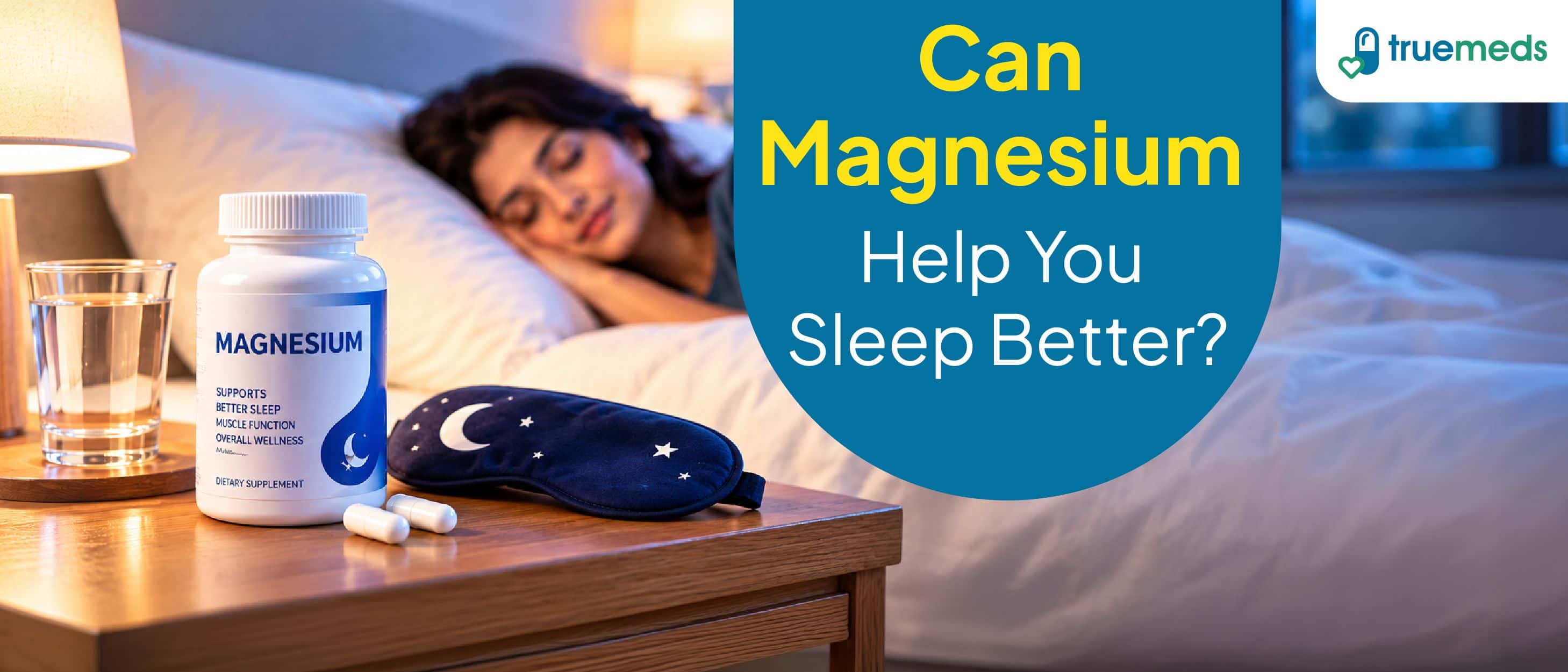
Many people consider taking magnesium for sleep, hoping it will help them fall asleep faster or stay asleep longer. However, the evidence supporting magnesium supplements for sleep improvement remains limited. Studies examining magnesium's effects on sleep have generally been small and produced conflicting results[1]. Magnesium plays a role in over 300 enzyme systems in your body, including those affecting nerve function [2]. This article explores what current research shows about magnesium and sleep, which forms may be most beneficial, safe dosages, and who might benefit most from supplementation.
What does the research say about magnesium and sleep?
The scientific evidence for magnesium as a sleep aid remains inconclusive. A 2024 review by the National Center for Complementary and Integrative Health found that studies suggesting positive effects were small and mostly of low quality[1].
A meta-analysis pooling three randomised controlled trials involving 151 older adults found that participants taking magnesium supplements fell asleep about 17.36 minutes faster than those taking a placebo. However, the improvement in total sleep time (approximately 16.06 minutes) was not statistically significant, and all trials carried moderate-to-high risk of bias [3].
Another systematic review found that five out of eight sleep-related studies reported improvements in at least one sleep parameter, while two showed no improvements[4]. These mixed findings suggest that magnesium may help some individuals with certain sleep parameters, but it is not a guaranteed solution.
Magnesium supplements are not a proven treatment for sleep disorders. Consult a healthcare provider for persistent sleep problems.
Does magnesium really make you sleepy, or is that just marketing?
Magnesium plays an important role in regulating neuronal activity in the central nervous system, particularly through its effects on NMDA and GABA-A receptors[4].
A randomised controlled trial found that participants taking magnesium L-threonate maintained good sleep quality over the study period, while the placebo group experienced declining sleep quality. Objective measurements using sleep tracking devices showed significant improvements in deep sleep and REM sleep scores in the magnesium group[5].
The evidence on magnesium and sleep is limited and mixed. Some studies suggest it may help people fall asleep more quickly or improve certain aspects of sleep, but the studies were generally small or low quality. Overall, there isn’t enough rigorous evidence to determine whether magnesium supplements are effective for sleep disorders[1].
Do not use magnesium as a replacement for addressing underlying sleep disorders.
Which magnesium is best for sleep?
Not all magnesium supplements are equally effective. The form determines how well your body can absorb and use the mineral.
A 2025 randomised controlled trial involving 155 adults found that magnesium bisglycinate (providing 250 mg of elemental magnesium daily) significantly reduced insomnia severity scores compared to placebo. The effect size was small but statistically meaningfu[6].
According to the NIH, magnesium forms that are more easily absorbed include[7]:
- Magnesium citrate
- Magnesium aspartate
- Magnesium lactate
- Magnesium chloride
Magnesium oxide, while commonly sold, is less bioavailable and may not deliver as much usable magnesium to your body[7]. If you are considering magnesium specifically for sleep support, magnesium glycinate, magnesium threonate or magnesium citrate may be better choices based on absorption[8].
How much magnesium should you take for sleep?
There are no official guidelines for how much magnesium you should take specifically for sleep. Your recommended daily intake depends on your age and sex. According to the National Institutes of Health (NIH), the recommended daily amounts are[2]:
| Age | Male | Female |
|---|---|---|
| 0–6 months | 30 mg | 30 mg |
| 7–12 months | 75 mg | 75 mg* |
| 1–3 years | 80 mg | 80 mg |
| 4–8 years | 130 mg | 130 mg |
| 9–13 years | 240 mg | 240 mg |
| 14–18 years | 410 mg | 360 mg |
| 19–30 years | 400 mg | 310 mg |
| 31–50 years | 420 mg | 320 mg |
| 51+ years | 420 mg | 320 mg |
| Pregnant, 14–18 years | — | 400 mg |
| Pregnant, 19–30 years | — | 350 mg |
| Pregnant, 31–50 years | — | 360 mg |
For supplements specifically, the FDA sets an upper limit of 350 mg per day. This limit applies to supplements only, not magnesium from food. Exceeding this amount may cause digestive side effects, particularly diarrhoea, nausea and stomach cramps[2].
Always consult your healthcare provider before starting magnesium supplements to determine the appropriate dose for your needs.
Who is most likely to be magnesium deficient?
Certain groups are at higher risk for inadequate magnesium levels. According to the NIH, people more likely to have magnesium inadequacy include[2]:
- People with gastrointestinal diseases (Crohn's disease, coeliac disease)
- People with type 2 diabetes
- People with alcohol dependence
- Older adults
Age plays a significant role in magnesium status. Intestinal magnesium absorption tends to decrease with age, while urinary magnesium excretion tends to increase. This combination can raise the risk of magnesium depletion in older adults even when dietary intake appears adequate[2].
Exploratory analysis from a study suggested that participants with lower baseline dietary magnesium intake showed greater improvements from supplementation[6].
Safety and side effects of magnesium supplements
Magnesium supplements are generally safe for most people when taken at recommended doses. The most common side effects of exceeding the 350 mg daily supplemental limit is diarrhoea, nausea and abdominal cramping. Serious toxicity from oral magnesium supplements is rare in people with healthy kidney function. However, people with kidney disease cannot excrete excess magnesium efficiently and should avoid supplements unless directed by a doctor[2].
Magnesium can interact with certain medications. It may form insoluble complexes with tetracycline and quinolone antibiotics, reducing their effectiveness. If you take these antibiotics, take them at least 2 hours before or 4-6 hours after your magnesium supplement[2].
Consult your doctor before taking magnesium supplements if you have kidney disease or take any medications.
FAQs
Is it safe to take magnesium every night for sleep?
Generally yes, when taken at recommended doses up to 350 mg daily from supplements. People with kidney disease should consult a doctor first, as their bodies cannot efficiently remove excess magnesium.
Does magnesium actually make you tired?
Not directly. Magnesium does not work as a sedative. Research suggests it may support conditions favourable for sleep rather than causing drowsiness itself.
Why do I feel so good after taking magnesium?
Magnesium supports over 300 enzyme systems in your body, including those involved in muscle function and nerve signalling. If your dietary intake was low, supplementation may help restore normal function, potentially improving how you feel overall.
Can you take too much magnesium?
Yes. Exceeding 350 mg daily from supplements commonly causes diarrhoea and nausea. Very high doses or impaired kidney function can lead to more serious toxicity. Stick to recommended amounts and consult a healthcare provider if unsure.
How long does it take for magnesium to help you sleep?
There is no established timeline for magnesium to help with sleep. Magnesium is not an immediate sleep aid. Studies have used different durations of supplementation, so it is unclear how long it may take before any changes are noticed.
Does magnesium interact with any medications
Yes, magnesium can reduce absorption of certain antibiotics, bisphosphonates, diuretics and proton pump inhibitors. If you take these medications, discuss suitable timing with your doctor.
Is magnesium better than melatonin for sleep?
They work differently. Melatonin signals your body when to sleep, while magnesium may support overall sleep quality through its role in nerve function. Neither is definitively better; the right choice depends on your specific sleep issues. Consult a healthcare provider for guidance.
Can I get enough magnesium from food alone?
Yes, many people can meet their needs through diet. Good sources include green leafy vegetables, nuts, seeds, whole grains, and legumes. Those at risk for deficiency may need supplementation.
Medical Disclaimer
This article is for informational purposes only and does not constitute medical advice. The information provided should not be used for diagnosing or treating health conditions. Always consult a qualified healthcare provider for diagnosis, treatment, and personalised medical advice. Do not disregard professional medical advice or delay seeking it because of information found in this article. If you have a medical emergency, contact your doctor or emergency services immediately.
References
National Center for Complementary and Integrative Health. (2024). In the news: Magnesium supplements for sleep disorders. NCCIH. https://www.nccih.nih.gov/health/in-the-news-magnesium-supplements-for-sleep-disorders
National Institutes of Health Office of Dietary Supplements. (2026). Magnesium: Fact sheet for health professionals. NIH Office of Dietary Supplements. https://ods.od.nih.gov/factsheets/Magnesium-HealthProfessional/
Mah, J., & Pitre, T. (2021). Oral magnesium supplementation for insomnia in older adults: A systematic review and meta-analysis. BMC Complementary Medicine and Therapies. https://www.ncbi.nlm.nih.gov/pmc/articles/PMC8053283/
Rawji, A., Peltier, M. R., Mourtzanakis, K., Awan, S., Rana, J., Pothen, N. J., & Afzal, S. (2024). Examining the effects of supplemental magnesium on self-reported anxiety and sleep quality: A systematic review. Cureus, 16(4), e59317. https://www.ncbi.nlm.nih.gov/pmc/articles/PMC11136869/