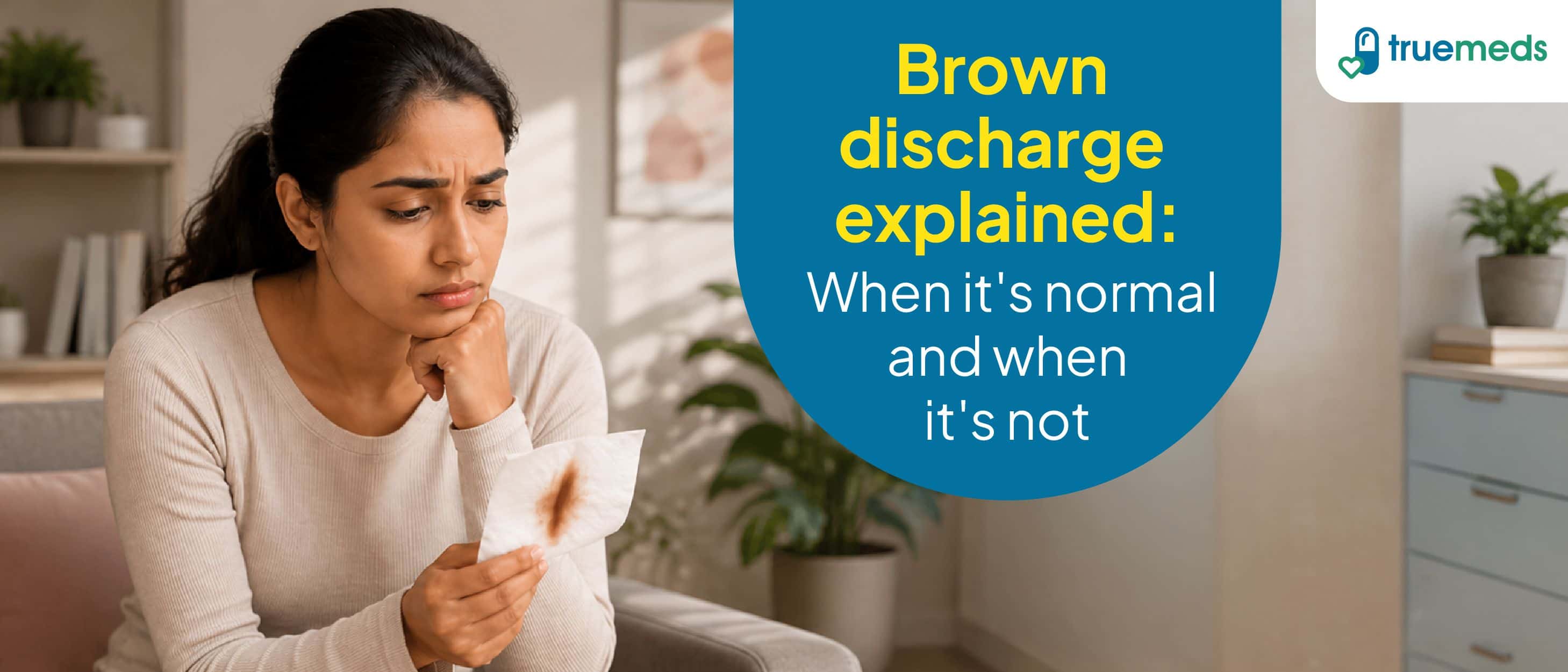
Brown discharge before or after a period is among the most common menstrual concerns Indian women report. In many cases, it is simply old or slow-moving blood leaving the body, because menstrual bleeding often becomes lighter at the beginning or end of a period, allowing blood to oxidise and appear brown[1]. However, timing, amount, smell, and accompanying symptoms can help determine whether brown discharge is a routine cycle variation or something that deserves medical attention.
This guide explains the common causes before and after a period, causes unrelated to the cycle, warning signs to watch for, and practical tracking tips.
Key Takeaways
- Brown discharge often represents older or oxidised blood, most commonly appearing at the start or end of a period as flow is lightest.
- Timing in the cycle matters more than colour alone when deciding whether discharge is a normal variation.
- Brief spotting linked to ovulation, hormonal contraception, stress, or lifestyle changes is a recognised occurrence.
- Discharge with a strong smell, itching, fever, pelvic pain, heavy bleeding, pregnancy, or repeated unexplained spotting should always be evaluated by a doctor.
- Keeping a simple record of timing, amount, and associated symptoms makes medical consultations more useful.
What Brown Discharge Can Tell You About Your Menstrual Cycle
The colour of vaginal bleeding depends largely on how quickly blood leaves the body. Fresh blood flowing at a normal rate tends to appear bright red. When blood moves slowly or in very small amounts, it mixes with vaginal fluid and oxidises, producing a brown colour[1].
Timing is an important clue. Bleeding that stays within the expected cycle window usually fits normal menstruation. Bleeding that occurs between expected periods is classified as intermenstrual bleeding and can have a wider range of causes[2]. So when you notice brown discharge, noting where it falls in your cycle is often more informative than the colour alone.
Light Brown vs Dark Brown Discharge: What the Shade Can Tell You
The lightness or darkness of brown discharge broadly reflects how much blood is present relative to vaginal fluid, and how long that blood has taken to leave the body:
Brown Discharge Before Your Period: Common Reasons It Happens
Brown discharge before period arrival is a pattern many women experience. The most common reasons include:
Hormonal changes and irregular ovulation: Hormone fluctuations during a cycle can cause a small amount of blood to be shed before the main flow begins. Abnormal bleeding is often associated with irregular ovulation and related hormonal shifts[3].
The start of menstruation: A period does not always begin with a sudden rush of bright red blood. For some women, the flow starts slowly and lightly, appearing brown before becoming heavier[1].
Spotting: Spotting before a period can occur due to hormonal fluctuations and may be a normal variation of the menstrual cycle[2].
Early pregnancy: Some women experience light spotting around the time of implantation, although the exact cause remains uncertain. However, any bleeding during pregnancy should be discussed with a clinician promptly[4].
Professional diagnosis is essential if you suspect pregnancy or if pre-period spotting is new, heavy, or painful.
Brown Discharge After Your Period: Why It Often Happens Naturally
Brown discharge after period flow has slowed down is usually the tail end of menstruation. Flow is typically heaviest in the first couple of days, and lighter blood toward the end of a period may appear pink or brown rather than red[1]. This is generally considered a normal variation rather than a cause for concern.
That said, it is worth knowing when post-period brown discharge moves outside the normal range. If spotting continues well beyond the usual menstrual window, recurs between periods, or becomes heavy or prolonged, it is treated as abnormal uterine bleeding and warrants medical assessment[5]. The cautious approach is to monitor how long the spotting lasts and report anything unusual to your doctor.
Brown Discharge Causes Beyond Your Monthly Period
Several situations can cause brown discharge that is not directly linked to the start or end of a period. These include:
Ovulation: Around the midpoint of the menstrual cycle, ovulation can occasionally cause brief spotting. Other causes of bleeding between periods include cervical inflammation, uterine conditions, IUD use, stress, or missed hormonal contraception doses[6].
Hormonal contraception: Hormonal birth control is a common cause of spotting or light bleeding between periods. Management varies depending on the type of method used, such as implants, injectables, or combined hormonal pills[7].
PCOS: Polycystic ovary syndrome commonly disrupts menstrual bleeding through absent or infrequent ovulation, which can make cycles unpredictable and may contribute to spotting[8].
Perimenopause: During the menopausal transition, periods can become shorter, longer, closer together, heavier, or lighter. Vaginal atrophy after menopause can make tissues more fragile, sometimes leading to light bleeding or spotting[9].
Cervical irritation and infections: Pregnancy-related cervical changes, sexually transmitted infections, and vaginal infections can all contribute to unusual discharge or bleeding outside the normal menstrual period.
Consult your doctor before attributing brown discharge to any of these causes without a proper assessment.
When Brown Discharge Is Usually Harmless and When It May Need Attention
Not all brown discharge requires urgent action. Light, brief brown spotting that fits within your usual cycle pattern and comes with no other symptoms is often a normal variation. The following features, however, suggest it is time to seek medical attention.
Seek medical review if you notice[3]:
Heavy bleeding that soaks a pad or tampon every hour for 2 or more consecutive hours
Bleeding lasting more than a week
Any bleeding during pregnancy
Bleeding after menopause
Spotting that recurs repeatedly after sex or between periods
Fever, lower abdominal pain, or dizziness alongside abnormal bleeding
Lifestyle and Hormonal Changes That Can Affect Brown Discharge
The menstrual cycle is sensitive to everyday changes in health and lifestyle. Stress, recent weight loss or gain, changes in exercise routine, low oestrogen levels, and hormonal changes can all affect bleeding patterns. A study involving adolescents and young women found associations between menstrual disorders and factors including BMI, sleep, and physical activity patterns[10].
Hormonal contraceptives can also alter discharge and spotting behaviour, particularly when a method is changed or started or when doses are missed[7]. PCOS is an important hormonal condition worth considering in women whose cycles are consistently irregular[8]. Thyroid disorders, including both hypothyroidism and hyperthyroidism, are also among the common causes of irregular menstrual bleeding and should be considered during evaluation[11].
These factors do not automatically explain brown discharge, but they give useful context when discussing cycle changes with a doctor.
Tracking Brown Discharge: What Patterns Are Worth Noticing
Keeping a simple record of your discharge can make a medical consultation much more productive. Useful information to track includes:
The start and end dates of the brown discharge
Whether it appears before, during, or after the main period, or between periods
How much there is and whether it is increasing or decreasing
Whether it is accompanied by pain, odour, fever, or itching
Any bleeding after sex
Whether there is any possibility of pregnancy
Noting colour changes (from brown to bright red, or from light to heavy) over time can also help a clinician identify a pattern. If you use a cycle-tracking app or a simple diary, recording these details each month gives you useful data rather than relying on memory during a consultation.
Repeated intermenstrual spotting, unusual discharge, or any significant change from your usual cycle is worth bringing to a doctor's attention [2].
FAQs
Can brown discharge be an early sign of pregnancy?
Brief brown spotting can occur in very early pregnancy. However, it is not a reliable sign of pregnancy on its own. If you suspect pregnancy or experience ongoing bleeding, pain, or dizziness alongside the discharge, consult a healthcare provider for proper assessment.
Is it normal to have brown discharge instead of a regular period?
Light or brown flow can occur due to hormonal changes or with a lighter-than-usual menstrual period. If a usual period is repeatedly replaced by spotting only, pregnancy and other causes such as hormonal imbalance should be considered with the help of a doctor.
Can birth control pills cause brown discharge between periods?
Yes, hormonal contraception commonly causes spotting or light bleeding between periods, particularly when a method is first started or changed or when doses are missed. A healthcare provider can advise on whether the pattern is expected or needs review.
How many days can brown discharge last after a period?
Brown discharge often occurs toward the end of a normal menstrual period, which typically lasts 2 to 7 days. Bleeding that continues well beyond this or recurs between periods is worth discussing with a doctor.
Can stress delay a period and cause brown discharge?
Yes, stress is a recognised factor associated with irregular bleeding and may contribute to spotting or changes in cycle timing. If stress-related disruptions to your cycle are frequent, a healthcare provider can help identify the cause.
Does brown discharge always contain old blood?
Often, but not always. It is often a small amount of older blood mixed with vaginal secretions, producing a brown appearance. Timing and accompanying symptoms remain more important than colour alone.
Can brown discharge occur even if my menstrual cycle is regular?
Yes. Occasional spotting can still appear around ovulation, with hormonal contraception, or from minor hormonal shifts even in otherwise regular cycles. Repeated spotting between periods in a regular cycle is worth mentioning to a doctor.
Medical Disclaimer
This article is for informational purposes only and does not constitute medical advice. The information provided should not be used for diagnosing or treating health conditions. Always consult a qualified healthcare provider for diagnosis, treatment, and personalised medical advice. Do not disregard professional medical advice or delay seeking it because of information found in this article. If you have a medical emergency, contact your doctor or emergency services immediately.
References
NHS. (2023). Periods. https://www.nhs.uk/conditions/periods/
NLM MedlinePlus. (2025). Vaginal bleeding between periods. https://medlineplus.gov/ency/article/003156.htm
NLM MedlinePlus. (2024). Vaginal or uterine bleeding. https://medlineplus.gov/ency/article/007496.htm
NHS. (2026). Vaginal bleeding in pregnancy. https://www.nhs.uk/pregnancy/common-symptoms/vaginal-bleeding/