Key Takeaways
- Stress can delay your period by disrupting the hormonal signals between your brain and ovaries
- Intense exercise combined with inadequate nutrition may cause menstrual irregularities or stop periods entirely
- Significant weight loss, particularly rapid weight loss, can affect your menstrual cycle by disrupting reproductive hormone signalling
- The hypothalamus acts as the control centre for your menstrual cycle and responds to stress, energy availability, and body composition
- Occasional late periods are common, but missing three or more periods or experiencing additional symptoms warrants medical evaluation
- Maintaining adequate nutrition and managing stress can help support regular menstrual cycles
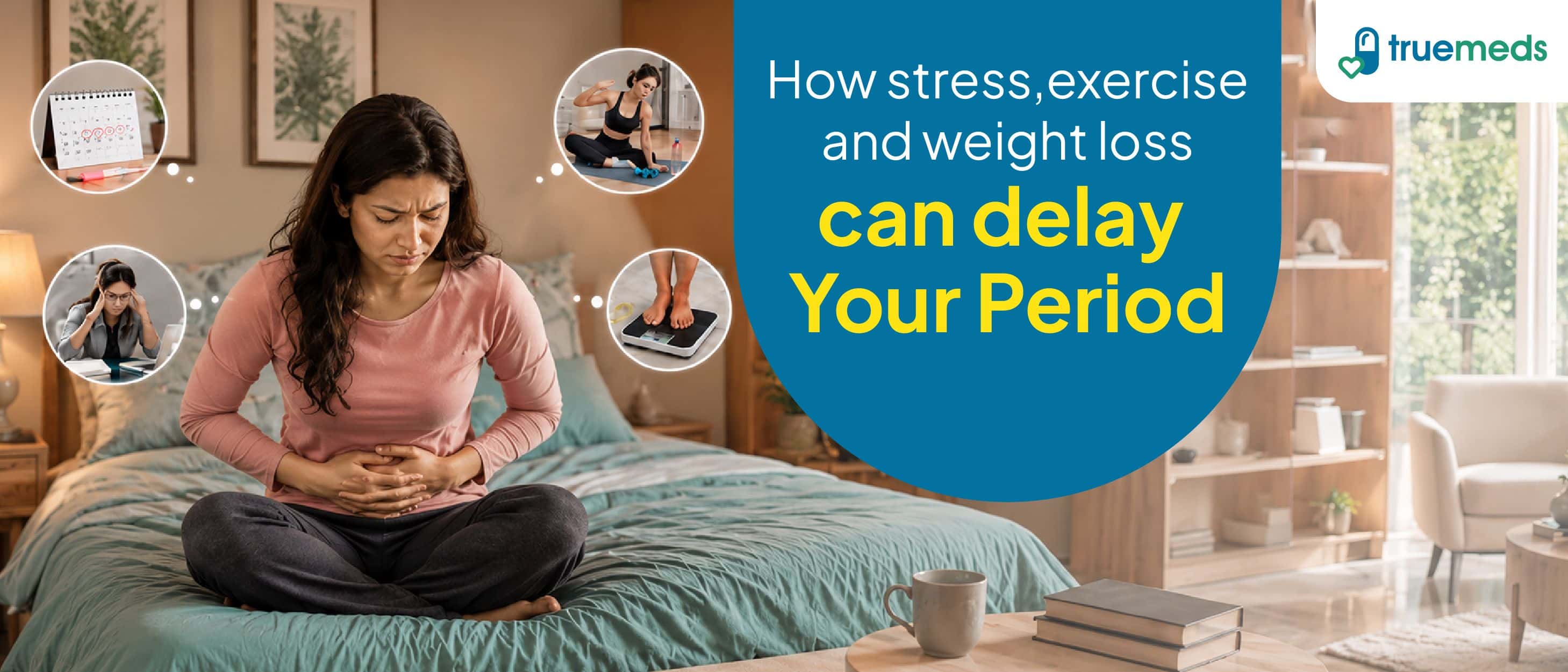
A late period can feel worrying, especially when you are not expecting it. Stress can affect the timing of your menstrual cycle, so it is natural to ask, “Can stress delay periods?” Other factors, including changes in exercise levels and body weight, can also affect your cycle [1]. A normal menstrual cycle typically lasts between 21 and 35 days [2]. Understanding what may be causing your late period can help you decide whether to wait or seek medical advice.
Why is my period late?
Late or irregular periods can happen for many reasons. Common causes include hormonal contraception, significant weight changes, stress and anxiety, and exercising too much [1]. While pregnancy is often the first concern, lifestyle factors frequently play a role in menstrual irregularities.
Your body's hormonal balance is sensitive to changes in your daily routine. When something disrupts this balance, your cycle may respond by becoming shorter, longer, or skipping altogether.
Can stress delay your period?
Yes, stress can delay your period. Periods of psychological distress can affect menstrual health by activating the hypothalamic-pituitary-gonadal (HPG) axis, which controls reproductive hormones. When this system is disrupted, it may result in a condition called functional hypothalamic amenorrhoea (FHA) [3].
How stress affects your hormones
Stress triggers your body to release cortisol and other stress hormones. These can interfere with gonadotropin-releasing hormone (GnRH), which controls ovulation [4]. When GnRH pulsatility is suppressed, your brain may not signal your ovaries to release an egg, leading to a late or missed period [3].
This hormonal disruption explains why a stressful month at work, relationship problems, or major life changes can affect your cycle. Your body prioritises dealing with stress over reproduction.
How many days late is typical with stress
Stress can delay your period by a few days to several weeks. If your period has been absent for more than six months, this is called secondary amenorrhoea [5]. At this point, a medical evaluation may help rule out other causes.
If you experience prolonged menstrual irregularities, consult your healthcare provider.
Can exercise delay your period?
Intense exercise can stress your body and affect the hormones responsible for your period [6]. While moderate physical activity supports overall health, excessive exercise without adequate nutrition may disrupt your menstrual cycle.
Why intense exercise affects your cycle
When you exercise intensely, your body requires more energy. If you do not consume enough calories to match your activity level, your body may conserve energy by reducing non-essential functions, including reproduction [6].
Losing too much body fat is not the only factor that can affect your cycle. Low energy availability can disrupt the hormonal system that regulates the menstrual cycle, leading to menstrual dysfunction such as irregular periods, anovulation, or secondary amenorrhoea [6].
Who is most at risk
Athletes and those who exercise frequently without adequate nutrition face the highest risk. The Female Athlete Triad describes three interconnected effects of insufficient energy intake: menstrual disturbances, reduced bone mineral density, and bone health problems [7]. When the body does not receive enough energy to support both exercise and normal physiological functions, reproductive hormones can be suppressed, leading to irregular or absent periods. Over time, reduced oestrogen levels, together with ongoing energy deficiency, can weaken bones and increase the risk of stress injuries.
If you exercise intensely and have missed periods, speak with a healthcare provider about your nutrition and training balance.
Read about - Brown Discharge Guide
Can weight loss delay your period?
Losing a lot of weight suddenly can cause your periods to stop. Severely restricting calories prevents your body from producing the hormones needed for ovulation [6]. This is a protective mechanism: your body avoids pregnancy when it senses insufficient energy reserves.
How body fat and energy levels affect your cycle
Weight loss-related amenorrhoea occurs when the hypothalamic-pituitary-ovarian (HPO) axis is suppressed due to low body weight or rapid weight loss. This condition primarily affects adolescents and women of reproductive age and is often reversible with adequate nutrition and weight restoration [8].
Your body fat plays a crucial role in hormone production. Fat cells influence reproductive hormone signalling, which is essential for ovulation and menstruation. When body fat drops significantly, hormonal signalling may be disrupted, affecting the menstrual cycle [8].
How much weight change can affect periods?
There is no exact threshold that applies to everyone, as individual responses vary. However, rapid weight loss through crash diets, eating disorders, or extreme calorie restriction commonly leads to menstrual irregularities [6]. Gradual, healthy weight loss is less likely to affect your cycle than sudden, dramatic changes.
For those who have lost their period due to low body weight, achieving a body fat percentage above 22% may help restore regular cycles [9].
If you are experiencing menstrual changes alongside significant weight loss, seek medical advice to ensure your approach is healthy and sustainable.
When should you see a doctor for a late period?
While a period may occasionally come later than expected, certain situations require medical attention. Consider seeing a healthcare provider if:
- You have missed periods for 6 months or longer [5]
- Your period has not started by age 16 [10]
- You experience additional symptoms such as unexplained weight gain or loss, excessive tiredness, unusual hair growth on your face, or significant changes in your skin [11]
If you are sexually active and your period is late, taking a pregnancy test is an important first step. If the test is negative and your period remains delayed, consider factors like recent stress, changes in exercise habits, or weight fluctuations.
A healthcare provider can perform tests to identify underlying causes and recommend appropriate treatment.
FAQs
How many days late can a period be due to stress?
Stress can delay your period by a few days to several weeks, depending on the severity and duration. If stress is ongoing, periods may become very irregular. If you continue to have missed or irregular periods, seek medical advice.
Can a workout make your period late?
A single workout is unlikely to delay your period. However, prolonged intense exercise combined with inadequate nutrition can disrupt your cycle. Athletes who train heavily without eating enough calories are most at risk.
Can losing weight stop periods?
Yes, rapid or severe weight loss can stop periods by disrupting hormone production. Your body needs adequate energy to maintain regular ovulation. Gradual, healthy weight loss is less likely to cause menstrual problems.
Can stress delay periods with regular cycles?
Yes, even if your cycles are usually regular, significant stress can cause a temporary delay. The hormonal response to stress can temporarily suppress ovulation, resulting in a late period that month.
Can weight gain affect periods?
Yes, excess weight can also affect periods. Higher body weight may be associated with menstrual irregularities. Maintaining a healthy weight supports overall reproductive health.
When should I take a pregnancy test for a late period?
You can take a home pregnancy test from the day your period is due. Test first thing in the morning for the most accurate result. If positive, confirm with your healthcare provider.
Medical Disclaimer
This article is for informational purposes only and does not constitute medical advice. The information provided should not be used for diagnosing or treating health conditions. Always consult a qualified healthcare provider for diagnosis, treatment, and personalised medical advice. Do not disregard professional medical advice or delay seeking it because of information found in this article. If you have a medical emergency, contact your doctor or emergency services immediately.
References
National Health Service. (2026). Irregular periods. NHS. https://www.nhs.uk/symptoms/irregular-periods/
American College of Obstetricians and Gynecologists. (2025). Abnormal uterine bleeding. ACOG. https://www.acog.org/womens-health/faqs/abnormal-uterine-bleeding
Phelan, N., Behan, L. A., & Owens, L. (2021). The impact of the COVID-19 pandemic on women's reproductive health. PMC. https://www.ncbi.nlm.nih.gov/pmc/articles/PMC8030584/
Morrison, A. E., Fleming, S., & Levy, M. J. (2021). A review of the pathophysiology of functional hypothalamic amenorrhoea in women subject to psychological stress, disordered eating, excessive exercise or a combination of these factors. Clinical Endocrinology, 95(2), 229–238. https://onlinelibrary.wiley.com/doi/10.1111/cen.14399