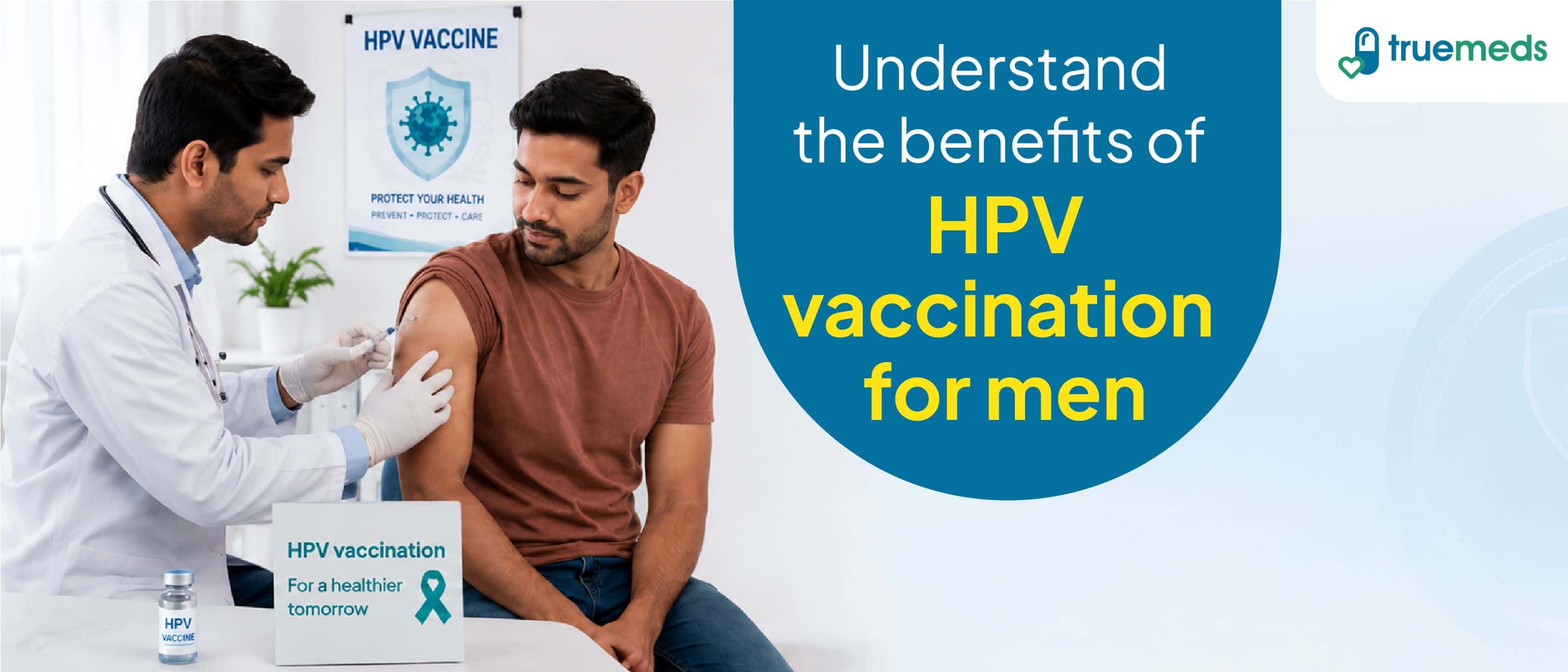
Many people still believe the HPV vaccine is only for women. This is a misconception that public health experts are working to correct. HPV vaccination can prevent more than 90% of HPV-related cancers caused by vaccine-targeted HPV types when given before exposure[1]. Vaccinating men also helps reduce the spread of HPV to sexual partners, providing broader protection within communities. As awareness of HPV-related throat, anal, and penile cancers grows, more men and their doctors are asking whether and when to get vaccinated.
This article explains why the HPV vaccine matters for men, who should consider it, what side effects to expect, and how to start the conversation with your doctor.
Key Takeaways
- HPV is a common sexually transmitted infection that can affect men and cause genital warts and several cancers, including anal, penile, and oropharyngeal cancers.
- Routine HPV vaccination is recommended from age 11 to 12, with catch-up vaccination available through age 26.
- The vaccine works best before sexual exposure but may still offer some benefit to sexually active individuals who have not yet acquired all vaccine-targeted HPV types.
- The HPV vaccine prevents new infections; it does not treat an existing HPV infection or related disease.
- Side effects are generally mild and temporary, and vaccine safety is continuously monitored.
- Many men remain unaware of the vaccine due to stigma, poor targeted messaging, and the historical framing of HPV as a women's issue.
Why HPV Vaccination Matters for Men's Health
HPV, or human papillomavirus, is one of the most common sexually transmitted infections. It often causes no symptoms at all, which means a person can carry and transmit it without knowing[2]. In many cases, the body clears the infection on its own. However, certain HPV types can persist and lead to serious health problems, even in men.
A persistent HPV infection in men can lead to anogenital warts, precancers, and cancers of the penis, anus, and oropharynx (the back of the throat and base of the tongue). Unlike cervical cancer, there is no routine HPV screening test available for most of these male HPV-related conditions[1]. However, anal Pap smears and HPV-based anal screening may be available for certain high-risk groups, particularly people with HIV, including men who have sex with men (MSM), and should be discussed with a healthcare provider.
The HPV vaccine works by preventing new HPV infections rather than treating existing ones. Clinical and real-world evidence shows strong protection against HPV infection, precancerous changes, and cancer, particularly when vaccination happens before exposure[3]. Because there is no equivalent of cervical cancer screening for most HPV-related diseases in men, vaccination remains one of the most effective tools available.
HPV Vaccine Age Recommendations for Boys and Men
Routine HPV vaccination is recommended at ages 11 to 12 years for all children, including boys, and can be started as early as age 9. HPV vaccination provides the strongest protection when given before exposure to HPV, because vaccine effectiveness is highest in people who have never had sex. For those who were not vaccinated during the recommended preteen window, catch-up vaccination is recommended for everyone through age 26[4].
The number of doses generally depends on the age at which vaccination begins and a person's immune status[5]:
- 2 doses are typically recommended for those who start vaccination between ages 9 and 14.
- 3 doses are recommended for those who start at age 15 or later, or for those with certain immunocompromising conditions.
For unvaccinated adults between ages 27 and 45, vaccination is not a routine recommendation. However, it may be considered after a shared decision-making discussion with a doctor, based on individual circumstances[5].
Consulting a healthcare provider is essential before making this decision.
HPV Vaccination After Sexual Activity: What Men Should Know
A common misconception is that HPV vaccination is pointless once a person has become sexually active. This is not accurate. The vaccine can still offer meaningful protection against HPV types that a person has not yet been exposed to. That said, the vaccine does not clear an existing HPV infection and does not treat any HPV-caused disease that has already developed[3]. Protection is generally stronger when vaccination happens before sexual activity begins.
For unvaccinated adults aged 27 to 45, the decision to vaccinate is individual rather than routine. Factors that a doctor may consider include prior exposure history, the likelihood of new sexual partners in the future, and whether the person may still be at risk of acquiring a new HPV infection[4]. This age group is not automatically recommended for vaccination, and a personalised medical consultation is the right starting point.
HPV-Related Conditions That Can Affect Men
HPV can cause a range of health problems in men. These include genital warts as well as cancers of the anus, penis, and mouth or throat. These conditions can develop silently over many years after an initial infection, sometimes with no warning signs.
Some groups face a higher risk of HPV-related disease, including men who have sex with men and people with weakened immune systems[6]. For these individuals, the importance of prevention through vaccination is even greater.
Because there is no routine HPV screening test available for most male HPV-related conditions, men may not know they have a precancerous change until it progresses[1]. This is one reason vaccination before HPV exposure remains the most effective preventive strategy.
HPV Vaccine Side Effects in Men: Common Concerns and Safety Information
The HPV vaccine is generally well tolerated. Most side effects are mild and temporary. The following reactions may occur after vaccination[7]:
- Pain, redness, or swelling at the injection site
- Fever
- Headache
- Tiredness
- Nausea
- Muscle or joint pain
Severe allergic reactions are rare. Fainting can sometimes occur shortly after vaccination, so a brief period of observation after the injection is recommended[7].
The HPV vaccines used today have gone through extensive testing before approval and continue to be monitored after release. In India, the Ministry of Health and Family Welfare maintains formal adverse event following immunisation (AEFI) surveillance guidelines to ensure that any vaccine safety concerns are identified, reported, and investigated promptly [8.
If you experience any unusual or severe symptoms after vaccination, seek medical attention immediately.
Why Many Men Remain Unaware of HPV Vaccination
Despite the clear benefits, many men remain unaware that the HPV vaccine applies to them. Research involving adult males has identified several overlapping reasons for this gap[9]:
- Masculine norms: Social expectations around health-seeking behaviour discourage some men from pursuing preventive healthcare.
- Sexual health stigma: Discussing sexually transmitted infections can feel uncomfortable, leading to avoidance.
- Intergenerational silence: Families may not discuss sexual health openly, leaving younger men without information.
- Misinformation: Many men believe HPV vaccination is a women's issue because early public messaging focused heavily on cervical cancer.
- Institutional exclusion: Male-focused HPV vaccine communication has historically been limited.
Addressing these barriers requires improved public health messaging that clearly communicates the relevance of HPV vaccination for men across all age groups.
HPV Vaccine for Men: Myths vs Facts
Discussing HPV Vaccination With Your Doctor
A conversation with your doctor is the most important step for any man considering the HPV vaccine. Rather than relying on general age guidance alone, a medical consultation allows for personalised assessment[4].
During this discussion, your doctor may consider:
- Your age and whether any prior doses were received
- Your sexual history, only to the extent clinically relevant
- Your likelihood of future exposure to new HPV types
- Any immunocompromising conditions
- A history of severe allergies
- Realistic expectations about what the vaccine can and cannot do
The key point to remember is that the vaccine prevents new HPV infections but does not treat any existing infection. Shared decision-making with your doctor helps ensure that any choice you make about vaccination is based on your personal health profile and risk factors.
Professional diagnosis and medical guidance are essential. Do not make vaccination decisions without consulting a qualified healthcare provider.
FAQs
Can adult men still receive the HPV vaccine?
Yes. All unvaccinated men through age 26 are recommended for catch-up vaccination. Men aged 27 to 45 may also receive it after a doctor-led discussion based on personal risk factors and likely future exposure. Routine vaccination is not recommended for this older age group.
How many doses of the HPV vaccine might be needed?
Generally, 2 doses are recommended if vaccination starts between ages 9 and 14, while 3 doses are needed if vaccination starts at age 15 or later, or in certain immunocompromising conditions. Your doctor can confirm the correct schedule based on your age and health status.
Is HPV vaccination still useful after becoming sexually active?
It may still help, as the vaccine can protect against HPV types not yet acquired. However, protection is strongest when vaccination happens before any sexual exposure. Whether it is worthwhile after sexual activity begins depends on individual factors best discussed with a doctor.
Does the HPV vaccine treat an existing HPV infection?
No. The HPV vaccine prevents new infections. It does not clear a current HPV infection and does not treat any HPV-caused disease that has already developed. It is a preventive tool, not a treatment.
Why is the HPV vaccine often associated with women?
Early public health campaigns focused on cervical cancer prevention, which naturally centred on women. Combined with social stigma around sexual health in men and limited male-targeted communication, this created the widespread misconception that HPV vaccination is mainly a women's concern.
Can HPV cause health problems in men?
Yes. HPV can cause genital warts and cancers of the anus, penis, and oropharynx in men. These conditions can develop silently over years. Men who have sex with men and those with weakened immune systems may face a higher risk of HPV-related disease.
Can vaccinated men still get HPV?
Yes, because no vaccine prevents every HPV type, and effectiveness is highest before exposure. However, vaccination meaningfully reduces the risk of infection with the specific HPV types the vaccine targets, which include those most commonly linked to cancer and genital warts.
Medical Disclaimer
This article is for informational purposes only and does not constitute medical advice. The information provided should not be used for diagnosing or treating health conditions. Always consult a qualified healthcare provider for diagnosis, treatment, and personalised medical advice. Do not disregard professional medical advice or delay seeking it because of information found in this article. If you have a medical emergency, contact your doctor or emergency services immediately.
References
CDC. (2024). Clinical Overview of HPV. https://www.cdc.gov/hpv/hcp/clinical-overview/index.html
CDC. (2025). About Genital HPV Infection. https://www.cdc.gov/sti/about/about-genital-hpv-infection.html
NCI/NIH. (2026). Human Papillomavirus (HPV) Vaccine. https://www.cancer.gov/about-cancer/causes-prevention/risk/infectious-agents/hpv-vaccine-fact-sheet
CDC. (2024). HPV Vaccine Recommendations. https://www.cdc.gov/hpv/hcp/vaccination-considerations/